
Laminectomy — Symptoms, Causes & Treatment
Causes, symptoms and how physiotherapy treats Laminectomy — without surgery or medicines.
Laminectomy को समझें
Laminectomy हर व्यक्ति को अलग तरह से प्रभावित करता है, और सही देखभाल यह समझने से शुरू होती है कि यह आप पर कैसे असर डाल रहा है। चाल-ढाल, ताक़त, ऊर्जा और आत्मविश्वास पर इसका रोज़मर्रा का असर — यहीं फिजियोथेरेपी काम करती है।
Laminectomy में हमारी भूमिका व्यावहारिक है: सावधान असेसमेंट के बाद बने प्लान से मूवमेंट और दैनिक कामकाज की रक्षा और पुनर्निर्माण — जहाँ मेडिकल प्रबंधन ज़रूरी हो, वहाँ आपके डॉक्टर के साथ तालमेल में।
Laminectomy के कारण और जोखिम
आम तौर पर इसे क्या बढ़ाता है — आपका असेसमेंट तय करता है कि इनमें से कौन-से आप पर लागू होते हैं।
एक से ज़्यादा संभावित कारण
Laminectomy के पीछे कई कारक हो सकते हैं — सावधान इतिहास और शारीरिक जाँच अंदाज़े की जगह उन्हें अलग-अलग परखती है।
घटा मूवमेंट और डीकंडीशनिंग
कारण जो भी हो, कम चलना-फिरना जल्दी ही अपनी कमज़ोरी और जकड़न जोड़ देता है — और यही हिस्सा सबसे आसानी से पलटता है।
रोज़मर्रा का भार और आदतें
काम की मुद्रा, दोहराए जाने वाले काम, नींद और तनाव — सब मिलकर तय करते हैं कि स्थिति रोज़ कैसे बर्ताव करेगी।
सामान्य सेहत और इतिहास
कुल सेहत, पुरानी चोटें और मौजूदा बीमारियाँ तस्वीर और प्लान दोनों को प्रभावित करती हैं — असेसमेंट इन सबको साथ देखता है।
फिजियोथेरेपी कब सही क़दम है
अगर इनमें से कुछ भी आप पर लागू होता है, तो असेसमेंट सही पहला क़दम है।
- ✓ Laminectomy का नया निदान मिला है और आप रिहैब की साफ़ शुरुआत चाहते हैं
- ✓ रोज़ के काम, चलना या सीढ़ियाँ पहले से मुश्किल होती जा रही हैं
- ✓ ताक़त, दमख़म या संतुलन साफ़ तौर पर घटा है
- ✓ आप क्लिनिक + घर का संरचित प्रोग्राम चाहते हैं, मापने लायक़ माइलस्टोन के साथ
- ✓ परिवार को आपकी सुरक्षित मदद के लिए मार्गदर्शन चाहिए
आपका इलाज, चरण-दर-चरण
पहले असेसमेंट से ट्रैक होते रिकवरी प्लान तक।
विस्तृत पहला असेसमेंट
इतिहास, मूवमेंट टेस्टिंग और ताक़त की जाँच — यह जानने के लिए कि आपके Laminectomy की असली वजह क्या है।
ऐसा निदान जो आप समझें
आपके फिजियोथेरेपिस्ट नतीजे सीधी भाषा में समझाते हैं — क्या प्रभावित है, क्यों हुआ और आपके लिए इसका क्या मतलब है।
सक्रिय, ट्रैक होता इलाज
हैंड्स-ऑन थेरेपी, सही मोडैलिटी और चरणबद्ध एक्सरसाइज़ — सेशन-दर-सेशन आगे बढ़ते हुए, Fizo IQ™ पर ट्रैक।
बचाव, प्लान में शामिल
आख़िरी चरण ताक़त और आदतें दोबारा बनाता है ताकि वही समस्या लौटे नहीं — घर के प्लान के साथ।
रिकवरी कैसी दिखती है
- ✓ रोज़ के कामों में ज़्यादा आत्मनिर्भरता
- ✓ बेहतर ताक़त, संतुलन और दमख़म
- ✓ कम झटके — चेतावनी संकेतों पर लगातार नज़र
- ✓ ऐसा प्रोग्राम जिसे परिवार समझे और सहारा दे सके
- ✓ Fizo IQ™ पर माइलस्टोन-दर-माइलस्टोन मापी जाती प्रगति
डॉक्टर से कब मिलें — चेतावनी संकेत
CB Physiotherapy Laminectomy का इलाज कैसे करती है
CB Physiotherapy में Laminectomy का इलाज उसका कारण खोजने से शुरू होता है: कुछ भी तय करने से पहले संरचित, फिजियोथेरेपिस्ट-आधारित असेसमेंट। फिर आपका प्लान हैंड्स-ऑन थेरेपी, लक्षित एक्सरसाइज़ और सही मोडैलिटी को जोड़ता है — आपके पास के क्लिनिक में या घर पर, और जहाँ मेडिकल देखभाल शामिल हो वहाँ आपके डॉक्टर के तालमेल में।
हर केस Fizo IQ™ — हमारे रिकवरी इंजन — पर चलता है: निदान, जड़, प्लान, माइलस्टोन और लक्ष्य, सेशन-दर-सेशन ट्रैक। आपको हमेशा पता रहता है कि आप कहाँ हैं और आगे क्या है।
Laminectomy में मदद करने वाली एक्सरसाइज़
इन एक्सरसाइज़ को अपना बनाइए — CB का फिजियो आपका प्लान पर्सनलाइज़ करता है और हफ़्ते-दर-हफ़्ते ट्रैक करता है।
मेरा पर्सनल प्लान बनाएँयह सामान्य मार्गदर्शन है — अगर किसी एक्सरसाइज़ से दर्द बढ़े तो रुक जाएँ, और नई रूटीन शुरू करने से पहले अपने फिजियो से सलाह लें।
Get Laminectomy treatment near you
Certified physiotherapists at a clinic near you or at home — same-day slots, assessment-led care.
रिक्वेस्ट मिल गई!
हम 10 मिनट के भीतर कॉल करके आपकी होम विज़िट कन्फ़र्म करेंगे।हम 10 मिनट के भीतर कॉल करके आपका स्लॉट कन्फ़र्म करेंगे।
WhatsApp पर हमसे बात करेंLaminectomy, answered
Types of Laminectomies include:
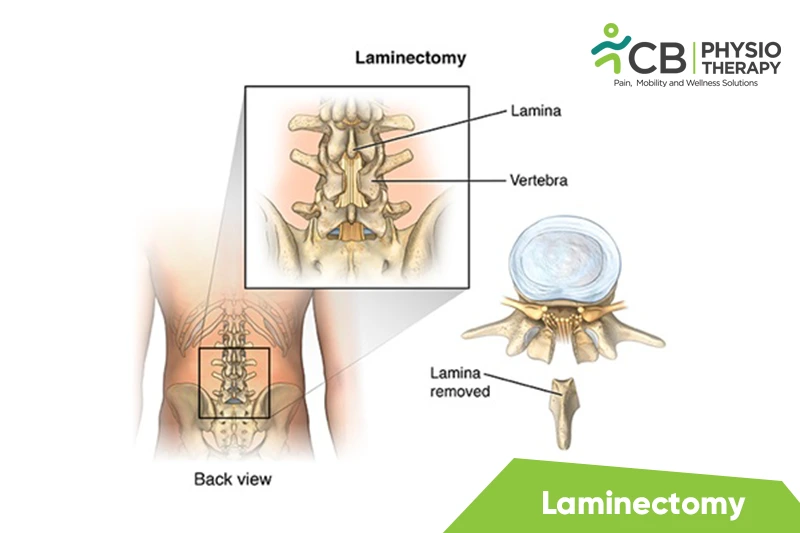
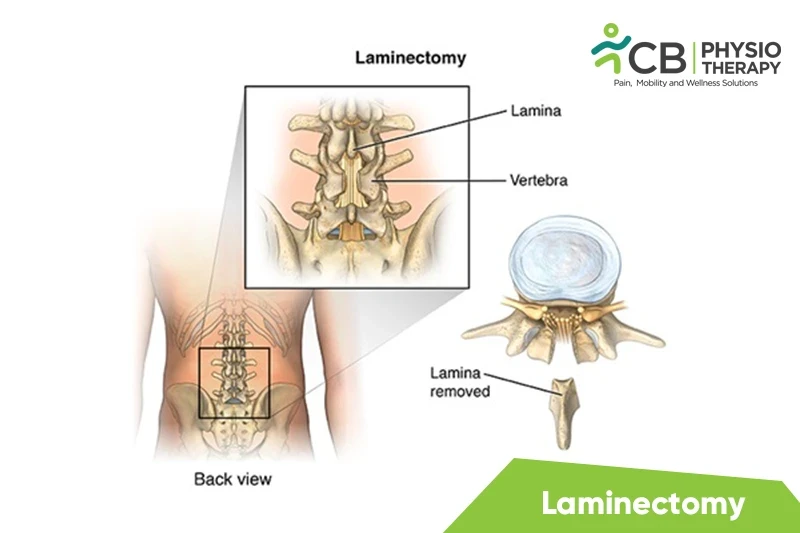
Cervical Laminectomy: This is a procedure performed on a cervical vertebra in the neck.
Lumbar Laminectomy: This involves the vertebrae in the lower back. This procedure helps relieve pain in the lower back, buttocks, and legs.
Sacral Laminectomy: In this procedure, the lamina on the fused sacral vertebrae is removed.
Pain in the neck or back.
Sharp shooting pain.
Limitation in mobility.
Cramps in the neck.
Weakness.
Numbness down the arms and legs.
Difficulty with balance.
Herniated disc.
Spinal stenosis.
Ankylosing spondylitis.
Overgrowths or bony spurs.
Tumors.
Infection.
Trauma.
Pathology
The word laminectomy means excision of the lamina. However, in most cases, it involves the excision of the supraspinous ligament and part or all of the spinous process. Lamina is rarely removed if required, it is done to break the continuity of the rigid ring of the spinal canal to allow the soft tissues within the canal to expand, change the contour of the vertebral column, and permit access to deeper tissue inside the spinal canal.
X-ray is a reliable diagnostic tool that helps to determine the extent to which the bone is damaged.
MRI:
MRI is another diagnostic tool used to determine disc, bone, muscular or ligamentous damage.
Note: Medication should not be taken without a doctor's prescription.
Excessive mobility and stress on the tissues should be avoided to enhance healing.
Cryotherapy:
Ice therapy or cryotherapy may be used to help decrease swelling and pain at the surgical site and should be applied for 20 minutes several times a day.
Thermotherapy:
Heat therapy or thermotherapy is used to help relax muscles and improve circulation around the back.
TENS:
Transcutaneous electrical stimulations may be used to help control pain.
Scar massage:
Scar massage relieves tightness around the surgical incision, and scar mobilization techniques are recommended.
Collar:
For the first 6 weeks, a multilevel fusion hard collar is recommended.
Breathing exercises:
Breathing exercises include diaphragmatic breathing, which involves lying straight on the back and with hands on the stomach practice diaphragmatic breathing. This breathing exercise involves breathing in from the nose and breathing out from the mouth.
Assistive devices:
Assistive devices help prevent falls, promote comfort, and avoid certain back movements. Examples are a shower stool and rails, a reacher/grabber an elevated toilet seat, slip-on shoes, etc. A cane or walker for a short time after surgery can be used for comfort and stability
Range of motion exercises:
Simple spinal exercises are done to maintain mobility and also reduce the risk of secondary complications such as blood clots, increased pain, and infection. Ankle pumps prevent the formation of clots, hence doing ankle pump exercises helps prevent clotting and regulate blood circulation in the legs. This further prevents muscle shortening and improves muscle flexibility. Bending and twisting, lifting, pushing, and pulling 5kgs or more for two weeks should be avoided. Other exercises like shoulder rolls, and shoulder shrugs. Scapular retraction and depression are also recommended.
Strengthening exercises:
Strengthening exercises involve isometric exercises for the upper extremity and lower extremity. Exercises with weight and resistance are done for strengthening, progressing to weight bearing, balance, Swiss Ball, Reformer, etc. Other examples are chest press, pull down, shoulder shrugs/rolls, seated rows, and incline push-ups. Exercises like glutes and quads exercises, enable the muscles to pick up accurate weight while physical movement so that there is the least stress on the back.
Stretching exercises:
Stretching exercises like quadriceps, hamstrings, calf, hip flexors, gluteal, multifidus, transverse abdominus, etc, without tilting the pelvis.
Posture and balance training:
The patient is given balance training and advised to emphasize correct posture by maintaining and doing exercises for the same. Advised to limit sitting, including in the car, to no more than 30 minutes at a time (standing/walk breaks).
Mobilization:
Soft tissue mobilization to decrease guarding and joint mobilization over restricted joints is done to increase the movement.
Cardiovascular exercises:
These exercises include cardiovascular training, running, stationary bike, and treadmill. etc.
Don't let Laminectomy decide your day.
Get assessed today — find the cause, get a plan, and know when you'll feel better.