
Thermotherapy(heat Therapy) — How It Works & What It Treats
Also known as Thermotherapy(heat Therapy). What Thermotherapy(heat Therapy) is, how it works and what it treats — explained by CB Physiotherapy's clinical team.
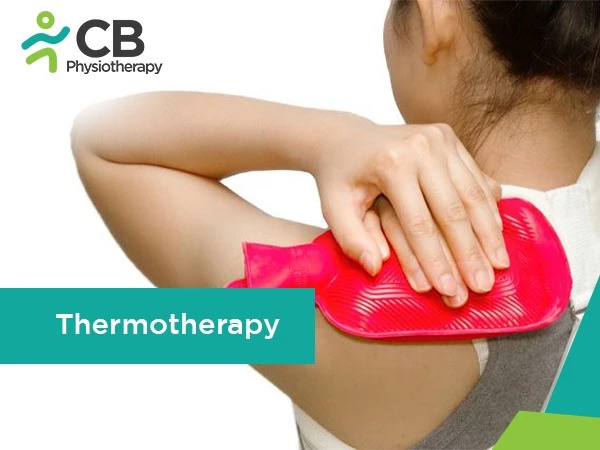
How Thermotherapy(heat Therapy) works
Thermotherapy(heat Therapy) earns its place in a recovery plan when the assessment says it fits — that is the honest answer to "does it work?", because the same treatment helps one diagnosis and does little for another.
Used on the right case, at the right dose, alongside exercise and hands-on care, Thermotherapy(heat Therapy) supports pain relief and recovery without medicines. Your physiotherapist will tell you plainly whether your case is one it helps.
Thermotherapy(heat Therapy) — techniques & equipment
What the treatment actually involves — your plan combines the pieces your assessment calls for.
Assessment before application
Your physiotherapist first confirms Thermotherapy(heat Therapy) suits your diagnosis — and screens for anything that rules it out.
Targeted application
The treatment is applied to the specific structures your assessment identified, at a dose set for your case.
Paired with active rehab
Exercise and movement retraining run alongside, so the gains each session makes are kept.
Reviewed and progressed
Your response is checked every session; the plan is adjusted rather than repeated on autopilot.
Conditions Thermotherapy(heat Therapy) treats
Where it fits best — your assessment confirms whether it belongs in your plan.
- ✓ Frozen Shoulder →
- ✓ Achilles Tendon Rupture →
- ✓ Carpal Tunnel Syndrome (cts) →
- ✓ Arthritis →
- ✓ Ankle Sprain →
- ✓ Tennis Elbow →
- ✓ Pain or stiffness that has not settled with rest
- ✓ As part of a wider, assessment-led recovery plan
- ✓ When your assessment identifies the specific problem Thermotherapy(heat Therapy) addresses
What a Thermotherapy(heat Therapy) session looks like
Step by step — from screening to treatment to what comes next.
Screening and consent
A quick reassessment and safety screen — you will know what the session involves and why before it starts.
The treatment itself
Thermotherapy(heat Therapy) applied to the targeted area — most patients find sessions comfortable, and you can speak up at any point.
Active follow-through
Exercise or movement work right after, while the treatment effect is fresh.
Response check
What changed and for how long — the answer shapes your next session and the plan.
Benefits of Thermotherapy(heat Therapy)
- ✓ Dosed to your case after a proper assessment
- ✓ Always combined with active rehab, for results that last
- ✓ Available at CB clinics near you — and at home where equipment allows
- ✓ Drug-free support for pain relief and recovery
- ✓ Delivered by certified physiotherapists, never unsupervised
Safety & contraindications
How CB Physiotherapy delivers Thermotherapy(heat Therapy)
You will not walk into CB Physiotherapy and simply receive Thermotherapy(heat Therapy) — you will receive an assessment, and Thermotherapy(heat Therapy) if your case calls for it. That order matters: it is how we make sure every session moves you towards a goal rather than just filling a slot.
Your plan runs on Fizo IQ™ — diagnosis, root cause, milestones, goals — and Thermotherapy(heat Therapy) is combined with hands-on care and exercise as indicated, at a clinic near you or at home where the equipment allows.
Real published prices from our physiotherapists for Thermotherapy(heat Therapy) in India — your exact quote is confirmed after assessment, before you commit. Packages save 10%.
Get Thermotherapy(heat Therapy) near you
Certified physiotherapists at a clinic near you or at home — same-day slots, assessment-led care.
Request received!
We'll call you within 10 minutes to confirm your home visit.We'll call you within 10 minutes to confirm your slot.
Chat with us on WhatsAppThermotherapy(heat Therapy), answered
Thermotherapy involves the application of Heat. The most common heating agent used in rehabilitation is a hot pack. Hot packs transfer their heat energy to the body by conduction. Superficial heat usually produces temperature elevation in the underlying tissues to a depth of up to 1cm. Adipose tissue acts as an insulating layer, which decreases the depth of heat. Commercial hot packs are canvas, usually filled with a hydrophilic substance, that is immersed in 170 0 F (77 0 C), water in a thermostatically controlled heater. The packs can retain heat up to 30 minutes. With superficial heat, local metabolism is increased and local vasodilatation with hyperemia occurs. Initial vasoconstriction is produced in deep tissue layers, followed by vasodilatation. Hot packs also promote muscle relaxation as well as sedation of sensory nerve endings.
The aim of thermotherapy is to alter the tissue temperature of the targeted area to induce a desired Biological response. The increase in the temperature of the skin/soft Tissue leads to the
- Increase in the blood flow by vasodilatation.
- Increases the oxygen uptake thus increasing tissue healing
- Increases the metabolic rate,
- Increases tissue extensibility,
Heating of tissues can be achieved using Hot Packs, Wax Baths, Towels, Sunlights, Saunas, Heat wraps, Steam Baths/Rooms. We can also get the heat in deeper tissues through Electrotherapy (Ultrasound). The temperature should be comfortable and should not cause a burn. Exercise in warm water is an effective treatment for pain relief for patients with Neurological and Musculoskeletal problems. The warmth enhances the blood flow and muscle relaxation and also relieves the pain by reducing peripheral edema.
· Osteoarthritis .
· Tendonitis .
· Warming up stiff Muscles or Tissue before activity.
· Relieving pain or spasms relating to neck or back injury, including lower back, sub-acute or chronic traumatic and inflammatory conditions.
· Preheating before electrical stimulation.
· New injury.
· Open wounds.
· Acute inflammation conditions.
· If fever already noted.
· Metastasis of malignancies.
· Areas of active bleeding.
· Cardiac insufficiency.
· Patient who has received x-ray therapy to the tissue.
· Peripheral vascular disease.
· I f the skin is hot, red, or inflamed and if the area is numb.
· People with Diabetic Neuropathy or another condition that reduces sensations of heat. It may be hard to know when the heat is excessive in these cases.
Ready to start your recovery?
Get assessed today — find the cause, get a plan, and know when you'll feel better.