Arthritis — Symptoms, Causes & Treatment
Also known as Arthritis. Causes, symptoms and how physiotherapy treats Arthritis — without surgery or medicines.
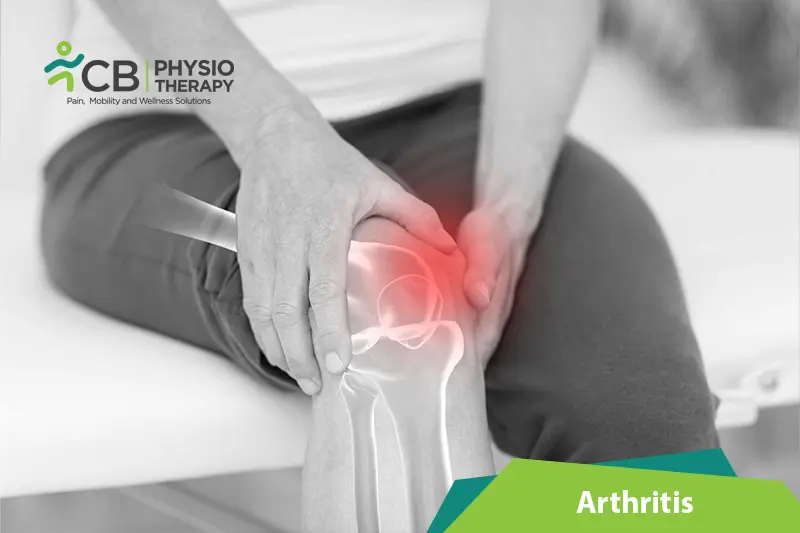
Understanding Arthritis
Arthritis is one of the conditions our physiotherapists treat most often — and one of the most treatable when the actual driver is found. Two people with Arthritis rarely share the same underlying cause, which is why one-size-fits-all treatment so often disappoints.
What matters clinically is the pattern: how it started, what makes it better or worse, and how it behaves through the day. That pattern — mapped in a structured assessment — tells us which structures are involved and which treatment will actually move the needle.
Causes & risk factors of Arthritis
What commonly drives it — your assessment pins down which of these apply to you.
Joint stiffness and age-related change
Joints that move less start to hurt more; age-related wear is normal, but painful stiffness is not something to simply accept.
Weakness and deconditioning
When supporting muscles lose strength, load shifts to structures that were never meant to carry it.
Old injuries and compensations
A previous injury that never fully rehabilitated often leaves a movement pattern that overloads something else.
Sudden spikes in activity
A new sport, a new gym program, a long trek — tissue adapts to gradual change and protests when change is sudden.
Muscle strain and overload
A sudden lift, an awkward movement or simply more load than the tissues were prepared for — the most common trigger.
When physiotherapy is the right call
If any of these sound like you, an assessment is the right first step.
- ✓ Arthritis that keeps returning or hasn't settled within two weeks
- ✓ Pain or stiffness that limits work, sleep or daily activities
- ✓ You want to avoid long-term painkillers — or surgery has been mentioned
- ✓ You've been diagnosed with Arthritis and told to "rest and see"
- ✓ Movement feels restricted, weak or guarded compared to before
Your treatment journey
Step by step — from your first assessment to a tracked recovery plan.
A detailed first assessment
History, movement testing and strength checks — a focused session to find what is actually driving your Arthritis.
A diagnosis you understand
Your physiotherapist explains the findings in plain language — what is affected, why it happened and what that means for you.
Active, tracked treatment
Hands-on therapy, the right modalities and graded exercise — progressed session by session and tracked on Fizo IQ™.
Prevention, built in
The final phase rebuilds strength and habits so the same problem does not come back — with a home plan you keep.
What recovery looks like
- ✓ Care without long-term medicines — at a clinic near you or at home
- ✓ Relief that comes from treating the cause, not masking it
- ✓ A clear diagnosis and a timeline you can plan around
- ✓ Strength and movement rebuilt, not just pain reduced
- ✓ Lower chance of recurrence, with a prevention plan
When to see a doctor — red flags
How CB Physiotherapy treats Arthritis
At CB Physiotherapy, treatment for Arthritis starts with finding its cause: a structured, physiotherapist-led assessment before anything is prescribed. Your plan then combines hands-on therapy, targeted exercise and the right modalities — delivered at a clinic near you or at home, and coordinated with your doctor where medical care is involved.
Every case runs on Fizo IQ™, our recovery engine: diagnosis, root cause, plan, milestones and goals, tracked session by session. You always know where you are in your recovery — and what comes next.
Exercises that help with Arthritis
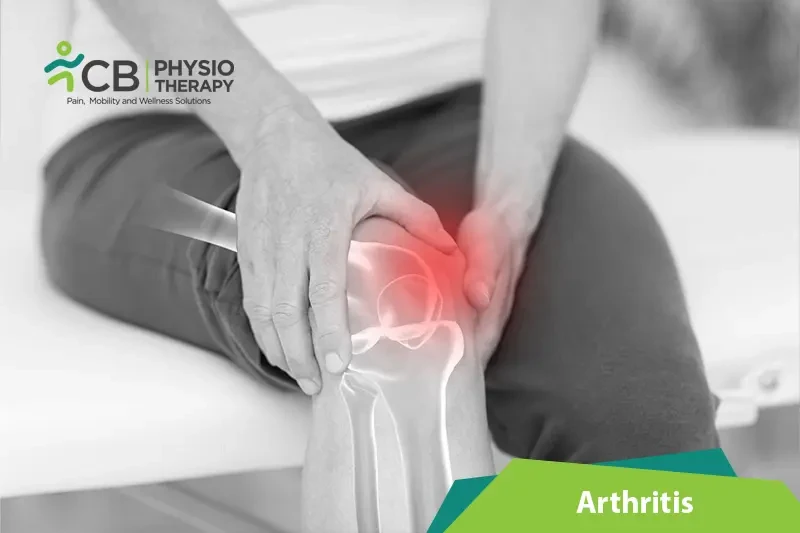 Top 5 Exercises For Arthritis
Steps & precautions →
Top 5 Exercises For Arthritis
Steps & precautions →
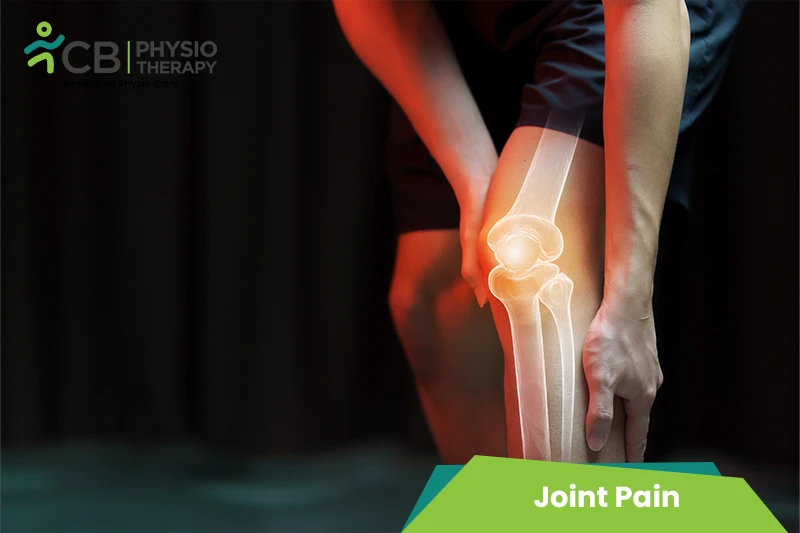 Top 5 Exercises For Joint Pain
Steps & precautions →
Top 5 Exercises For Joint Pain
Steps & precautions →
Make these exercises yours — a CB physio personalizes, doses and tracks your plan week by week.
Get my personalized planGeneral guidance only — stop if an exercise increases your pain, and check with your physio before starting a new routine.
Get Arthritis treatment near you
Certified physiotherapists at a clinic near you or at home — same-day slots, assessment-led care.
Request received!
We'll call you within 10 minutes to confirm your home visit.We'll call you within 10 minutes to confirm your slot.
Chat with us on WhatsAppArthritis, answered
Arthritis is an acute or chronic joint inflammation that causes pain and structural damage. Arthritis can refer to more than 150 different conditions that affect muscles, bones, and joints.
These include:
- Osteoarthritis.
- Auto-immune conditions such as rheumatoid arthritis and ankylosing spondylitis.
- Crystal deposition in conditions like gout and pseudogout.
- Infection causing septic arthritis.
- Idiopathic causes juvenile idiopathic arthritis.
Patients suffering from arthritis, experience the following symptoms:
- Pain and swelling.
- Joint stiffness with constant ache around the joint.
- Muscle weakness.
- Loss of flexibility.
- Decreased aerobic fitness.
Arthritic conditions like rheumatoid and lupus can also affect other organs of the body with a variety of symptoms like:
- Muscle aches and pains.
- Swelling and tenderness.
- Feeling of tiredness.
- Inability to use the hand.
- Inability to walk.
- Difficulty in moving the joint.
- Poor sleep.
Pathology:
There is a loss of collagen and proteoglycans from the matrix. Initially, chondrocytes proliferate and synthesize enhanced amounts of proteoglycan and collagen molecules. As the disease progresses, fibrillation, erosion, and cracking initially appear in the superficial layer of cartilage and progress over time to deeper layers.
Many factors contribute to the cause of arthritis-like:
- Wear-and-tear associated with day-to-day weight-bearing.
- Trauma or injury to the joint.
- Prior infection.
- Prior surgery.
- Deposition of calcium pyrophosphate dihydrate crystals of monosodium urate.
- Diabetes.
- Autoimmune processes.
Physical examination:
During the physical examination, the examiner looks for redness and swelling in and around the joint, range of motion of the joints. Depending on the type of arthritis, the examiner also looks for rashes, checks the eyes and throat, and records the temperature.
Laboratory tests:
Laboratory tests are done to rule out other diseases that have similar symptoms as those experienced by a condition like Fibromyalgia or RA (rheumatoid arthritis).
X-ray:
X-rays are used to study the bones for the damage that can be the cause, for symptoms such as joint pain or stiffness.
Magnetic resonance imaging (MRI):
Magnetic resonance imaging (MRI) is done to study the soft tissues in the diagnosis of Fibromyalgia.
Medication: NSAIDs, pain killers, corticosteroids, analgesics, etc.
Note: Medication should not be taken without the doctor's prescription.
Surgery:
Surgery is recommended for a patient with severe arthritis. Surgery is applicable when conservative treatment is not effective for the patient.
Fusion:
In this surgery, two or more bones are permanently fused, this process immobilizes a joint and reduces pain caused by the movement.
Joint replacement:
Damaged, an arthritic joint is replaced with an artificial joint. Joint replacement surgery preserves joint function and movement.
Heat therapy has an analgesic effect causing relief from muscle spasms and increasing the elasticity of periarticular structures. Heat therapy can be used before exercise to gain maximum benefit for 10-20 minutes once or twice a day.
Ice is usually applied in active joints, it can be applied as ice, nitrogen spray, and cryotherapy.
Therapeutic ultrasound helps to stimulate the healing process by increasing blood flow and decreasing pain and inflammation.
Transcutaneous Electrical Nerve Stimulation (TENS):
Transcutaneous electrical nerve stimulation therapy is used to increase strength after the daily application of 15 minutes of TENS. It also helps in reducing synovial fluid and inflammatory exudate in acute arthritis and thus provides pain relief.
Interferential therapy is used to treat muscle strains, spasms, joint damage, and edema. Interferential therapy can provide relief from chronic pain, inflammation, and swelling.
Laser therapy is highly effective for pain relief, it causes a natural healing response from the body because it increases circulation and can break up calcified deposits in the joints.
Kinesio taping helps decrease pain and increase the function of the joints.
Manual or hands-on therapy helps manage arthritis symptoms. Two of the most common treatments include manual manipulation or mobilization and massage therapy.
Hydrotherapy:
Hydrotherapy can help to relax the muscles and ease the pain in the joints. Water supports the weight, which helps to relieve pain and increase the range of movement of the joints. Water can be used to provide resistance to moving joints by pushing the arms and legs against the water, this can also help improve muscle strength.
Exercises:
Exercises include passive range of motion, active range of motion, stretching, and strengthening exercises to increase range of motion, flexibility, strength, and endurance.
The patient is advised to do physical activity that is simple and effective, as it can reduce pain, improve function, and also reduce the risk of developing other chronic diseases. The patient is advised to perform low-impact activities that are easy on the joints like walking, bicycling, and swimming so that there is a low risk of injury. Also losing excess weight and staying at a healthy weight is particularly important for people with arthritis.
Don't let Arthritis decide your day.
Get assessed today — find the cause, get a plan, and know when you'll feel better.