
Osteoarthritis — Symptoms, Causes & Treatment
Also known as Osteoarthritis. Causes, symptoms and how physiotherapy treats Osteoarthritis — without surgery or medicines.
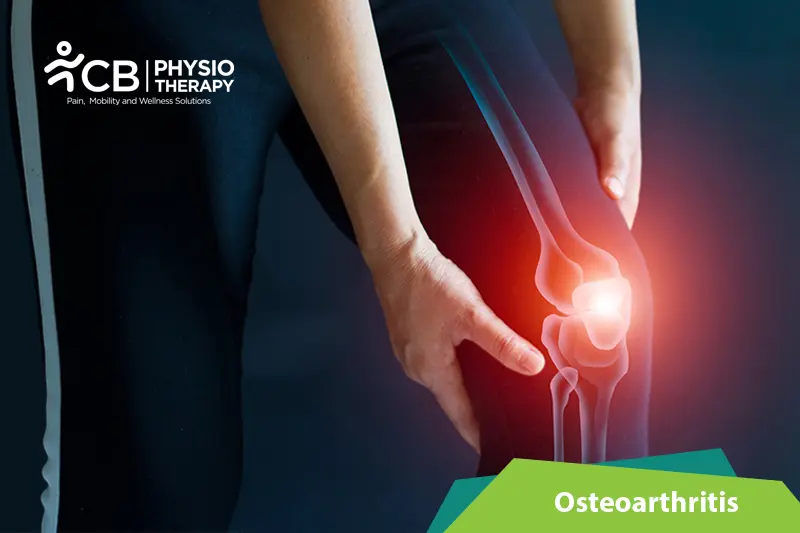
Understanding Osteoarthritis
Osteoarthritis can arrive suddenly or build over months, and how much it hurts is a poor guide to how serious it is — minor strains can hurt intensely, while slow-building problems stay quiet until they start limiting you.
Physiotherapy approaches Osteoarthritis by treating the cause rather than chasing the symptom: a detailed movement assessment first, then a plan combining hands-on treatment, targeted exercise and the habit changes that stop it returning.
Causes & risk factors of Osteoarthritis
What commonly drives it — your assessment pins down which of these apply to you.
Sudden spikes in activity
A new sport, a new gym program, a long trek — tissue adapts to gradual change and protests when change is sudden.
Muscle strain and overload
A sudden lift, an awkward movement or simply more load than the tissues were prepared for — the most common trigger.
Posture and long static hours
Desks, driving and screens keep the same structures loaded for hours at a stretch — comfortable at first, aching later.
Joint stiffness and age-related change
Joints that move less start to hurt more; age-related wear is normal, but painful stiffness is not something to simply accept.
Weakness and deconditioning
When supporting muscles lose strength, load shifts to structures that were never meant to carry it.
When physiotherapy is the right call
If any of these sound like you, an assessment is the right first step.
- ✓ You want to avoid long-term painkillers — or surgery has been mentioned
- ✓ You've been diagnosed with Osteoarthritis and told to "rest and see"
- ✓ Movement feels restricted, weak or guarded compared to before
- ✓ You want to return to sport or work with a plan, not by trial and error
- ✓ Osteoarthritis that keeps returning or hasn't settled within two weeks
Your treatment journey
Step by step — from your first assessment to a tracked recovery plan.
A detailed first assessment
History, movement testing and strength checks — a focused session to find what is actually driving your Osteoarthritis.
A diagnosis you understand
Your physiotherapist explains the findings in plain language — what is affected, why it happened and what that means for you.
Active, tracked treatment
Hands-on therapy, the right modalities and graded exercise — progressed session by session and tracked on Fizo IQ™.
Prevention, built in
The final phase rebuilds strength and habits so the same problem does not come back — with a home plan you keep.
What recovery looks like
- ✓ Strength and movement rebuilt, not just pain reduced
- ✓ Lower chance of recurrence, with a prevention plan
- ✓ Care without long-term medicines — at a clinic near you or at home
- ✓ Relief that comes from treating the cause, not masking it
- ✓ A clear diagnosis and a timeline you can plan around
When to see a doctor — red flags
How CB Physiotherapy treats Osteoarthritis
We treat Osteoarthritis the way we treat everything: assessment first, plan second, treatment third. It sounds obvious, but it is the difference between sessions that fill a slot and sessions that move you towards a goal. Care is delivered by certified physiotherapists at a clinic near you or at home.
Your whole journey is tracked on Fizo IQ™ — the diagnosis, the root cause, the milestones and the goals — so progress is measured, not guessed, and the plan adapts the moment your response calls for it.
Get Osteoarthritis treatment near you
Certified physiotherapists at a clinic near you or at home — same-day slots, assessment-led care.
Request received!
We'll call you within 10 minutes to confirm your home visit.We'll call you within 10 minutes to confirm your slot.
Chat with us on WhatsAppOsteoarthritis, answered
Osteoarthritis (OA) is a degenerative joint disease. It is the most common joint disease and is considered to be the leading cause of disability in older adults. Osteoarthritis is characterized by progressive deterioration and loss of articular cartilage with the simultaneous proliferation of new bone, cartilage, and connective tissue.
Pain is the most common symptom of Osteoarthritis, other symptoms may include:
- Joint pain.
- Pain worsens by movement and is relieved by rest.
- In progressive causes, pain at rest may become common, as well as pain brought by minimal movement.
- Stiffness in joints
- Limitation of movement.
- Swollen joints due to increased synovial fluid or bony proliferation.
- Crepitus while moving the hip joint.
- Difficulty in doing routine work.
- DIP and PIP joints, the base of the thumb, hip, knee, and spine are commonly involved joints, whereas the shoulder and elbow are involved rarely.
There is no specific cause of Osteoarthritis, but factors that can be responsible for the development of the disease, include:
- Heredity.
- Old age.
- Obesity.
- Injury.
- Joint overuse.
- Metabolic disease.
- Deficiency of Vitamin C, D, and K.
Pathology:
Osteoarthritis is a progressive degradation of the cartilage, due to a combination of mechanical, inflammatory, and metabolic factors affecting the hyaline cartilage, the subchondral bone, the joint capsule, and the synovium as well as the surrounding ligaments. The synovium becomes thick and the subchondral bone begins to remodel forming lytic lesions.
Physical examination:
Examiner checks the family and medical history of the patient. Physical examination is done to evaluate the location of pain, swelling, range of motion, strength of muscles, and balance.
X-rays:
X-ray creates detailed images of bones. X-rays of an osteoarthritic joint may show changes in the bone, loss of joint space, and formation of marginal osteophytes.
Magnetic resonance imaging (MRI):
Magnetic resonance imaging (MRI) is used to detect damage to the muscles, ligaments, and tendons.
Bone scan:
A bone scan also helps to determine the condition of the bone and soft tissues of the joint.
Medication: Non-steroidal anti-inflammatory drugs (NSAIDs), analgesics, corticosteroids.
Note: Medication should not be taken without the doctor's prescription.
Surgery:
Surgery is recommended if the patient has debilitating pain and major limitation of functions such as the impaired ability to work or sleep, daily activity, or impaired ability to walk.
Cold therapy or cryotherapy causes numbness resulting in the constriction of blood vessels, thus reducing swelling.
Thermotherapy transfers heat to the connective tissue and muscles, which improves blood flow, removes toxic substances, and decreases pain. It also improves flexibility which leads to improvement in range of motion.
Ultrasound therapy uses sound waves to decrease spasms and reduce joint stiffness.
Transcutaneous electrical stimulations (TENS):
Transcutaneous electrical stimulations (TENS), transmits electrical stimulations through pads placed on the skin, to relieve pain.
Interferential current therapy (IFT), is an electrical modality that is used to decrease pain and increase mobility.
Hydrotherapy:
Water exercises are useful when the weight-bearing joints are affected, these exercises increase the range of motion by immersing the body in water and allowing weight-bearing muscles to relax, and alternatively, a simple range of motion exercises are performed.
Manual therapy involves several techniques and stretches to increase the quality and range of movement of the ankle.
Progressive resisted exercises:
Strengthening exercises consist of Progressive resisted exercises, and strong and sustained repeated sessions of isometrics exercises.
Range of motion exercises:
Active free relaxed rhythmic movements are done to improve the range as well as promote relaxation of the joint. Relaxed passive movements are started to mobilize stiff joints. Range of motion exercises causes improvement in functional independence.
Assistive devices:
Assistive aids, modified supports, orthoses, adaptations, and modifications in the environment are recommended which prove to be beneficial for the patients.
Strengthening Exercises:
Strengthening exercises are taught to restore strength and endurance. These exercises can involve the use of weight cuffs, dumbbells, resistance bands, and cardio exercise equipment such as treadmills or static cycles.
Progressive resisted Exercises:
Strengthening exercises consist of Progressive resisted exercises, and strong and sustained repeated sessions of isometrics exercises.
Stretching exercises:
Stretching exercises are done by gently lengthening the muscles around the joint. Regular stretching increases the range of motion and flexibility.
Aerobic Exercises:
Aerobic exercises like cardio exercises, like speed walking, running, vigorous swimming, stationary bike, etc can also be done without stressing the joints.
The patient is advised to decrease high-impact activities in daily life and minimize the stress on the joint. The patient is also encouraged to reduce weight, which can be achieved through a combination of diet and exercise.
Don't let Osteoarthritis decide your day.
Get assessed today — find the cause, get a plan, and know when you'll feel better.