
Kinesio Taping / Taping Therapy — How It Works & What It Treats
Also known as Kinesio Taping / Taping Therapy. What Kinesio Taping / Taping Therapy is, how it works and what it treats — explained by CB Physiotherapy's clinical team.
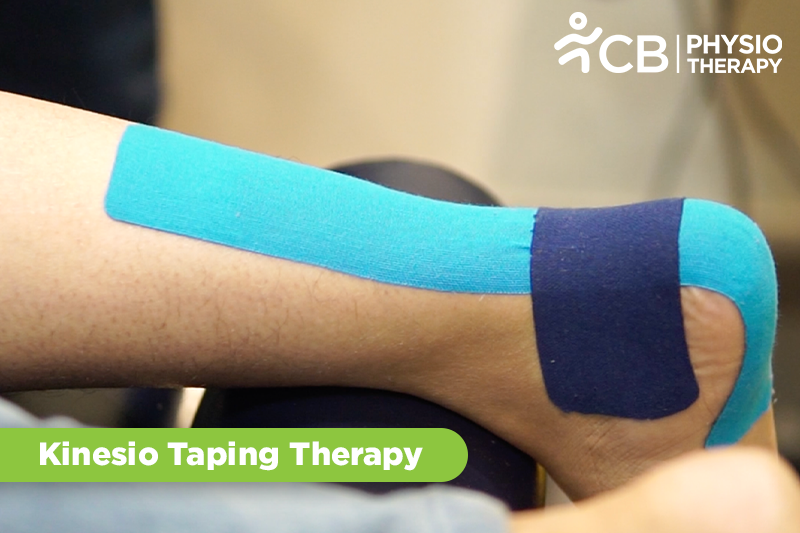
How Kinesio Taping / Taping Therapy works
Kinesio Taping / Taping Therapy earns its place in a recovery plan when the assessment says it fits — that is the honest answer to "does it work?", because the same treatment helps one diagnosis and does little for another.
Used on the right case, at the right dose, alongside exercise and hands-on care, Kinesio Taping / Taping Therapy supports pain relief and recovery without medicines. Your physiotherapist will tell you plainly whether your case is one it helps.
Kinesio Taping / Taping Therapy — techniques & equipment
What the treatment actually involves — your plan combines the pieces your assessment calls for.
Assessment before application
Your physiotherapist first confirms Kinesio Taping / Taping Therapy suits your diagnosis — and screens for anything that rules it out.
Targeted application
The treatment is applied to the specific structures your assessment identified, at a dose set for your case.
Paired with active rehab
Exercise and movement retraining run alongside, so the gains each session makes are kept.
Reviewed and progressed
Your response is checked every session; the plan is adjusted rather than repeated on autopilot.
Conditions Kinesio Taping / Taping Therapy treats
Where it fits best — your assessment confirms whether it belongs in your plan.
- ✓ Cervical Spondylosis →
- ✓ Achilles Tendon Rupture →
- ✓ Ankle Sprain →
- ✓ Tennis Elbow →
- ✓ Whiplash →
- ✓ Rotator Cuff Injury →
- ✓ Pain or stiffness that has not settled with rest
- ✓ As part of a wider, assessment-led recovery plan
- ✓ When your assessment identifies the specific problem Kinesio Taping / Taping Therapy addresses
What a Kinesio Taping / Taping Therapy session looks like
Step by step — from screening to treatment to what comes next.
Screening and consent
A quick reassessment and safety screen — you will know what the session involves and why before it starts.
The treatment itself
Kinesio Taping / Taping Therapy applied to the targeted area — most patients find sessions comfortable, and you can speak up at any point.
Active follow-through
Exercise or movement work right after, while the treatment effect is fresh.
Response check
What changed and for how long — the answer shapes your next session and the plan.
Benefits of Kinesio Taping / Taping Therapy
- ✓ Dosed to your case after a proper assessment
- ✓ Always combined with active rehab, for results that last
- ✓ Available at CB clinics near you — and at home where equipment allows
- ✓ Drug-free support for pain relief and recovery
- ✓ Delivered by certified physiotherapists, never unsupervised
Safety & contraindications
How CB Physiotherapy delivers Kinesio Taping / Taping Therapy
You will not walk into CB Physiotherapy and simply receive Kinesio Taping / Taping Therapy — you will receive an assessment, and Kinesio Taping / Taping Therapy if your case calls for it. That order matters: it is how we make sure every session moves you towards a goal rather than just filling a slot.
Your plan runs on Fizo IQ™ — diagnosis, root cause, milestones, goals — and Kinesio Taping / Taping Therapy is combined with hands-on care and exercise as indicated, at a clinic near you or at home where the equipment allows.
Real published prices from our physiotherapists for Kinesio Taping / Taping Therapy in India — your exact quote is confirmed after assessment, before you commit. Packages save 10%.
Get Kinesio Taping / Taping Therapy near you
Certified physiotherapists at a clinic near you or at home — same-day slots, assessment-led care.
Request received!
We'll call you within 10 minutes to confirm your home visit.We'll call you within 10 minutes to confirm your slot.
Chat with us on WhatsAppKinesio Taping / Taping Therapy, answered
Elastic Therapeutic Tape, also called Kinesiology Tape, Kinesio Tape, K-Tape is a rehabilitative method used to facilitate the body's natural healing process, while providing support and stability to muscles and joints without restricting the body's range of motion. Tapping is usually used by physiotherapists to change Muscle Tone, Move Lymphatic Fluids, Correct Movement Patterns, and Improve Posture.
Kinesiology tape is a therapeutic tape that is applied to the body to decrease pain, reduce swelling, and improve functionality. The process involves placing Strips of Kinesiology tape on the body in Specific directions for therapeutic purposes.
K-Taping can be applied in the shape of a "Y", "I", "X", "Fan", "Web" or "Donut". Depending upon the size of the affected muscle and the result to be achieved, the shape of taping is decided.
"Y" Tape:
"Y" Tape application is generally used to
1. Surround the target Muscle
2. Inhibit or Facilitate muscle stimuli
3. Should be 2 inches longer than the target muscle.
"I" Tape:
"I" Tape application is generally used for
1. Acute injuries in place of "Y" Tape
2. Edema and pain (Primary purpose)
3. Alignment correction.
"X" Tape:
"X" Tape application is generally used when
· The origin and the intersection of the target muscle change depending on movement e.g. the Rhomboids.
"Fan" /"web" Tape:
"Fan" /"web" tape application is used for
· Edema (Web is different because the ends remain intact).
"Donut" Tape:
"Donut" tape application is used for:
· Edema (Use overlapping strips and the center is cut out over the area of focus).
Kinesiology tape is stretchable, water-resistant adhesive, made of nylon and cotton both. It is elastic-like skin, therefore allows a full range of motion. When the tape is applied to the body, it lifts your skin gently by recoiling, creating space between the skin and the underneath tissues. These tissues contain sensory receptors that feel, touch, pain, and temperature, also responsible for sensing proprioception. Kinesiology taping decompresses these tissues thus sending new signals to the brain. When the brain receives these signals, it responds differently.
· Clean and dry the area where taping is to be done.
· Trim the excess hair, as it can prevent the tape from gripping the skin.
· Apply the first strip, after the backing paper is taken off let the end recoil slightly, which prevents any stretch in the last two inches at either end because the tabs help to hold the tape in place. If the ends are stretched, the tape will pull the skin and the tape will get detached.
· To hold the tape keep your fingers on the packing paper. To prevent it from sticking.
· To apply the tape in the treatment area. Stretch the tape by 75 percent and extend the tape as far as it will go and then release it about a quarter of its length.
· To get an even stretch, use the whole length of your thumb across the tape.
· After the tape is applied, rub the strip vigorously for few seconds. Heat is created by rubbing, which activates the glue, it takes few minutes for tape to stick to the skin.
Follow these steps to remove the tape from the body:
. Apply some lotion or oil on top of the tape to loosen the strip.
· Remove it slowly.
· Pull up one end of the strip, and press the skin down to separate it from the tape.
· Pull the tape back gently.
In few cases, the tape might cause skin allergies. Therefore to prevent so apply a test strip first, to check if the person is allergic to the tape.
- Kinesiology Taping alone can be used to treat the patients who have been injured. But it is more effective when used in conjunction with other physiotherapy techniques. There are a wide variety of conditions treated by this therapy, some of them are mentioned below:
Pain and Swelling in cervical, shoulder, elbow, wrist, lumbar, hip or groin, knee and ankle. - Shoulder instability
- Shoulder injuries
- Tennis elbow
- Hamstring and quadriceps strain
- Plantar fasciitis
- Ankle instability
- Turf toe
- Tibialis posterior dysfunction
- Bunions
- Patellofemoral Stress Syndrome
- IT Band Friction Syndrome
- Achilles Tendonitis
- Re-educating Muscle
- Supporting weak zones
- Correct Posture in head, neck, etc
- Enhancing Performance in Athletes
- Managing Scars
Kinesiology taping should be avoided in certain conditions as it might cause harm to the patient.
· Tumors
· Infection, cellulitis
· Open Wound
· DVT
· Allergic
· Skin problems
· Diabetes
· Congestive Heart Failure
· Fracture.
Ready to start your recovery?
Get assessed today — find the cause, get a plan, and know when you'll feel better.