
Plantar Fasciitis — Symptoms, Causes & Treatment
Also known as Plantar Fasciitis. Causes, symptoms and how physiotherapy treats Plantar Fasciitis — without surgery or medicines.
Understanding Plantar Fasciitis
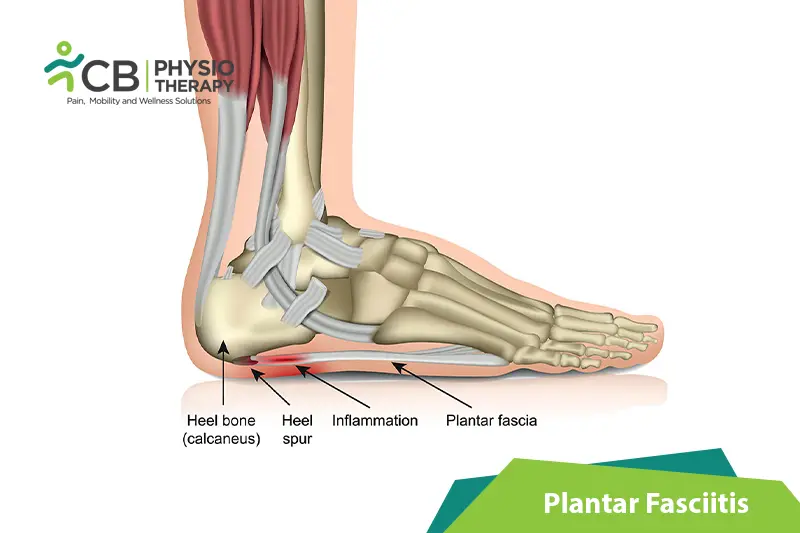
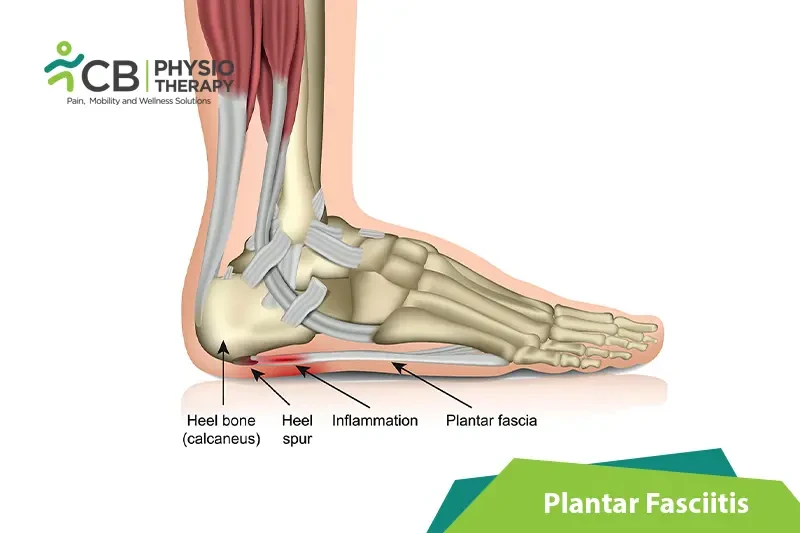
Plantar fasciitis is irritation of the plantar fascia — the thick band of tissue running from your heel along the arch of the foot — and it announces itself unmistakably: stabbing heel pain with the first steps out of bed, easing as you move, returning after rest or long standing. It is the most common cause of heel pain, and despite the name, it is less an inflammation than an overload: the fascia has been asked to do more than it could adapt to.
That overload framing matters, because it points to the fix. Rest alone rarely cures it — the fascia deconditions further — while progressive loading, calf and foot strengthening, and addressing what overloaded it in the first place resolve the great majority of cases without injections.
Causes & risk factors of Plantar Fasciitis
What commonly drives it — your assessment pins down which of these apply to you.
Training and standing load spikes
New running plans, sudden long walks, jobs on the feet — the classic overload triggers.
Tight calves and stiff ankles
A calf that won't lengthen makes the fascia absorb the difference with every step.
Foot mechanics
Very flat or very high arches both concentrate load on the fascia's heel attachment.
Footwear changes
Worn-out soles, sudden flats or barefoot phases shift load faster than tissue adapts.
Body weight and long standing
More hours and more kilograms through the same small attachment — arithmetic the fascia eventually protests.
When physiotherapy is the right call
If any of these sound like you, an assessment is the right first step.
- ✓ Stabbing heel pain with the first steps of the morning
- ✓ Heel pain after rest, long standing or at day's end
- ✓ A runner or walker whose mileage recently jumped
- ✓ A "heel spur" on X-ray and no plan beyond gel insoles
- ✓ Months of heel pain that rest and home remedies haven't fixed
Your treatment journey
Step by step — from your first assessment to a tracked recovery plan.
Foot-to-hip assessment
Fascia loading tests plus calf length, ankle mobility, foot strength and footwear review — the whole chain that loads the heel.
Your overload, identified
Which factor tipped your fascia over — training spike, calf stiffness, mechanics — and the plan that follows from it.
Load it right
Progressive fascia and calf loading — the best-evidenced treatment — with hands-on care and modalities to manage pain.
Return and prevent
Graded return to running or standing work, footwear guidance and a maintenance routine that keeps mornings quiet.
What recovery looks like
- ✓ Morning first steps without the wince
- ✓ A loading program that fixes, not just soothes
- ✓ Running and standing work resumed on a plan
- ✓ Injections avoided in the great majority of cases
- ✓ Footwear and routine guidance that prevents round two
When to see a doctor — red flags
How CB Physiotherapy treats Plantar Fasciitis
CB Physiotherapy treats plantar fasciitis as the load-capacity problem it is. Your assessment finds what overloaded the fascia; your plan then rebuilds its capacity with progressive loading — supported by manual therapy, taping and modalities like shockwave where indicated — instead of parking you on insoles and hope.
Progress runs on Fizo IQ™ with clear milestones: pain-free first steps, then standing tolerance, then your sport. Clinic or home sessions, whichever keeps the program consistent.
Exercises that help with Plantar Fasciitis
Make these exercises yours — a CB physio personalizes, doses and tracks your plan week by week.
Get my personalized planGeneral guidance only — stop if an exercise increases your pain, and check with your physio before starting a new routine.
Get Plantar Fasciitis treatment near you
Certified physiotherapists at a clinic near you or at home — same-day slots, assessment-led care.
Request received!
We'll call you within 10 minutes to confirm your home visit.We'll call you within 10 minutes to confirm your slot.
Chat with us on WhatsAppPlantar Fasciitis, answered
Plantar fasciitis is the inflammation of the ligament (bowstring) or plantar fascia, present underneath the sole attached at the heel, responsible for stretching.
Patients with plantar fasciitis suffer from pain and inflammation. The symptoms of plantar fasciitis include:
- Pain at the bottom of the heel, or around it.
- Pain aggravates while standing or sitting for a prolonged period or while and after exercising.
- Pain after intense activity such as running or jumping.
- Pain in the medial part of the foot.
- Pain is worse in the morning.
- Inflammation and stiffness.
- Swelling in the heel.
- Pain while walking barefoot or in shoes with minimal support.
Excessive pressure on the foot can cause a small tear in the tissue and too much pressure can damage the plantar fascia. Other causes may include:
- Age between 40 to 60 years.
- Repetitive activities doing exercises like running.
- Flat feet, high arches.
- Tight calf muscles.
- Obesity.
- Pregnancy.
- Arthritis.
- Standing for extended periods.
- Wearing high-heeled shoes.
- High longitudinal arches.
- Weakness of the ankle and foot stabilizers.
Pathology
Plantar fasciitis occurs when the plantar fascia becomes irritated. The plantar fascia supports the foot, providing a tension bridge as well as shock absorption, but it cannot take too much pressure, as a result, excessive tension creates fascia fibers to become inflamed.
Physical examination:
To check the tenderness, redness, swelling, and exact location of the pain in the foot. Examination for reflexes, muscle tone, sense of touch and sight, coordination, and balance are also done.
X-ray:
An X-ray can be used to check any bony lesions of the foot like subcalcaneal spur.
Magnetic resonance imaging (MRI):
Magnetic resonance imaging (MRI) is used for assessing plantar fascia thickening.
Medication: Nonsteroidal anti-inflammatory drugs (NSAIDs), Corticosteroids etc.
Note: Medication should be taken as prescribed by the doctor.
If the conservative treatments do not relieve the symptoms of plantar fasciitis, then the next option is surgery.
Rest:
Rest is first recommended for plantar fasciitis until the inflammation goes away.
Ice:
Ice packs or ice massage can be applied for the treatment of plantar fascia, it is done for 15 to 20 minutes.
Contrast Bath:
A contrast bath is used for the reduction of swelling and inflammation, given for 15 min.
Shock wave therapy:
Shock wave therapy is sound waves bombarded on the heel to stimulate healing within the ligament and relieve symptoms.
Ultrasound:
Ultrasound is given to decrease inflammation, pain and prevent adhesion formation.
Iontophoresis:
Iontophoresis is done in which medication is allowed to pass through the tissue with the help of an electric current.
Posterior-night splints:
Posterior-night splints help maintain ankle dorsiflexion and toe extension, thus providing constant stretch on the plantar fascia.
Foot orthoses:
Foot orthoses provide short-term functional benefits and also a reduction in pain.
Shoe modification:
A soft silicone heel pad can be used to protect the heel. Heel cushions are placed in the back of the shoe, which reduces the effect of the arch support. A viscoelastic heel cup can be placed over the medial calcaneal tubercle to reduce ground reactive forces.
Sole Modification:
A sponge rubber cushion with the center removed may be placed under the heel, or a hole may be drilled into the sole of the shoe at the site of inflammation and covered with sponge rubber.
Taping:
Taping can be done on the gastrocnemius and plantar fascia.
Strengthening exercises:
High-load strength training is an effective treatment for plantar fasciitis. It helps in the reduction of pain and improves function. Towel curls, towel pickup, calf raises (unilateral and bilateral), picking up marbles, and resisted thera-band exercises for the lower leg are examples of strengthening exercises.
Stretching exercises:
Stretching consists of crossing the affected leg over the unaffected leg and using the fingers across the base of the toes to apply pressure onto the toe extension until a stretch is felt along the plantar fascia. Achilles tendon stretching exercises can be performed in a standing position with the affected leg placed behind the unaffected leg with the toes pointed forward. The front knee is bent, keeping the back knee straight and heel on the ground. The stretching can be gentle, prolonged, slow, and static, performed five times by holding each stretch for 15-20 sec.
Manipulations and mobilization:
Manipulations and mobilization help in decreasing pain and stiffness, e.g ankle, subtalar and midfoot joint mobilizations.
Depending on the stage of injury patients should be educated that the symptoms may take a few weeks to improve injury. The patient should follow the advice and activity modification should be done to decrease the distance and duration of walking and instead of doing running or, jumping activities, swimming or cycling should be done to reduce the stress on the foot.
Don't let Plantar Fasciitis decide your day.
Get assessed today — find the cause, get a plan, and know when you'll feel better.