
Bunion Or Hallux Valgus — Symptoms, Causes & Treatment
Also known as Bunion Or Hallux Valgus. Causes, symptoms and how physiotherapy treats Bunion Or Hallux Valgus — without surgery or medicines.
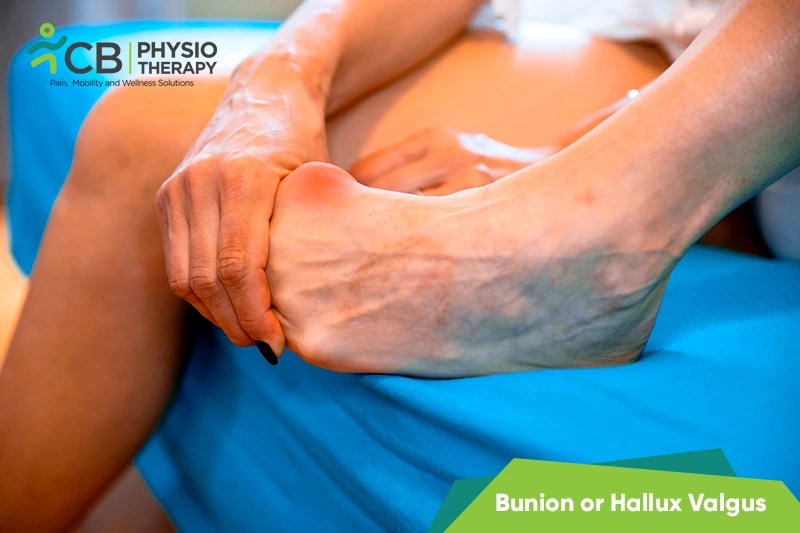
Understanding Bunion Or Hallux Valgus
Bunion Or Hallux Valgus affects people differently, and the right care starts with understanding how it affects you. Its day-to-day impact — on movement, strength, energy and confidence — is where physiotherapy does its work.
Our role in Bunion Or Hallux Valgus is practical: protect and rebuild movement and daily function with a plan set after a careful assessment, in coordination with your doctor wherever medical management is involved. No two plans look the same, because no two cases behave the same.
Causes & risk factors of Bunion Or Hallux Valgus
What commonly drives it — your assessment pins down which of these apply to you.
More than one possible driver
Bunion Or Hallux Valgus can have several contributing factors — a careful history and physical assessment separate them rather than guessing.
Reduced movement and deconditioning
Whatever the trigger, less movement quickly adds weakness and stiffness of its own — usually the most reversible part.
Daily-life load and habits
Work posture, repeated tasks, sleep and stress all shape how a condition behaves day to day.
General health and history
Overall health, previous injuries and existing conditions influence both the picture and the plan — the assessment takes all of it in.
When physiotherapy is the right call
If any of these sound like you, an assessment is the right first step.
- ✓ A new diagnosis of Bunion Or Hallux Valgus and you want a clear rehabilitation start point
- ✓ Daily tasks, walking or stairs are getting harder than they used to be
- ✓ Strength, stamina or balance has visibly dropped
- ✓ You want a structured clinic + home program with measurable milestones
- ✓ Family members need guidance to support you safely
Your treatment journey
Step by step — from your first assessment to a tracked recovery plan.
A detailed first assessment
History, movement testing and strength checks — a focused session to find what is actually driving your Bunion Or Hallux Valgus.
A diagnosis you understand
Your physiotherapist explains the findings in plain language — what is affected, why it happened and what that means for you.
Active, tracked treatment
Hands-on therapy, the right modalities and graded exercise — progressed session by session and tracked on Fizo IQ™.
Prevention, built in
The final phase rebuilds strength and habits so the same problem does not come back — with a home plan you keep.
What recovery looks like
- ✓ More independence in daily tasks
- ✓ Better strength, balance and stamina
- ✓ Fewer setbacks, with red flags monitored
- ✓ A program your family understands and can support
- ✓ Progress measured milestone by milestone on Fizo IQ™
When to see a doctor — red flags
How CB Physiotherapy treats Bunion Or Hallux Valgus
At CB Physiotherapy, treatment for Bunion Or Hallux Valgus starts with finding its cause: a structured, physiotherapist-led assessment before anything is prescribed. Your plan then combines hands-on therapy, targeted exercise and the right modalities — delivered at a clinic near you or at home, and coordinated with your doctor where medical care is involved.
Every case runs on Fizo IQ™, our recovery engine: diagnosis, root cause, plan, milestones and goals, tracked session by session. You always know where you are in your recovery — and what comes next.
Exercises that help with Bunion Or Hallux Valgus
Make these exercises yours — a CB physio personalizes, doses and tracks your plan week by week.
Get my personalized planGeneral guidance only — stop if an exercise increases your pain, and check with your physio before starting a new routine.
Get Bunion Or Hallux Valgus treatment near you
Certified physiotherapists at a clinic near you or at home — same-day slots, assessment-led care.
Request received!
We'll call you within 10 minutes to confirm your home visit.We'll call you within 10 minutes to confirm your slot.
Chat with us on WhatsAppBunion Or Hallux Valgus, answered
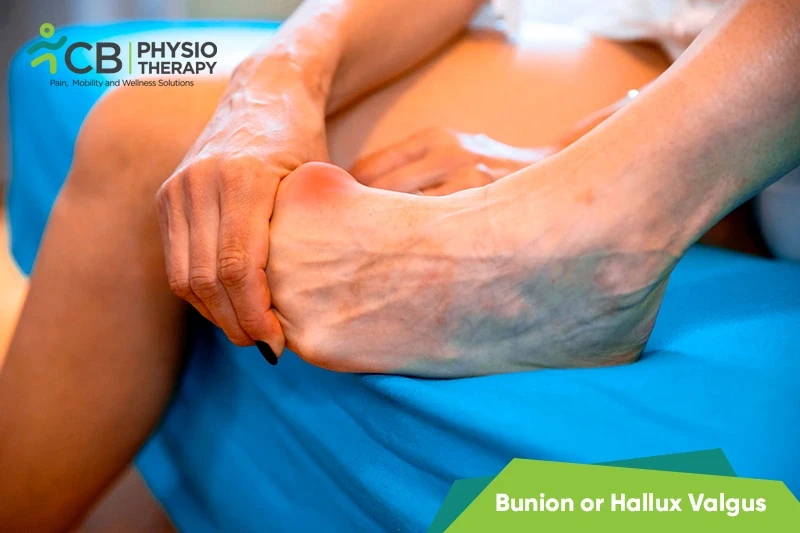
A bunion or hallux valgus is a large bump on the side of the foot that develops at the base of the big toe. The bunion may become inflamed and swollen, causing foot pain.
A bunion can develop in anyone, it can occur mostly in women and older adults. Several reasons may cause bunions, including:
- Heredity.
- How the foot is shaped.
- joint laxity.
- Flat arches.
- Osteoarthritis.
- Tight footwear.
The symptoms depend and vary with each individual. Not all bunions cause symptoms, however, people with bunions report mild to severe symptoms, these include:
- Pain and swelling in the big toe joint.
- Pain worsens with standing and walking.
- Redness.
- Gradual enlargement of the bump on the foot.
- Pain while wearing shoes.
- Changes in a walking pattern.
- Increased difficulty in walking.
- Changes in balance.
- Crossing of the lesser toes and big toe.
PATHOLOGY:
Over time, the bunion joint may become painful, enlarged, and stiff and this causes problems like pain, and even difficulty walking. For example, inappropriate and tight footwear can irritate a bunion by rubbing on the tissue at the joint, and this leads to more swelling, inflammation, and pain.
Physical examination:
The examiner asks for the medical history and symptoms. Observes the walking and weight-bearing pattern. The examiner also checks the foot and the big toe to observe any swelling, deformity, or tenderness. The strength of the foot and big toe, are measured to assess the flexibility and range of motion.
X-ray:
An X-ray is a diagnostic procedure that helps to identify the cause and severity of a bunion.
Medication: Acetaminophen, ibuprofen or naproxen sodium, cortisone injections, etc.
NOTE : Medication should not be taken without the doctor's prescription.
Surgery:
Surgery can be done as a single procedure or in combination. It might involve:
- Removal of the swollen tissue.
- Straightening of big toe by removing a part of the bone.
- Realigning one or more bones in the forefoot to correct the abnormal angle in the big toe joint.
- Joining the bones of the affected joint.
Cryotherapy or cold therapy reduces soreness and inflammation.
Thermotherapy or heat therapy helps to manage any inflammation or swelling and pain.
Taping:
Specialized taping of the big toe is done to improve the alignment and reduce pain. The physiotherapist recommends the best footwear for the condition.
Shoe inserts:
Padded shoe inserts help to distribute pressure evenly while moving the feet, reduce symptoms, and prevent bunions from getting worse.
Orthotics and Devices:
The physiotherapist recommends foot orthotics, the use of splints or assistive devices, depending on the condition, and trains the patient to use them properly. These devices may include:
- Splints and toe separators are used to reduce pain and pressure on the big toe.
- Custom arch supports to help keep the foot and ankle in a proper position during walking.
- Assistive devices like cane, walker, or crutches can reduce pain and improve walking ability as they help to keep the foot and ankle in the correct position when walking.
Manual therapy is hands-on to help improve the position of the big toe. To reduce joint stiffness gently move the big toe and ankle and any stiffness of the surrounding tissues, and increase the big toe's bending range of motion. Soft tissue and joint mobilizations help to gently move the muscles and joints of the foot to improve movement, particularly in the joint of the big toe.
Massage:
Deep massage increases blood circulation and removes toxins from the body.
Exercise:
Range-of-motion, stretching, and strengthening exercises are recommended to improve the alignment of the big toe when standing and improve walking patterns. An individualized exercise program is designed based on your specific needs.
Range of motion exercises:
Range of motion exercises emphasizes on walking and learning how to push off the big toe properly to reduce pain, and swelling and restore better bending of the big toe.
Strengthening exercises help to strengthen the big toe and ankle, and movement to restore normal walking ability. Targeted strengthening of the muscles of the big toe, ankle, and foot and strengthening of the legs and hips is included to address any muscle weaknesses or imbalances contributing to bunion development and pain.
Stretching Exercises:
Stretching exercises help to restore normal motion in the foot, toes, and ankle.
Balance Training:
Balance training helps reduce the risk of falling and improves balance during movement.
The patient is encouraged to perform a home-exercise program even after the physiotherapy sessions are completed, to help return to the job, leisure, or sports activities. External factors that cause pain, e.g., minimizing tight footwear that may aggravate the bunion(s). Shoes that are roomy and comfortable should be worn to provide plenty of space for the toes.
Don't let Bunion Or Hallux Valgus decide your day.
Get assessed today — find the cause, get a plan, and know when you'll feel better.