Verified
Dr. Sidharth Sharma
Physiotherapist · BPT
See clinics, physiotherapists and prices for your city.
Whether it's a dull ache, a sharp catch, or pain that keeps coming back — we find the root cause of your Bunion Or Hallux Valgus and fix it, at a clinic near you or at home.
Precision Care, Proven RecoveryWe'll call you within 10 minutes to confirm your home visit.We'll call you within 10 minutes to confirm your slot.
Chat with us on WhatsAppCommon triggers include muscle strain, joint stiffness, poor posture and long desk hours. If two or more of these fit, a physiotherapy assessment can identify exactly what's driving it.
Most bunion or hallux valgus improves without surgery or long-term medication — the key is finding the cause first.
Bunion Or Hallux Valgus rarely signals something serious, but see a doctor immediately if it comes with:
Our physios screen for these red flags at every first assessment and refer you to the right doctor if needed.
We start with an AI-based assessment to find the root cause — then follow a clear, four-phase plan.
Hands-on therapy and advanced modalities to calm pain and inflammation fast.
Mobility work and posture correction so everyday movement feels normal again.
Targeted strengthening that protects you — in-clinic or in our physio gym.
Back to work, sport and life — with a home program that prevents relapse.
One patient record, stage by stage: your physiotherapist pinpoints the diagnosis, finds the root cause and builds your in-clinic plan — while Fizo IQ™, our AI decision-support engine, tracks every milestone until your goals are met and you leave with an exercise plan to stay active.
Make these exercises yours — a CB physio personalizes, doses and tracks your plan week by week.
Get my personalized planGeneral guidance only — stop if an exercise increases your pain, and check with your physio before starting a new routine.
Every CB physio is a qualified BPT/MPT clinician. You don't need to choose one — our lead physiotherapist reviews your case and assigns the specialist best suited to treat it.
Verified
Physiotherapist · BPT
Verified
Physiotherapist
Verified
Physiotherapist
Verified
Physiotherapist
Verified
Physiotherapist · BPT
Verified
Physiotherapist
Verified
Physiotherapist · BPT
Rated 5.0 / 5 across 18 verified patient reviews in Faridabad.
“Dr Rahul Kumar is very experienced. I was diagnosed with disc issues and initially I was not even able to move. His treatment helped me recover in a short duration of time.”
“Went for rehab post an elbow dislocation. The place has good facilities and the therapists there are really helpful Dr Rahul Kumar was overseeing me, she was extremely patient and explained things well. The variety of new exercises done helped with my recovery and made the sessions more interesting.”
“Excellent physiotherapist”
“Dr. Sidharth extensive knowledge of physiotherapy was evident. He conducted a thorough assessment of my condition, taking the time to understand my medical history and concerns. His ability to explain the underlying causes of my symptoms in a clear and concise manner helped me grasp the importance of the prescribed treatment plan. he empowered me to actively participate in my own recovery.”
“Much appreciated work in physio”
“Quality treatment!! I will give u 5-stars⭐⭐⭐⭐⭐ for your work...”
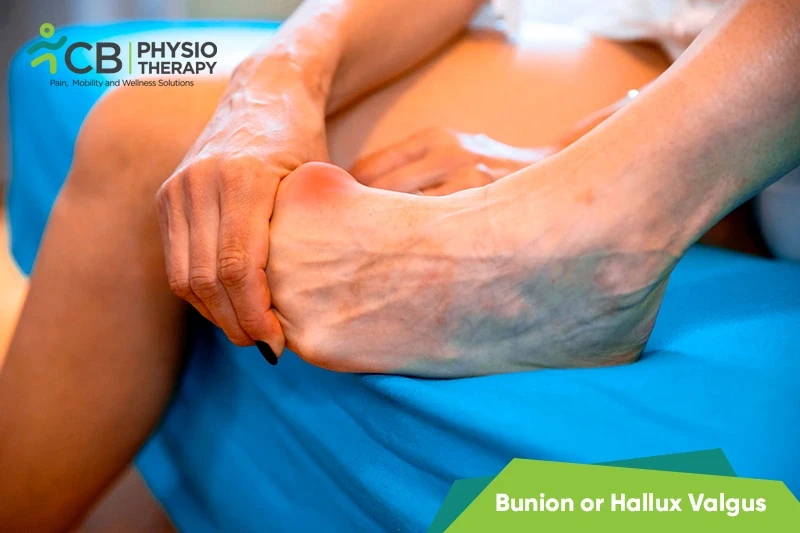
A bunion or hallux valgus is a large bump on the side of the foot that develops at the base of the big toe. The bunion may become inflamed and swollen, causing foot pain.
A bunion can develop in anyone, it can occur mostly in women and older adults. Several reasons may cause bunions, including:
The symptoms depend and vary with each individual. Not all bunions cause symptoms, however, people with bunions report mild to severe symptoms, these include:
PATHOLOGY:
Over time, the bunion joint may become painful, enlarged, and stiff and this causes problems like pain, and even difficulty walking. For example, inappropriate and tight footwear can irritate a bunion by rubbing on the tissue at the joint, and this leads to more swelling, inflammation, and pain.
Physical examination:
The examiner asks for the medical history and symptoms. Observes the walking and weight-bearing pattern. The examiner also checks the foot and the big toe to observe any swelling, deformity, or tenderness. The strength of the foot and big toe, are measured to assess the flexibility and range of motion.
X-ray:
An X-ray is a diagnostic procedure that helps to identify the cause and severity of a bunion.
Medication: Acetaminophen, ibuprofen or naproxen sodium, cortisone injections, etc.
NOTE : Medication should not be taken without the doctor's prescription.
Surgery:
Surgery can be done as a single procedure or in combination. It might involve:
Cryotherapy or cold therapy reduces soreness and inflammation.
Thermotherapy or heat therapy helps to manage any inflammation or swelling and pain.
Taping:
Specialized taping of the big toe is done to improve the alignment and reduce pain. The physiotherapist recommends the best footwear for the condition.
Shoe inserts:
Padded shoe inserts help to distribute pressure evenly while moving the feet, reduce symptoms, and prevent bunions from getting worse.
Orthotics and Devices:
The physiotherapist recommends foot orthotics, the use of splints or assistive devices, depending on the condition, and trains the patient to use them properly. These devices may include:
Manual therapy is hands-on to help improve the position of the big toe. To reduce joint stiffness gently move the big toe and ankle and any stiffness of the surrounding tissues, and increase the big toe's bending range of motion. Soft tissue and joint mobilizations help to gently move the muscles and joints of the foot to improve movement, particularly in the joint of the big toe.
Massage:
Deep massage increases blood circulation and removes toxins from the body.
Exercise:
Range-of-motion, stretching, and strengthening exercises are recommended to improve the alignment of the big toe when standing and improve walking patterns. An individualized exercise program is designed based on your specific needs.
Range of motion exercises:
Range of motion exercises emphasizes on walking and learning how to push off the big toe properly to reduce pain, and swelling and restore better bending of the big toe.
Strengthening exercises help to strengthen the big toe and ankle, and movement to restore normal walking ability. Targeted strengthening of the muscles of the big toe, ankle, and foot and strengthening of the legs and hips is included to address any muscle weaknesses or imbalances contributing to bunion development and pain.
Stretching Exercises:
Stretching exercises help to restore normal motion in the foot, toes, and ankle.
Balance Training:
Balance training helps reduce the risk of falling and improves balance during movement.

The patient is encouraged to perform a home-exercise program even after the physiotherapy sessions are completed, to help return to the job, leisure, or sports activities. External factors that cause pain, e.g., minimizing tight footwear that may aggravate the bunion(s). Shoes that are roomy and comfortable should be worn to provide plenty of space for the toes.
Get assessed today — find the cause, get a plan, and know when you'll feel better.