
Rotator Cuff Injury — Symptoms, Causes & Treatment
Also known as Rotator Cuff Injury. Causes, symptoms and how physiotherapy treats Rotator Cuff Injury — without surgery or medicines.
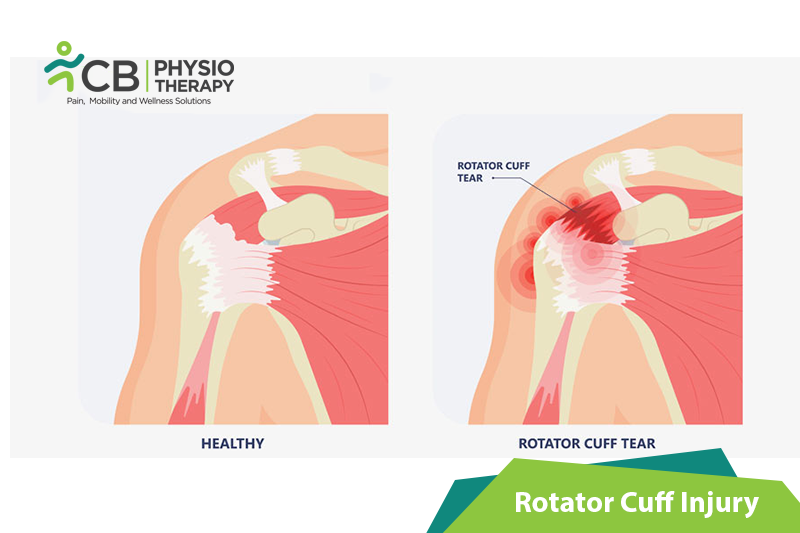
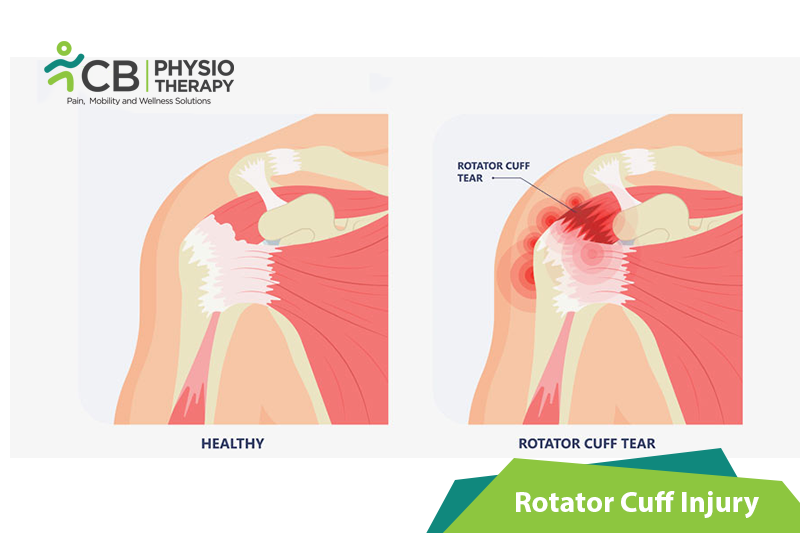
Understanding Rotator Cuff Injury
Rotator Cuff Injury affects people differently, and the right care starts with understanding how it affects you. Its day-to-day impact — on movement, strength, energy and confidence — is where physiotherapy does its work.
Our role in Rotator Cuff Injury is practical: protect and rebuild movement and daily function with a plan set after a careful assessment, in coordination with your doctor wherever medical management is involved. No two plans look the same, because no two cases behave the same.
Causes & risk factors of Rotator Cuff Injury
What commonly drives it — your assessment pins down which of these apply to you.
More than one possible driver
Rotator Cuff Injury can have several contributing factors — a careful history and physical assessment separate them rather than guessing.
Reduced movement and deconditioning
Whatever the trigger, less movement quickly adds weakness and stiffness of its own — usually the most reversible part.
Daily-life load and habits
Work posture, repeated tasks, sleep and stress all shape how a condition behaves day to day.
General health and history
Overall health, previous injuries and existing conditions influence both the picture and the plan — the assessment takes all of it in.
When physiotherapy is the right call
If any of these sound like you, an assessment is the right first step.
- ✓ A new diagnosis of Rotator Cuff Injury and you want a clear rehabilitation start point
- ✓ Daily tasks, walking or stairs are getting harder than they used to be
- ✓ Strength, stamina or balance has visibly dropped
- ✓ You want a structured clinic + home program with measurable milestones
- ✓ Family members need guidance to support you safely
Your treatment journey
Step by step — from your first assessment to a tracked recovery plan.
A detailed first assessment
History, movement testing and strength checks — a focused session to find what is actually driving your Rotator Cuff Injury.
A diagnosis you understand
Your physiotherapist explains the findings in plain language — what is affected, why it happened and what that means for you.
Active, tracked treatment
Hands-on therapy, the right modalities and graded exercise — progressed session by session and tracked on Fizo IQ™.
Prevention, built in
The final phase rebuilds strength and habits so the same problem does not come back — with a home plan you keep.
What recovery looks like
- ✓ More independence in daily tasks
- ✓ Better strength, balance and stamina
- ✓ Fewer setbacks, with red flags monitored
- ✓ A program your family understands and can support
- ✓ Progress measured milestone by milestone on Fizo IQ™
When to see a doctor — red flags
How CB Physiotherapy treats Rotator Cuff Injury
We treat Rotator Cuff Injury the way we treat everything: assessment first, plan second, treatment third. It sounds obvious, but it is the difference between sessions that fill a slot and sessions that move you towards a goal. Care is delivered by certified physiotherapists at a clinic near you or at home.
Your whole journey is tracked on Fizo IQ™ — the diagnosis, the root cause, the milestones and the goals — so progress is measured, not guessed, and the plan adapts the moment your response calls for it.
Exercises that help with Rotator Cuff Injury
Make these exercises yours — a CB physio personalizes, doses and tracks your plan week by week.
Get my personalized planGeneral guidance only — stop if an exercise increases your pain, and check with your physio before starting a new routine.
Get Rotator Cuff Injury treatment near you
Certified physiotherapists at a clinic near you or at home — same-day slots, assessment-led care.
Request received!
We'll call you within 10 minutes to confirm your home visit.We'll call you within 10 minutes to confirm your slot.
Chat with us on WhatsAppRotator Cuff Injury, answered
A rotator cuff is a group of muscles and tendons that surround the shoulder joint, and keep the head of the upper arm bone firmly within the shallow socket of the shoulder. A rotator cuff injury can cause a dull pain in the shoulder, which often worsens when the patient sleeps on the involved side. Rotator cuff tear is the leading cause of shoulder pain and shoulder-related disability.
The symptoms of rotator cuff injury depend upon the severity of the injury. Individuals with rotator cuff injury can suffer from:
- Severe pain at the time of injury.
- Pain at night.
- Pain with overhead activities.
- Shoulder stiffness.
- Positive painful arc sign.
- Weakness of involved muscle.
Rotator cuff tears can be caused due to many reasons, few of them are:
- Age-related muscle deterioration.
- Degenerative changes.
- Inflammation of the joint capsule.
- Repetitive micro-trauma.
- Traumatic injuries.
- Fall on an outstretched hand.
- Unexpected force when pushing or pulling.
- Atraumatic injuries.
- Excessive repetitive motions.
- Poor vascularity.
- Subacromial and internal impingement.
- Tensile overload.
Pathology:
Rotator cuff injury is the term used to describe the damage of tendons due to aging, degeneration, or excessive pressure, irritating the adjacent bursa known as subdeltoid or subacromial bursitis or gradual detachment of the bone tendons from the head of the humerus.
Physical examination:
The physiotherapist checks for the yellow flags for shoulder injuries like depression fear avoidance beliefs. pain syndromes, psychological illness. The physical examination includes inspection and palpation, range of motion testing, strength testing, and special tests. Active and passive range of movements such as forward flexion, abduction, and internal/external rotation at 0° and 90° are checked. Rotator cuff injuries can lead to loss of active range of motion although the passive range of motion is often preserved. Strength can be tested using a portable hand-held dynamometer, as rotator cuff tears are often present with shoulder weakness.
Tests for Subscapularis:
- Lift-off test and Passive Lift Off Test.
- Belly Press.
- Belly-off sign.
- Bear Hug Test.
Tests for Supraspinatus and Infraspinatus:
- External rotation lag sign: 0° and 90°.
- Jobe's test.
- Drop arm test.
- Neer test.
Test for Teres minor:
Hornblower's sign.
X-rays:
X-rays are used to exclude sclerosis and osteophyte formation on the acromion. Although
X-rays can't show rotator cuff tear, they can visualize bone spurs or other causes of pain like arthritis.
Magnetic resonance imaging (MRI):
Magnetic resonance imaging (MRI) uses radio waves and a strong magnet, to display all structures of the shoulder in detail.
Ultrasound:
Ultrasound uses sound waves to produce images of structures within the body, particularly soft tissues like muscles and tendons. It allows a provider to assess the structures of the shoulder during movement. It also allows comparison between the affected shoulder and an unaffected shoulder.
Medication: Nonsteroidal anti-inflammatory drugs (NSAIDs), steroid injections, etc.
NOTE : Medication should not be taken without the doctor's prescription.
Surgery:
Many different types of surgeries are available for rotator cuff injuries, required only when conservative treatment fails. These surgeries include:
- Arthroscopic tendon repair.
- Open tendon repair.
- Tendon transfer.
- Shoulder replacement.
Cold therapy or ice therapy are used to decrease pain, and swelling and also help to relieve soreness.
Heat therapy or thermotherapy helps to increase circulation and release the toxins from the affected area.
Ultrasound therapy is used near the inflamed area of the rotator cuff, to decrease pain and inflammation.
Transcutaneous electrical stimulation (TENS):
Transcutaneous electrical stimulation (TENS) helps reduce pain and muscle tension in the scapular and shoulder areas to promote mobility.
Iontophoresis:
Iontophoresis is a procedure used to drive medication to the targeted tissue. It provides pain relief with modalities and helps to maintain motion.
Sling or immobilisation :
A sling may be recommended for short-term comfort, but if used for a longer duration might cause shoulder stiffness. The elbow, forearm, and wrist should be used to strengthen them, especially during long immobilization.
Kinesio taping for pain-free ROM and joint stability is recommended.
Passive and active range of motion:
A gentle, passive range-of-motion program is recommended to prevent stiffness and maintain range of motion during the resting period. Exercises, for the anterior, inferior, and posterior shoulder, should be part of the rehab program.
Codman exercises:
These exercises permit the patient to abduct the arm by gravity, the supraspinatus remains relaxed and does not require a fulcrum.
Strengthening Exercises:
After a painless range of motion is achieved, the patient is recommended a gentle strengthening program. Strengthening exercises gradually improve strength in the shoulder girdle by using manual resistance, elastic bands of six different colors and strengths, weights, dumbbells, or a pulley set. The program is customized according to the needs of the individual.
Mobilization:
Mobilization of the scapulothoracic joint and posterior capsular mobilization are applied to improve the shoulder range of motion.
Soft Tissue Massage:
Soft tissue massage is a hands-on technique used for muscles and ligaments, improving the flexibility in these structures. This can help open up the posture and decrease any pinching or irritation on the rotator cuff muscle.
Stretching Exercises:
Stretching exercises are often indicated and applied to decrease shoulder stiffness and improve shoulder function. The physiotherapist usually focuses on improving the flexibility in the chest muscles that help move the shoulder.
Plyometric training:
Plyometric training includes catching & throwing a weighted ball. Agility training includes deriving energy from the lower extremities, transferring it through the pelvis, and releasing it through the upper extremity.
Patients with a sedentary lifestyle can suffer from rotator cuff injury as it can lead to deconditioning of the upper body and arms strength. Stressing a weakened rotator cuff can eventually lead to a rotator cuff injury. Therefore, one should focus on strengthening training and prevent the overloading of muscles.
Don't let Rotator Cuff Injury decide your day.
Get assessed today — find the cause, get a plan, and know when you'll feel better.