
Shoulder Dislocation — Symptoms, Causes & Treatment
Also known as Shoulder Dislocation. Causes, symptoms and how physiotherapy treats Shoulder Dislocation — without surgery or medicines.
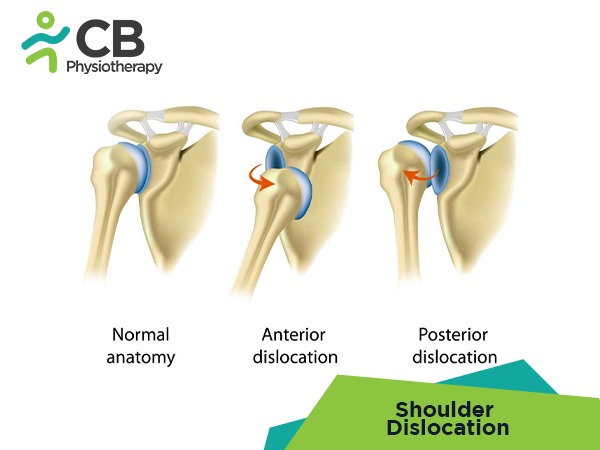
Understanding Shoulder Dislocation
Shoulder Dislocation is one of the conditions our physiotherapists treat most often — and one of the most treatable when the actual driver is found. Two people with Shoulder Dislocation rarely share the same underlying cause, which is why one-size-fits-all treatment so often disappoints.
What matters clinically is the pattern: how it started, what makes it better or worse, and how it behaves through the day. That pattern — mapped in a structured assessment — tells us which structures are involved and which treatment will actually move the needle.
Causes & risk factors of Shoulder Dislocation
What commonly drives it — your assessment pins down which of these apply to you.
Sudden spikes in activity
A new sport, a new gym program, a long trek — tissue adapts to gradual change and protests when change is sudden.
Muscle strain and overload
A sudden lift, an awkward movement or simply more load than the tissues were prepared for — the most common trigger.
Posture and long static hours
Desks, driving and screens keep the same structures loaded for hours at a stretch — comfortable at first, aching later.
Joint stiffness and age-related change
Joints that move less start to hurt more; age-related wear is normal, but painful stiffness is not something to simply accept.
Weakness and deconditioning
When supporting muscles lose strength, load shifts to structures that were never meant to carry it.
When physiotherapy is the right call
If any of these sound like you, an assessment is the right first step.
- ✓ You want to avoid long-term painkillers — or surgery has been mentioned
- ✓ You've been diagnosed with Shoulder Dislocation and told to "rest and see"
- ✓ Movement feels restricted, weak or guarded compared to before
- ✓ You want to return to sport or work with a plan, not by trial and error
- ✓ Shoulder Dislocation that keeps returning or hasn't settled within two weeks
Your treatment journey
Step by step — from your first assessment to a tracked recovery plan.
A detailed first assessment
History, movement testing and strength checks — a focused session to find what is actually driving your Shoulder Dislocation.
A diagnosis you understand
Your physiotherapist explains the findings in plain language — what is affected, why it happened and what that means for you.
Active, tracked treatment
Hands-on therapy, the right modalities and graded exercise — progressed session by session and tracked on Fizo IQ™.
Prevention, built in
The final phase rebuilds strength and habits so the same problem does not come back — with a home plan you keep.
What recovery looks like
- ✓ Strength and movement rebuilt, not just pain reduced
- ✓ Lower chance of recurrence, with a prevention plan
- ✓ Care without long-term medicines — at a clinic near you or at home
- ✓ Relief that comes from treating the cause, not masking it
- ✓ A clear diagnosis and a timeline you can plan around
When to see a doctor — red flags
How CB Physiotherapy treats Shoulder Dislocation
We treat Shoulder Dislocation the way we treat everything: assessment first, plan second, treatment third. It sounds obvious, but it is the difference between sessions that fill a slot and sessions that move you towards a goal. Care is delivered by certified physiotherapists at a clinic near you or at home.
Your whole journey is tracked on Fizo IQ™ — the diagnosis, the root cause, the milestones and the goals — so progress is measured, not guessed, and the plan adapts the moment your response calls for it.
Exercises that help with Shoulder Dislocation
 Top 5 Exercises For Shoulder Dislocation
Steps & precautions →
Top 5 Exercises For Shoulder Dislocation
Steps & precautions →
 Top 5 Exercises For Frozen Shoulder
Steps & precautions →
Top 5 Exercises For Frozen Shoulder
Steps & precautions →
Make these exercises yours — a CB physio personalizes, doses and tracks your plan week by week.
Get my personalized planGeneral guidance only — stop if an exercise increases your pain, and check with your physio before starting a new routine.
Get Shoulder Dislocation treatment near you
Certified physiotherapists at a clinic near you or at home — same-day slots, assessment-led care.
Request received!
We'll call you within 10 minutes to confirm your home visit.We'll call you within 10 minutes to confirm your slot.
Chat with us on WhatsAppShoulder Dislocation, answered
Shoulder dislocation is an injury in which the upper part of the arm bone (humerus) comes out of the cup-shaped socket (glenoid). The shoulder joint is a ball and socket joint, with humerus bone fitted in a groove in the shoulder blade. It is the most mobile joint in the body and can move in several directions. Even though it is supported by muscles, tendons, and ligaments. Even though it is supported by muscles, tendons and ligaments yet mobility can leave the shoulder unstable. The shoulder is the most likely to become dislocated among the joints in the body. Patients regain full shoulder function within a few weeks. If the joint is dislocated, it may become unstable and prone to repeated dislocations.
Types of shoulder dislocations
· Partial dislocation or subluxation
Partial dislocation means the head of the upper arm bone is partially out of the socket, causing pain and instability in the shoulder.
· Complete dislocation
Complete dislocation means the head of the upper arm bone is completely out of the socket. Both partial and complete dislocations causing shoulder pain and instability.
Sometimes a dislocated shoulder may also tear the shoulder ligaments or tendons or even damage nerves. Symptoms of a dislocated shoulder include:
Visible deformity
Pain
Muscle spasm
Swelling
Redness
Bruising
Numbness or weakness in the arm, hand, or fingers
Difficulty in moving the arm.
A shoulder dislocation is usually caused due to a fall or blows to the shoulder. This can happen during sports activities.
- The group that tends to be physically active, is more prone to shoulder dislocation.
- Males in their teens than younger children or 20s are at the highest risk of shoulder dislocation.
- Due to a sudden blow to the shoulder, that might pull the bones out of place.
- The extreme rotation of the shoulder joint can cause partial dislocation, in which the upper arm bone is partially in and partially out of your shoulder socket.
- Due to contact sports, such as hockey and football, and sports that may involve falls, such as volleyball, gymnastics, and downhill skiing.
- Due to a hard blow to the shoulder during a motor vehicle accident.
- Due to fall that may dislocate the shoulder, such as tripping on a loose rug or fall from a ladder.
Pathology
Among shoulder dislocations, anterior dislocation is most common. It can occur due to a blow resulting in an abducted, externally rotated, and extended extremity. It may also occur due to a fall on an outstretched arm.
X-rays:
X-ray shows the image of the dislocation or other damage to the shoulder joint. It also shows the broken bones or other damage to the shoulder joint.
Magnetic resonance imaging (MRI):
MRI helps to evaluate Joint abnormalities caused by traumatic or repetitive injuries.
Computerized tomography (CT) scans:
CT scan of the shoulder joint is a method to check the amount of bone loss on the head of the humerus or the glenoid side.
Medication
Ibuprofen, naproxen or acetaminophen, muscle relaxers.
NOTE: Do not take the medication without the doctor’s prescription.
Once the shoulder joint is dislocated, the joint is more susceptible to future shoulder dislocations. To avoid recurrence, a physiotherapy regime for strengthening and stability exercises should be followed. If shoulder dislocation becomes a recurrent problem, a brace can be helpful. If physiotherapy therapy and bracing fail, surgery may be needed to repair or tighten the torn or stretched ligaments that help to hold the joint in place.
Techniques used by physiotherapist
- Immobilization
Place the shoulder in the sling or splint the shoulder joint in its proper position. Plenty of early rest is needed Don't try to move the shoulder or force it back into place, it can cause damage to the shoulder joint and the surrounding ligaments, muscles, blood vessels, or nerves.
The physiotherapist applies ice to the shoulder to reduce pain and swelling by controlling bleeding and fluids retention in and around the shoulder joint.
· Thermotherapy
Thermotherapy is used for relaxation of the muscles before performing the exercise program.
· TENS
Transcutaneous electrical nerve stimulation provides pain relief, which may be caused after performing stretching exercises.
Ultrasound is very effective in breaking adhesions.
· Range of motion and strengthening exercises
Range of motion and strengthening exercises for muscles, prevent the dislocation of the shoulder again in the future. Physiotherapy begins with gentle muscle toning exercises. Later, exercises with weights can be added.
Post-surgery physiotherapy
Physiotherapy after shoulder surgery is essential to restore the shoulder’s function.
- Phase I (maximal protection).
After shoulder stabilization surgery, the arm is placed in a sling, usually for 4 to 6 weeks.
To control pain and swelling, icing, and proper positioning are done. This phase lasts for the first few weeks after your surgery, when your shoulder is at the after immobilization gentle range-of-motion and strengthening exercises using only the weight of the arm is started. After immobilization gentle range-of-motion and strengthening exercises
Cryotherapy, TENS, Ultrasound therapy, and Gentle massage are given to help decrease pain, swelling, and stiffness.
- Phase II (moderate protection).
After almost 1 month following surgery, the use of your sling is reduced, and range-of-motion and strengthening exercises will progressively become more challenging. Extra resistance for strengthening exercises is slowly increased.
Strengthening of the core muscles of the shoulder and trunk muscles is started which provides additional support and stability to the shoulder. Joint mobilization techniques are used to help restore the shoulder's range of motion. Also light cardiovascular activities, such as exercising on a stationary bike or walking on a treadmill.
- Phase III (return to activity).
This phase begins after 3 months of surgery. The therapist now focuses on restoring strength and use of the arm for daily activities, except for activities such as sports or any other physically strenuous work-related tasks. Modified weight-lifting or gym-based programs are in cooperated to increase the difficulty of exercises.
- Phase IV (return to occupation/sport).
This phase begins about 4 months after surgery, the therapist helps to return to work, sports, and other higher-level activities. The therapist trains the patient in activity-specific exercises to meet the needs. The exercises include lifting heavy objects, for certain athletes, the task may include catching and throwing. A shoulder brace might be recommended to allow gradual and safe return to regular activity level without re-injury.
Don't let Shoulder Dislocation decide your day.
Get assessed today — find the cause, get a plan, and know when you'll feel better.