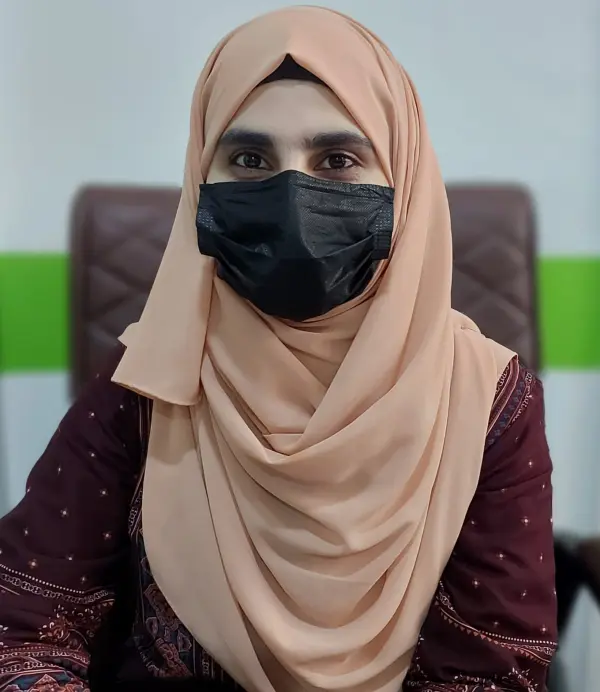
Dr. Shafiya
Physiotherapist
See clinics, physiotherapists and prices for your city.
Certified Kinesio Taping / Taping Therapy experts in Jammu And Kashmir — at a clinic near you or at home, with a recovery plan matched to your case.
Precision Care, Proven RecoveryWe'll call you within 10 minutes to confirm your home visit.We'll call you within 10 minutes to confirm your slot.
Chat with us on WhatsAppOne patient record, stage by stage: your physiotherapist pinpoints the diagnosis, finds the root cause and builds your in-clinic plan — while Fizo IQ™, our AI decision-support engine, tracks every milestone until your goals are met and you leave with an exercise plan to stay active.
Every plan combines hands-on care, advanced modalities and guided exercise — matched to your assessment.
Joint mobilisation, soft-tissue release and targeted manual techniques.
TECAR & laser therapy, cryo-compression, dry needling and therapeutic taping.
Non-surgical, computer-controlled decompression for disc and nerve-root pressure.
Stability and strengthening programs matched to your assessment.
Desk, posture and lifting corrections that stop pain from coming back.
Simple daily exercises with adherence tracking through Activ PT.
Pick the condition that sounds like yours, or type it below — we'll match you to the right specialist and book you in.
Every CB physio is a qualified BPT/MPT clinician. You don't need to choose one — our lead physiotherapist reviews your case and assigns the specialist best suited to treat it.
Physiotherapist
Verified
Physiotherapist
Kinesio Taping / Taping Therapy pricing depends on your assessment — we publish our session charges and confirm your exact quote before you commit. No hidden fees, ever.
Rated 5.0 / 5 across 23 verified patient reviews in Jammu And Kashmir.
“Received treatment at Cb Anantnag clinic where Dr. Athar treated me she was highly skilled and professional. Her treatment approach is effective, and I noticed significant improvement in my knee pain within a short time. I highly recommend her for quality physiotherapy care. in Anantnag”
“Excellent physiotherapist, Dr. Athar! Her expertise and customized care assisted me in recovering swiftly. from back issue, I strongly recommend her..”
“I had an excellent experience with Dr. Shafiya. My back pain recovery was made easier and less stressful thanks to her knowledge and kind attitude. Thank you for your incredible care. Doctor Shafiya.”
“Dr. Shafiya is an excellent physiotherapist! Her expertise, concern, and dedication enabled me to heal fast and painlessly. I definitely recommend her to anyone looking for efficient physiotherapy treatment.”
“Dr. Athar un Nisa is a wonderful physical therapist who honestly cares about her patients. She devised a treatment regimen that helped me restore mobility and strength following my injury. Her treatment sessions were quite successful and motivational. I am incredibly appreciative for her effort and support.”
Elastic Therapeutic Tape, also called Kinesiology Tape, Kinesio Tape, K-Tape is a rehabilitative method used to facilitate the body's natural healing process, while providing support and stability to muscles and joints without restricting the body's range of motion. Tapping is usually used by physiotherapists to change Muscle Tone, Move Lymphatic Fluids, Correct Movement Patterns, and Improve Posture.
Kinesiology tape is a therapeutic tape that is applied to the body to decrease pain, reduce swelling, and improve functionality. The process involves placing Strips of Kinesiology tape on the body in Specific directions for therapeutic purposes.
K-Taping can be applied in the shape of a "Y", "I", "X", "Fan", "Web" or "Donut". Depending upon the size of the affected muscle and the result to be achieved, the shape of taping is decided.
"Y" Tape:
"Y" Tape application is generally used to
1. Surround the target Muscle
2. Inhibit or Facilitate muscle stimuli
3. Should be 2 inches longer than the target muscle.
"I" Tape:
"I" Tape application is generally used for
1. Acute injuries in place of "Y" Tape
2. Edema and pain (Primary purpose)
3. Alignment correction.
"X" Tape:
"X" Tape application is generally used when
· The origin and the intersection of the target muscle change depending on movement e.g. the Rhomboids.
"Fan" /"web" Tape:
"Fan" /"web" tape application is used for
· Edema (Web is different because the ends remain intact).
"Donut" Tape:
"Donut" tape application is used for:
· Edema (Use overlapping strips and the center is cut out over the area of focus).
Kinesiology tape is stretchable, water-resistant adhesive, made of nylon and cotton both. It is elastic-like skin, therefore allows a full range of motion. When the tape is applied to the body, it lifts your skin gently by recoiling, creating space between the skin and the underneath tissues. These tissues contain sensory receptors that feel, touch, pain, and temperature, also responsible for sensing proprioception. Kinesiology taping decompresses these tissues thus sending new signals to the brain. When the brain receives these signals, it responds differently.
· Clean and dry the area where taping is to be done.
· Trim the excess hair, as it can prevent the tape from gripping the skin.
· Apply the first strip, after the backing paper is taken off let the end recoil slightly, which prevents any stretch in the last two inches at either end because the tabs help to hold the tape in place. If the ends are stretched, the tape will pull the skin and the tape will get detached.
· To hold the tape keep your fingers on the packing paper. To prevent it from sticking.
· To apply the tape in the treatment area. Stretch the tape by 75 percent and extend the tape as far as it will go and then release it about a quarter of its length.
· To get an even stretch, use the whole length of your thumb across the tape.
· After the tape is applied, rub the strip vigorously for few seconds. Heat is created by rubbing, which activates the glue, it takes few minutes for tape to stick to the skin.
Follow these steps to remove the tape from the body:
. Apply some lotion or oil on top of the tape to loosen the strip.
· Remove it slowly.
· Pull up one end of the strip, and press the skin down to separate it from the tape.
· Pull the tape back gently.
In few cases, the tape might cause skin allergies. Therefore to prevent so apply a test strip first, to check if the person is allergic to the tape.
Kinesiology taping should be avoided in certain conditions as it might cause harm to the patient.
· Tumors
· Infection, cellulitis
· Open Wound
· DVT
· Allergic
· Skin problems
· Diabetes
· Congestive Heart Failure
· Fracture.
Get assessed today — find the cause, get a plan, and know when you'll feel better.