
Hammer Toe — Symptoms, Causes & Treatment
Also known as Hammer Toe. Causes, symptoms and how physiotherapy treats Hammer Toe — without surgery or medicines.
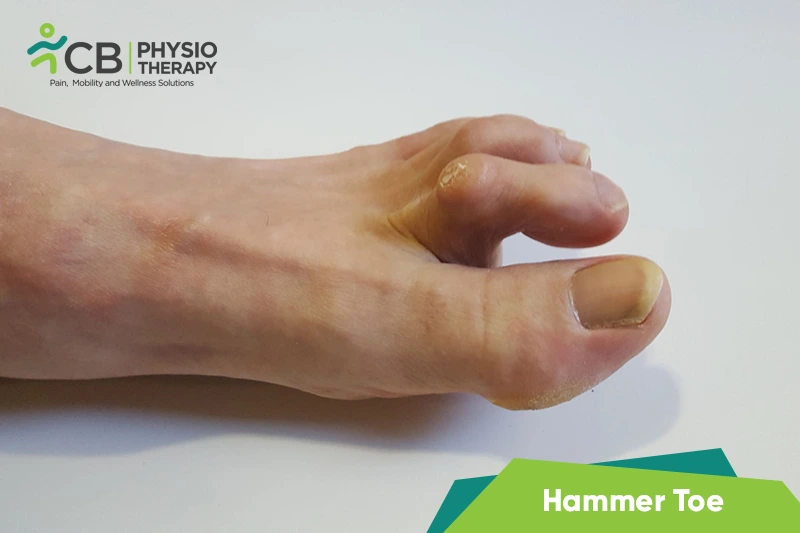
Understanding Hammer Toe
Hammer Toe affects people differently, and the right care starts with understanding how it affects you. Its day-to-day impact — on movement, strength, energy and confidence — is where physiotherapy does its work.
Our role in Hammer Toe is practical: protect and rebuild movement and daily function with a plan set after a careful assessment, in coordination with your doctor wherever medical management is involved. No two plans look the same, because no two cases behave the same.
Causes & risk factors of Hammer Toe
What commonly drives it — your assessment pins down which of these apply to you.
More than one possible driver
Hammer Toe can have several contributing factors — a careful history and physical assessment separate them rather than guessing.
Reduced movement and deconditioning
Whatever the trigger, less movement quickly adds weakness and stiffness of its own — usually the most reversible part.
Daily-life load and habits
Work posture, repeated tasks, sleep and stress all shape how a condition behaves day to day.
General health and history
Overall health, previous injuries and existing conditions influence both the picture and the plan — the assessment takes all of it in.
When physiotherapy is the right call
If any of these sound like you, an assessment is the right first step.
- ✓ A new diagnosis of Hammer Toe and you want a clear rehabilitation start point
- ✓ Daily tasks, walking or stairs are getting harder than they used to be
- ✓ Strength, stamina or balance has visibly dropped
- ✓ You want a structured clinic + home program with measurable milestones
- ✓ Family members need guidance to support you safely
Your treatment journey
Step by step — from your first assessment to a tracked recovery plan.
A detailed first assessment
History, movement testing and strength checks — a focused session to find what is actually driving your Hammer Toe.
A diagnosis you understand
Your physiotherapist explains the findings in plain language — what is affected, why it happened and what that means for you.
Active, tracked treatment
Hands-on therapy, the right modalities and graded exercise — progressed session by session and tracked on Fizo IQ™.
Prevention, built in
The final phase rebuilds strength and habits so the same problem does not come back — with a home plan you keep.
What recovery looks like
- ✓ More independence in daily tasks
- ✓ Better strength, balance and stamina
- ✓ Fewer setbacks, with red flags monitored
- ✓ A program your family understands and can support
- ✓ Progress measured milestone by milestone on Fizo IQ™
When to see a doctor — red flags
How CB Physiotherapy treats Hammer Toe
We treat Hammer Toe the way we treat everything: assessment first, plan second, treatment third. It sounds obvious, but it is the difference between sessions that fill a slot and sessions that move you towards a goal. Care is delivered by certified physiotherapists at a clinic near you or at home.
Your whole journey is tracked on Fizo IQ™ — the diagnosis, the root cause, the milestones and the goals — so progress is measured, not guessed, and the plan adapts the moment your response calls for it.
Exercises that help with Hammer Toe
Make these exercises yours — a CB physio personalizes, doses and tracks your plan week by week.
Get my personalized planGeneral guidance only — stop if an exercise increases your pain, and check with your physio before starting a new routine.
Get Hammer Toe treatment near you
Certified physiotherapists at a clinic near you or at home — same-day slots, assessment-led care.
Request received!
We'll call you within 10 minutes to confirm your home visit.We'll call you within 10 minutes to confirm your slot.
Chat with us on WhatsAppHammer Toe, answered
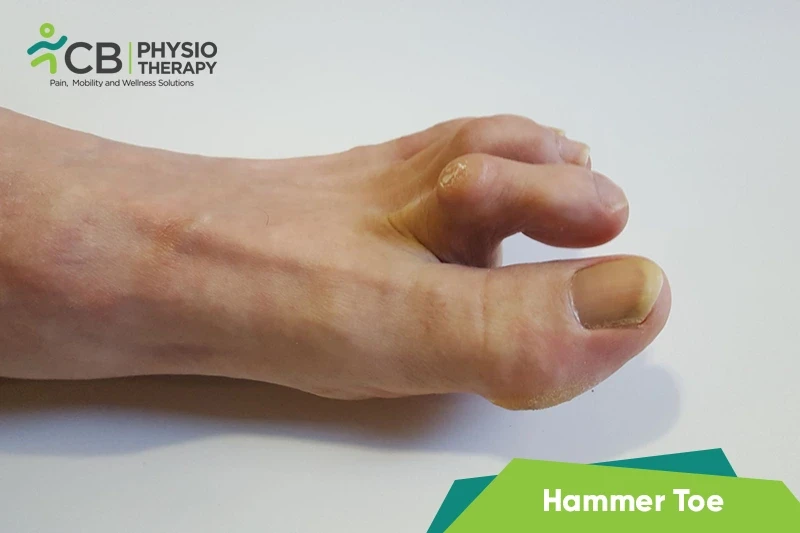
The Hammer toe or claw toe is the most common deformity of the second, third, or fourth toe. It is a toe that has an abnormal bend in its middle joint, making the toe bend downward to look like a hammer. This deformity is characterized by bending or curling of the toe downward instead of being in the normal straightforward position. Over a period, as the deformity progresses, eventually, the toe is stuck in a claw-like position.
Women are more prone than men to develop hammer toe, other causes can be:
- Genetically transferred.
- Women are more prone than men to develop hammer toe.
- Injury to the brain, spinal cord, or nerves such as stroke, degenerative disc disease, and cerebral palsy.
- Stagnant for prolonged periods in bed.
- Breaking a toe.
- Imbalance in the muscles, ligaments, and tendons of the toes.
- Muscle weakens.
- Injuries.
- Longer toe length.
- Certain diseases like arthritis, diabetes, and peripheral arterial disease.
- Shoes with narrow, little, and no arch support.
- Tight shoes.
Symptoms may vary depending on the degree of the bend. Commonly found symptoms are:
- Swelling, redness, or a burning sensation.
- Sores.
- Upward bent toe.
- Inability to straighten the toe.
- Pain while moving it or wearing shoes.
- Corns and callouses.
- Blisters.
- Pain while walking.
Pathology:
Hammer toe is a chronic, sustained imbalance between flexion and extension force of the toes from intrinsic forces, extrinsic forces, or both. Hammertoe deformity involves flexion deformity of the PIP joint of the toe, with hyperextension of the MTP and DIP joints.
Physical examination:
The examiner checks the toe by gently moving the foot and toe to cause symptoms to occur. This helps the examiner to thoroughly evaluate the condition of the toe.
X-rays
X-rays are done to examine the bone and joints of the feet and toes
Medication: NSAIDs, corticosteroid injection, etc.
Note: Medication should not be taken without the doctor's prescription.
Surgery:
If the hammer toe is not treated immediately, then it may become fixed and require surgery to correct. Surgery is done to reposition the affected toe, remove any deformed bone, and realign the tendons to relieve the symptoms. During the surgery, the tight tendons and muscles are released so that the toe can straighten again.
Rest:
Rest is recommended as a weight off the feet allows inflammation reduction.
Cold pads or ice therapy is used to reduce pain, swelling, and soreness of the toe.
Proper footwear:
Properly fitted shoes with big toe boxes, so that the shoes have ample space to accommodate the toes are recommended.
Supports and Pads:
Toe pads or insoles in the shoes can be worn while performing special toe exercises. These treatment steps encourage the toe to straighten while strengthening the toe muscles to become more flexible. Corn pads and foot straps are used to relieve some of the painful symptoms.
Splinting:
Splinting is done to keep the hammer toe straight, it stretches out the tendons and muscles of the toe.
Taping:
Taping is used for milder cases where the affected toe is still flexible. A piece of tape is wrapped under the big toe, over the hammer toe, and under the toe next to the hammertoe to help keep it straight.
Stretching Exercise:
Stretching exercises use hands to gently stretch and move the affected toe, manually several times a day, increasing flexibility.
Hammer toe is best treated by early intervention when the muscles and joints are still more flexible. The physiotherapist works on relaxing the area so that the joints can shift back into their natural location. Range of motion exercises helps to preserve flexibility and function in the joint. Examples of these exercises are picking up various small and bigger things using the toes is also a great exercise that can be done, picking up marbles and towels seem to correct the hammertoe efficiently, put a towel under the foot and use the toes to crumple it or another example can be toe-spread exercise, which can be also done.
Strengthening the joint by strengthening exercises helps preserve motion in the joint that can be lost because of prolonged joint stress.
The person with a hammer toe wears improper footwear and might have ignored the development of the hammer toe, and thus might require surgery to release the tendons. Hammer toe, like many other foot problems, can be avoided by wearing proper footwear, and low heels with enough toe room. Shoes should be of proper size and should accommodate the longest toe, with adjustable laces and straps and proper arch support which prevents several foot ailments. Even after treatment, the hammer toe may return to make sure that the hammer toe does not reoccur therefore proper footwear should be worn.
Don't let Hammer Toe decide your day.
Get assessed today — find the cause, get a plan, and know when you'll feel better.