
Motor Neuron Disease (mnd) — Symptoms, Causes & Treatment
Also known as Amyotrophic Lateral Sclerosis (ALS). Causes, symptoms and how physiotherapy treats Motor Neuron Disease (mnd) — without surgery or medicines.
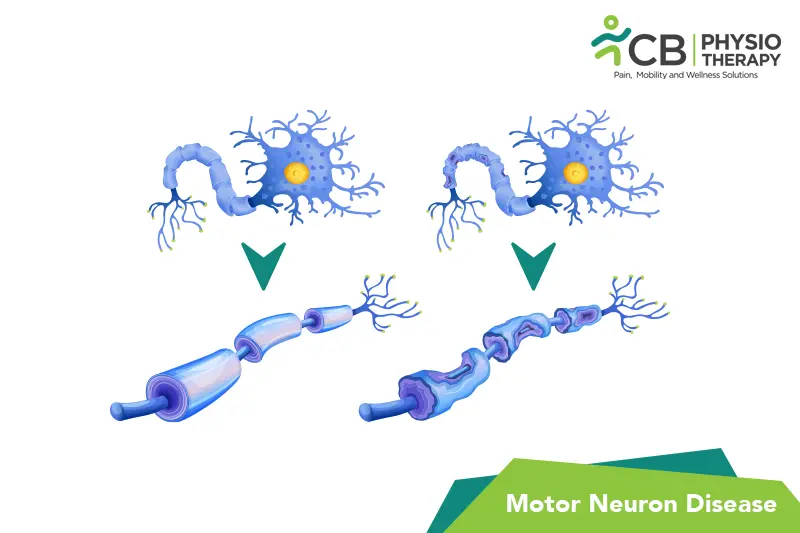
Understanding Motor Neuron Disease (mnd)
Motor Neuron Disease (mnd) (also called Amyotrophic Lateral Sclerosis (ALS)) affects the nervous system's control of movement — and while the diagnosis itself is made and managed by your doctor, physiotherapy shapes what daily life looks like with it. Strength, balance, walking and everyday tasks can all improve with the right rehabilitation, at almost any stage.
Neuro-rehabilitation works because of neuroplasticity: with repeated, task-specific practice the nervous system re-learns. A structured program targets what matters to you — transfers, walking, stairs, confidence — and measures progress milestone by milestone.
Causes & risk factors of Motor Neuron Disease (mnd)
What commonly drives it — your assessment pins down which of these apply to you.
The underlying neurological event
Conditions like Motor Neuron Disease (mnd) begin in the nervous system — diagnosis and medical management sit with your doctor and neurologist.
Reduced activity after diagnosis
Fear, fatigue and difficulty shrink movement — and inactivity then adds its own layer of weakness and stiffness.
Muscle weakness and tone changes
Altered signals change how muscles fire — some weaken, some tighten — reshaping movement patterns over time.
Balance and confidence
Balance changes raise fall risk, and fear of falling quietly cuts activity further — a loop rehabilitation is designed to break.
When physiotherapy is the right call
If any of these sound like you, an assessment is the right first step.
- ✓ A new diagnosis of Motor Neuron Disease (mnd) and you want a clear rehabilitation start point
- ✓ Daily tasks, walking or stairs are getting harder than they used to be
- ✓ Strength, stamina or balance has visibly dropped
- ✓ You want a structured clinic + home program with measurable milestones
- ✓ Family members need guidance to support you safely
Your treatment journey
Step by step — from your first assessment to a tracked recovery plan.
A detailed first assessment
History, movement testing and strength checks — a focused session to find what is actually driving your Motor Neuron Disease (mnd).
A diagnosis you understand
Your physiotherapist explains the findings in plain language — what is affected, why it happened and what that means for you.
Active, tracked treatment
Hands-on therapy, the right modalities and graded exercise — progressed session by session and tracked on Fizo IQ™.
Prevention, built in
The final phase rebuilds strength and habits so the same problem does not come back — with a home plan you keep.
What recovery looks like
- ✓ More independence in daily tasks
- ✓ Better strength, balance and stamina
- ✓ Fewer setbacks, with red flags monitored
- ✓ A program your family understands and can support
- ✓ Progress measured milestone by milestone on Fizo IQ™
When to see a doctor — red flags
How CB Physiotherapy treats Motor Neuron Disease (mnd)
We treat Motor Neuron Disease (mnd) the way we treat everything: assessment first, plan second, treatment third. It sounds obvious, but it is the difference between sessions that fill a slot and sessions that move you towards a goal. Care is delivered by certified physiotherapists at a clinic near you or at home.
Your whole journey is tracked on Fizo IQ™ — the diagnosis, the root cause, the milestones and the goals — so progress is measured, not guessed, and the plan adapts the moment your response calls for it.
Get Motor Neuron Disease (mnd) treatment near you
Certified physiotherapists at a clinic near you or at home — same-day slots, assessment-led care.
Request received!
We'll call you within 10 minutes to confirm your home visit.We'll call you within 10 minutes to confirm your slot.
Chat with us on WhatsAppMotor Neuron Disease (mnd), answered
The exact causes of MND are not fully understood, and it can occur sporadically or in a familial form (inherited). Several factors are believed to contribute to its development:
1: Genetic Factors: In some cases, there may be a genetic component to MND, with specific gene mutations linked to the condition.
2: Neuroinflammation: Abnormal immune system responses and inflammation in the nervous system can play a role.
3: Environmental Factors: Some environmental factors, such as exposure to toxins, may increase the risk.
1: Muscle Weakness: It often begins with muscle weakness, typically in the limbs, and may affect the hands, legs, and the ability to speak, swallow, and breathe.
2: Muscle Atrophy: The affected muscles may become smaller (atrophy) due to lack of use.
3: Spasticity: Some individuals experience muscle stiffness and spasms.
4: Difficulty Speaking and Swallowing: Speech and swallowing difficulties can occur as the condition progresses.
5: Loss of Motor Control: Loss of fine motor skills, difficulty with tasks like buttoning a shirt or writing.
6: Muscle Cramps: Cramps and muscle twitches are common.
7: Fatigue and Weight Loss: Muscle wasting can lead to fatigue and weight loss.
8: Breathing Problems: In advanced stages, MND can affect the muscles involved in breathing, leading to respiratory issues.
9: Cognitive Changes: In some cases, there may be mild cognitive changes, although it's distinct from conditions like Alzheimer's disease.
Pathology:
The primary hallmark of MND is the degeneration of motor neurons. Motor neurons are specialized nerve cells responsible for controlling voluntary muscle movements. In MND, these neurons progressively degenerate and die. This degeneration disrupts the signals that the brain sends to the muscles, leading to muscle weakness and atrophy.
Electromyography (EMG) and Nerve Conduction Studies: EMG is a key diagnostic test for MND. It measures the electrical activity of muscles and can help identify abnormalities in the motor neurons. Nerve conduction studies are often conducted alongside EMG to assess the function of peripheral nerves.
Imaging Studies: Various imaging studies may be used to rule out other conditions and assess changes in the nervous system. This can include Magnetic Resonance Imaging (MRI) and in some cases, a spinal tap (lumbar puncture) to analyze cerebrospinal fluid.
Blood Tests: Blood tests may be performed to rule out other potential causes of similar symptoms, such as thyroid disorders, vitamin deficiencies, or autoimmune conditions.
Note: Medication should not be taken without the doctor’s prescription.
Tracheostomy:
Breathing difficulties can be addressed with respiratory support, including non-invasive ventilation (NIV) or invasive ventilation (tracheostomy).
Speech and Swallowing Therapy:
Speech-language pathologists can assist in managing speech and swallowing difficulties, which are common in ALS.
Respiratory Muscle Training (RMT): RMT may involve electrical stimulation to strengthen the respiratory muscles in individuals with MND who experience breathing difficulties. This can help improve lung function and respiratory endurance.
Electromyography (EMG) Biofeedback: EMG biofeedback provides real-time information about muscle activity. It can be used in biofeedback training to help individuals with MND gain better control over their muscles and improve muscle function
Functional Electrical Stimulation (FES): FES involves applying low-level electrical currents to specific muscles to stimulate contractions. This can help individuals with MND by promoting muscle activation and improving muscle strength. FES devices can assist with walking, standing, and other functional movements.
Transcutaneous Electrical Nerve Stimulation (TENS): TENS units use electrical currents to stimulate nerves and reduce pain. While they may not slow the progression of MND, TENS can be used to manage discomfort, muscle cramps, or other painful symptoms associated with the disease.
Neuromuscular Electrical Stimulation (NMES): NMES is similar to FES but is often used for rehabilitation and muscle strengthening. It can be helpful in preventing muscle atrophy and maintaining muscle strength in individuals with MND.
Interferential Current (IFC): IFC is a type of electrical stimulation used for pain management. It involves the use of two high-frequency currents that intersect and create an interference pattern. IFC can be used to alleviate muscle pain and discomfort in individuals with MND.
Range of Motion (ROM) Exercises: Physiotherapists often prescribe gentle range of motion exercises to maintain flexibility in the joints and prevent contractures (muscle shortening and tightening).
Strengthening Exercises: Specific exercises may be recommended to maintain muscle strength and function for as long as possible. These exercises target both weak and unaffected muscles.
Spasticity Management: Techniques like stretching and range of motion exercises can help manage spasticity, a common symptom in MND.
Balance and Posture Training: Maintaining good posture and balance is essential for preventing falls and improving overall mobility. Physiotherapists can offer guidance and exercises to achieve these goals.
Mobility Aids and Assistive Devices: Physiotherapists can assess the need for mobility aids such as wheelchairs, walkers, or orthoses to improve mobility and independence.
Home Modifications: Adaptations to the home environment, such as ramps, wider doorways, and bathroom modifications, can improve accessibility and independence.
Fall Prevention: Physiotherapists work on balance and coordination to reduce the risk of falls, which can be particularly important in advanced stages of MND.
Don't let Motor Neuron Disease (mnd) decide your day.
Get assessed today — find the cause, get a plan, and know when you'll feel better.