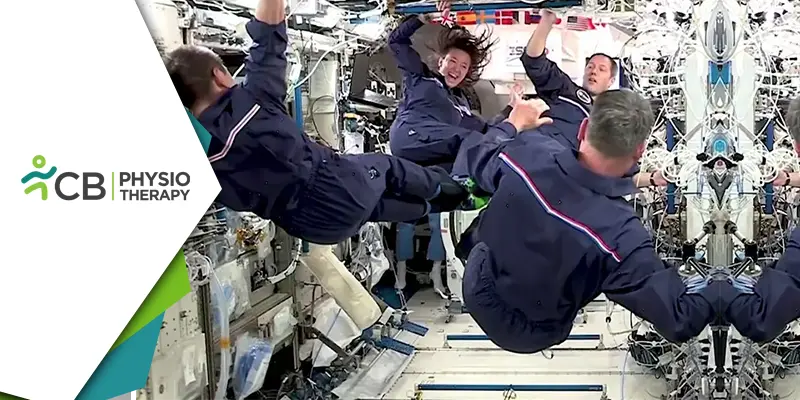
Space exploration is one of humanity’s greatest endeavours, pushing the limits of human capability and endurance. However, the effects of prolonged exposure to microgravity present significant challenges to astronauts’ health. Among these challenges are muscle atrophy, bone density loss, cardiovascular deconditioning, and balance disorders. To combat these adverse effects, physiotherapy plays a crucial role in space medicine, ensuring astronauts maintain their physical health before, during, and after space missions. This blog explores how physiotherapy is integrated into space programs to counteract the physiological impacts of microgravity.
1. Muscle Atrophy: The absence of gravitational force reduces the need for muscle contraction, leading to significant muscle wasting, especially in weight-bearing muscles like the quadriceps, hamstrings, and calf muscles.
2. Bone Density Loss: Without the constant force of gravity, bones lose essential minerals, leading to osteoporosis-like conditions that increase the risk of fractures.
3. Cardiovascular Changes: In microgravity, bodily fluids shift towards the upper body, causing heart muscle weakening and a reduction in blood volume.
4. Balance and Coordination Issues: The vestibular system, which governs balance, adapts to weightlessness, making readjustment to Earth’s gravity challenging upon return.
1. Pre-Space Mission Physiotherapy
Astronauts undergo rigorous physical training to prepare their bodies for the stressors of space. Physiotherapists play a key role in designing individualized programs that focus on:
a) Strength Training: Targeting major muscle groups to build endurance and prevent muscle atrophy in space.
b) Core Stability Exercises: Strengthening the core to help astronauts maintain posture control in microgravity.
c) Cardiovascular Conditioning: High-intensity training ensures the heart remains strong and adaptable to changing environments.
d) Balance and Vestibular Training: Exercises like head tilts, eye movements, and dynamic balance tasks help the body adapt to potential disorientation in space.
2. Physiotherapy During Space Missions
Once in space, astronauts must adhere to structured exercise regimens designed by physiotherapists and space medicine specialists. The absence of gravity means that standard weightlifting and running exercises must be modified using specialized equipment:
a) Advanced Resistive Exercise Device (ARED): Simulates weightlifting by using vacuum cylinders to provide resistance.
b) Treadmills with Harnesses: Astronauts use bungee cords or harnesses to stay in place while running to maintain cardiovascular health.
c) Cycle Ergometers: These stationary bikes allow astronauts to engage in cardiovascular exercise without the need for gravity.
d) Stretching and Mobility Routines: Essential to maintain joint flexibility and prevent stiffness.
Physiotherapists on Earth monitor astronauts’ progress in real time, adjusting exercise protocols based on their health status. Virtual rehabilitation programs have also been introduced, allowing physiotherapists to guide astronauts remotely through tele-rehabilitation sessions.
3. Post-Mission Rehabilitation and Recovery
Upon returning to Earth, astronauts often struggle with gravity re-adaptation syndrome, experiencing dizziness, weakness, and loss of coordination. Physiotherapy is crucial in facilitating their recovery through:
a) Gait Training: Helping astronauts regain normal walking patterns after prolonged weightlessness.
b) Balance and Proprioception Exercises: Utilizing stability balls, wobble boards, and other tools to retrain the vestibular system.
c) Muscle and Bone Recovery Programs: Resistance training and weight-bearing exercises to rebuild lost muscle mass and bone density.
d) Hydrotherapy: Water-based exercises provide low-impact resistance to support rehabilitation.
As space missions become longer, including potential Mars expeditions, the need for advanced physiotherapy interventions will continue to grow. Researchers are exploring:
1. AI-Based Rehabilitation: Smart wearables and AI-driven exercise monitoring to provide real-time feedback.
2. Robot-assisted physiotherapy: Exoskeletons and robotic devices to aid in muscle and bone maintenance.
3. Virtual Reality (VR) Training: Simulated gravity environments to train astronauts before, during, and after missions.
Physiotherapy is an indispensable component of space medicine, ensuring astronauts remain physically capable of performing their duties in space and recovering effectively upon their return. As we move closer to extended space missions, physiotherapy will play an even greater role in optimizing human performance in the final frontier.
Understanding the Effects of Microgravity on the Human Body
Microgravity, the near-weightlessness experienced in space, leads to profound changes in the human body. Some of the key physiological changes include:1. Muscle Atrophy: The absence of gravitational force reduces the need for muscle contraction, leading to significant muscle wasting, especially in weight-bearing muscles like the quadriceps, hamstrings, and calf muscles.
2. Bone Density Loss: Without the constant force of gravity, bones lose essential minerals, leading to osteoporosis-like conditions that increase the risk of fractures.
3. Cardiovascular Changes: In microgravity, bodily fluids shift towards the upper body, causing heart muscle weakening and a reduction in blood volume.
4. Balance and Coordination Issues: The vestibular system, which governs balance, adapts to weightlessness, making readjustment to Earth’s gravity challenging upon return.
Physiotherapy interventions are strategically employed before, during, and after space travel:
1. Pre-Space Mission Physiotherapy
Astronauts undergo rigorous physical training to prepare their bodies for the stressors of space. Physiotherapists play a key role in designing individualized programs that focus on:
a) Strength Training: Targeting major muscle groups to build endurance and prevent muscle atrophy in space.
b) Core Stability Exercises: Strengthening the core to help astronauts maintain posture control in microgravity.
c) Cardiovascular Conditioning: High-intensity training ensures the heart remains strong and adaptable to changing environments.
d) Balance and Vestibular Training: Exercises like head tilts, eye movements, and dynamic balance tasks help the body adapt to potential disorientation in space.
2. Physiotherapy During Space Missions
Once in space, astronauts must adhere to structured exercise regimens designed by physiotherapists and space medicine specialists. The absence of gravity means that standard weightlifting and running exercises must be modified using specialized equipment:
a) Advanced Resistive Exercise Device (ARED): Simulates weightlifting by using vacuum cylinders to provide resistance.
b) Treadmills with Harnesses: Astronauts use bungee cords or harnesses to stay in place while running to maintain cardiovascular health.
c) Cycle Ergometers: These stationary bikes allow astronauts to engage in cardiovascular exercise without the need for gravity.
d) Stretching and Mobility Routines: Essential to maintain joint flexibility and prevent stiffness.
Physiotherapists on Earth monitor astronauts’ progress in real time, adjusting exercise protocols based on their health status. Virtual rehabilitation programs have also been introduced, allowing physiotherapists to guide astronauts remotely through tele-rehabilitation sessions.
3. Post-Mission Rehabilitation and Recovery
Upon returning to Earth, astronauts often struggle with gravity re-adaptation syndrome, experiencing dizziness, weakness, and loss of coordination. Physiotherapy is crucial in facilitating their recovery through:
a) Gait Training: Helping astronauts regain normal walking patterns after prolonged weightlessness.
b) Balance and Proprioception Exercises: Utilizing stability balls, wobble boards, and other tools to retrain the vestibular system.
c) Muscle and Bone Recovery Programs: Resistance training and weight-bearing exercises to rebuild lost muscle mass and bone density.
d) Hydrotherapy: Water-based exercises provide low-impact resistance to support rehabilitation.
Future of Physiotherapy in Space Medicine
As space missions become longer, including potential Mars expeditions, the need for advanced physiotherapy interventions will continue to grow. Researchers are exploring:1. AI-Based Rehabilitation: Smart wearables and AI-driven exercise monitoring to provide real-time feedback.
2. Robot-assisted physiotherapy: Exoskeletons and robotic devices to aid in muscle and bone maintenance.
3. Virtual Reality (VR) Training: Simulated gravity environments to train astronauts before, during, and after missions.
Physiotherapy is an indispensable component of space medicine, ensuring astronauts remain physically capable of performing their duties in space and recovering effectively upon their return. As we move closer to extended space missions, physiotherapy will play an even greater role in optimizing human performance in the final frontier.