
Boutonniere Deformity — Symptoms, Causes & Treatment
Also known as Boutonniere Deformity. Causes, symptoms and how physiotherapy treats Boutonniere Deformity — without surgery or medicines.
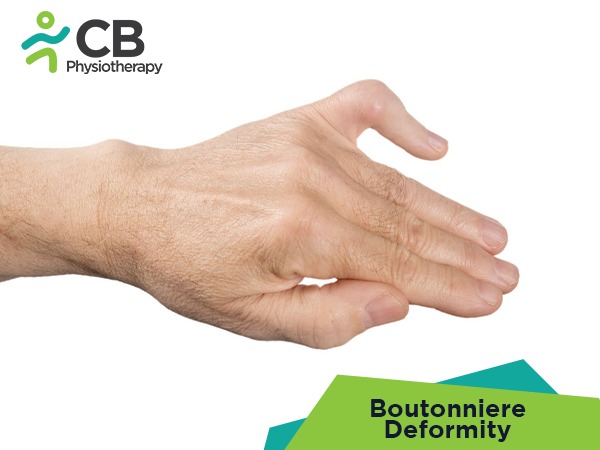
Understanding Boutonniere Deformity
Boutonniere Deformity affects people differently, and the right care starts with understanding how it affects you. Its day-to-day impact — on movement, strength, energy and confidence — is where physiotherapy does its work.
Our role in Boutonniere Deformity is practical: protect and rebuild movement and daily function with a plan set after a careful assessment, in coordination with your doctor wherever medical management is involved. No two plans look the same, because no two cases behave the same.
Causes & risk factors of Boutonniere Deformity
What commonly drives it — your assessment pins down which of these apply to you.
More than one possible driver
Boutonniere Deformity can have several contributing factors — a careful history and physical assessment separate them rather than guessing.
Reduced movement and deconditioning
Whatever the trigger, less movement quickly adds weakness and stiffness of its own — usually the most reversible part.
Daily-life load and habits
Work posture, repeated tasks, sleep and stress all shape how a condition behaves day to day.
General health and history
Overall health, previous injuries and existing conditions influence both the picture and the plan — the assessment takes all of it in.
When physiotherapy is the right call
If any of these sound like you, an assessment is the right first step.
- ✓ A new diagnosis of Boutonniere Deformity and you want a clear rehabilitation start point
- ✓ Daily tasks, walking or stairs are getting harder than they used to be
- ✓ Strength, stamina or balance has visibly dropped
- ✓ You want a structured clinic + home program with measurable milestones
- ✓ Family members need guidance to support you safely
Your treatment journey
Step by step — from your first assessment to a tracked recovery plan.
A detailed first assessment
History, movement testing and strength checks — a focused session to find what is actually driving your Boutonniere Deformity.
A diagnosis you understand
Your physiotherapist explains the findings in plain language — what is affected, why it happened and what that means for you.
Active, tracked treatment
Hands-on therapy, the right modalities and graded exercise — progressed session by session and tracked on Fizo IQ™.
Prevention, built in
The final phase rebuilds strength and habits so the same problem does not come back — with a home plan you keep.
What recovery looks like
- ✓ More independence in daily tasks
- ✓ Better strength, balance and stamina
- ✓ Fewer setbacks, with red flags monitored
- ✓ A program your family understands and can support
- ✓ Progress measured milestone by milestone on Fizo IQ™
When to see a doctor — red flags
How CB Physiotherapy treats Boutonniere Deformity
We treat Boutonniere Deformity the way we treat everything: assessment first, plan second, treatment third. It sounds obvious, but it is the difference between sessions that fill a slot and sessions that move you towards a goal. Care is delivered by certified physiotherapists at a clinic near you or at home.
Your whole journey is tracked on Fizo IQ™ — the diagnosis, the root cause, the milestones and the goals — so progress is measured, not guessed, and the plan adapts the moment your response calls for it.
Get Boutonniere Deformity treatment near you
Certified physiotherapists at a clinic near you or at home — same-day slots, assessment-led care.
Request received!
We'll call you within 10 minutes to confirm your home visit.We'll call you within 10 minutes to confirm your slot.
Chat with us on WhatsAppBoutonniere Deformity, answered
Boutonniere Deformity or central slip injury is a deformity of the fingers or toes in which the proximal interphalangeal joint is flexed and the distal interphalangeal joint is hyper-extended, this results in an inability to straighten that particular finger joint and is also difficult to bend.
A boutonniere deformity can happen for several reasons:
- Due to a disease like rheumatoid arthritis.
- A forceful blow to the dorsal side of the middle joint of a finger.
- Laceration injury to the central slip.
- Finger fractures.
- Osteoarthritis.
- Sports-related injuries.
- Dislocation of the PIP joint.
- A jammed finger, a tendon injury, and can result in a boutonniere deformity.
- Secondary to burn injury.
Symptoms of boutonnière deformity can develop immediately after an injury or might develop after a week to 3 weeks:
- Pain and discomfort continue on the top of the middle joint of the finger.
- Patient may experience swelling.
- Stiffness may occur if the deformed position is not treated.
- The middle joint cannot be straightened.
- Unable to bend the fingertip.
- Difficulty while washing their face, writing, buttoning the clothes, putting the hand in the pocket to take out phone or wallet, etc.
Pathology
Boutonniere’ deformity results when the central slip of the tendon is disrupted. This disruption of the tendon causes the lateral bands to displace volarly. This results in forced flexion of the finger which causes limitation of the DIP joint to extend. It can be secondary to rheumatoid arthritis (RA) or a burn injury. In the case of inflammatory arthritides such as RA, inflammatory cells collect in the synovial fluid of the joint and form a layer of fibrous tissue which leads to bony erosion resulting in damage of cartilage and ligaments. This causes the joints to gradually deform leading to loss of function and pain.
X-rays
X-rays are required to see if there is an avulsion fracture.
Treatment options include both surgical and nonsurgical modalities. After surgery, a splint or brace for several weeks is used to keep the proximal interphalangeal joint straight, physiotherapy often follows splinting. Splinting is also a non-surgical treatment used for immobilization followed by exercises to improve the strength and flexibility of the affected digit. The goal of physiotherapy treatment is to regain the full range of motion and strength of the affected finger. If the injury occurs as a result of sports then the affected area may be splinted or taped for protection during activity.
Medicine: Non-steroidal anti-inflammatory medications (NSAIDs), Disease-modifying anti-rheumatic drugs (DMARDs), glucocorticoids, analgesics, etc.
NOTE: The medication should not be taken without the doctor's permission.
Immobilization
For the injury which occurs to the central slip due to a simple avulsion of the tendon from the bone, splinting of the PIP joint is recommended for 6 weeks after that, the splint needs to be worn at the night for a few weeks. The splint allows movement to the DIP joint and thus exercises can be done to prevent stiffness. Some splints are similar to springs and can be used to gently stretch the PIP joint for several weeks to prevent the formation of contracture. The spring applies continuous gentle pressure, helping to straighten the PIP joint slowly.
The physiotherapist recommends exercises designed to get the hand and fingers working so that the work tasks and daily activities can be done easily. They also guide to help find ways to do tasks in such a way that don't put too much stress on the finger joint.
Range-of-motion exercise.
Gentle range-of-motion exercises can help to retain the range of motion, flexibility, and mobility.
Strengthening exercises
Strengthening exercises usually follow 8 to 10 weeks after surgery range of motion exercises can be recommended with resistance like squeeze –ball, gel balls, etc.
Stretching exercises
Stretching exercises are done at PIP contracture before repairing or reconstruction. Stretching exercises are done to improve the strength and flexibility of the fingers.
MCPJ flexion and extension
Bend the fingers from the knuckles, make sure to keep the fingers straight. Hold this position for 5 secs and then straighten. Repeat this 10 times and do it 1-2 hrs.
DIPJ flexion and extension
Bend the tip of the finger over the edge of the splint and hold for 5 seconds, straighten the fingertip and hold for 5 seconds. With the other hand hold the splint and keep the joint that has been splinted, straight. Repeat this 10 times and do it for 1-2 hours.
PIPJ flexion and extension
Bend the finger at the middle joint, while wearing the splint, and allow the splint to return the finger to a straight position. Repeat 10 times and do it for 1-2 hours.
Pain can be reduced and function can be improved by surgery but might not be able to correct the condition fully. The deformity if left untreated for more than 3 weeks, then it can become much more difficult to treat.
Don't let Boutonniere Deformity decide your day.
Get assessed today — find the cause, get a plan, and know when you'll feel better.