
Erb’s Palsy — Symptoms, Causes & Treatment
Also known as Erb’s Palsy. Causes, symptoms and how physiotherapy treats Erb’s Palsy — without surgery or medicines.
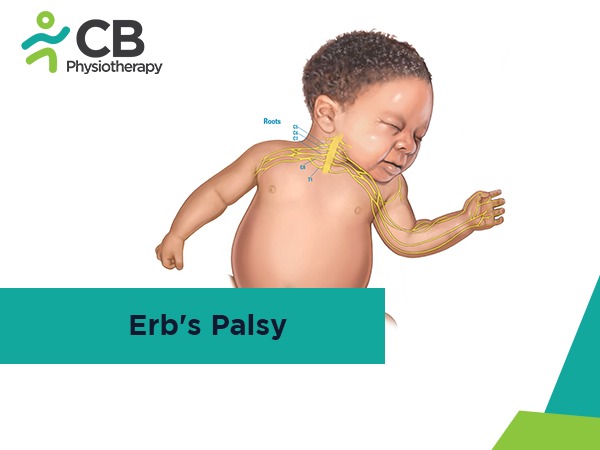
Understanding Erb’s Palsy
Erb’s Palsy affects the nervous system's control of movement — and while the diagnosis itself is made and managed by your doctor, physiotherapy shapes what daily life looks like with it. Strength, balance, walking and everyday tasks can all improve with the right rehabilitation, at almost any stage.
Neuro-rehabilitation works because of neuroplasticity: with repeated, task-specific practice the nervous system re-learns. A structured program targets what matters to you — transfers, walking, stairs, confidence — and measures progress milestone by milestone.
Causes & risk factors of Erb’s Palsy
What commonly drives it — your assessment pins down which of these apply to you.
The underlying neurological event
Conditions like Erb’s Palsy begin in the nervous system — diagnosis and medical management sit with your doctor and neurologist.
Reduced activity after diagnosis
Fear, fatigue and difficulty shrink movement — and inactivity then adds its own layer of weakness and stiffness.
Muscle weakness and tone changes
Altered signals change how muscles fire — some weaken, some tighten — reshaping movement patterns over time.
Balance and confidence
Balance changes raise fall risk, and fear of falling quietly cuts activity further — a loop rehabilitation is designed to break.
When physiotherapy is the right call
If any of these sound like you, an assessment is the right first step.
- ✓ A new diagnosis of Erb’s Palsy and you want a clear rehabilitation start point
- ✓ Daily tasks, walking or stairs are getting harder than they used to be
- ✓ Strength, stamina or balance has visibly dropped
- ✓ You want a structured clinic + home program with measurable milestones
- ✓ Family members need guidance to support you safely
Your treatment journey
Step by step — from your first assessment to a tracked recovery plan.
A detailed first assessment
History, movement testing and strength checks — a focused session to find what is actually driving your Erb’s Palsy.
A diagnosis you understand
Your physiotherapist explains the findings in plain language — what is affected, why it happened and what that means for you.
Active, tracked treatment
Hands-on therapy, the right modalities and graded exercise — progressed session by session and tracked on Fizo IQ™.
Prevention, built in
The final phase rebuilds strength and habits so the same problem does not come back — with a home plan you keep.
What recovery looks like
- ✓ More independence in daily tasks
- ✓ Better strength, balance and stamina
- ✓ Fewer setbacks, with red flags monitored
- ✓ A program your family understands and can support
- ✓ Progress measured milestone by milestone on Fizo IQ™
When to see a doctor — red flags
How CB Physiotherapy treats Erb’s Palsy
We treat Erb’s Palsy the way we treat everything: assessment first, plan second, treatment third. It sounds obvious, but it is the difference between sessions that fill a slot and sessions that move you towards a goal. Care is delivered by certified physiotherapists at a clinic near you or at home.
Your whole journey is tracked on Fizo IQ™ — the diagnosis, the root cause, the milestones and the goals — so progress is measured, not guessed, and the plan adapts the moment your response calls for it.
Exercises that help with Erb’s Palsy
Make these exercises yours — a CB physio personalizes, doses and tracks your plan week by week.
Get my personalized planGeneral guidance only — stop if an exercise increases your pain, and check with your physio before starting a new routine.
Get Erb’s Palsy treatment near you
Certified physiotherapists at a clinic near you or at home — same-day slots, assessment-led care.
Request received!
We'll call you within 10 minutes to confirm your home visit.We'll call you within 10 minutes to confirm your slot.
Chat with us on WhatsAppErb’s Palsy, answered
Erb's palsy also known as Erb-Duchenne paralysis is a condition that involves the loss of movement and weakness of the arm. It can occur in both infants and adults. Most commonly it occurs as a result of birth injury due to traction between the child's head and shoulder. The lesion is usually at the junction of the C5 and C6 roots (Erb's point).
Erb's palsy occurs due to the paralysis of the deltoid, supraspinatus, infraspinatus, biceps, teres minor, supinators, and brachialis muscles. And in few cases, there is the involvement of extensor carpi radialis longus and brevis also.
The involvement of these muscle groups results in a typical posture of "waiters or policeman's tip" position. The arm hangs by the side with the shoulder in internal rotation, the elbow in extension, and the forearm pronated.
The upper nerves can get damaged when the shoulder is forced down while the neck stretches up and away from the injured shoulder. And the lower nerves are injured when the arm is forced above the head. The causes for such injury might be:
· Trauma like falls, motor vehicle accidents, bullet wounds.
· Sports injury like football etc.
· Tumors
· Breech delivery
· Improperly used tools during birth
· Large infant size
Injury to the 5th cervical root alone results in weakness or the loss of shoulder: abduction and external rotation, Elbow flexion and, Forearm supination. And the involvement of the 6th cervical root results in the loss of wrist extension.
· Complete lack of movement of one arm
· Partial or total paralysis of one arm
· Weakness in one arm
· Numbness in one arm
· The arm hangs by the side
· Shoulder in internal rotation,
· Elbow in extension and the
· Forearm pronated with the Palm facing backward.
Pathology
Erb's palsy involves the compression of the brachial plexus causing stretch and tear of C5, C6 nerves. The head is deviated away from the shoulder due to excessive traction or stretch.
Electromyography (EMG):
This test can confirm the presence of nerve damage and determine its severity. EMG measures the electrical activity of a muscle in response to stimulation.
Imaging scans:
Magnetic resonance imaging (MRI) or computerized tomography (CT) may be needed on occasion to rule out other possible sources of pressure on the nerve.
Ultrasound and x-ray:
These imaging techniques can be used to find out if there is any damage to the bones and joints of the neck and shoulder.
Nerve conduction test:
Nerve conduction tests help to find how well the nerves can send an electrical signal from the spinal cord to the muscles.
Physical and Neurological examination:
History is taken to know the mechanism of injury followed by a physical and neurological examination to check the movement, sensation, and reflexes of the affected arm.
Medications
Analgesic or pain relief medicines, anti-inflammatory (medications should not be taken without the doctor's permission)
Techniques used by the Physiotherapy
Thermotherapy:
Thermotherapy can be used before the exercises to decrease the stiffness.
NMES:
Electrical stimulation can be used as an adjunct with the exercises to re-educate the muscles and nerves.
Splinting
Aero plane splint or abduction splint can be used to avoid a soft tissue contracture.
Massage
Mild and gentle massage is given to the affected arm to increase circulation, sensory stimulation, and decrease tightness.
PROM exercises:
Passive range of motion exercises are used to prevent the formation of contractures. The exercises help to maintain the range of movement in the joints to prevent stiffness and pain. Involved muscle groups can be exercised and re-educated.
PNF technique:
The involved muscles are activated by assisted active movements by using sensory stimulus. Bilateral symmetrical PNF patterns may be included to achieve irradiation from the normal contralateral limb or the surviving strong muscles of the affected limb.
Strengthening exercises:
Strengthening exercises with weights and resistance can be used for muscle strengthening.
Hydrotherapy exercises:
These exercises help to build up the joint movement and strength by assisting in the motion and also using water resistance for strengthening.
Other activities:
Crawling, climbing, swimming, and throwing activities can be included in the treatment session.
The parent of the child or the patient(adult) is advised to handle the affected arm with care. The arm should be positioned in a comfortable position to prevent the formation of contractures. Exercise should be done on regular basis to maintain the range of motion.
Don't let Erb’s Palsy decide your day.
Get assessed today — find the cause, get a plan, and know when you'll feel better.