
Spina Bifida — Symptoms, Causes & Treatment
Also known as Spina Bifida. Causes, symptoms and how physiotherapy treats Spina Bifida — without surgery or medicines.
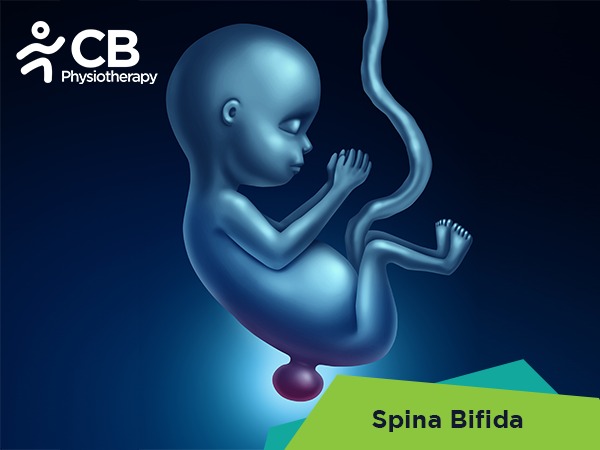
Understanding Spina Bifida
Spina Bifida affects the nervous system's control of movement — and while the diagnosis itself is made and managed by your doctor, physiotherapy shapes what daily life looks like with it. Strength, balance, walking and everyday tasks can all improve with the right rehabilitation, at almost any stage.
Neuro-rehabilitation works because of neuroplasticity: with repeated, task-specific practice the nervous system re-learns. A structured program targets what matters to you — transfers, walking, stairs, confidence — and measures progress milestone by milestone.
Causes & risk factors of Spina Bifida
What commonly drives it — your assessment pins down which of these apply to you.
The underlying neurological event
Conditions like Spina Bifida begin in the nervous system — diagnosis and medical management sit with your doctor and neurologist.
Reduced activity after diagnosis
Fear, fatigue and difficulty shrink movement — and inactivity then adds its own layer of weakness and stiffness.
Muscle weakness and tone changes
Altered signals change how muscles fire — some weaken, some tighten — reshaping movement patterns over time.
Balance and confidence
Balance changes raise fall risk, and fear of falling quietly cuts activity further — a loop rehabilitation is designed to break.
When physiotherapy is the right call
If any of these sound like you, an assessment is the right first step.
- ✓ A new diagnosis of Spina Bifida and you want a clear rehabilitation start point
- ✓ Daily tasks, walking or stairs are getting harder than they used to be
- ✓ Strength, stamina or balance has visibly dropped
- ✓ You want a structured clinic + home program with measurable milestones
- ✓ Family members need guidance to support you safely
Your treatment journey
Step by step — from your first assessment to a tracked recovery plan.
A detailed first assessment
History, movement testing and strength checks — a focused session to find what is actually driving your Spina Bifida.
A diagnosis you understand
Your physiotherapist explains the findings in plain language — what is affected, why it happened and what that means for you.
Active, tracked treatment
Hands-on therapy, the right modalities and graded exercise — progressed session by session and tracked on Fizo IQ™.
Prevention, built in
The final phase rebuilds strength and habits so the same problem does not come back — with a home plan you keep.
What recovery looks like
- ✓ More independence in daily tasks
- ✓ Better strength, balance and stamina
- ✓ Fewer setbacks, with red flags monitored
- ✓ A program your family understands and can support
- ✓ Progress measured milestone by milestone on Fizo IQ™
When to see a doctor — red flags
How CB Physiotherapy treats Spina Bifida
At CB Physiotherapy, treatment for Spina Bifida starts with finding its cause: a structured, physiotherapist-led assessment before anything is prescribed. Your plan then combines hands-on therapy, targeted exercise and the right modalities — delivered at a clinic near you or at home, and coordinated with your doctor where medical care is involved.
Every case runs on Fizo IQ™, our recovery engine: diagnosis, root cause, plan, milestones and goals, tracked session by session. You always know where you are in your recovery — and what comes next.
Exercises that help with Spina Bifida
Make these exercises yours — a CB physio personalizes, doses and tracks your plan week by week.
Get my personalized planGeneral guidance only — stop if an exercise increases your pain, and check with your physio before starting a new routine.
Get Spina Bifida treatment near you
Certified physiotherapists at a clinic near you or at home — same-day slots, assessment-led care.
Request received!
We'll call you within 10 minutes to confirm your home visit.We'll call you within 10 minutes to confirm your slot.
Chat with us on WhatsAppSpina Bifida, answered
Spina bifida is a neural defect that occurs during fetal development resulting from a defective fusion of one or more posterior vertebral arches causing protrusion of the contents of the spinal canal before birth, incomplete closing of the embryonic neural tube (a group of cells that form the brain and the spinal cord of a baby). This can cause physical and mental issues. The neural tube and spinal column do not develop properly and remain exposed along several vertebrae. The spinal cord and membranes are pushed out forming a sac on the back of the fetus. This sac may be covered with membranes or meninges.
Types of spina bifida:
- Spina bifida occulta
- Spina bifida cystic(menifesta)
- Meningocele
- Myelomeningocele
Spina bifida occulta
There is merely a radiological defect between the laminae. Skin defects like haemangioma, lipoma, a tuft of hair, occur as a result of spina bifida occulta.
Spina bifida cystic
There is a developmental deficiency of laminae, spinous processes, overlying muscles, and skin.
Meningocele
In this condition mostly the spinal cord and its nerve roots are intact, only the covering membrane projects as a dural sac.
Myelomeningocele
It is associated with muscle paralysis, sensory loss, bladder and bowel incontinence, and deformities. It may be present from the 4th thoracic to 1st sacral vertebra. However, most common in the lumbosacral region. Associated with complications like paraplegia, deformities, bladder and kidney infections, skin ulceration, development of pathological fractures, meningitis as well as hydrocephalus.
Spina bifida can occur due to a combination of genetic, environmental, and nutritional factors.
- Folate deficiency during the pregnancy their babies are at a higher risk for Spina bifida
- Family history of neural tube defects. Couples who have had one child with spina bifida have a slightly higher chance of having another baby with the same defect.
- Deficiency of Plant proteins, iron, magnesium, and niacin.
- Medications are used to treat seizures and epilepsy.
- Females with diabetes, their babies are at a higher risk of having spina bifida.
- Obese women with a BMI of 30 or above have a higher risk of having a baby with spina bifida.
- Increased body temperature, due to fever or using a hot tub in the early weeks of pregnancy may increase the risk of spina bifida.
The most severe symptoms of spina bifida are seen in the Myelomeningocele type of spina bifida. Other symptoms include:
- Coordination problems.
- Cognitive problems due to the presence of hydrocephalus building up of cerebrospinal fluid (CSF) and possibly brain damage.
- Difficulty in learning, reading, focusing, solving problems, and understanding the spoken language.
- Visual and physical coordination.
- Weakness or paralysis in the legs.
- Urinary incontinence.
- Bowel incontinence
- Lack of sensation in the skin.
Pathology
Incomplete development of the neural tube and spinal column and thus the spine does not close fully, and the spinal column remains exposed along several vertebrae. If the opening in the vertebrae occurs in the upper spine, there are chances of complete paralysis in the legs and others. If the openings are in the middle of the spine, symptoms tend to be less severe. There is fluid inside the brain and also around the surface of the brain and the spinal cord called cerebrospinal fluid (CSF). An increase in the CSF can lead to hydrocephalus, causing pressure on the brain, and brain damage.
Neural tube defects and other problems during pregnancy can be reduced by taking early action by these tests.
· Ultrasound
Ultrasound is used to scan the detects of spina bifida during pregnancy. Various prenatal tests can also be done, but they are not accurate.
· Alpha-fetoprotein (AFP) Blood test
This is a blood test that assesses for a protein, alpha-fetoprotein (AFP), that the fetus produces.
These tests are used to assess three or four substances in the blood.
· Amniocentesis
Test alpha-fetoprotein(AFP) levels are done by taking the sample of fluid from the amniotic sac. If there is a high level of AFP in the amniotic fluid then the fetus has a neural tube defect.
· Treatment
Treatment of spina bifida depends on its type and its severity.
· Surgical options
Surgery is possible in some cases.
· Surgery to repair the spine
The spinal cord and any exposed tissues or nerves are replaced and the gap is closed in the vertebrae the spinal cord with muscle sealed.
· Prenatal surgery
Usually, during 19TH to 25TH week of pregnancy. The spinal cord of the fetus is repaired by opening the uterus. This may reduce the risk of spina bifida after delivery.
· Hydrocephalus
A thin tube, or shunt, is implanted in the baby's brain are implanted. And the excess Cerebro Spinal fluid is drained into the abdomen.
· Medication
Anticholinergic, antibiotics, Botox injection.
· Physiotherapy treatment includes
· Prevention and management of deformities:
Less severe types of deformities may be treated by passive stretching and adequate splinting. Rigid deformities may need manipulation under general anesthesia, followed by plaster and splints.
· Physiotherapy treatment after surgery:
Reeducate the transplanted muscle iliopsoas to function as an effective hip abductor and extensor is of primary importance. ROM range of motion exercises and muscle strengthening at the knee to offer stabilization in standing and walking.
· Management of muscle paralysis:
Muscles like hip abductors, extensors, knee extensors, ankle dorsi flexors, and plantar flexors should be strengthened for weight-bearing. Also strengthen the shoulder girdle and trunk muscles, as they also are functionally important.
Prevent adverse factors like hip flexion, knee flexion, and ankle dorsiflexion contractures by emphasizing hip extension, knee extension, and ankle plantigrade programs.
· Balance and coordination exercises:
To maintain body equilibrium in various positions, arm muscles, visual and auditory feedback techniques can be used. Reeducation of the trunk muscles is required in children with trunk lesions.
· Care of skin and joints:
Proper checking of the splint and brace by frequent careful examination of the skin at pressure points. Parents should also be careful about exposing the insensitive parts of the limb to extreme hot and cold situations.
· Education in ambulation and self-care:
Develop equilibrium, static and dynamic weight-bearing programs. Re-educate in standing and gait training.
Arm and shoulder muscles are strengthened for crutch walking.
· Assistive technologies:
An electric wheelchair is provided to the person with total paralysis of the legs.
· Special leg braces:
Leg braces help to prevent the lower limb muscles from weakening and make the patient independent.
Don't let Spina Bifida decide your day.
Get assessed today — find the cause, get a plan, and know when you'll feel better.