
Spinal Stenosis — Symptoms, Causes & Treatment
Also known as Spinal Stenosis. Causes, symptoms and how physiotherapy treats Spinal Stenosis — without surgery or medicines.
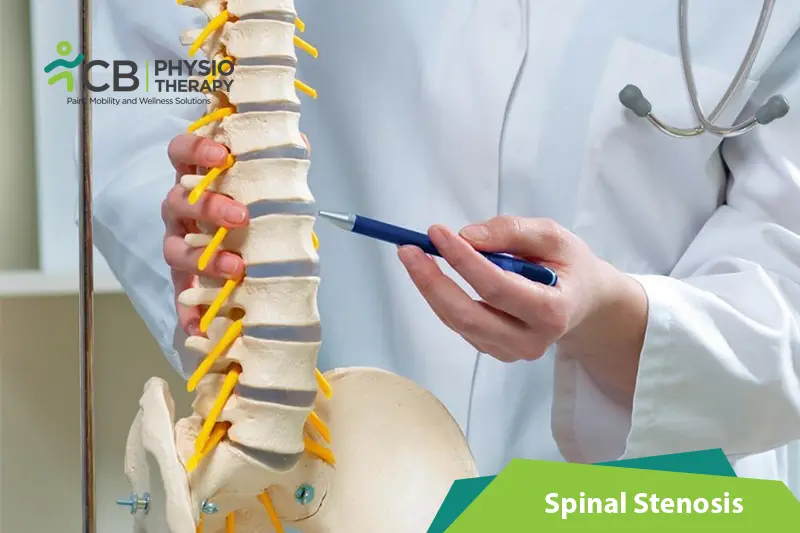
Understanding Spinal Stenosis
Spinal Stenosis affects people differently, and the right care starts with understanding how it affects you. Its day-to-day impact — on movement, strength, energy and confidence — is where physiotherapy does its work.
Our role in Spinal Stenosis is practical: protect and rebuild movement and daily function with a plan set after a careful assessment, in coordination with your doctor wherever medical management is involved. No two plans look the same, because no two cases behave the same.
Causes & risk factors of Spinal Stenosis
What commonly drives it — your assessment pins down which of these apply to you.
More than one possible driver
Spinal Stenosis can have several contributing factors — a careful history and physical assessment separate them rather than guessing.
Reduced movement and deconditioning
Whatever the trigger, less movement quickly adds weakness and stiffness of its own — usually the most reversible part.
Daily-life load and habits
Work posture, repeated tasks, sleep and stress all shape how a condition behaves day to day.
General health and history
Overall health, previous injuries and existing conditions influence both the picture and the plan — the assessment takes all of it in.
When physiotherapy is the right call
If any of these sound like you, an assessment is the right first step.
- ✓ A new diagnosis of Spinal Stenosis and you want a clear rehabilitation start point
- ✓ Daily tasks, walking or stairs are getting harder than they used to be
- ✓ Strength, stamina or balance has visibly dropped
- ✓ You want a structured clinic + home program with measurable milestones
- ✓ Family members need guidance to support you safely
Your treatment journey
Step by step — from your first assessment to a tracked recovery plan.
A detailed first assessment
History, movement testing and strength checks — a focused session to find what is actually driving your Spinal Stenosis.
A diagnosis you understand
Your physiotherapist explains the findings in plain language — what is affected, why it happened and what that means for you.
Active, tracked treatment
Hands-on therapy, the right modalities and graded exercise — progressed session by session and tracked on Fizo IQ™.
Prevention, built in
The final phase rebuilds strength and habits so the same problem does not come back — with a home plan you keep.
What recovery looks like
- ✓ More independence in daily tasks
- ✓ Better strength, balance and stamina
- ✓ Fewer setbacks, with red flags monitored
- ✓ A program your family understands and can support
- ✓ Progress measured milestone by milestone on Fizo IQ™
When to see a doctor — red flags
How CB Physiotherapy treats Spinal Stenosis
We treat Spinal Stenosis the way we treat everything: assessment first, plan second, treatment third. It sounds obvious, but it is the difference between sessions that fill a slot and sessions that move you towards a goal. Care is delivered by certified physiotherapists at a clinic near you or at home.
Your whole journey is tracked on Fizo IQ™ — the diagnosis, the root cause, the milestones and the goals — so progress is measured, not guessed, and the plan adapts the moment your response calls for it.
Exercises that help with Spinal Stenosis
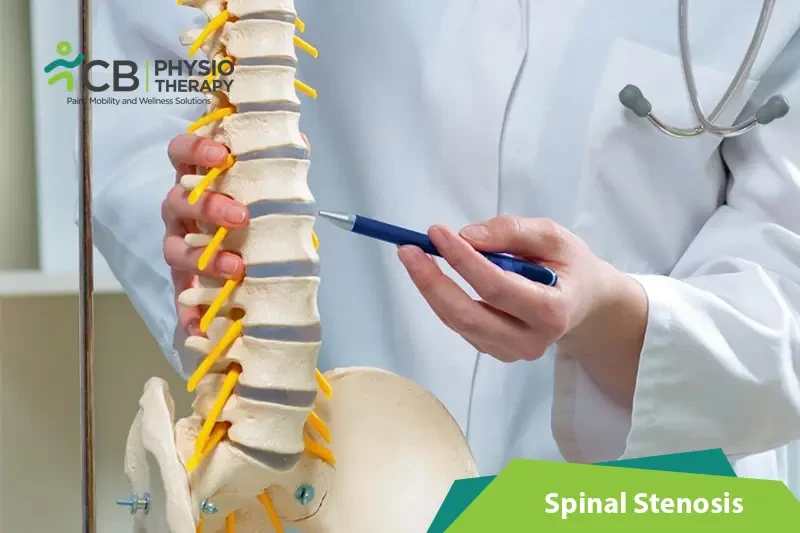 Top 5 Exercises For Spinal Stenosis
Steps & precautions →
Top 5 Exercises For Spinal Stenosis
Steps & precautions →
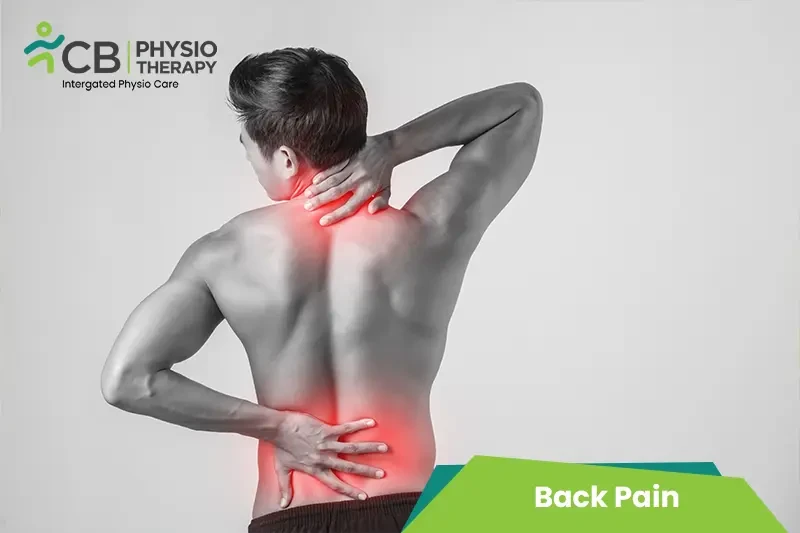 Top 5 Exercises For Back Pain
Steps & precautions →
Top 5 Exercises For Back Pain
Steps & precautions →
Make these exercises yours — a CB physio personalizes, doses and tracks your plan week by week.
Get my personalized planGeneral guidance only — stop if an exercise increases your pain, and check with your physio before starting a new routine.
Get Spinal Stenosis treatment near you
Certified physiotherapists at a clinic near you or at home — same-day slots, assessment-led care.
Request received!
We'll call you within 10 minutes to confirm your home visit.We'll call you within 10 minutes to confirm your slot.
Chat with us on WhatsAppSpinal Stenosis, answered
Spinal Stenosis is a narrowing of the spaces within the spine, which can put pressure on the nerves that travel through the spine. Spinal stenosis occurs most often in the lower back and the neck. . Spinal stenosis is most commonly caused by wear-and-tear changes in the spine related to osteoarthritis. In severe cases of spinal stenosis, doctors may recommend surgery to create additional space for the spinal cord or nerves .Some people with spinal stenosis may not have symptoms. Others may experience pain, tingling, numbness and muscle weakness. Symptoms can worsen over time.
The types of spinal stenosis are classified according to where on the spine the condition occurs. It's possible to have more than one type. The two main types of spinal stenosis are:
· Cervical stenosis. In this condition, the narrowing occurs in the part of the spine in your neck.
· Lumbar stenosis. In this condition, the narrowing occurs in the part of the spine in your lower back. It's the most common form of spinal stenosis.
The narrowing of the spinal canal is usually a slow process and worsens over time. Although spinal stenosis can happen anywhere along the spinal column, the lower back (number one most common area) and neck are common areas. Symptoms vary from person to person and may come and go.
Symptoms of lower back (lumbar) spinal stenosis include:
- Pain in the lower back. Pain is sometimes described as dull ache or tenderness to electric-like or burning sensation
- Sciatica. This is pain that begins in the buttocks and extends down the leg and may continue into your foot.
- A heavy feeling in the legs, which may lead to cramping in one or both legs.
- Numbness or tingling (“pins and needles”) in the buttocks, leg or foot.
- Weakness in the leg or foot (as the stenosis worsens).
- Pain that worsens when standing for long periods of time, walking or walking downhill.
- Pain that lessens when leaning, bending slightly forward, walking uphill or sitting.
- Loss of bladder or bowel control (in severe cases).
Symptoms of neck (cervical) spinal stenosis include:
- Neck pain.
- Numbness or tingling in the arm, hand, leg or foot. (Symptoms can be felt anywhere below the point of the nerve compression.)
- Weakness or clumsiness in the arm, hand, leg or foot.
- Problems with balance.
- Loss of function in hands, like having problems writing or buttoning shirts.
- Loss of bladder or bowel control (in severe cases).
Some people are born with a small spinal canal. But most spinal stenosis occurs when something happens to narrow the open space within the spine. Causes of spinal stenosis may include:
· Overgrowth of bone. Wear and tear damage from osteoarthritis on your spinal bones can prompt the formation of bone spurs, which can grow into the spinal canal. Paget's disease, a bone disease that usually affects adults, also can cause bone overgrowth in the spine.
· Herniated disks. The soft cushions that act as shock absorbers between your vertebrae tend to dry out with age. Cracks in a disk's exterior may allow some of the soft inner material to escape and press on the spinal cord or nerves.
· Thickened ligaments. The tough cords that help hold the bones of your spine together can become stiff and thickened over time. These thickened ligaments can bulge into the spinal canal.
· Tumours. Abnormal growths can form inside the spinal cord, within the membranes that cover the spinal cord or in the space between the spinal cord and vertebrae. These are uncommon and identifiable on spine imaging with an MRI or CT.
· Spinal injuries. Car accidents and other trauma can cause dislocations or fractures of one or more vertebrae. Displaced bone from a spinal fracture may damage the contents of the spinal canal. Swelling of nearby tissue immediately after back surgery also can put pressure on the spinal cord or nerves.
To diagnose spinal stenosis, doctor may ask about signs and symptoms, discuss medical history, and conduct a physical examination. He or she may order several imaging tests to help pinpoint the cause of signs and symptoms.
Imaging tests
These tests may include:
· X-rays. An X-ray of a back can reveal bony changes, such as bone spurs that may be narrowing the space within the spinal canal. Each X-ray involves a small exposure to radiation.
· Magnetic resonance imaging (MRI). An MRI uses a powerful magnet and radio waves to produce cross-sectional images of your spine. The test can detect damage to your disks and ligaments, as well as the presence of tumors.
· CT or CT myelogram. If you can't have an MRI, your doctor may recommend computerized tomography (CT), a test that combines X-ray images taken from many different angles to produce detailed, cross-sectional images of your body. In a CT myelogram, the CT scan is conducted after a contrast dye is injected. The dye outlines the spinal cord and nerves, and it can reveal herniated disks, bone spurs and tumors.
Treatment for spinal stenosis depends on the location of the stenosis and the severity of your signs and symptoms. If the symptoms are mild or you aren't experiencing any, doctor may monitor the condition with regular follow-up appointments. He or she may offer some self-care tips that can be done at home. If these don't help, he or she may recommend medications or physical therapy.
Medications
Your doctor may prescribe:
· Pain relievers. Pain medications such as ibuprofen (Advil, Motrin IB, others), naproxen (Aleve, others) and acetaminophen (Tylenol, others) may be used temporarily to ease the discomfort of spinal stenosis.
· Antidepressants. Nightly doses of tricyclic antidepressants, such as amitriptyline, can help ease chronic pain.
· Anti-seizure drugs. Some anti-seizure drugs, such as gabapentin (Neurontin) and pregabalin (Lyrica), are used to reduce pain caused by damaged nerves.
· Opioids. Drugs that contain codeine-related drugs such as oxycodone (Oxycontin, Roxicodone) and hydrocodone (Norco, Vicodin) may be useful for short-term pain relief
Physical therapy
It's common for people who have spinal stenosis to become less active, in an effort to reduce pain. But that can lead to muscle weakness, which can result in more pain. A physical therapist can teach you exercises that may help:
· Build up your strength and endurance
· Maintain the flexibility and stability of your spine
· Improve your balance
Integrative medicine and alternative therapies may be used with conventional treatments to help you cope with spinal stenosis pain. Examples include:
· Massage therapy
· Chiropractic treatment
· Acupuncture
Steroid injections
While injecting a steroid medication (corticosteroid) into the space around impingement won't fix the stenosis, it can help reduce the inflammation and relieve some of the pain. Steroid injections don't work for everyone. And repeated steroid injections can weaken nearby bones and connective tissue, so you can only get these injections a few times a year.
Decompression procedure
With this procedure, needle-like instruments are used to remove a portion of a thickened ligament in the back of the spinal column to increase spinal canal space and remove nerve root impingement. Only patients with lumbar spinal stenosis and a thickened ligament are eligible for this type of decompression.
Surgery
Surgery may be considered if other treatments haven't helped or if you're disabled by your symptoms. The goals of surgery include relieving the pressure on your spinal cord or nerve roots by creating more space within the spinal canal. Surgery to decompress the area of stenosis is the most definitive way to try to resolve symptoms of spinal stenosis.
Don't let Spinal Stenosis decide your day.
Get assessed today — find the cause, get a plan, and know when you'll feel better.