
Lumbar Spondylosis — Symptoms, Causes & Treatment
Also known as Lumbar Spondylosis. Causes, symptoms and how physiotherapy treats Lumbar Spondylosis — without surgery or medicines.
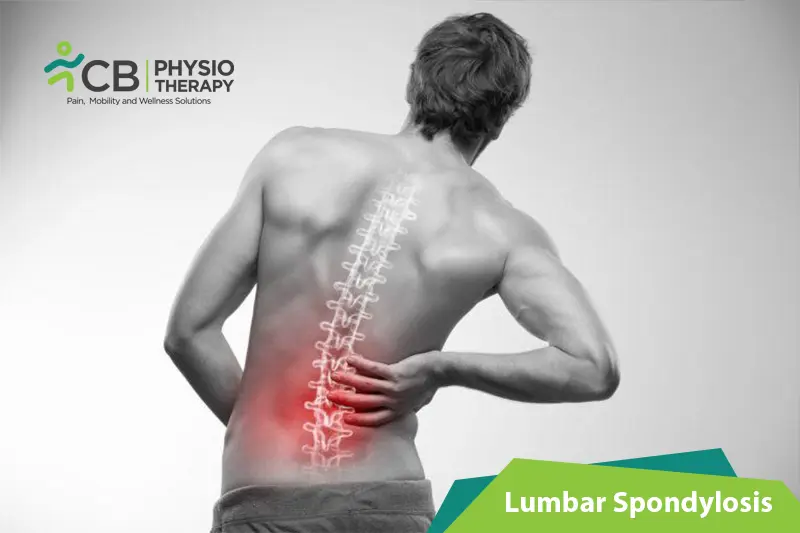
Understanding Lumbar Spondylosis
Living with Lumbar Spondylosis usually means negotiating with it daily — adjusting how you sit, move, sleep and work around it. It is common; that never makes it something you simply have to live with.
In most cases the problem behaves mechanically: particular movements or positions load the affected structures more than they can currently tolerate. A physiotherapy assessment identifies that mechanism, and treatment targets it directly — most mechanical cases respond well to conservative care, without medicines or surgery.
Causes & risk factors of Lumbar Spondylosis
What commonly drives it — your assessment pins down which of these apply to you.
Muscle strain and overload
A sudden lift, an awkward movement or simply more load than the tissues were prepared for — the most common trigger.
Posture and long static hours
Desks, driving and screens keep the same structures loaded for hours at a stretch — comfortable at first, aching later.
Joint stiffness and age-related change
Joints that move less start to hurt more; age-related wear is normal, but painful stiffness is not something to simply accept.
Weakness and deconditioning
When supporting muscles lose strength, load shifts to structures that were never meant to carry it.
Old injuries and compensations
A previous injury that never fully rehabilitated often leaves a movement pattern that overloads something else.
When physiotherapy is the right call
If any of these sound like you, an assessment is the right first step.
- ✓ Movement feels restricted, weak or guarded compared to before
- ✓ You want to return to sport or work with a plan, not by trial and error
- ✓ Lumbar Spondylosis that keeps returning or hasn't settled within two weeks
- ✓ Pain or stiffness that limits work, sleep or daily activities
- ✓ You want to avoid long-term painkillers — or surgery has been mentioned
Your treatment journey
Step by step — from your first assessment to a tracked recovery plan.
A detailed first assessment
History, movement testing and strength checks — a focused session to find what is actually driving your Lumbar Spondylosis.
A diagnosis you understand
Your physiotherapist explains the findings in plain language — what is affected, why it happened and what that means for you.
Active, tracked treatment
Hands-on therapy, the right modalities and graded exercise — progressed session by session and tracked on Fizo IQ™.
Prevention, built in
The final phase rebuilds strength and habits so the same problem does not come back — with a home plan you keep.
What recovery looks like
- ✓ Lower chance of recurrence, with a prevention plan
- ✓ Care without long-term medicines — at a clinic near you or at home
- ✓ Relief that comes from treating the cause, not masking it
- ✓ A clear diagnosis and a timeline you can plan around
- ✓ Strength and movement rebuilt, not just pain reduced
When to see a doctor — red flags
How CB Physiotherapy treats Lumbar Spondylosis
We treat Lumbar Spondylosis the way we treat everything: assessment first, plan second, treatment third. It sounds obvious, but it is the difference between sessions that fill a slot and sessions that move you towards a goal. Care is delivered by certified physiotherapists at a clinic near you or at home.
Your whole journey is tracked on Fizo IQ™ — the diagnosis, the root cause, the milestones and the goals — so progress is measured, not guessed, and the plan adapts the moment your response calls for it.
Exercises that help with Lumbar Spondylosis
 Top 5 Exercises For Lumbar Spondylosis
Steps & precautions →
Top 5 Exercises For Lumbar Spondylosis
Steps & precautions →
 Top 5 Exercises For Back Pain
Steps & precautions →
Top 5 Exercises For Back Pain
Steps & precautions →
Make these exercises yours — a CB physio personalizes, doses and tracks your plan week by week.
Get my personalized planGeneral guidance only — stop if an exercise increases your pain, and check with your physio before starting a new routine.
Get Lumbar Spondylosis treatment near you
Certified physiotherapists at a clinic near you or at home — same-day slots, assessment-led care.
Request received!
We'll call you within 10 minutes to confirm your home visit.We'll call you within 10 minutes to confirm your slot.
Chat with us on WhatsAppLumbar Spondylosis, answered
Lumbar spondylosis is a condition caused by degeneration of the lumbar disc or facet joints. It is a degenerative condition affecting discs, vertebral bodies, and associated joints of lumbar vertebrae. Lumbar spondylosis is progressive and irreversible in older patients and commonly occurs due to exposure to mechanical stress.
- Pain in the spine,
- Numbness,
- Weakness,
- Neurological claudication affects the lower back, and leg while standing and walking,
- Disc bulging.
- Old-Age,
- Heredity,
- Back trauma,
- Repetitive spine loading,
- Repetitive bending, lifting, twisting, and
- Sustained postures.
Pathology
Degenerative changes can cause the weakening of the disc fibers, causing wear and tear. Constant wear and tear and injury to the joints of the vertebrae cause inflammation and the formation of mineral deposits within the discs. The water content of the disc decreases with age making the disc hard, stiff, and decreased in size. This, results in strain on the surrounding joints and tissues, causing stiffness.
Physical examination of the patient is done thoroughly followed by the following diagnostic tests.
Magnetic resonance imaging (MRI):
Magnetic resonance imaging (MRI) is used to show a detailed image of the spine and visualize the degree of disc herniation.
X-rays:
X-rays are used to show bone spurs on vertebral bodies in the spine, the thickening of intervertebral disc spaces, and the thickening of facet joints.
CT scan:
CT scan helps to visualize a detailed image of the spine and also checks the narrowing of the spinal cord.
Single-photon emission computer tomography (SPECT):
Single-photon emission computer tomography is used to evaluate patients with spondylosis.
Note: Medication should not be taken without the doctor's permission.
Surgical Management:
Surgery may be recommended to arrest further neurological deficits and restore function.
There are various decompression surgical options such as;
- Foraminotomy,
- Facetectomy,
- Laminectomy,
- laminotomy, or discectomy.
Lumbar back support:
Lumbar back support is beneficial for patients suffering from lumbar spondylosis. It helps to limit excessive spine movement and reduce mechanical forces. It also helps to stabilize and correct spine deformity.
Lumbar support:
Lumbar support with the help of braces is used for stabilization, reducing mechanical forces, and limiting spine movement.
Cryotherapy:
Cryotherapy is used as it reduces swelling and pain.
Thermotherapy:
Thermotherapy is used to promote blood flow, decrease swelling, and remove toxins.
Exercise therapy:
Exercise therapy includes muscle strengthening, muscle stretching, and aerobics exercises. The exercise programs vary in intensity, duration, and frequency.
Traction therapy:
Traction therapy helps to relieve chronic back pain. It helps to open intervertebral space and decreases spine lordosis.
Manual therapy:
Manual therapy is a hands-on technique that involves spinal manipulation and mobilization. It is used to break the adhesions, align the bones, and improve mobility.
Massage therapy:
Massage therapy helps to decrease pain and swelling, breaks adhesions, and increases blood circulation.
Transcutaneous electrical stimulation (TENS):
Transcutaneous electrical stimulation (TENS) gives immediate relief from pain.
Interferential therapy:
Interferential therapy is used to decrease pain and inflammation.
Laser therapy:
Laser therapy helps to enhance the healing process, thus decreasing pain and also increasing mobility.
Kinesio-taping:
Kinesio-taping helps to relieve pain in the lower back. It is used to improve the range of motion and also to correct bad posture.
Strengthening exercises:
Strengthening exercises are done to strengthen back and core muscles which help to support the low back.
Stretching exercises:
Stretching exercises are done to improve the flexibility and pain-free range of motion of the back muscles.
Balance exercises:
Balance exercises are taught for awareness to show the proper posture of the back while moving during various activities.
McKenzie exercises:
McKenzie's exercises focus on extension and help to prevent further degeneration of the lumbar spine.
The patient is educated about the lumbar anatomy, correct posture, and ergonomics, and given appropriate back exercises. The patient is advised to avoid activities that aggravate his condition.
Don't let Lumbar Spondylosis decide your day.
Get assessed today — find the cause, get a plan, and know when you'll feel better.