
Ankylosing Spondylitis (as) — Symptoms, Causes & Treatment
Also known as Ankylosing Spondylitis (as). Causes, symptoms and how physiotherapy treats Ankylosing Spondylitis (as) — without surgery or medicines.
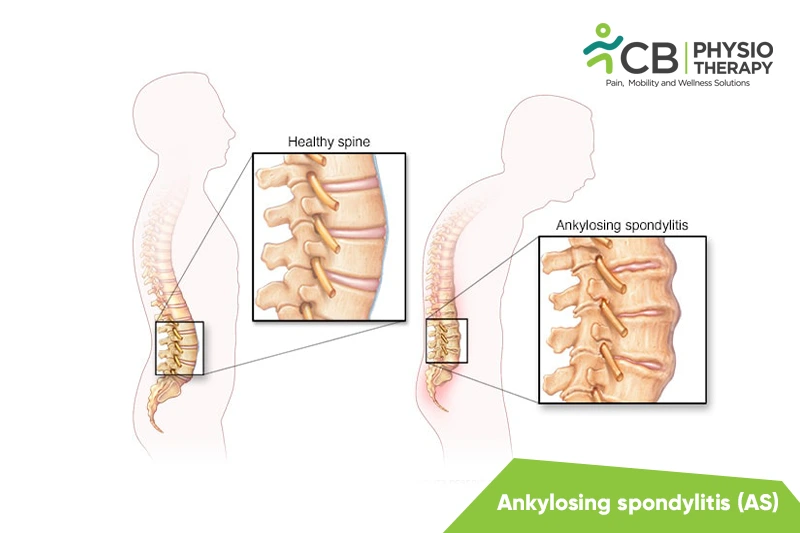
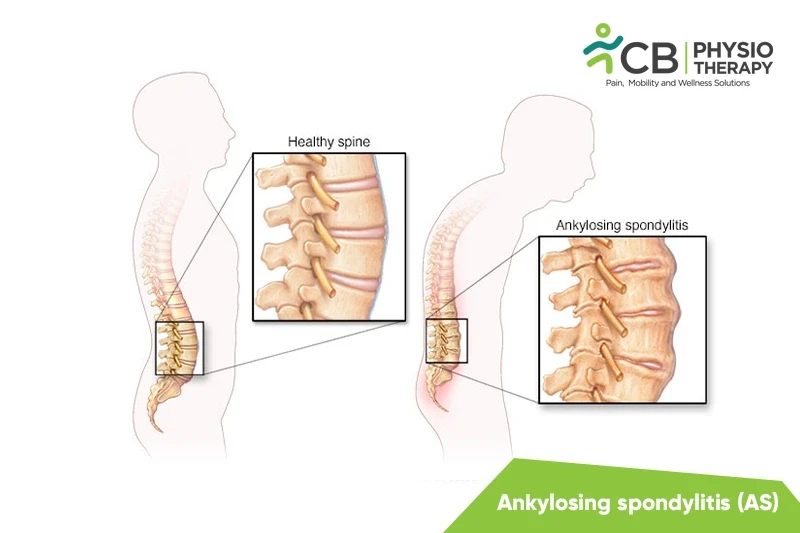
Understanding Ankylosing Spondylitis (as)
Ankylosing Spondylitis (as) is an inflammatory condition, so flare-ups and calmer phases tend to alternate. Medical management from your doctor controls the disease process; physiotherapy protects what it threatens — joint mobility, muscle strength and your capacity to stay active.
Graded, well-dosed exercise is one of the best-evidenced ways to reduce pain and stiffness in inflammatory conditions. The art is in the dosing: enough to build capacity, never enough to provoke a flare — which is exactly what a physiotherapist-led plan manages.
Causes & risk factors of Ankylosing Spondylitis (as)
What commonly drives it — your assessment pins down which of these apply to you.
An overactive immune response
The inflammation is driven by the immune system, not by injury — which is why your doctor's medical management leads the treatment.
Flare and rest cycles
Resting too much in calm phases weakens muscles and stiffens joints — making the next flare feel worse than it needs to.
Stiffness that follows inflammation
Inflamed joints lose range quietly; keeping them moving within tolerance is protective, not risky.
Deconditioning
Pain makes activity shrink; lost fitness then makes every activity cost more — graded exercise reverses the slide.
When physiotherapy is the right call
If any of these sound like you, an assessment is the right first step.
- ✓ Pain or stiffness that limits work, sleep or daily activities
- ✓ You want to avoid long-term painkillers — or surgery has been mentioned
- ✓ You've been diagnosed with Ankylosing Spondylitis (as) and told to "rest and see"
- ✓ Movement feels restricted, weak or guarded compared to before
- ✓ You want to return to sport or work with a plan, not by trial and error
Your treatment journey
Step by step — from your first assessment to a tracked recovery plan.
A detailed first assessment
History, movement testing and strength checks — a focused session to find what is actually driving your Ankylosing Spondylitis (as).
A diagnosis you understand
Your physiotherapist explains the findings in plain language — what is affected, why it happened and what that means for you.
Active, tracked treatment
Hands-on therapy, the right modalities and graded exercise — progressed session by session and tracked on Fizo IQ™.
Prevention, built in
The final phase rebuilds strength and habits so the same problem does not come back — with a home plan you keep.
What recovery looks like
- ✓ A clear diagnosis and a timeline you can plan around
- ✓ Strength and movement rebuilt, not just pain reduced
- ✓ Lower chance of recurrence, with a prevention plan
- ✓ Care without long-term medicines — at a clinic near you or at home
- ✓ Relief that comes from treating the cause, not masking it
When to see a doctor — red flags
How CB Physiotherapy treats Ankylosing Spondylitis (as)
At CB Physiotherapy, treatment for Ankylosing Spondylitis (as) starts with finding its cause: a structured, physiotherapist-led assessment before anything is prescribed. Your plan then combines hands-on therapy, targeted exercise and the right modalities — delivered at a clinic near you or at home, and coordinated with your doctor where medical care is involved.
Every case runs on Fizo IQ™, our recovery engine: diagnosis, root cause, plan, milestones and goals, tracked session by session. You always know where you are in your recovery — and what comes next.
Exercises that help with Ankylosing Spondylitis (as)
 Top 5 Exercises For Ankylosing Spondylitis (as)
Steps & precautions →
Top 5 Exercises For Ankylosing Spondylitis (as)
Steps & precautions →
 Top 5 Exercises For Back Pain
Steps & precautions →
Top 5 Exercises For Back Pain
Steps & precautions →
Make these exercises yours — a CB physio personalizes, doses and tracks your plan week by week.
Get my personalized planGeneral guidance only — stop if an exercise increases your pain, and check with your physio before starting a new routine.
Get Ankylosing Spondylitis (as) treatment near you
Certified physiotherapists at a clinic near you or at home — same-day slots, assessment-led care.
Request received!
We'll call you within 10 minutes to confirm your home visit.We'll call you within 10 minutes to confirm your slot.
Chat with us on WhatsAppAnkylosing Spondylitis (as), answered
Ankylosing spondylitis (AS) causes inflammation of the sacroiliac joints located between the base of the spine (vertebrae) and pelvis. Inflammation is one of the first signs of AS, which often spreads to joints between the vertebrae, the bones that make up the spinal column. This condition is known as spondylitis. This fusing makes the spine less flexible and can result in a hunched posture, it also affects the ribs and can be difficult to breathe deeply. There is no cure for ankylosing spondylitis, but treatments can lessen symptoms and possibly slow the progression of the disease.
Early signs and symptoms of ankylosing spondylitis might include:
- Persistent pain and stiffness.
- Lower back pain.
- Hip pain.
- Joint pain.
- Inflammation.
- Fatigue.
- Difficulty breathing.
- Unexplained weight loss.
- Loss of appetite.
- Abdominal pain.
- Diarrhea.
- Skin rash.
- Vision problems.
AS has no known specific cause, though genetic factors and genetic links may be one of the causes. Other causes may be:
- A gene called HLA-B27 is present in people who are more susceptible to developing ankylosing spondylitis.
- Ulcerative colitis.
- Crohn's disease.
- Psoriasis.
Pathology:
Initially, the inflammation of the synovium occurs, which commonly starts, from the sacroiliac joints followed by the other region of the spine. It causes the cartilage of the joint to get destroyed and becomes rough and bony erosion occurs. Finally leading to the formation of new bones in these areas, and bridging takes place between the vertebral bodies, usually from the edge of one body to the next, along the outer layer of the disc.
During the physical examination, the examiner asks the patient to bend in different directions to test the range of motion in the spine. The examiner tries to reproduce the pain by pressing on specific portions of the pelvis or by moving the legs into a particular position. He may also ask the patient to take a deep breath to see if he/she has difficulty expanding the chest.
X-rays:
X-rays help us to see changes in the joints and bones, though visible signs of ankylosing spondylitis might not be evident in the early phase of the disease.
MRI:
MRI uses radio waves and a strong magnetic field to show more-detailed images of bones and soft tissues. Magnetic resonance imaging can reveal evidence of ankylosing spondylitis in the early phase of the disease.
(Note: Medication should not be taken without the doctor's prescription.)
Surgery:
Most people with ankylosing spondylitis don't need surgery. Surgery may be recommended if there is severe pain or if a hip joint is so damaged that it needs to be replaced. Only a few people with ankylosing spondylitis may need surgery. Joint replacement surgery implants, an artificial joint, and kyphoplasty correct a curved spine.
Hot packs or thermotherapy increase circulation and relieves pain.
Cryotherapy:
Cryotherapy or cold therapy decreases inflammation and muscle spasm.
Hydrotherapy:
Hydrotherapy uses the therapeutic effect of water in the treatment of Ankylosing Spondylitis as it relieves pain and muscle spasms, maintains and increases the range of motion of joints, strengthens the weak muscles, and increases circulation.
Mobilization:
Mobilization helps to maintain the mobility of joints like the spine, hip, shoulder, and thoracic cage are essential in Ankylosing Spondylitis Treatment. As maintenance of mobility is essential so that all the joints are moved to their maximum limit and thus, we can delay the process of ankylosis.
Prevent and correct the deformity
While standing and walking the spondylitis patient should always be conscious of his posture and should maintain an erect posture during these activities. As it helps to prevent and correct the deformity. The patient should sleep in a prone position or supine on a firm mattress with a thin or no pillow to keep the spine in an extended position and not in flexion.
Patients who spend most of their working hours sitting at the desk should avoid low-arm chairs, an upright chair with some cushioning to support the lower lumber spine is better.
Also, the height of the working table should be such that the patient does not stoop on that. Prolonged immobilization or bed rest, should also be avoided so that the spinal extensors don't become weak.
Breathing Exercises:
Breathing exercises are recommended to increase chest expansion and vital capacity. These exercises include apical breathing exercises, diaphragmatic breathing exercises, and lateral costal breathing exercises.
Range of motion, Strengthening, and Stretching Exercises:
Simple range of motion exercises can slow or stop disease progression. Strengthening exercises are done by working muscles against light resistance and high repetition i.e. for a longer time. Strengthening exercises for abdominal and back muscles are recommended. Stretching exercises are also done for pain relief and to increase flexibility.
The patient is asked to stay active and do exercises to help ease pain, maintain flexibility and improve posture. The patient is also advised to quit smoking, as smoking is generally bad for the health, as it further hampers breathing. Also, practicing standing straight in front of a mirror can help avoid some of the problems associated with ankylosing spondylitis.
Don't let Ankylosing Spondylitis (as) decide your day.
Get assessed today — find the cause, get a plan, and know when you'll feel better.