Open today · 8 AM–8 PM · Same-day slots
CB Physiotherapy
Same-day appointments

Ankylosing Spondylitis (as) Treatment Doctors in Jammu And Kashmir

Whether it's a dull ache, a sharp catch, or pain that keeps coming back — we find the root cause of your Ankylosing Spondylitis (as) and fix it, at a clinic near you or at home.

Precision Care, Proven Recovery
ACCURATE DIAGNOSIS
ROOT CAUSE ASSESSMENT
COMPREHENSIVE RECOVERY PLAN
MILESTONE TRACKING
GOALS ACHIEVED
STAYING ACTIVE
See how it works ↓
Move pain-free Avoid drugs & surgery
5.0 / 5 · 23 Google reviews Verified on Google

Request received!

We'll call you within 10 minutes to confirm your home visit.We'll call you within 10 minutes to confirm your slot.

Chat with us on WhatsApp

Book in 30 seconds

Visit your nearest CB clinic. Tell us your concern and a preferred time — we'll confirm your slot by call within 10 minutes.

Same-day booking by default. We'll confirm your exact slot by call.
+91
No spam · Your number is safe with us
Prefer to talk now? Call +08082666216
Understanding your ankylosing spondylitis (as)

Does this sound like you?

Common triggers include muscle strain, joint stiffness, poor posture and long desk hours. If two or more of these fit, a physiotherapy assessment can identify exactly what's driving it.

  • A dull ache or sharp, burning ankylosing spondylitis (as) that keeps returning
  • Discomfort that worsens with movement, lifting or long sitting hours
  • Morning stiffness that eases as you move
  • Pain that limits work, sport or everyday activities
  • Recurring episodes that keep coming back

Most ankylosing spondylitis (as) improves without surgery or long-term medication — the key is finding the cause first.

⚠ When to seek urgent medical care

Ankylosing Spondylitis (as) rarely signals something serious, but see a doctor immediately if it comes with:

  • Fever, unexplained weight loss, or a history of cancer
  • Numbness or weakness that keeps getting worse
  • Loss of bladder or bowel control
  • Pain after a major fall or accident

Our physios screen for these red flags at every first assessment and refer you to the right doctor if needed.

Assessment-led treatment

How we treat ankylosing spondylitis (as)

We start with an AI-based assessment to find the root cause — then follow a clear, four-phase plan.

Phase 1

Ease the pain

Hands-on therapy and advanced modalities to calm pain and inflammation fast.

Phase 2

Restore movement

Mobility work and posture correction so everyday movement feels normal again.

Phase 3

Build strength

Targeted strengthening that protects you — in-clinic or in our physio gym.

Phase 4

Return to activity

Back to work, sport and life — with a home program that prevents relapse.

Your physiotherapist, with Fizo IQ™

Every recovery, planned and proven

One patient record, stage by stage: your physiotherapist pinpoints the diagnosis, finds the root cause and builds your in-clinic plan — while Fizo IQ™, our AI decision-support engine, tracks every milestone until your goals are met and you leave with an exercise plan to stay active.

Physio Expert @CB with Fizo IQ™ — recovery engine
TRACKING
ACCURATE DIAGNOSIS
L4–L5 disc bulge · nerve-root irritation, pinpointed at the first movement assessment
ROOT CAUSE ASSESSMENT
Poor sitting posture, weak core–hip chain · quietly loading that disc
COMPREHENSIVE RECOVERY PLAN
24 clinic sessions · manual therapy + spinal decompression · guided exercise therapy, reviewed weekly
MILESTONE TRACKING
Sitting pain-free ✓ · stairs ✓ · next: the morning 5 km walk
GOALS ACHIEVED
Pain 7 → 3 in six weeks · back to daily life, moving freely
STAYING ACTIVE
A personalized exercise plan, yours to keep · so the pain doesn't come back
Example recovery journey · every plan is built around you
Feeling something?

Symptoms Ankylosing Spondylitis (as) addresses

These symptoms respond well to Ankylosing Spondylitis (as) — tap one to see how we treat it near you.

Move better

Exercises that help with Ankylosing Spondylitis (as)

More exercises →

Make these exercises yours

Get my personalized plan

General guidance only — stop if an exercise increases your pain, and check with your physio before starting a new routine.

Meet your care team

Licensed experts who treat hundreds like you every month

Every CB physio is a qualified BPT/MPT clinician. You don't need to choose one — our lead physiotherapist reviews your case and assigns the specialist best suited to treat it.

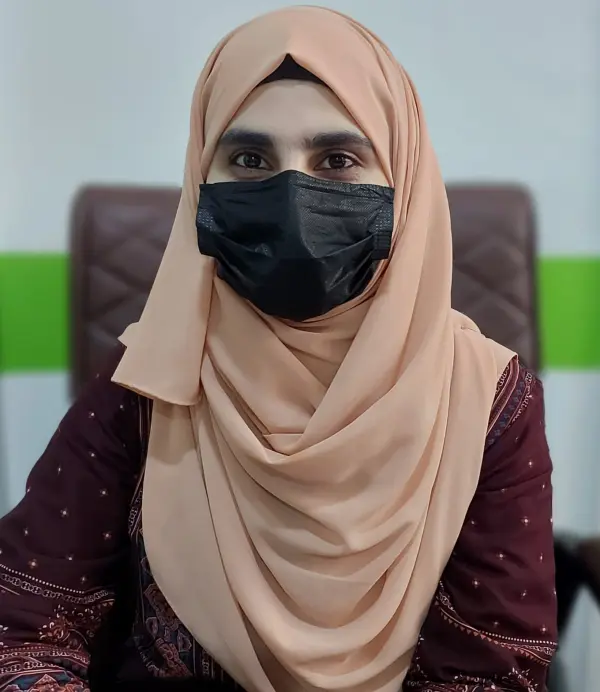
Dr. Shafiya, physiotherapist in Anantnag

Dr. Shafiya

Physiotherapist

5.0 (13)
Anantnag
cb physiotherapy janglat mandi
1 yrs experience
Ortho Spine Sports Physiotherapy Center
Dr. Athur Un Nisa, physiotherapist in Anantnag Verified

Dr. Athur Un Nisa

Physiotherapist

5.0 (10)
Anantnag
cb physiotherapy janglat mandi
4 yrs experience
Ortho Spine Sports Physiotherapy Center
Not sure who to see? You don't have to decide. Our lead physiotherapist reviews every case and assigns the physio best suited to it — based on your condition and availability.
Patient stories

Ankylosing Spondylitis (as) recoveries, verified on Google

Rated 5.0 / 5 across 23 verified patient reviews in Jammu And Kashmir.

Verified

“Received treatment at Cb Anantnag clinic where Dr. Athar treated me she was highly skilled and professional. Her treatment approach is effective, and I noticed significant improvement in my knee pain within a short time. I highly recommend her for quality physiotherapy care. in Anantnag”

KZ
Khan Zainab Verified patient · Treated at CB · 7 months ago
Verified

“Excellent physiotherapist, Dr. Athar! Her expertise and customized care assisted me in recovering swiftly. from back issue, I strongly recommend her..”

SJ
Saima Jan Verified patient · Treated at CB · 7 months ago
Verified

“I had an excellent experience with Dr. Shafiya. My back pain recovery was made easier and less stressful thanks to her knowledge and kind attitude. Thank you for your incredible care. Doctor Shafiya.”

SB
Saima Bhat Verified patient · Treated at CB · 7 months ago
Verified

“Dr. Shafiya is an excellent physiotherapist! Her expertise, concern, and dedication enabled me to heal fast and painlessly. I definitely recommend her to anyone looking for efficient physiotherapy treatment.”

RJ
Rumaisa Jaan Verified patient · Treated at CB · 7 months ago
Verified

“Dr. Athar un Nisa is a wonderful physical therapist who honestly cares about her patients. She devised a treatment regimen that helped me restore mobility and strength following my injury. Her treatment sessions were quite successful and motivational. I am incredibly appreciative for her effort and support.”

RB
Rafia Bhat Verified patient · Treated at CB · 7 months ago
Verified

“Dr. Athar un Nisa is a wonderful physical therapist who honestly cares about her patients. She devised a treatment regimen that helped me restore mobility and strength following my injury. Her treatment sessions were quite successful and motivational. I am incredibly appreciative for her effort and support.”

RB
Rafia Bhat Verified patient · Treated at CB · 7 months ago
Good to know

Ankylosing Spondylitis (as), answered

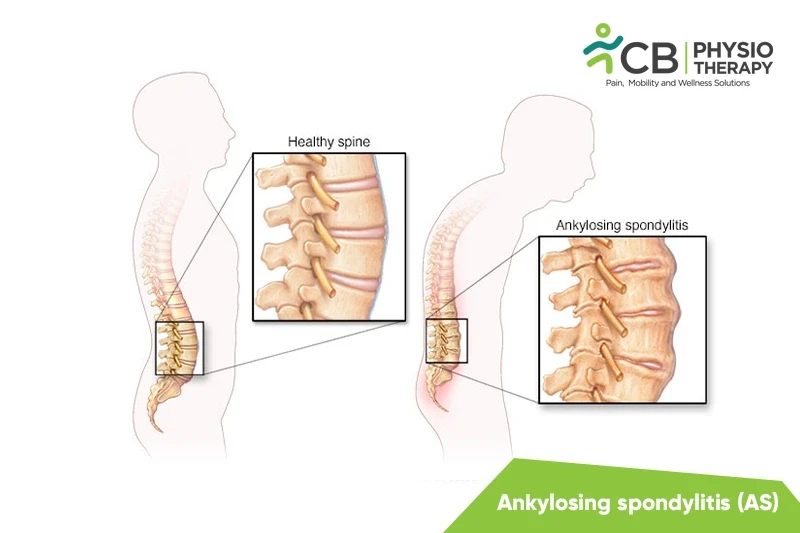
Ankylosing spondylitis (AS) causes inflammation of the sacroiliac joints located between the base of the spine (vertebrae) and pelvis. Inflammation is one of the first signs of AS, which often spreads to joints between the vertebrae, the bones that make up the spinal column. This condition is known as spondylitis. This fusing makes the spine less flexible and can result in a hunched posture, it also affects the ribs and can be difficult to breathe deeply. There is no cure for ankylosing spondylitis, but treatments can lessen symptoms and possibly slow the progression of the disease.

Early signs and symptoms of ankylosing spondylitis might include:

  • Persistent pain and stiffness.
  • Lower back pain.
  • Hip pain.
  • Joint pain.
  • Inflammation.
  • Fatigue.
  • Difficulty breathing.
  • Unexplained weight loss.
  • Loss of appetite.
  • Abdominal pain.
  • Diarrhea.
  • Skin rash.
  • Vision problems.

AS has no known specific cause, though genetic factors and genetic links may be one of the causes. Other causes may be:

  • A gene called HLA-B27 is present in people who are more susceptible to developing ankylosing spondylitis.
  • Ulcerative colitis.
  • Crohn's disease.
  • Psoriasis.

Pathology:

Initially, the inflammation of the synovium occurs, which commonly starts, from the sacroiliac joints followed by the other region of the spine. It causes the cartilage of the joint to get destroyed and becomes rough and bony erosion occurs. Finally leading to the formation of new bones in these areas, and bridging takes place between the vertebral bodies, usually from the edge of one body to the next, along the outer layer of the disc.

Physical Examination:
During the physical examination, the examiner asks the patient to bend in different directions to test the range of motion in the spine. The examiner tries to reproduce the pain by pressing on specific portions of the pelvis or by moving the legs into a particular position. He may also ask the patient to take a deep breath to see if he/she has difficulty expanding the chest.

X-rays:
X-rays help us to see changes in the joints and bones, though visible signs of ankylosing spondylitis might not be evident in the early phase of the disease.

MRI:
MRI uses radio waves and a strong magnetic field to show more-detailed images of bones and soft tissues. Magnetic resonance imaging can reveal evidence of ankylosing spondylitis in the early phase of the disease.
Medications: Nonsteroidal anti-inflammatory drugs (NSAIDs) like ibuprofen, and naproxen. Tumor necrosis factor (TNF) blockers like Adalimumab (Humira), Etanercept (Enbrel), Infliximab (Remicade), or an interleukin-17 (IL-17) inhibitor include secukinumab (Cosentyx) and ixekizumab (Taltz) and injectable corticosteroids, etc.
(Note: Medication should not be taken without the doctor's prescription.)

Surgery:
Most people with ankylosing spondylitis don't need surgery. Surgery may be recommended if there is severe pain or if a hip joint is so damaged that it needs to be replaced. Only a few people with ankylosing spondylitis may need surgery. Joint replacement surgery implants, an artificial joint, and kyphoplasty correct a curved spine.
Hot packs:
Hot packs or thermotherapy increase circulation and relieves pain.

Cryotherapy:
Cryotherapy or cold therapy decreases inflammation and muscle spasm.

Hydrotherapy:
Hydrotherapy uses the therapeutic effect of water in the treatment of Ankylosing Spondylitis as it relieves pain and muscle spasms, maintains and increases the range of motion of joints, strengthens the weak muscles, and increases circulation.

Mobilization:
Mobilization helps to maintain the mobility of joints like the spine, hip, shoulder, and thoracic cage are essential in Ankylosing Spondylitis Treatment. As maintenance of mobility is essential so that all the joints are moved to their maximum limit and thus, we can delay the process of ankylosis.

Prevent and correct the deformity
While standing and walking the spondylitis patient should always be conscious of his posture and should maintain an erect posture during these activities. As it helps to prevent and correct the deformity. The patient should sleep in a prone position or supine on a firm mattress with a thin or no pillow to keep the spine in an extended position and not in flexion.
Patients who spend most of their working hours sitting at the desk should avoid low-arm chairs, an upright chair with some cushioning to support the lower lumber spine is better.
Also, the height of the working table should be such that the patient does not stoop on that. Prolonged immobilization or bed rest, should also be avoided so that the spinal extensors don't become weak.

Breathing Exercises:
Breathing exercises are recommended to increase chest expansion and vital capacity. These exercises include apical breathing exercises, diaphragmatic breathing exercises, and lateral costal breathing exercises.

Range of motion, Strengthening, and Stretching Exercises:
Simple range of motion exercises can slow or stop disease progression. Strengthening exercises are done by working muscles against light resistance and high repetition i.e. for a longer time. Strengthening exercises for abdominal and back muscles are recommended. Stretching exercises are also done for pain relief and to increase flexibility.

The patient is asked to stay active and do exercises to help ease pain, maintain flexibility and improve posture. The patient is also advised to quit smoking, as smoking is generally bad for the health, as it further hampers breathing. Also, practicing standing straight in front of a mirror can help avoid some of the problems associated with ankylosing spondylitis.

Ready when you are

Don't let the pain decide your day.

Get assessed today — find the cause, get a plan, and know when you'll feel better.

📞 Call 💬 WhatsApp Book now