Wartenberg’s Syndrome — Symptoms, Causes & Treatment
Also known as Cheiralgia Paresthetica. Causes, symptoms and how physiotherapy treats Wartenberg’s Syndrome — without surgery or medicines.
Wartenberg’s Syndrome को समझें
Wartenberg’s Syndrome (जिसे Cheiralgia Paresthetica भी कहा जाता है) हर व्यक्ति को अलग तरह से प्रभावित करता है, और सही देखभाल यह समझने से शुरू होती है कि यह आप पर कैसे असर डाल रहा है। चाल-ढाल, ताक़त, ऊर्जा और आत्मविश्वास पर इसका रोज़मर्रा का असर — यहीं फिजियोथेरेपी काम करती है।
Wartenberg’s Syndrome में हमारी भूमिका व्यावहारिक है: सावधान असेसमेंट के बाद बने प्लान से मूवमेंट और दैनिक कामकाज की रक्षा और पुनर्निर्माण — जहाँ मेडिकल प्रबंधन ज़रूरी हो, वहाँ आपके डॉक्टर के साथ तालमेल में।
Wartenberg’s Syndrome के कारण और जोखिम
आम तौर पर इसे क्या बढ़ाता है — आपका असेसमेंट तय करता है कि इनमें से कौन-से आप पर लागू होते हैं।
एक से ज़्यादा संभावित कारण
Wartenberg’s Syndrome के पीछे कई कारक हो सकते हैं — सावधान इतिहास और शारीरिक जाँच अंदाज़े की जगह उन्हें अलग-अलग परखती है।
घटा मूवमेंट और डीकंडीशनिंग
कारण जो भी हो, कम चलना-फिरना जल्दी ही अपनी कमज़ोरी और जकड़न जोड़ देता है — और यही हिस्सा सबसे आसानी से पलटता है।
रोज़मर्रा का भार और आदतें
काम की मुद्रा, दोहराए जाने वाले काम, नींद और तनाव — सब मिलकर तय करते हैं कि स्थिति रोज़ कैसे बर्ताव करेगी।
सामान्य सेहत और इतिहास
कुल सेहत, पुरानी चोटें और मौजूदा बीमारियाँ तस्वीर और प्लान दोनों को प्रभावित करती हैं — असेसमेंट इन सबको साथ देखता है।
फिजियोथेरेपी कब सही क़दम है
अगर इनमें से कुछ भी आप पर लागू होता है, तो असेसमेंट सही पहला क़दम है।
- ✓ Wartenberg’s Syndrome का नया निदान मिला है और आप रिहैब की साफ़ शुरुआत चाहते हैं
- ✓ रोज़ के काम, चलना या सीढ़ियाँ पहले से मुश्किल होती जा रही हैं
- ✓ ताक़त, दमख़म या संतुलन साफ़ तौर पर घटा है
- ✓ आप क्लिनिक + घर का संरचित प्रोग्राम चाहते हैं, मापने लायक़ माइलस्टोन के साथ
- ✓ परिवार को आपकी सुरक्षित मदद के लिए मार्गदर्शन चाहिए
आपका इलाज, चरण-दर-चरण
पहले असेसमेंट से ट्रैक होते रिकवरी प्लान तक।
विस्तृत पहला असेसमेंट
इतिहास, मूवमेंट टेस्टिंग और ताक़त की जाँच — यह जानने के लिए कि आपके Wartenberg’s Syndrome की असली वजह क्या है।
ऐसा निदान जो आप समझें
आपके फिजियोथेरेपिस्ट नतीजे सीधी भाषा में समझाते हैं — क्या प्रभावित है, क्यों हुआ और आपके लिए इसका क्या मतलब है।
सक्रिय, ट्रैक होता इलाज
हैंड्स-ऑन थेरेपी, सही मोडैलिटी और चरणबद्ध एक्सरसाइज़ — सेशन-दर-सेशन आगे बढ़ते हुए, Fizo IQ™ पर ट्रैक।
बचाव, प्लान में शामिल
आख़िरी चरण ताक़त और आदतें दोबारा बनाता है ताकि वही समस्या लौटे नहीं — घर के प्लान के साथ।
रिकवरी कैसी दिखती है
- ✓ रोज़ के कामों में ज़्यादा आत्मनिर्भरता
- ✓ बेहतर ताक़त, संतुलन और दमख़म
- ✓ कम झटके — चेतावनी संकेतों पर लगातार नज़र
- ✓ ऐसा प्रोग्राम जिसे परिवार समझे और सहारा दे सके
- ✓ Fizo IQ™ पर माइलस्टोन-दर-माइलस्टोन मापी जाती प्रगति
डॉक्टर से कब मिलें — चेतावनी संकेत
CB Physiotherapy Wartenberg’s Syndrome का इलाज कैसे करती है
CB Physiotherapy में Wartenberg’s Syndrome का इलाज उसका कारण खोजने से शुरू होता है: कुछ भी तय करने से पहले संरचित, फिजियोथेरेपिस्ट-आधारित असेसमेंट। फिर आपका प्लान हैंड्स-ऑन थेरेपी, लक्षित एक्सरसाइज़ और सही मोडैलिटी को जोड़ता है — आपके पास के क्लिनिक में या घर पर, और जहाँ मेडिकल देखभाल शामिल हो वहाँ आपके डॉक्टर के तालमेल में।
हर केस Fizo IQ™ — हमारे रिकवरी इंजन — पर चलता है: निदान, जड़, प्लान, माइलस्टोन और लक्ष्य, सेशन-दर-सेशन ट्रैक। आपको हमेशा पता रहता है कि आप कहाँ हैं और आगे क्या है।
Get Wartenberg’s Syndrome treatment near you
Certified physiotherapists at a clinic near you or at home — same-day slots, assessment-led care.
रिक्वेस्ट मिल गई!
हम 10 मिनट के भीतर कॉल करके आपकी होम विज़िट कन्फ़र्म करेंगे।हम 10 मिनट के भीतर कॉल करके आपका स्लॉट कन्फ़र्म करेंगे।
WhatsApp पर हमसे बात करेंWartenberg’s Syndrome, answered
- Pain or discomfort in the forearm, wrist, and hand.
- Numbness or tingling in the thumb, index, and middle fingers.
- Weakness in the hand and difficulty in gripping or holding objects.
- In severe cases, the hand may have muscle wasting.
- Repetitive use of the wrist and forearm, such as in certain occupational or sports activities.
- Direct trauma to the wrist or forearm, such as from a fall or impact.
- Inflammation or swelling of the radial nerve due to underlying medical conditions like arthritis, diabetes, or thyroid dysfunction.
- Anatomic variations in the radial tunnel that increase the pressure on the nerve.
Pathology:
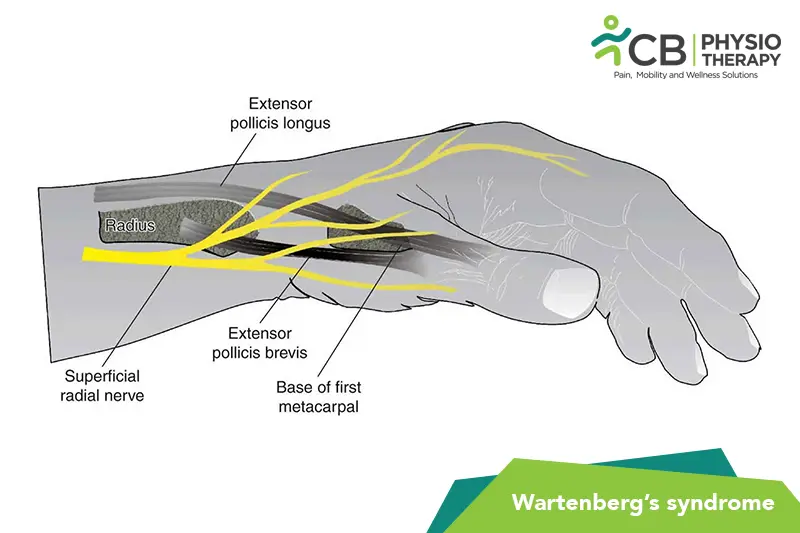
Wartenberg’s syndrome is caused by compression or irritation of the radial nerve as it passes through the radial tunnel, a narrow passage formed by the forearm's bones, muscles, and ligaments. Repetitive use of the wrist and forearm, direct trauma to the area, inflammation or swelling of the nerve, or anatomic variations that increase pressure on the nerve can all contribute to the development of Wartenberg’s syndrome. As the radial nerve is compressed, it may become inflamed and swollen, further exacerbating pain, numbness, and tingling symptoms.
The physiotherapist asks about the patient's symptoms, medical history, and any factors that may contribute to the development of Wartenberg’s syndrome, such as repetitive use of the wrist or forearm, trauma, or underlying medical conditions.
Physical examination:
The therapist performs a physical examination to assess for signs of nerve compression, such as pain, weakness, numbness, or tingling in the hand and fingers. They may also assess for any muscle wasting or atrophy.
Imaging studies:
Imaging studies such as X-rays, MRI, or CT scans may be ordered to assess for any anatomic variations or abnormalities that may be contributing to nerve compression.
Nerve conduction studies:
This test assesses the speed and strength of electrical signals transmitted through the radial nerve. It can help confirm the diagnosis of Wartenberg’s syndrome and assess the severity of the condition.
Note: Medication should not be taken without the doctor’s prescription.
Thermotherapy or heat therapy can help promote blood flow and tissue healing.
Cryotherapy:
Cryotherapy or cold therapy can help reduce inflammation and pain.
Transcutaneous electrical nerve stimulation (TENS):
TENS involves the use of a small device that delivers low-voltage electrical current to the affected area via electrodes placed on the skin. TENS can help reduce pain and improve nerve function in patients with Wartenberg’s syndrome.
Ultrasound therapy:
Ultrasound therapy involves the use of high-frequency sound waves to stimulate blood flow and promote tissue healing. This modality may be used to reduce inflammation and pain in the affected area.
Electrical muscle stimulation (EMS):
EMS involves the use of electrical impulses to stimulate muscle contractions. This modality may be used to help maintain muscle strength and reduce muscle wasting in the affected hand.
Shortwave diathermy:
Shortwave diathermy involves the use of high-frequency electromagnetic waves to generate heat in the affected area. This modality may be used to promote tissue healing and reduce pain and inflammation.
Range of motion exercises:
Range of motion exercises is designed to improve the flexibility and mobility of the affected hand and wrist. These exercises may include wrist rotations, finger stretches, and grip-strengthening exercises.
Nerve gliding exercises:
Nerve gliding exercises involve moving the affected nerve through a range of motion to reduce compression and irritation. These exercises may include wrist extensions, finger extensions, and elbow flexion.
Soft tissue mobilization:
Soft tissue mobilization techniques such as massage, myofascial release, and trigger point therapy can help reduce muscle tension and promote tissue healing.
Don't let Wartenberg’s Syndrome decide your day.
Get assessed today — find the cause, get a plan, and know when you'll feel better.