
Tremors — Causes & Treatment
Also known as Tremors. Causes, symptoms and how physiotherapy treats Tremors — without surgery or medicines.
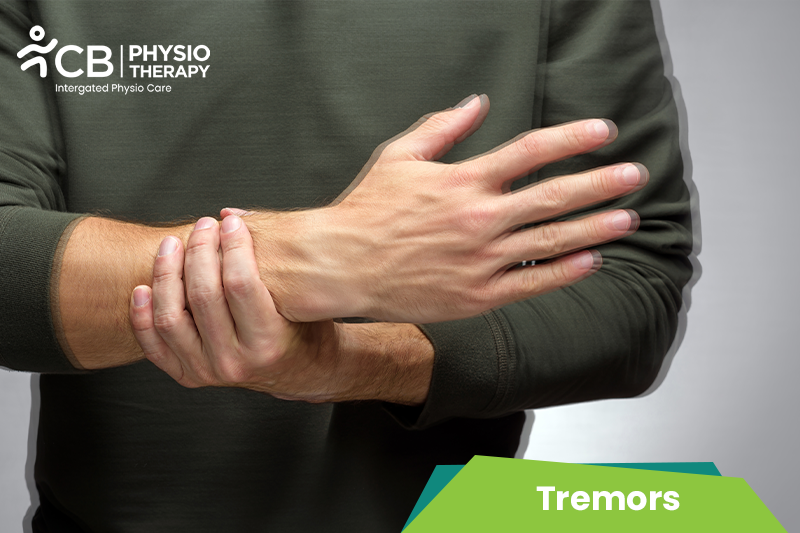
What Tremors feels like
Tremors is a signal, not a diagnosis. The same symptom can come from very different sources, and the pattern is what points to the cause: when it appears, what brings it on, what eases it, and whether it is changing.
That pattern is exactly what a physiotherapy assessment reads. Instead of treating Tremors blindly, we trace it to its source and treat that — which is why the relief lasts.
What could be behind Tremors
The usual suspects our physiotherapists screen for — finding the right one is what the assessment is for.
Vertigo →
One of the conditions our physiotherapists screen for when Tremors persists — see how it's treated.
Parkinson's Disease →
One of the conditions our physiotherapists screen for when Tremors persists — see how it's treated.
Muscle and soft-tissue causes
Overload, strain or protective spasm — the most common source, and usually the fastest to settle with the right treatment.
Joint-related causes
A stiff, irritated or worn joint nearby can refer the symptom and often adds a "locked" morning feeling.
Nerve involvement
An irritated nerve makes symptoms travel, tingle or come with numbness — and needs a different plan from a muscle problem.
When it needs a doctor first
A small minority of cases have a medical cause — your first assessment screens for exactly that and refers on immediately.
When to take Tremors seriously
If any of these fit, don't wait it out — get it assessed.
- ✓ It wakes you at night or is getting steadily worse
- ✓ It started after a fall, accident or injury
- ✓ It comes with numbness, tingling or weakness
- ✓ It is limiting work, sport or everyday tasks
- ✓ Tremors that has lasted more than two weeks or keeps returning
How we assess Tremors
Step by step — from what you feel to a clear cause and plan.
We listen first
When it started, what triggers it, what eases it — the story of your Tremors carries half the diagnosis.
Movement and strength testing
Specific tests load different structures one by one to isolate where the Tremors is actually coming from.
Screening the serious out
Red-flag checks are built into every first assessment — anything that needs a doctor is referred on immediately.
Cause, plan, timeline
You leave with a named cause, a treatment plan and a realistic timeline — not just something for the pain.
Your path to relief
- ✓ The actual source identified — not just the symptom managed
- ✓ Relief that holds, because the cause is treated
- ✓ A plan for work, sleep and activity while you recover
- ✓ Onward referral the moment anything needs a doctor
- ✓ Clinic or home sessions, tracked on Fizo IQ™
When to seek urgent care
How CB Physiotherapy gets to the bottom of Tremors
Tremors is where CB Physiotherapy's assessment-first model earns its keep. Anyone can quiet a symptom for a day; lasting relief needs the cause. Your first session maps how your Tremors behaves, tests the structures that could produce it and screens out anything that needs a doctor first.
Treatment then targets the source — hands-on therapy, the right modalities and a graded exercise plan — tracked stage by stage on Fizo IQ™, at a clinic near you or at home.
Get Tremors treatment near you
Certified physiotherapists at a clinic near you or at home — same-day slots, assessment-led care.
Request received!
We'll call you within 10 minutes to confirm your home visit.We'll call you within 10 minutes to confirm your slot.
Chat with us on WhatsAppTremors, answered
Tremors are involuntary movements of a part or parts of the body, occurring at a slow frequency of about 4 – 7 oscillations per second. These movements lead to shaking, back and forth oscillatory movements. It is the most common movement disorder. Tremors are not life-threatening but they can be embarrassing and disabling.
· Resting tremors:
Typically present at rest and disappears with voluntary movements. Resting tremors may be seen in hands, legs, feet, lips, tongue, and jaws.
· Action tremors :
Occur during movement of the affected part.
Types of Action tremors
Kinetic tremors
Occur when a person is in the process of voluntary muscle contraction, such as reaching for something and suddenly the handshakes.
Intentional tremors
Occurs while specific functional skills such as writing, feeding, and dressing.
Postural tremors
During sitting or standing, when a limb or body is supported against gravity.
Orthostatic tremors
Occur while standing, the legs and trunk shakes and stops when a person starts moving.
· Shaking hands, arms, feet, legs, tongue.
· Difficulty in feeding, writing and dressing.
· Shaky voice.
· Difficulty in holding things.
· Difficulty in walking.
There are various reasons for a person to have tremors, it can be just physiological when a normal person stretches the hand and keeps it steady you can see some amount of shaking and this can get exaggerated when you are anxious or stressed. It can be associated with neurological disorders like
· Stroke
· Peripheral neuropathy
· Traumatic brain injury
· Wilson’s disease
The other causes can be
· Drug induced anti-depressants, amphetamines, caffeine, corticosteroids, etc.
· Genetic.
· Alcohol abuse.
· Liver or kidney failure.
· High blood sugar.
· Aging.
· Stress or anxiety.
· Electromyogram or EMG.
The test measures involuntary muscle activity and muscle response to nerve stimulation
Accelerometer
Used to check the speed of the tremors, which are classified as low frequency (< 4Hz ), moderate frequency ( 4- 7 Hz) and high frequency ( > 7 Hz).
Physical examination
· History and complete neurological examination helps the therapist to access the tremors. During a physical examination your therapist observes and does some neurological examinations like:
· Ability to feel touch
· Muscle tone
· Tendon reflexes
The patient is asked to perform certain tasks
· Observe the patient at rest.
· Ask the patient to extend arms and hold.
· Finger nose test
· Heel to shin test
Medication
Tranquilizers, anti- seizures, Beta-blockers (should be taken as prescribed by the doctor)
Physiotherapy treatment for Tremors
Physiotherapy helps to bring people from a state of disability to a good functional status. It helps to strengthen your muscles and improve the coordination. It improves balance, gait, flexibility and grip strength
Physiotherapy uses the following techniques:
Relaxation exercises
Gentle rocking, rotational exercises combined with deep breathing can be used to produce generalized relaxation. Range of motion exercises should be emphasized for restoring range of motion of neck and trunk and can be performed in combination with rotational exercises to promote relaxation.
Exercises should initially be performed in fully supported positions like supine - slow side to side head rotations, hook lying - lower trunk rotations, side-lying - upper and lower trunk rotations.
PNF technique
Proprioceptive neuromuscular facilitation progressive movements from passive to active assisted to slightly resisted or active movement, which is designed to overcome the crippling effects of mobility. Techniques like hold relax, contract-relax techniques are used as a treatment technique.
Flexibility exercises
Both active and passive ROM exercises are used to improve flexibility. Exercises emphasize active motions that are performed two or three times a day. Exercise should be focused on strengthening the patient’s weak, elongated extensor muscles and tight flexor muscles.
Stretching techniques
This technique can be used to elongate the muscles. The patient or caregiver should be instructed on appropriate stretching exercises and the importance of maintaining the stretch force for at least 15 – 30 seconds. Stretches are repeated at least 3 -5 times. Ballistic stretches (high-intensity bouncing stretches) should be avoided.
Mobility exercises
The overall focus is on improving mobility and function with specific emphasize on improving segmental mobility of the head, trunk and proximal segments hips and shoulders the movements should be rhythmic and should progress towards increasing ROM. Bed mobility, sitting and standing activities are essential skills to be taught.
Balance activities
A number of positions can be used to improve balance. Training should begin with weight shifts in both sitting and standing positions. The complexity of the activities can be altered by increasing the range of the weight shift or adding upper extremity tasks like reaching, picking up objects off the floor, tying shoelaces etc. Use of Swiss ball can be incorporated also.
Home program
Early morning warm-up exercises are helpful in the morning reduces morning stiffness. HOM exercises can often be assisted by the use of adaptive equipments like wall pulleys, which can be used to improve upper extremities ROM. Hanging from an overhead bar, maintain the stretch to upper extremities, wands or canes can used in promoting overhead movements. In standing countertop or sturdy chair can be used to assist in stabilization during balance activities.
Patient and family education
Patients, family members and caregivers need to be educated about the patient’s condition. They should be taught to understand the preventive measures taken to minimize the secondary complications and impairments that typically result. The patient cannot be hurried because performance will suffer. Caregivers should be encouraged not to provide too much assistance because this will foster dependence.
Don't let Tremors decide your day.
Get assessed today — find the cause, get a plan, and know when you'll feel better.