Bell's Palsy Or Facial Palsy — Symptoms, Causes & Treatment
Also known as Bell's Palsy Or Facial Palsy. Causes, symptoms and how physiotherapy treats Bell's Palsy Or Facial Palsy — without surgery or medicines.
Understanding Bell's Palsy Or Facial Palsy
Bell's Palsy Or Facial Palsy affects the nervous system's control of movement — and while the diagnosis itself is made and managed by your doctor, physiotherapy shapes what daily life looks like with it. Strength, balance, walking and everyday tasks can all improve with the right rehabilitation, at almost any stage.
Neuro-rehabilitation works because of neuroplasticity: with repeated, task-specific practice the nervous system re-learns. A structured program targets what matters to you — transfers, walking, stairs, confidence — and measures progress milestone by milestone.
Causes & risk factors of Bell's Palsy Or Facial Palsy
What commonly drives it — your assessment pins down which of these apply to you.
The underlying neurological event
Conditions like Bell's Palsy Or Facial Palsy begin in the nervous system — diagnosis and medical management sit with your doctor and neurologist.
Reduced activity after diagnosis
Fear, fatigue and difficulty shrink movement — and inactivity then adds its own layer of weakness and stiffness.
Muscle weakness and tone changes
Altered signals change how muscles fire — some weaken, some tighten — reshaping movement patterns over time.
Balance and confidence
Balance changes raise fall risk, and fear of falling quietly cuts activity further — a loop rehabilitation is designed to break.
When physiotherapy is the right call
If any of these sound like you, an assessment is the right first step.
- ✓ A new diagnosis of Bell's Palsy Or Facial Palsy and you want a clear rehabilitation start point
- ✓ Daily tasks, walking or stairs are getting harder than they used to be
- ✓ Strength, stamina or balance has visibly dropped
- ✓ You want a structured clinic + home program with measurable milestones
- ✓ Family members need guidance to support you safely
Your treatment journey
Step by step — from your first assessment to a tracked recovery plan.
A detailed first assessment
History, movement testing and strength checks — a focused session to find what is actually driving your Bell's Palsy Or Facial Palsy.
A diagnosis you understand
Your physiotherapist explains the findings in plain language — what is affected, why it happened and what that means for you.
Active, tracked treatment
Hands-on therapy, the right modalities and graded exercise — progressed session by session and tracked on Fizo IQ™.
Prevention, built in
The final phase rebuilds strength and habits so the same problem does not come back — with a home plan you keep.
What recovery looks like
- ✓ More independence in daily tasks
- ✓ Better strength, balance and stamina
- ✓ Fewer setbacks, with red flags monitored
- ✓ A program your family understands and can support
- ✓ Progress measured milestone by milestone on Fizo IQ™
When to see a doctor — red flags
How CB Physiotherapy treats Bell's Palsy Or Facial Palsy
At CB Physiotherapy, treatment for Bell's Palsy Or Facial Palsy starts with finding its cause: a structured, physiotherapist-led assessment before anything is prescribed. Your plan then combines hands-on therapy, targeted exercise and the right modalities — delivered at a clinic near you or at home, and coordinated with your doctor where medical care is involved.
Every case runs on Fizo IQ™, our recovery engine: diagnosis, root cause, plan, milestones and goals, tracked session by session. You always know where you are in your recovery — and what comes next.
Exercises that help with Bell's Palsy Or Facial Palsy
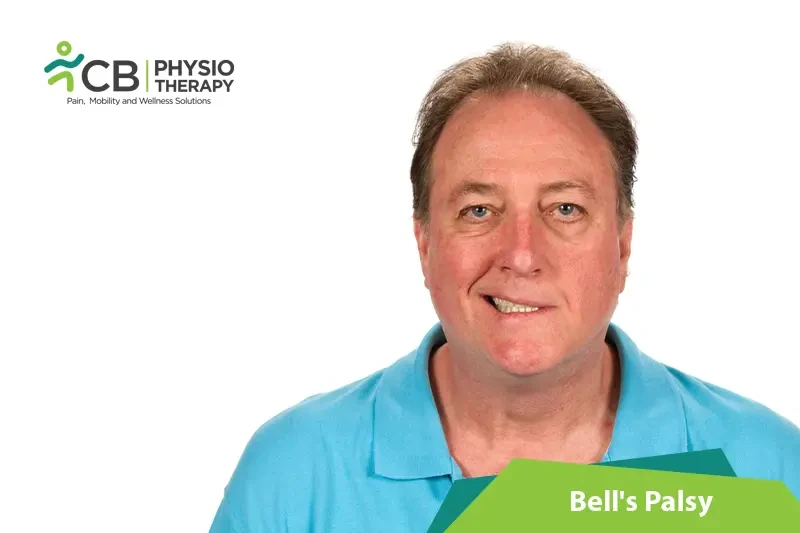
Make these exercises yours — a CB physio personalizes, doses and tracks your plan week by week.
Get my personalized planGeneral guidance only — stop if an exercise increases your pain, and check with your physio before starting a new routine.
Get Bell's Palsy Or Facial Palsy treatment near you
Certified physiotherapists at a clinic near you or at home — same-day slots, assessment-led care.
Request received!
We'll call you within 10 minutes to confirm your home visit.We'll call you within 10 minutes to confirm your slot.
Chat with us on WhatsAppBell's Palsy Or Facial Palsy, answered
Bell's palsy (also known as idiopathic facial paralysis) is a condition affecting the facial nerve causing paralysis of the facial muscles on one or both sides of the face. Its onset is usually rapid leading to facial drooping, inability to control the facial muscles and difficulty closing the eyelids. It is thought that the nerve controlling the muscles of face (VII cranial nerve) becomes inflamed in its bony canal which affects the transmission of nerve impulses. Facial weakness can occur in other conditions such as stroke, brain tumours or head trauma. It is only when other causes are excluded that the facial weakness is attributed to Bell's palsy.
The condition in many cases resolves quickly, especially for those with partial paralysis. Drug treatment such as antiviral treatment or steroid treatment may be offered for some patients. Physiotherapy treatment may be indicated to help speed recovery with facial exercises or electrical stimulation.
The symptoms of Bell’s palsy can appear one to two weeks after a person has had cold, ear infection, or eye infection. They usually appear abruptly, and the patient may notice them when he/ she wakes up in the morning or tries to eat or drink. Bell’s palsy is marked by a droopy appearance on one side of the face and the inability to open or close the eye on the affected side. In rare cases, Bell’s palsy may affect both sides of the face.
Other signs and symptoms of Bell’s palsy include:
· Drooling
· Twitching
· Facial tingling
· Moderate or severe headache/neck pain
· Memory problems
· Balance problems
· Ipsilateral limb paresthesias
· Ipsilateral limb weakness
· Significant facial distortion.
· Drooping eyelid or corner of the mouth
· Drooling
· Dry eye or mouth
· Impairment of taste
· Excessive tearing in the eye (crocodile tears).
· A sense of clumsiness
Contact your doctor immediately if you develop any of these symptoms. The patient should never self-diagnose Bell’s palsy. The symptoms can be similar to those of other serious conditions, such as a stroke or brain tumour.
Although the exact immediate reason Bell's palsy or facial paralysis occurs isn't clear, it’s more often noticed to be related to having a viral infection. Viruses that have been linked to Bell's palsy include viruses that cause:
· Cold sores and genital herpes (herpes simplex)
· Chickenpox and shingles (herpes zoster)
· Infectious mononucleosis (Epstein-Barr)
· Cytomegalovirus infections
· Respiratory illnesses (adenovirus)
· German measles (rubella)
· Mumps (mumps virus)
· Flu (influenza B)
· Hand-foot-and-mouth disease (coxsackievirus)
The nerve that controls your facial muscles passes through a narrow corridor of bone on its way to your face. In Bell's palsy, that nerve becomes inflamed and swollen — usually related to a viral infection. Besides facial muscles, the nerve affects tears, saliva, taste and a small bone in the middle of your ear.
There's no specific test for Bell's palsy. Your doctor will look at your face and ask you to move your facial muscles by closing your eyes, lifting your brow, showing your teeth and frowning, among other movements.
Other conditions — such as a stroke, infections, Lyme disease and tumours — can cause facial muscle weakness that mimics Bell's palsy. If the cause of your symptoms isn't clear, your doctor may recommend other tests, including:
· Electromyography (EMG). This test can confirm the presence of nerve damage and determine its severity. An EMG measures the electrical activity of a muscle in response to stimulation and the nature and speed of the conduction of electrical impulses along a nerve.
· Imaging scans. Magnetic resonance imaging (MRI) or computerized tomography (CT) may be needed on occasion to rule out other possible sources of pressure on the facial nerve, such as a tumour or skull fracture.
Most people with Bell's palsy recover fully — with or without treatment. There's no one-size-fits-all treatment for Bell's palsy, but your doctor may suggest medications or physical therapy to help speed your recovery. Surgery is rarely an option for Bell's palsy.
MedicationsCommonly used medications to treat Bell's palsy include:
· Corticosteroids, such as prednisone, are powerful anti-inflammatory agents. If they can reduce the swelling of the facial nerve, it will fit more comfortably within the bony corridor that surrounds it. Corticosteroids may work best if they're started within several days of when your symptoms started.
· Antiviral drugs. The role of antivirals remains unsettled. Antivirals alone have shown no benefit compared with placebo. Antivirals added to steroids are possibly beneficial for some people with Bell's palsy, but this is still unproved.
However, despite this, valacyclovir (Valtrex) or acyclovir (Zovirax) is sometimes given in combination with prednisone in people with severe facial palsy.
Physical therapyParalyzed muscles can shrink and shorten, causing permanent contractures. A physical therapist can teach you how to massage and exercise your facial muscles to help prevent this from occurring.
SurgeryIn the past, decompression surgery was used to relieve the pressure on the facial nerve by opening the bony passage that the nerve passes through. Today, decompression surgery isn't recommended. Facial nerve injury and permanent hearing loss are possible risks associated with this surgery.
Rarely, plastic surgery may be needed to correct lasting facial nerve problems. Facial reanimation helps to make the face look more even and may restore facial movement. Examples of this type of surgery include eyebrow lift, eyelid lift, facial implants and nerve grafts. Some procedures, such as an eyebrow lift, may need to be repeated after several years.
Don't let Bell's Palsy Or Facial Palsy decide your day.
Get assessed today — find the cause, get a plan, and know when you'll feel better.