
Dementia — Symptoms, Causes & Treatment
Also known as Dementia. Causes, symptoms and how physiotherapy treats Dementia — without surgery or medicines.
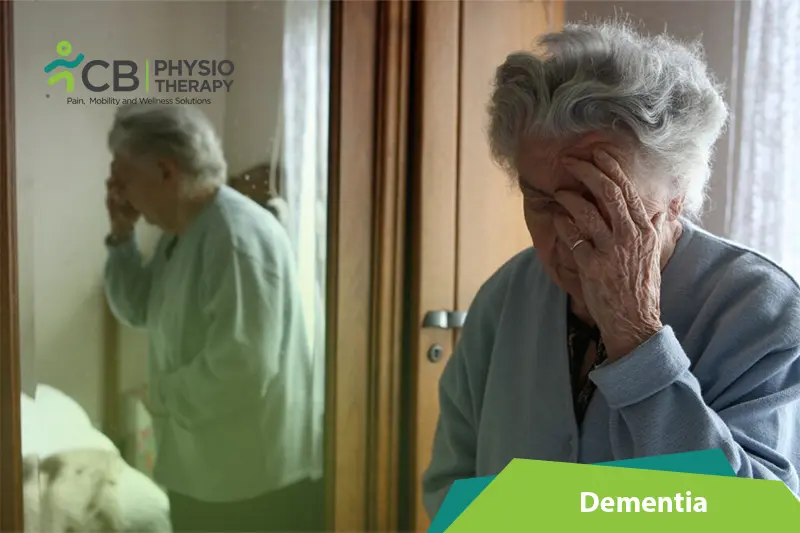
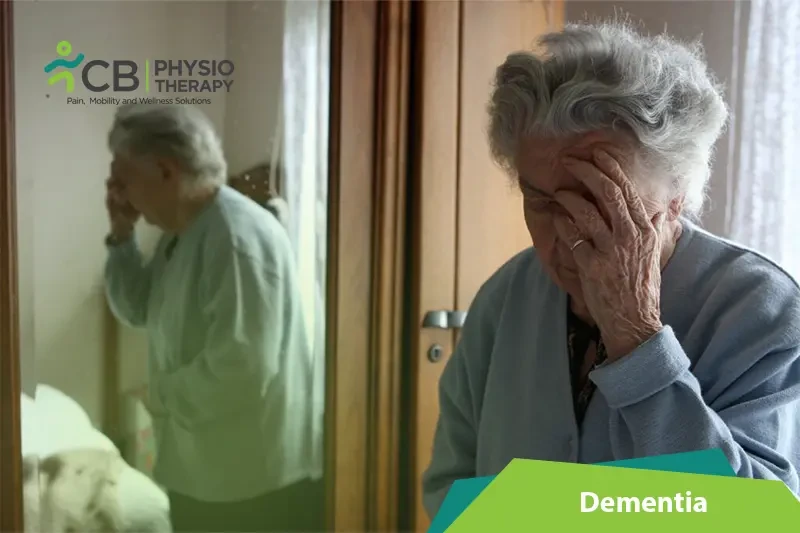
Understanding Dementia
Dementia affects the nervous system's control of movement — and while the diagnosis itself is made and managed by your doctor, physiotherapy shapes what daily life looks like with it. Strength, balance, walking and everyday tasks can all improve with the right rehabilitation, at almost any stage.
Neuro-rehabilitation works because of neuroplasticity: with repeated, task-specific practice the nervous system re-learns. A structured program targets what matters to you — transfers, walking, stairs, confidence — and measures progress milestone by milestone.
Causes & risk factors of Dementia
What commonly drives it — your assessment pins down which of these apply to you.
The underlying neurological event
Conditions like Dementia begin in the nervous system — diagnosis and medical management sit with your doctor and neurologist.
Reduced activity after diagnosis
Fear, fatigue and difficulty shrink movement — and inactivity then adds its own layer of weakness and stiffness.
Muscle weakness and tone changes
Altered signals change how muscles fire — some weaken, some tighten — reshaping movement patterns over time.
Balance and confidence
Balance changes raise fall risk, and fear of falling quietly cuts activity further — a loop rehabilitation is designed to break.
When physiotherapy is the right call
If any of these sound like you, an assessment is the right first step.
- ✓ A new diagnosis of Dementia and you want a clear rehabilitation start point
- ✓ Daily tasks, walking or stairs are getting harder than they used to be
- ✓ Strength, stamina or balance has visibly dropped
- ✓ You want a structured clinic + home program with measurable milestones
- ✓ Family members need guidance to support you safely
Your treatment journey
Step by step — from your first assessment to a tracked recovery plan.
A detailed first assessment
History, movement testing and strength checks — a focused session to find what is actually driving your Dementia.
A diagnosis you understand
Your physiotherapist explains the findings in plain language — what is affected, why it happened and what that means for you.
Active, tracked treatment
Hands-on therapy, the right modalities and graded exercise — progressed session by session and tracked on Fizo IQ™.
Prevention, built in
The final phase rebuilds strength and habits so the same problem does not come back — with a home plan you keep.
What recovery looks like
- ✓ More independence in daily tasks
- ✓ Better strength, balance and stamina
- ✓ Fewer setbacks, with red flags monitored
- ✓ A program your family understands and can support
- ✓ Progress measured milestone by milestone on Fizo IQ™
When to see a doctor — red flags
How CB Physiotherapy treats Dementia
At CB Physiotherapy, treatment for Dementia starts with finding its cause: a structured, physiotherapist-led assessment before anything is prescribed. Your plan then combines hands-on therapy, targeted exercise and the right modalities — delivered at a clinic near you or at home, and coordinated with your doctor where medical care is involved.
Every case runs on Fizo IQ™, our recovery engine: diagnosis, root cause, plan, milestones and goals, tracked session by session. You always know where you are in your recovery — and what comes next.
Exercises that help with Dementia
Make these exercises yours — a CB physio personalizes, doses and tracks your plan week by week.
Get my personalized planGeneral guidance only — stop if an exercise increases your pain, and check with your physio before starting a new routine.
Get Dementia treatment near you
Certified physiotherapists at a clinic near you or at home — same-day slots, assessment-led care.
Request received!
We'll call you within 10 minutes to confirm your home visit.We'll call you within 10 minutes to confirm your slot.
Chat with us on WhatsAppDementia, answered
Dementia is an umbrella term for various cognitive disorders affecting memory, thinking, and social abilities. It is not a disease but a symptom of different diseases. Some people with dementia cannot control their emotions, and thus their personalities may change. Dementia ranges in severity from mild to severe. Dementia generally involves memory loss, loss of attention, mood swing, etc.
The person suffering from dementia may show the symptoms listed below:
- Recent memory loss,
- Difficulty completing tasks like making tea or cooking a meal,
- Communicating problems like language difficulty, forgetting words, or using wrong words,
- Disorientation
- Misplacing things like forgetting the location of items such as keys, or wallets,
- Mood changes,
- Personality changes like irritable, suspicious or fearful,
- Loss of initiative like showing less interest in starting something,
- Cognitive impairments.
Dementia can be caused due to neurodegenerative diseases, other reasons may be:
- Brain cell death, progressive brain cell death that happens over time,
- Head injury,
- Stroke,
- Brain tumor,
- Repetitive traumatic brain injuries such as those received by sports players,
- Prion diseases like Creutzfeldt-Jakob disease,
- HIV infection.
Pathology:
Dementia is a symptom of a variety of structural brain diseases and several system degenerations. Alzheimer's disease is the most common cause, it results in a cortical-subcortical degeneration of ascending cholinergic neurons and large pyramidal cells in the cerebral cortex.
Physical Examination:
Physical Examination is done to check the symptoms along with the medical history.
Cognitive and neuropsychological tests:
Evaluation of cognitive functions like thinking skills, language skills, memory, orientation, judgment, reasoning, and attention is done.
Neurological evaluation:
Evaluation of memory, visual perception, language, attention, movement, problem-solving, senses, reflexes, balance, and other areas are also done.
Brain scans:
Magnetic resonance imaging and computed tomography are used to rule out stroke, tumor, bleeding, or hydrocephalus.
Laboratory tests:
Laboratory tests are used to detect vitamin B-12 deficiency or an underactive thyroid gland that can affect brain function. Examination of the spinal fluid is done for infection, inflammation, or degenerative diseases.
Psychiatric evaluation:
Mental health professionals help to determine depression or any other mental health condition.
Medication: Anti-anxiety medications, antidepressants, etc.
Note : Medication should not be taken without the doctor's prescription.
The physiotherapist performs the assessment and designs a treatment plan.
Fall prevention:
A fall prevention program is created and completed between treatment sessions. The home assessment done along with the fall prevention program increases safety at home and reduces the risk of falls.
Stretching exercises:
Stretching exercises help a person to move and assist in muscle tightening.
Strengthening exercises:
Water therapy exercises are done to promote strengthening and mobility these exercises decrease the risk of osteoporosis and increase bone strength.
Balance exercises:
Group exercises are conducted to improve balance and mobility.
Postural Management:
For posture management, it is important for a person to regularly change the position. A physiotherapist helps to increase comfort levels as well as decreases joint movement.
Other exercises:
Exercises like walking, running, and dancing can also be incorporated to improve the mood of the patient.
Social interaction:
Social interaction is encouraged to reduce the need for medication and recover better and faster. As it has a positive impact on psychological and behavioral symptoms.
Modification of the environment:
Reduce clutter, noise and hide objects that can threaten safety, such as knives.
Task simplifying:
Tasks can be broken up into easier steps, which helps to reduce confusion in people with dementia.
The physiotherapist provides advice on aids and adaptations to maximize the Patient's Independence. Family members are educated about home safety ideas, strategies to prevent falls and injuries, and communication techniques to improve everyone's quality of life.
Don't let Dementia decide your day.
Get assessed today — find the cause, get a plan, and know when you'll feel better.