Distal Muscular Dystrophy — Symptoms, Causes & Treatment
Also known as Distal Muscular Dystrophy. Causes, symptoms and how physiotherapy treats Distal Muscular Dystrophy — without surgery or medicines.
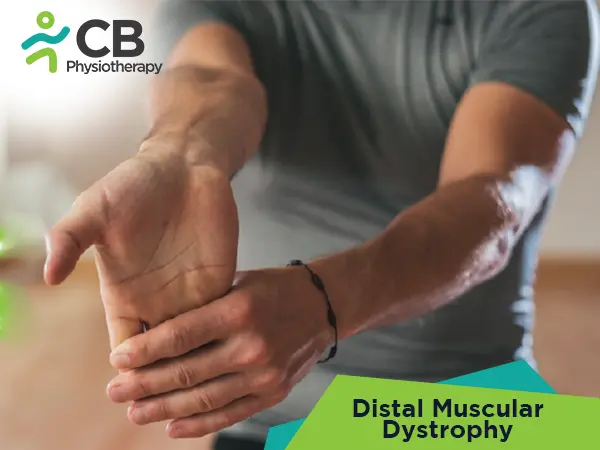
Understanding Distal Muscular Dystrophy
Distal Muscular Dystrophy affects the nervous system's control of movement — and while the diagnosis itself is made and managed by your doctor, physiotherapy shapes what daily life looks like with it. Strength, balance, walking and everyday tasks can all improve with the right rehabilitation, at almost any stage.
Neuro-rehabilitation works because of neuroplasticity: with repeated, task-specific practice the nervous system re-learns. A structured program targets what matters to you — transfers, walking, stairs, confidence — and measures progress milestone by milestone.
Causes & risk factors of Distal Muscular Dystrophy
What commonly drives it — your assessment pins down which of these apply to you.
The underlying neurological event
Conditions like Distal Muscular Dystrophy begin in the nervous system — diagnosis and medical management sit with your doctor and neurologist.
Reduced activity after diagnosis
Fear, fatigue and difficulty shrink movement — and inactivity then adds its own layer of weakness and stiffness.
Muscle weakness and tone changes
Altered signals change how muscles fire — some weaken, some tighten — reshaping movement patterns over time.
Balance and confidence
Balance changes raise fall risk, and fear of falling quietly cuts activity further — a loop rehabilitation is designed to break.
When physiotherapy is the right call
If any of these sound like you, an assessment is the right first step.
- ✓ A new diagnosis of Distal Muscular Dystrophy and you want a clear rehabilitation start point
- ✓ Daily tasks, walking or stairs are getting harder than they used to be
- ✓ Strength, stamina or balance has visibly dropped
- ✓ You want a structured clinic + home program with measurable milestones
- ✓ Family members need guidance to support you safely
Your treatment journey
Step by step — from your first assessment to a tracked recovery plan.
A detailed first assessment
History, movement testing and strength checks — a focused session to find what is actually driving your Distal Muscular Dystrophy.
A diagnosis you understand
Your physiotherapist explains the findings in plain language — what is affected, why it happened and what that means for you.
Active, tracked treatment
Hands-on therapy, the right modalities and graded exercise — progressed session by session and tracked on Fizo IQ™.
Prevention, built in
The final phase rebuilds strength and habits so the same problem does not come back — with a home plan you keep.
What recovery looks like
- ✓ More independence in daily tasks
- ✓ Better strength, balance and stamina
- ✓ Fewer setbacks, with red flags monitored
- ✓ A program your family understands and can support
- ✓ Progress measured milestone by milestone on Fizo IQ™
When to see a doctor — red flags
How CB Physiotherapy treats Distal Muscular Dystrophy
We treat Distal Muscular Dystrophy the way we treat everything: assessment first, plan second, treatment third. It sounds obvious, but it is the difference between sessions that fill a slot and sessions that move you towards a goal. Care is delivered by certified physiotherapists at a clinic near you or at home.
Your whole journey is tracked on Fizo IQ™ — the diagnosis, the root cause, the milestones and the goals — so progress is measured, not guessed, and the plan adapts the moment your response calls for it.
Exercises that help with Distal Muscular Dystrophy
Make these exercises yours — a CB physio personalizes, doses and tracks your plan week by week.
Get my personalized planGeneral guidance only — stop if an exercise increases your pain, and check with your physio before starting a new routine.
Get Distal Muscular Dystrophy treatment near you
Certified physiotherapists at a clinic near you or at home — same-day slots, assessment-led care.
Request received!
We'll call you within 10 minutes to confirm your home visit.We'll call you within 10 minutes to confirm your slot.
Chat with us on WhatsAppDistal Muscular Dystrophy, answered
Distal myopathy (or distal muscular dystrophy) is a general term for a group of rare progressive genetic disorders characterized by wasting (atrophy) and weakness of the voluntary distal muscles. The distal muscles are those farther from the center of the body and include the muscles of the lower arms and legs and the hands and feet. Conversely, the proximal muscles are the muscles closest to the center of the body such as the muscles of the shoulder, pelvis, and upper arms and legs.
The distal myopathies belong to a larger group of disorders known as muscular dystrophies. The muscular dystrophies are characterized by weakness and degeneration of various voluntary muscles of the body. Approximately 30 different disorders make up muscular dystrophies. The disorders affect different muscles and have different ages of onset, severity, and inheritance patterns.
The main symptom is a weakness that usually starts in the lower arms or legs. But the different forms of DD tend to get worse in different ways. Some examples include:
· Distal myopathy with vocal cord and throat (pharyngeal) weakness affects the hands, legs, and voice. It may cause difficulty swallowing. It usually happens between the ages of 35 and 60.
· Finnish (tibial) distal myopathy affects the legs, particularly the muscles near the shin. It usually shows up after age 40, and most people with this DD can still walk throughout their life. People who inherit 2 copies of the defective gene may have more severe weakness beginning in childhood. They may not be able to walk later. Their heart may also be affected.
· Hereditary inclusion-body myopathy type 2 shows up between ages 25 and 40. It usually weakens the foot and thigh.
· Miyoshi distal myopathy causes weakness that begins in the calf muscles. It shows up between ages 15 and 30. Some people with this form of DD may eventually be unable to walk.
· Nonaka distal myopathy affects the muscles near the shin first. It then affects muscle groups in the upper arm, upper leg, and neck. The thigh muscle (quadriceps) usually stays healthy.
· Welander distal myopathy usually affects the arms first, and then the legs. It shows up in people between ages 40 and 50.
Your symptoms may differ from those described above. The different forms of DD may cause slightly different symptoms and progression.
All forms of DD are caused by changes (mutations) in certain genes. Changes in several different genes can cause different types of DD. A change in only 1 copy of the gene is enough to cause most forms of DD. This means the disease passes down in a dominant manner. In some other types of DD, the disease occurs only if you have changes in both copies of the gene.
These recessive forms of DD include Nonaka distal myopathy and Miyoshi muscular dystrophy. In Finnish distal myopathy, people with one copy of the changed gene have a weakness in the muscles in the fronts of the lower legs (the tibial muscles) after age 40. People with Finnish DD who inherit 2 changed genes have muscle problems in childhood. They may need a wheelchair by age 30
A diagnosis of distal myopathy is made based upon a thorough clinical evaluation, a detailed patient history, identification of characteristic findings, and a variety of tests including a test that assesses the health of muscles and the nerves that control muscles (electromyography); specialized blood tests; magnetic resonance imaging (MRI) of muscle tissue; and surgical removal and microscopic examination (biopsy) of affected muscle tissue that may reveal characteristic changes to muscle fibers.
- During an electromyography, a needle electrode is inserted through the skin into an affected muscle. The electrode records the electrical activity of the muscle. This record shows how well a muscle responds to the nerves and can determine whether muscle weakness is caused by the muscle themselves or by the nerves that control the muscles.
- Blood tests may reveal elevated levels of the creatine kinase (CK), an enzyme that is often found in abnormally high levels when the muscle is damaged
- MRIs of muscle tissue may reveal a distinct pattern of muscle damage or involvement. Distinct patterns have been identified in individuals with Welander, Udd or Tibial, and other distal myopathies.
Biopsy of affected muscle tissue may reveal characteristic changes such as increased connective tissue and fat. In some forms of distal myopathy, numerous sub-cellular compartments known as rimmed vacuoles can be detected on muscle biopsy.
TREATMENT
People with distal muscular dystrophy should be monitored throughout their lives. Treatment options include medications, physical and occupational therapy, and surgical and other procedures. Ongoing assessments of walking, swallowing, breathing and hand function enable the treatment team to adjust treatments as the disease progresses.
Physical Therapy
Several types of therapy and assistive devices can improve the quality and sometimes the length of life in people who have distal muscular dystrophy. Examples include:
· Range-of-motion and stretching exercises. Muscular dystrophy can restrict the flexibility and mobility of joints. Limbs often draw inward and become fixed in that position. Range-of-motion exercises can help to keep joints as flexible as possible.
· Exercise. Low-impact aerobic exercise, such as walking and swimming, can help maintain strength, mobility and general health. Some types of strengthening exercises also might be helpful. But it's important to talk to your doctor first because some types of exercise might be harmful.
· Braces. Braces can help keep muscles and tendons stretched and flexible, slowing the progression of contractures. Braces can also aid mobility and function by providing support for weakened muscles.
· Mobility aids. Canes, walkers and wheelchairs can help maintain mobility and independence.
Don't let Distal Muscular Dystrophy decide your day.
Get assessed today — find the cause, get a plan, and know when you'll feel better.