
Dyslexia — Symptoms, Causes & Treatment
Also known as Dyslexia. Causes, symptoms and how physiotherapy treats Dyslexia — without surgery or medicines.
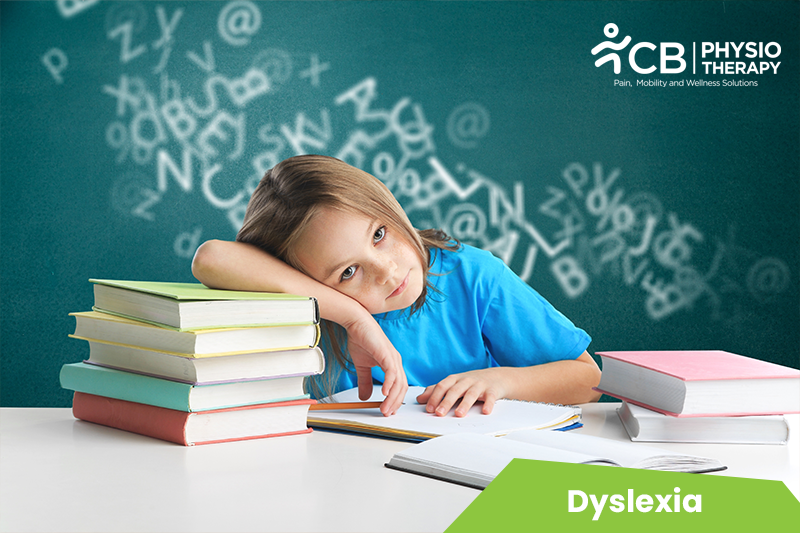
Understanding Dyslexia
Dyslexia affects people differently, and the right care starts with understanding how it affects you. Its day-to-day impact — on movement, strength, energy and confidence — is where physiotherapy does its work.
Our role in Dyslexia is practical: protect and rebuild movement and daily function with a plan set after a careful assessment, in coordination with your doctor wherever medical management is involved. No two plans look the same, because no two cases behave the same.
Causes & risk factors of Dyslexia
What commonly drives it — your assessment pins down which of these apply to you.
More than one possible driver
Dyslexia can have several contributing factors — a careful history and physical assessment separate them rather than guessing.
Reduced movement and deconditioning
Whatever the trigger, less movement quickly adds weakness and stiffness of its own — usually the most reversible part.
Daily-life load and habits
Work posture, repeated tasks, sleep and stress all shape how a condition behaves day to day.
General health and history
Overall health, previous injuries and existing conditions influence both the picture and the plan — the assessment takes all of it in.
When physiotherapy is the right call
If any of these sound like you, an assessment is the right first step.
- ✓ A new diagnosis of Dyslexia and you want a clear rehabilitation start point
- ✓ Daily tasks, walking or stairs are getting harder than they used to be
- ✓ Strength, stamina or balance has visibly dropped
- ✓ You want a structured clinic + home program with measurable milestones
- ✓ Family members need guidance to support you safely
Your treatment journey
Step by step — from your first assessment to a tracked recovery plan.
A detailed first assessment
History, movement testing and strength checks — a focused session to find what is actually driving your Dyslexia.
A diagnosis you understand
Your physiotherapist explains the findings in plain language — what is affected, why it happened and what that means for you.
Active, tracked treatment
Hands-on therapy, the right modalities and graded exercise — progressed session by session and tracked on Fizo IQ™.
Prevention, built in
The final phase rebuilds strength and habits so the same problem does not come back — with a home plan you keep.
What recovery looks like
- ✓ More independence in daily tasks
- ✓ Better strength, balance and stamina
- ✓ Fewer setbacks, with red flags monitored
- ✓ A program your family understands and can support
- ✓ Progress measured milestone by milestone on Fizo IQ™
When to see a doctor — red flags
How CB Physiotherapy treats Dyslexia
At CB Physiotherapy, treatment for Dyslexia starts with finding its cause: a structured, physiotherapist-led assessment before anything is prescribed. Your plan then combines hands-on therapy, targeted exercise and the right modalities — delivered at a clinic near you or at home, and coordinated with your doctor where medical care is involved.
Every case runs on Fizo IQ™, our recovery engine: diagnosis, root cause, plan, milestones and goals, tracked session by session. You always know where you are in your recovery — and what comes next.
Exercises that help with Dyslexia
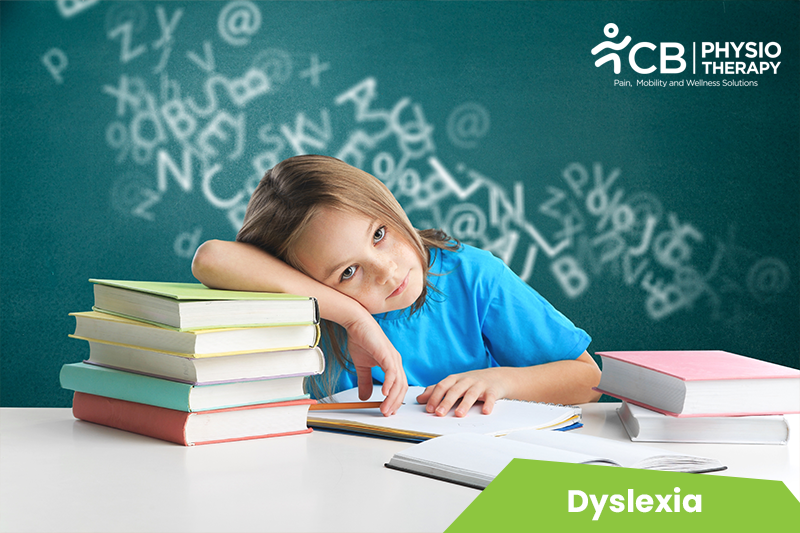
Make these exercises yours — a CB physio personalizes, doses and tracks your plan week by week.
Get my personalized planGeneral guidance only — stop if an exercise increases your pain, and check with your physio before starting a new routine.
Get Dyslexia treatment near you
Certified physiotherapists at a clinic near you or at home — same-day slots, assessment-led care.
Request received!
We'll call you within 10 minutes to confirm your home visit.We'll call you within 10 minutes to confirm your slot.
Chat with us on WhatsAppDyslexia, answered
Types of Dyslexia: 1: Primary Dyslexia: Most common type of dyslexia, occurs due to the dysfunction of the left side of the brain and does not change with age. The severity of the disability for Individuals with this type of dyslexia varies, most children who receive an appropriate educational intervention will be academically successful throughout their lives. Few might continue to struggle significantly with reading, spelling, and writing throughout their lives.
2: Secondary or developmental Dyslexia: Secondary dyslexia is caused by problems with brain development during the early stages of fetal development. As the child matures this type of dyslexia diminishes with time.
3: Trauma Dyslexia: This type of dyslexia usually occurs due to brain injury or trauma to the area of the brain that controls reading and writing.
1. Genetic mutation.
2. Problem during fetal development.
3. Brain injury or trauma.
Symptoms of Dyslexia may include:
1: Slow learning of new vocabulary.
2: Delayed development of language.
3: A problem in recognizing the differences between sounds.
4: Difficulty copying from the board to the book.
5: Difficulty with learning reading, spelling skills, and writing.
6: A child may be unable to remember content.
7: The child may appear to be uncoordinated and have difficulty in games or sports.
8: Difficulty is common with left and right dominance for either hand has not been established often.
9: A child may have difficulty in understanding or remembering what he/she hears.
10: Recalling sequences of things can be difficult.
11: Part of a word or part or parts of a sentence may be missed.
12: Children struggling with this problem may know what they want to say but have difficulty finding the actual words to express their thoughts.
13: Children may become withdrawn and become depressed.
14: Problems with self-esteem can arise, and sibling and peer interactions can become strained.
15: These children may lose interest in activities and appear lazy or unmotivated.
Pathology:
Dyslexia is a learning disorder characterized by difficulty in writing and reading. People suffering from dyslexia generally have normal or above-normal intelligence and eyesight. In dyslexia, the cerebellum is active during the initial stages of the learning process. It is found that the individuals suffering from dyslexia have reduced grey matter in the right lobule of VI, also this lobule has abnormal activity in patients with dyslexia when asked to name objects rapidly.
Medical history:
The examiner asks questions about the conditions that run in the family, including dyslexia or any other type of learning disability.
Questionnaires:
The examiner may ask the child to identify reading and language abilities.
Vision, hearing, and brain (neurological) tests:
These tests can help determine whether another disorder might be causing or adding to the child's difficulty reading.
Psychological evaluation:
The examiner may ask the child questions, to understand the child's mental health. This can help determine whether social problems, depression, or anxiety may be limiting the child's abilities.
Tests for reading and other academic skills:
The child is given a set of educational tests. The process and quality of reading skills are analyzed by a reading expert.
Note: Medication should not be taken without the doctor's prescription.
Brain training Exercises:
1. Knee to hand.
2. Elbow to the knee.
3. Hand to foot behind the back.
4. Hand to foot in front of the body.
5. Spinning clockwise.
6. Spinning anti-clockwise.
7. Juggling.
8. Juggling on the balance board.
9. Side to side on the balance/wobbleboard.
10. Twists.
Eye Exercises:
1. Eye tracking.
2. Opposite hand swinging using hand and fingers.
Balance ball Exercises:
1. Taking up one foot off the ground.
2. Taking both feet off the ground.
3. Balance on the stomach.
4. Bouncing.
5. Juggling on the balance ball.
6. Brain ball catching.
Reading Training:
Reading techniques involve hearing, vision, and touch to improve reading skills. Help a child use several senses to learn such as listening to a taped lesson, a word spoken or a letter used can be traced by the child using a finger.
1. Train the children to recognize and use the smallest sounds that make words (phonemes)
2. Understand the letters that represent these sounds and words (phonics).
3. Understand what is read.
4. Read aloud to build a reading expression, accuracy, and speed.
5. Build a vocabulary of words.
6. Provide the articles clearly to minimize the reading load.
7. Identify new vocabulary in the text.
8. Offer audio-visual sources on subjects such as TV or videos.
Spelling training:
1. Introduce new terms and concepts by writing them up on a board.
2. Provide lists of vocabulary at the beginning of a semester, and allow children sufficient time to absorb these terms and put them into context.
3. Encourage the use of grammar checkers and electronic spelling.
Note-taking training:
1. Providing handouts at the beginning of a tutorial can be a helpful strategy, as it is difficult for children with dyslexia to concentrate on what the speaker is saying.
2. Use a readable size of print if using an overhead projector.
3. Use whiteboards or chalkboards to elaborate a point making sure the writing is large and clear and students can read it.
4. Some dyslexic children can be easily distracted by noise or activity, even some children may even need to sit at the back of the room so as not to be distracted by people sitting behind them.
Writing training:
Writing for two or more hours, which deteriorates over time can prove very stressful use of technologies such as video, computer-generated or graphical presentations, and laptops can be recommended.
Oral Language:
1. Children suffering from dyslexia may need extra time, effort, and concentration to do the task involving language.
2. Instructions given orally should be clear and written down as a backup for the children if they need them.
3. Encourage children to formulate questions, then respond using straightforward language and demonstrate points with concrete examples.
Don't let Dyslexia decide your day.
Get assessed today — find the cause, get a plan, and know when you'll feel better.