Verified
Dr. Kasim Saifi
Physiotherapist · BPT
See clinics, physiotherapists and prices for your city.
Whether it's a dull ache, a sharp catch, or pain that keeps coming back — we find the root cause of your Hip Impingement and fix it, at a clinic near you or at home.
Precision Care, Proven RecoveryWe'll call you within 10 minutes to confirm your home visit.We'll call you within 10 minutes to confirm your slot.
Chat with us on WhatsAppCommon triggers include muscle strain, joint stiffness, poor posture and long desk hours. If two or more of these fit, a physiotherapy assessment can identify exactly what's driving it.
Most hip impingement improves without surgery or long-term medication — the key is finding the cause first.
Hip Impingement rarely signals something serious, but see a doctor immediately if it comes with:
Our physios screen for these red flags at every first assessment and refer you to the right doctor if needed.
We start with an AI-based assessment to find the root cause — then follow a clear, four-phase plan.
Hands-on therapy and advanced modalities to calm pain and inflammation fast.
Mobility work and posture correction so everyday movement feels normal again.
Targeted strengthening that protects you — in-clinic or in our physio gym.
Back to work, sport and life — with a home program that prevents relapse.
One patient record, stage by stage: your physiotherapist pinpoints the diagnosis, finds the root cause and builds your in-clinic plan — while Fizo IQ™, our AI decision-support engine, tracks every milestone until your goals are met and you leave with an exercise plan to stay active.
Make these exercises yours — a CB physio personalizes, doses and tracks your plan week by week.
Get my personalized planGeneral guidance only — stop if an exercise increases your pain, and check with your physio before starting a new routine.
Every CB physio is a qualified BPT/MPT clinician. You don't need to choose one — our lead physiotherapist reviews your case and assigns the specialist best suited to treat it.
Verified
Physiotherapist · BPT
Verified
Physiotherapist · BPT
Verified
Physiotherapist · BPT
Verified
Physiotherapist · MPT
Verified
Physiotherapist · BPT
Verified
Physiotherapist
Verified
Physiotherapist · BPT
Verified
Physiotherapist · BPT
Rated 5.0 / 5 across 31 verified patient reviews in Noida.
“Dr kasim listened well to my situation, was very quick to diagnose me and gave very clear guidelines on how I should manage my condition”
“I recently had the opportunity to experience physiotherapy at home, and I must say it was an outstanding and convenient experience. One of the biggest advantages of receiving physiotherapy at home was the convenience it offered. Instead of traveling to a clinic or hospital, the physiotherapists came to my doorstep, saving me time and energy. This personalized approach allowed me to receive treatment in the comfort of my own home, which greatly contributed to my overall well-being and recovery. Thanks Dr. kasim for the services.”
“I wholeheartedly recommend Dr. Kasim to anyone seeking treatment for a shoulder issue. His outstanding care, expertise, and compassionate approach make him an exceptional physiotherapist. Under his guidance, I experienced remarkable progress and successful recovery. Thank you, Dr. Kasim, for your exceptional care and dedication to helping your patients regain their shoulder health.”
“Dr. Vidhi's approach is highly professional and patient-centered. She took the time to thoroughly assess my condition, asking detailed questions and actively listening to my concerns. She ensured that I fully understood my diagnosis, the treatment plan, and the expected outcomes. . Her dedication to providing evidence-based care was evident. thanks for treated me so well..god bless.”
“Thank you sir for providing home physiotherapy treatment. its wonderful to have session with you. 🙏🙏”
“Hats off to you, ma'am. I am very satisfied with the treatment I had for body posture. Every session was great; it made me feel comfortable.👍👍”
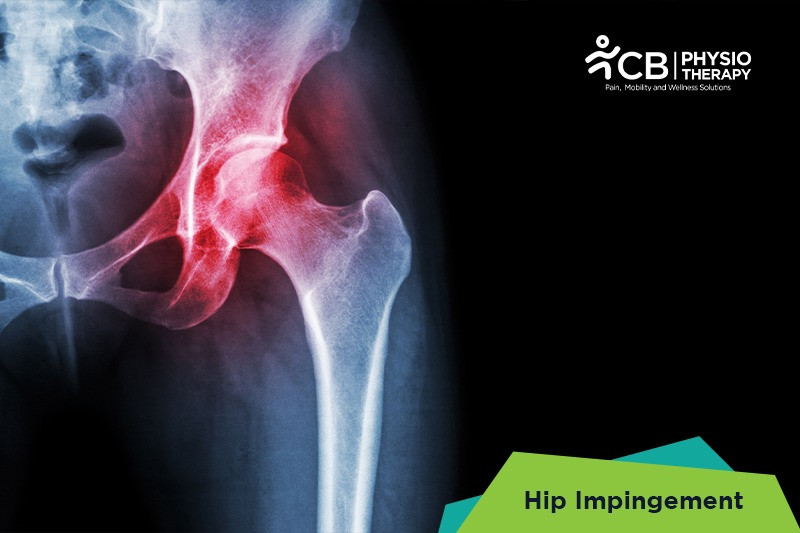
Hip impingement is also known as Femoroacetabular impingement. It occurs when the painless, smooth, and free movement of the ball-and-socket hip joint is prevented from occurring. In a normal hip, the rounded top of the thigh bone fits into the hip socket and allows the smooth movement of the femoral head within the socket. The ball and socket are lined with a thin layer of cartilage that protects and acts as a cushion for the bones, preventing them from grinding and rubbing against each other. The femoral head inside the hip socket is kept in place by the rim of the hip socket which is lined with a ridge of cartilage i.e. the labrum.
Types of Hip Impingement
Two main types of hip impingement:
Cam impingement occurs as the ball-shaped part of the femur is not perfectly round thus preventing the femoral head from moving smoothly within the hip socket.
Pincer impingement occurs due to excessive coverage of the femoral head by the acetabulum, which causes the neck of the femoral bone to impinge on the rim of the deep socket, resulting in cartilage and labral damage.
Hip impingement may be caused due to many reasons, a few of them are mentioned below:
There may be no symptoms in the early stage or symptoms may be mild to vague. Though different symptoms are depending on the type and severity of the condition. These can include:
Pathology:
Hip impingement occurs when there are injures to the labrum and articular cartilage, and if left untreated can lead to osteoarthritis. Patients with hip impingement often experience anterolateral hip pain.
Physical Examination:
Physical examination is done to check the range of motion of the hip joint and the presence of impingement.
X-rays:
X-ray is recommended as it produces two-dimensional images of the hip joint.
Magnetic resonance imaging (MRI):
Magnetic resonance imaging (MRI) may also be recommended to check the three-dimensional image including soft tissue cartilage and labrum.
Computed tomography (CT):
Computed tomography (CT) scan takes small images at different angles and produces a three-dimensional image of the hip. It often shows a detailed structure of joints.
Medication: Anti-inflammatory, analgesics, steroid, etc.
Note: Medication should not be taken without the doctor’s prescription.
Pain management, injections, reducing certain types of physical activity, and physiotherapy can be used for some patients and successfully are helpful to manage hip impingement with these conservative treatments.
Surgery:
Surgical intervention is recommended in some cases like minimally invasive arthroscopic or open surgery. Arthroscopic treatment can correct impingement deformities. But in severe or complicated impingement deformities, open surgery is done for full correction of the deformity. Osteotomy or bone cutting procedure is done to relieve the impingement of the hip joint. The abnormal contact can be reduced or eliminated by properly realigning the joint. Osteoplasty or debridement can be performed to reshape an abnormally shaped femoral head or hip socket. In other cases, total hip replacement can also be performed.
Physiotherapy is an excellent non-surgical treatment for hip impingement or femoroacetabular impingement (FAI). The treatment depends on the initial assessment. Physiotherapy may include a range of strengthening and stretching exercises tailored to the condition. Other treatment options include:
Transcutaneous electrical stimulation (TENS):
Transcutaneous electrical stimulation (TENS) machines can be used to help decrease hip pain and increase the ability to enjoy everyday activities.
Soft tissue massage:
Soft tissue massage, myofascial and trigger point release like piriformis or gluteal minimus release can be done
Manipulation and mobilization:
Mobilization is used to improve hip flexion and decrease symptoms of hip impingement. These techniques are used to help improve motion, decrease pain, and help move better and more comfortably. Hip mobilization like a distraction, AP glides can be recommended. Other examples are quadriceps soft tissue mobilization, ITB soft tissue mobilization can be done.
Passive stretching hip exercises of hip and pelvis:
Passive stretching like hip flexor stretching, groin stretching, piriformis stretching are recommended stretching exercises.
Strengthening exercises like seated isometric hip flexion, supine hip flexion with theraband, reverse lunge with front ball tap, or side plank, and core stability exercises can be done.
Kinesio-taping can be done for modification of the posture e.g thigh into abduction and external rotation.

In case of hip impingement, it is important not to ignore the symptoms and the patient should not continue with the normal activities, as they can make the condition worse. Physiotherapy is usually sufficient to decrease the symptoms but in severe cases, surgical intervention is recommended. The patient is advised to take rest, and do some lifestyle modifications to avoid excessive flexion, adduction, and internal rotation.
Get assessed today — find the cause, get a plan, and know when you'll feel better.