
Epidural Steroid Injection (esi) — How It Works & What It Treats
Also known as EPIDURAL STEROID INJECTION (ESI). What Epidural Steroid Injection (esi) is, how it works and what it treats — explained by CB Physiotherapy's clinical team.
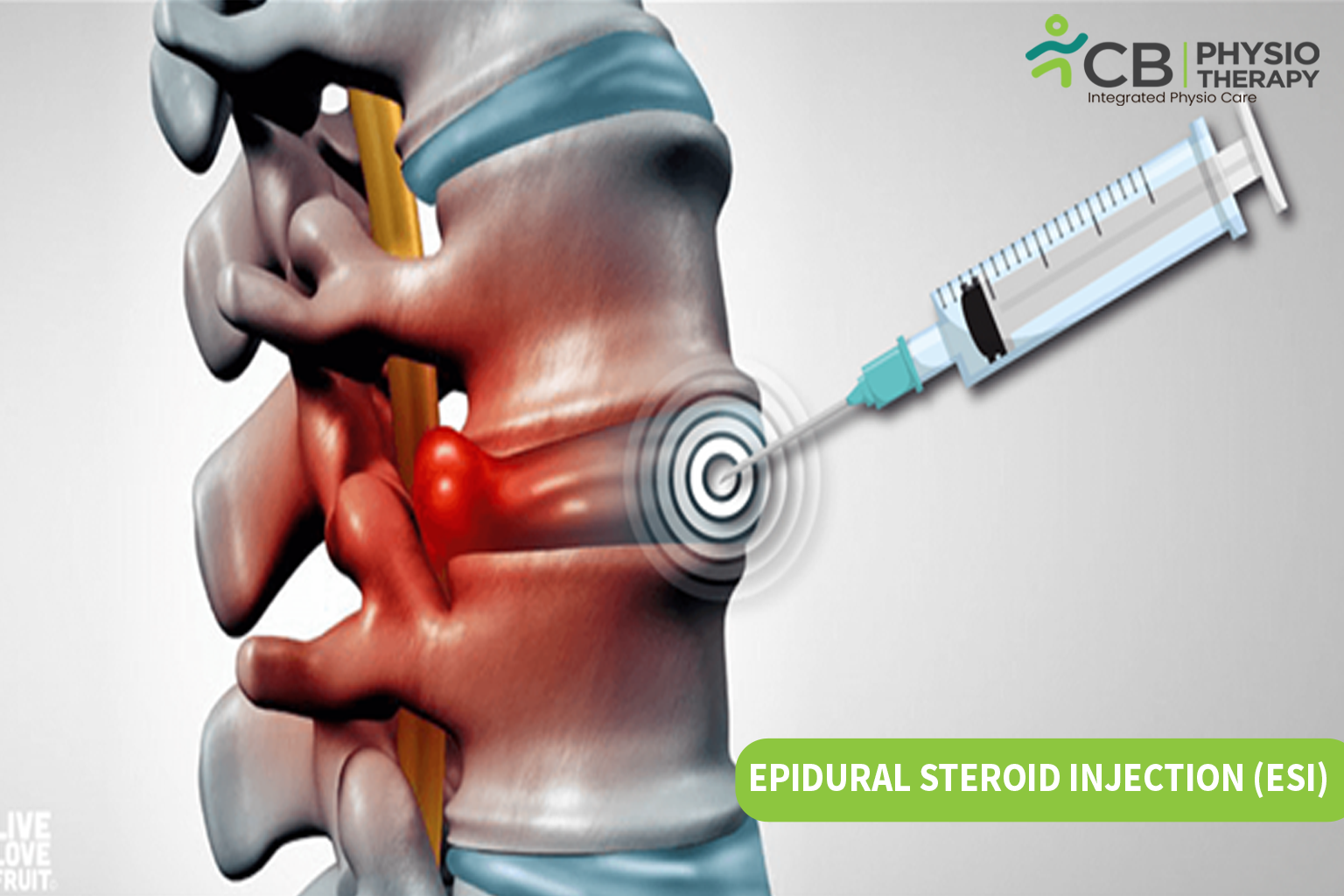
How Epidural Steroid Injection (esi) works
Epidural Steroid Injection (esi) earns its place in a recovery plan when the assessment says it fits — that is the honest answer to "does it work?", because the same treatment helps one diagnosis and does little for another.
Used on the right case, at the right dose, alongside exercise and hands-on care, Epidural Steroid Injection (esi) supports pain relief and recovery without medicines. Your physiotherapist will tell you plainly whether your case is one it helps.
Epidural Steroid Injection (esi) — techniques & equipment
What the treatment actually involves — your plan combines the pieces your assessment calls for.
Assessment before application
Your physiotherapist first confirms Epidural Steroid Injection (esi) suits your diagnosis — and screens for anything that rules it out.
Targeted application
The treatment is applied to the specific structures your assessment identified, at a dose set for your case.
Paired with active rehab
Exercise and movement retraining run alongside, so the gains each session makes are kept.
Reviewed and progressed
Your response is checked every session; the plan is adjusted rather than repeated on autopilot.
Conditions Epidural Steroid Injection (esi) treats
Where it fits best — your assessment confirms whether it belongs in your plan.
- ✓ Cervical Spondylosis →
- ✓ Spinal Stenosis →
- ✓ Degenerative Disc Disease →
- ✓ Lumbar Spondylosis →
- ✓ Herniated Disk Or Slipped Disc →
- ✓ Pain or stiffness that has not settled with rest
- ✓ As part of a wider, assessment-led recovery plan
- ✓ When your assessment identifies the specific problem Epidural Steroid Injection (esi) addresses
What a Epidural Steroid Injection (esi) session looks like
Step by step — from screening to treatment to what comes next.
Screening and consent
A quick reassessment and safety screen — you will know what the session involves and why before it starts.
The treatment itself
Epidural Steroid Injection (esi) applied to the targeted area — most patients find sessions comfortable, and you can speak up at any point.
Active follow-through
Exercise or movement work right after, while the treatment effect is fresh.
Response check
What changed and for how long — the answer shapes your next session and the plan.
Benefits of Epidural Steroid Injection (esi)
- ✓ Available at CB clinics near you — and at home where equipment allows
- ✓ Drug-free support for pain relief and recovery
- ✓ Delivered by certified physiotherapists, never unsupervised
- ✓ Dosed to your case after a proper assessment
- ✓ Always combined with active rehab, for results that last
Safety & contraindications
How CB Physiotherapy delivers Epidural Steroid Injection (esi)
You will not walk into CB Physiotherapy and simply receive Epidural Steroid Injection (esi) — you will receive an assessment, and Epidural Steroid Injection (esi) if your case calls for it. That order matters: it is how we make sure every session moves you towards a goal rather than just filling a slot.
Your plan runs on Fizo IQ™ — diagnosis, root cause, milestones, goals — and Epidural Steroid Injection (esi) is combined with hands-on care and exercise as indicated, at a clinic near you or at home where the equipment allows.
Real published prices from our physiotherapists for Epidural Steroid Injection (esi) in India — your exact quote is confirmed after assessment, before you commit. Packages save 10%.
Get Epidural Steroid Injection (esi) near you
Certified physiotherapists at a clinic near you or at home — same-day slots, assessment-led care.
Request received!
We'll call you within 10 minutes to confirm your home visit.We'll call you within 10 minutes to confirm your slot.
Chat with us on WhatsAppEpidural Steroid Injection (esi), answered
Epidural Steroid Injection (ESI) is a minimally invasive spine pain injection used to reduce inflammation and relieve pain caused by irritated spinal nerves.
The injection is given in the epidural space (the area around the spinal cord and nerve roots).
Usually, two medications are injected:
Local Anesthetic
Purpose:
Gives immediate pain relief
Confirms correct nerve level
Improves patient comfort during procedure
Corticosteroid
Purpose:
Reduces inflammation around compressed nerve roots
Controls swelling
Provides long-term pain relief
The anesthesia works immediately, while the steroid starts working within 24–72 hours.
Why Both Are Used?
Immediate pain relief (local anesthetic)
Long-term inflammation control (steroid)
Diagnostic + therapeutic benefit
Lumbar Epidural Injection – for lower back and leg pain
Cervical Epidural Injection – for neck and arm pain
Caudal Epidural Injection – given from tailbone area
Transforaminal Epidural Injection – targeted nerve root injection
An epidural injection works by reducing inflammation around irritated spinal nerve roots, which are usually compressed by a disc bulge, herniation, or spinal stenosis.
Exact Procedure (Step-by-Step)
Patient lies prone or sideways
Skin is cleaned and sterilized
Local anesthesia given to numb skin
Needle inserted under fluoroscopy (X-ray guidance)
Contrast dye used to confirm correct position
Steroid + anesthetic injected
Needle removed and small dressing applied
Procedure time: 15–30 minutes
Observation time: 30–60 minutes
Same-day discharge
During procedure:
Mild pressure sensation
Temporary tingling in leg/arm (normal)
After procedure:
Immediate relief due to anesthetic
Mild soreness at injection site
Steroid effect begins in 1–3 days
The number of epidural steroid injections required depends on the severity of nerve inflammation and the patient’s response to the first injection.
Usually 1 injection initially
Maximum 3 injections per year (depending on condition)
Often spaced 2–4 weeks apart
(Depends on severity & response)
Yes, when performed under image guidance by a trained pain specialist.
Possible minor side effects:
Temporary increase in pain
Facial flushing
Temporary rise in blood sugar
Serious complications are rare.
The effects of epidural steroid injection are as follows:
Faster inflammation control
Reduced nerve irritation
Relief in radiating pain (sciatica)
Improved mobility
Better participation in physiotherapy
May delay or avoid surgery
Here are the contraindications for Epidural Steroid Injection:
Active local or systemic infection
Uncontrolled bleeding disorder
Patient on anticoagulants (without proper stoppage protocol)
Allergy to steroid, local anesthetic, or contrast dye
Lack of patient consent
Relative Contraindications (Use Caution)
Uncontrolled diabetes (steroids raise blood sugar)
Severe spinal deformity
Pregnancy
Severe spinal canal compromise
Uncontrolled hypertension
Immunocompromised patients
After pain relief, physiotherapy is essential as it helps:
Strengthen core muscles
Improve spinal stability
Prevent recurrence
Restore functional movement
Long-term results
Reduced dependency on repeated injections.
Ready to start your recovery?
Get assessed today — find the cause, get a plan, and know when you'll feel better.