
Facet Joint Injections — How It Works & What It Treats
Also known as Intra Articular Facet Injection. What Facet Joint Injections is, how it works and what it treats — explained by CB Physiotherapy's clinical team.
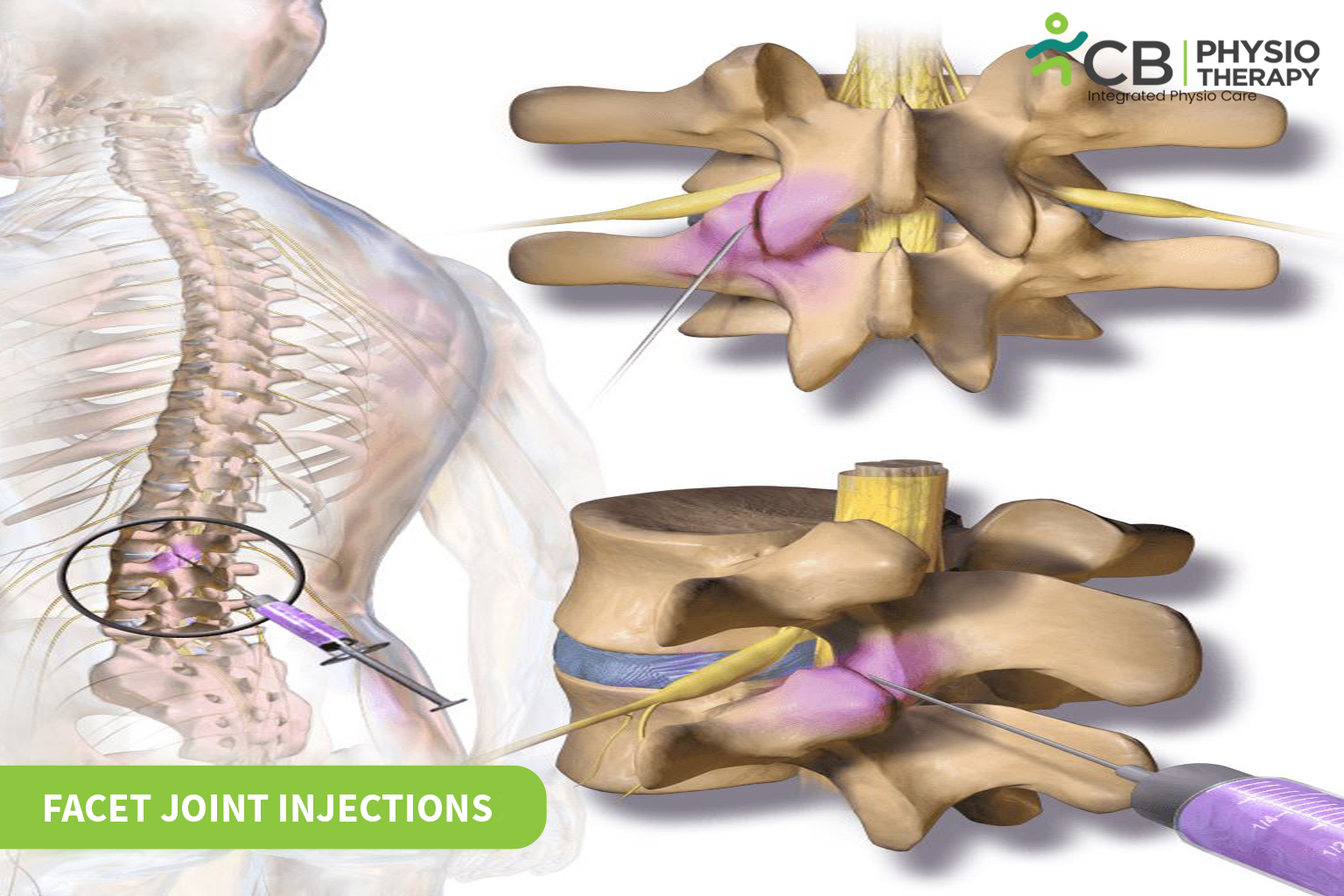
How Facet Joint Injections works
Facet Joint Injections (also called Intra Articular Facet Injection) earns its place in a recovery plan when the assessment says it fits — that is the honest answer to "does it work?", because the same treatment helps one diagnosis and does little for another.
Used on the right case, at the right dose, alongside exercise and hands-on care, Facet Joint Injections supports pain relief and recovery without medicines. Your physiotherapist will tell you plainly whether your case is one it helps.
Facet Joint Injections — techniques & equipment
What the treatment actually involves — your plan combines the pieces your assessment calls for.
Assessment before application
Your physiotherapist first confirms Facet Joint Injections suits your diagnosis — and screens for anything that rules it out.
Targeted application
The treatment is applied to the specific structures your assessment identified, at a dose set for your case.
Paired with active rehab
Exercise and movement retraining run alongside, so the gains each session makes are kept.
Reviewed and progressed
Your response is checked every session; the plan is adjusted rather than repeated on autopilot.
Conditions Facet Joint Injections treats
Where it fits best — your assessment confirms whether it belongs in your plan.
- ✓ Cervical Spondylosis →
- ✓ Spinal Stenosis →
- ✓ Degenerative Disc Disease →
- ✓ Temporomandibular Joint (tmj) →
- ✓ Total Knee Replacement(tkr) →
- ✓ Spondylolisthesis →
- ✓ Pain or stiffness that has not settled with rest
- ✓ As part of a wider, assessment-led recovery plan
- ✓ When your assessment identifies the specific problem Facet Joint Injections addresses
What a Facet Joint Injections session looks like
Step by step — from screening to treatment to what comes next.
Screening and consent
A quick reassessment and safety screen — you will know what the session involves and why before it starts.
The treatment itself
Facet Joint Injections applied to the targeted area — most patients find sessions comfortable, and you can speak up at any point.
Active follow-through
Exercise or movement work right after, while the treatment effect is fresh.
Response check
What changed and for how long — the answer shapes your next session and the plan.
Benefits of Facet Joint Injections
- ✓ Always combined with active rehab, for results that last
- ✓ Available at CB clinics near you — and at home where equipment allows
- ✓ Drug-free support for pain relief and recovery
- ✓ Delivered by certified physiotherapists, never unsupervised
- ✓ Dosed to your case after a proper assessment
Safety & contraindications
How CB Physiotherapy delivers Facet Joint Injections
You will not walk into CB Physiotherapy and simply receive Facet Joint Injections — you will receive an assessment, and Facet Joint Injections if your case calls for it. That order matters: it is how we make sure every session moves you towards a goal rather than just filling a slot.
Your plan runs on Fizo IQ™ — diagnosis, root cause, milestones, goals — and Facet Joint Injections is combined with hands-on care and exercise as indicated, at a clinic near you or at home where the equipment allows.
Real published prices from our physiotherapists for Facet Joint Injections in India — your exact quote is confirmed after assessment, before you commit. Packages save 10%.
Get Facet Joint Injections near you
Certified physiotherapists at a clinic near you or at home — same-day slots, assessment-led care.
Request received!
We'll call you within 10 minutes to confirm your home visit.We'll call you within 10 minutes to confirm your slot.
Chat with us on WhatsAppFacet Joint Injections, answered
Facet joint injections are minimally invasive procedures used to diagnose and treat pain that comes from the facet joints in your spine.
A doctor injects:
- Local anesthetic (for immediate pain relief)
- Corticosteroid (to reduce inflammation)
- The injection is given directly into the facet joint or near the medial branch nerves supplying it.
Facet joint injections work by targeting inflammation and pain signals coming from the small joints in your spine (facet joints).
Here’s how the process works step-by-step:
Step 1: Identify Pain Source
Facet joints irritated due to arthritis, injury, or degeneration send pain through medial branch nerves.
Step 2: Medication Effect
Local anesthetic → Immediate temporary pain relief
Steroid → Reduces inflammation for longer relief
Step 3: Procedure
Needle guided under X-ray
Medication injected at pain source
Anesthetic blocks pain signals
Steroid reduces swelling
Immediate relief = from the numbing medicine
Longer-term relief = from reduced inflammation
If pain reduces significantly for a few hours, it confirms facet joint involvement.
If relief is short-lived but strong, doctors may consider Radiofrequency Ablation for longer-lasting relief.
Facet joint injections can have the following effects. Here’s a clear breakdown:
1. Pain Reduction
2. Reduced Inflammation
3. Improved Mobility
4. Reduced Muscle Spasm
5. Diagnostic Confirmation
Facet joint injections are mainly used to treat pain coming from the facet joints that have become irritated, inflamed, or arthritic.
Here are the main conditions they help treat:
1. Facet Arthropathy (Spinal Osteoarthritis)
2. Chronic Low Back Pain
3. Chronic Neck Pain
5. Whiplash Injury
6. Facet-related Spinal Stenosis
7. Spondylosis
8. Post-surgical Back Pain
Facet joint injections offer several advantages, especially for people with chronic neck or back pain believed to come from the facet joints.
Here are the key benefits:
1. Minimally invasive (15–30 mins)
2. Quick recovery
3. Immediate pain relief
4. Confirms diagnosis
5. Improves participation in physiotherapy
6. May delay/avoid surgery
7. Reduces need for oral painkillers
Yes — facet joint injections are generally considered safe when performed by a trained medical professional under imaging guidance (usually X-ray/fluoroscopy).
They are:
- Minimally invasive
- Low complication rate
- Generally well tolerated
Diagnostic Injection
Usually 1 session, done to confirm facet joint as the pain source.
If pain relief is significant, facet joint is confirmed
If relief is short-term but positive → next step may be Radiofrequency Ablation
Therapeutic Injection
1–3 sessions per year
Not more than 3–4 steroid injections annually
A facet joint injection session typically lasts:
- Procedure time: 15–30 minutes
- Total clinic time: 30–60 minutes
- Same-day discharge
- Resume normal activity within 24 hours
1. During Procedure
Mild pinch or pressure
Temporary reproduction of usual pain
2. Immediately After
Numbness
Reduced stiffness
Mild soreness
3. 24–48 Hours
Mild soreness or temporary flare
4. 2–5 Days Later
Gradual pain relief
Improved movement
Reduced spasm
Facet joint injections are considered when doctors suspect that your neck or back pain is coming from the facet joints and more conservative treatments haven’t provided enough relief.
Here’s when they’re typically recommended:
- Chronic back/neck pain (3+ months)
- Pain pattern suggests facet involvement
- Failed conservative treatment
- To confirm pain source
- Degenerative spine conditions
- Before invasive surgery
1. Absolute
Active infection
Bleeding disorder
Uncontrolled anticoagulation
Drug allergy
2. Relative
Uncontrolled diabetes
Pregnancy
Severe deformity
Immunocompromised state
Previous steroid reaction
Combining facet joint injections with physiotherapy is often more effective than either treatment alone. Physiotherapy helps:
Benefits:
- Improves spinal stability
- Strengthens deep core muscles
- Restores movement patterns
- Prevents recurrence
- Reduces repeat injections
- Improves long-term outcomes
Ready to start your recovery?
Get assessed today — find the cause, get a plan, and know when you'll feel better.