
Robotic Spinal Decompression Therapy — How It Works & What It Treats
Also known as Robotic Spinal Decompression Therapy. What Robotic Spinal Decompression Therapy is, how it works and what it treats — explained by CB Physiotherapy's clinical team.
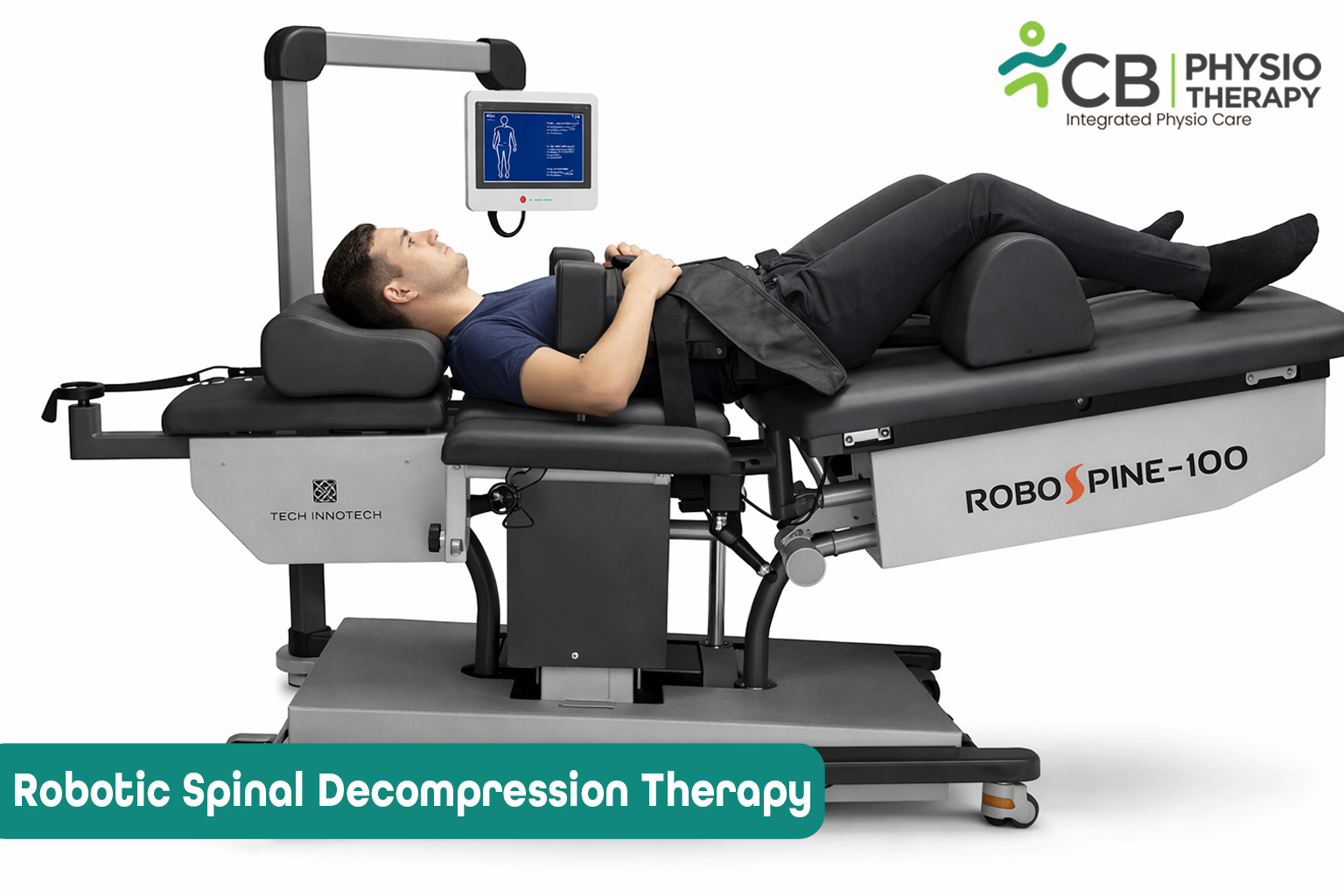
How Robotic Spinal Decompression Therapy works
Robotic Spinal Decompression Therapy earns its place in a recovery plan when the assessment says it fits — that is the honest answer to "does it work?", because the same treatment helps one diagnosis and does little for another.
Used on the right case, at the right dose, alongside exercise and hands-on care, Robotic Spinal Decompression Therapy supports pain relief and recovery without medicines. Your physiotherapist will tell you plainly whether your case is one it helps.
Robotic Spinal Decompression Therapy — techniques & equipment
What the treatment actually involves — your plan combines the pieces your assessment calls for.
Assessment before application
Your physiotherapist first confirms Robotic Spinal Decompression Therapy suits your diagnosis — and screens for anything that rules it out.
Targeted application
The treatment is applied to the specific structures your assessment identified, at a dose set for your case.
Paired with active rehab
Exercise and movement retraining run alongside, so the gains each session makes are kept.
Reviewed and progressed
Your response is checked every session; the plan is adjusted rather than repeated on autopilot.
Conditions Robotic Spinal Decompression Therapy treats
Where it fits best — your assessment confirms whether it belongs in your plan.
- ✓ Spinal Stenosis →
- ✓ Degenerative Disc Disease →
- ✓ Spinal Cord Injury →
- ✓ Herniated Disk Or Slipped Disc →
- ✓ Sciatica →
- ✓ Pain or stiffness that has not settled with rest
- ✓ As part of a wider, assessment-led recovery plan
- ✓ When your assessment identifies the specific problem Robotic Spinal Decompression Therapy addresses
What a Robotic Spinal Decompression Therapy session looks like
Step by step — from screening to treatment to what comes next.
Screening and consent
A quick reassessment and safety screen — you will know what the session involves and why before it starts.
The treatment itself
Robotic Spinal Decompression Therapy applied to the targeted area — most patients find sessions comfortable, and you can speak up at any point.
Active follow-through
Exercise or movement work right after, while the treatment effect is fresh.
Response check
What changed and for how long — the answer shapes your next session and the plan.
Benefits of Robotic Spinal Decompression Therapy
- ✓ Dosed to your case after a proper assessment
- ✓ Always combined with active rehab, for results that last
- ✓ Available at CB clinics near you — and at home where equipment allows
- ✓ Drug-free support for pain relief and recovery
- ✓ Delivered by certified physiotherapists, never unsupervised
Safety & contraindications
How CB Physiotherapy delivers Robotic Spinal Decompression Therapy
You will not walk into CB Physiotherapy and simply receive Robotic Spinal Decompression Therapy — you will receive an assessment, and Robotic Spinal Decompression Therapy if your case calls for it. That order matters: it is how we make sure every session moves you towards a goal rather than just filling a slot.
Your plan runs on Fizo IQ™ — diagnosis, root cause, milestones, goals — and Robotic Spinal Decompression Therapy is combined with hands-on care and exercise as indicated, at a clinic near you or at home where the equipment allows.
Real published prices from our physiotherapists for Robotic Spinal Decompression Therapy in India — your exact quote is confirmed after assessment, before you commit. Packages save 10%.
Get Robotic Spinal Decompression Therapy near you
Certified physiotherapists at a clinic near you or at home — same-day slots, assessment-led care.
Request received!
We'll call you within 10 minutes to confirm your home visit.We'll call you within 10 minutes to confirm your slot.
Chat with us on WhatsAppRobotic Spinal Decompression Therapy, answered
Robotic Spinal Decompression Therapy is a non-surgical, computer-controlled treatment designed to relieve back pain, neck pain, and nerve-related symptoms by gently and precisely decompressing the spine.Robotic spinal decompression therapy gently takes pressure off your spine using advanced robotic technology, allowing your discs and nerves to heal naturally and reducing pain without surgery.
Unlike traditional traction, this therapy uses robotic technology to apply accurate, level-specific, and programmable forces, helping reduce pressure on spinal discs and nerves and promoting natural healing.
Robotic spinal decompression works on a scientific principle of reducing intradiscal pressure in a controlled and targeted manner.
Step-by-Step Mechanism
1. Controlled Robotic Spinal Stretching
- The patient lies comfortably on a robotic decompression table.
- A computer-guided robotic system applies gentle, intermittent traction based on preset parameters.
2. Creation of Negative Intradiscal Pressure
- The robotic pull creates a vacuum (negative pressure) inside the spinal disc.
3. Disc Retraction
Because of the negative pressure:
- Bulging or herniated disc material may move back toward its normal position
- Pressure on spinal nerves is reduced
4. Increased Intervertebral Space
Slight separation of vertebrae:
- Reduces nerve root compression
- Decreases stress on facet joints and ligaments
5. Improved Disc Nutrition
Negative pressure allows entry of:
- Oxygen
- Water
- Nutrients
- These elements are essential for disc repair and hydration.
6. Muscle Relaxation & Pain Reduction
Robotic pull–relax cycles prevent muscle guarding, resulting in:
- Reduced muscle spasm
- Better mobility
- Pain relief
Parameters are customized by a trained physiotherapist based on diagnosis and patient tolerance.
1. Patient Position
- Supine: most common for lumbar spine
- Supine or prone: depending on machine and condition
- Cervical decompression: supine or seated (machine-specific)
2. Target Spinal Level
- Set precisely using MRI and clinical findings
- Examples: L4–L5, L5–S1, C5–C6
- Robotic angle adjustment targets the exact level
3. Traction Force (Load)
- Lumbar spine: ~25–50% of body weight
- Cervical spine: starts at 4–7 kg
- Gradual progression session-by-session
4. Pull–Relax Ratio
- Intermittent traction preferred
Common ratios:
- 60 sec pull: 30 sec relax
- 90 sec pull: 30 sec relax
5. Session Duration
- 20–30 minutes
6. Frequency
- 2–5 sessions per week
7. Total Sessions
- Usually 10–20 sessions
- Chronic cases: up to 30 sessions
8. Progression Criteria
- Pain reduction
- Improved ROM
- Reduced radicular symptoms
9. Adjunct Physiotherapy
Best results when combined with:
- Core stabilization
- McKenzie / flexion-based exercises
- Manual therapy
- Postural & ergonomic correction
10. Monitoring & Safety
- Continuous patient feedback
- Stop or modify if pain or neurological symptoms increase
Robotic spinal decompression produces mechanical, neurological, circulatory, and muscular benefits.
1. Disc Effects
- Reduced intradiscal pressure
- Disc rehydration
- Retraction of bulging/herniated discs
- Improved disc metabolism
2. Neural Effects
- Decompression of nerve roots
- Reduced nerve ischemia
- Decreased tingling, numbness, and radiating pain
3. Joint & Ligament Effects
- Increased intervertebral space
- Reduced facet joint compression
- Improved ligament flexibility
4. Muscular Effects
- Reduced muscle spasm
- Decreased guarding
- Improved flexibility
5. Circulatory Effects
- Improved blood flow
- Enhanced lymphatic drainage
- Reduced inflammatory waste
6. Pain Modulation
- Reduced mechanical and chemical pain
- Improved pain inhibition
- Reduced central sensitization
7. Functional Improvements
- Better posture
- Improved mobility
- Enhanced daily activity tolerance
Most patients find robotic spinal decompression comfortable, gentle, and relaxing.
1. During the Session
- Gentle stretching sensation
- Intermittent pull–relax cycles
- Well-supported with belts and cushions
2. After the Session
- Feeling of lightness
- Improved movement
- Mild soreness or stiffness for a few hours (normal)
3. What Is NOT Normal
- Sharp pain
- Worsening nerve pain
- Numbness or weakness
The number of sessions depends on diagnosis, severity, chronicity, and patient response.
General Guidelines
- Mild pain: 8–10 sessions
- Disc bulge / sciatica: 12–20 sessions
- Chronic conditions: 20–30 sessions
Frequency
- 2–5 sessions per week
Improvement Timeline
- Relief often starts in 3–5 sessions
- Disc healing takes 6–10 sessions or more
Robotic spinal decompression provides both pain relief and long-term spinal health benefits.
- Reduces back and neck pain
- Relieves nerve compression
- Promotes disc healing
- Improves spinal mobility
- Reduces muscle spasm
- Non-surgical and drug-free
- Improves daily function
- Enhances circulation and healing
- Long-term results when combined with physiotherapy
Robotic spinal decompression therapy is most effective for spinal conditions where disc pressure and nerve compression are the primary causes of pain and dysfunction.
- Slip disc / disc bulge
- Disc herniation
- Sciatica
- Degenerative disc disease
- Cervical radiculopathy
- Lumbar radiculopathy
- Chronic neck pain
- Low back pain
- Facet joint–related pain (selected cases)
Robotic spinal decompression therapy is generally safe, but certain medical conditions make this treatment unsuitable or require special caution.
1. Absolute Contraindications
Robotic spinal decompression should not be performed in patients with:
- Recent spinal fracture
- Spinal tumors (benign or malignant)
- Spinal infections (discitis, osteomyelitis, tuberculosis)
- Severe osteoporosis
- Spinal instability (e.g., high-grade spondylolisthesis)
- Recent spinal surgery (early post-operative phase)
2. Relative Contraindications
Treatment may need modification or avoidance in patients with:
- Pregnancy (especially lumbar spine)
- Severe acute pain of unknown origin
- Advanced spinal deformities
- Severe facet joint arthritis
- Uncontrolled hypertension
- Severe obesity (machine limitations)
3. Cervical Spine–Specific Contraindications
Cervical traction should be avoided in patients with:
- Severe cervical instability
- Vertebral artery insufficiency
- Acute cervical trauma
- Severe cervical myelopathy
Ready to start your recovery?
Get assessed today — find the cause, get a plan, and know when you'll feel better.