
Spinal Cord Injury — Symptoms, Causes & Treatment
Also known as Spinal Cord Injury. Causes, symptoms and how physiotherapy treats Spinal Cord Injury — without surgery or medicines.
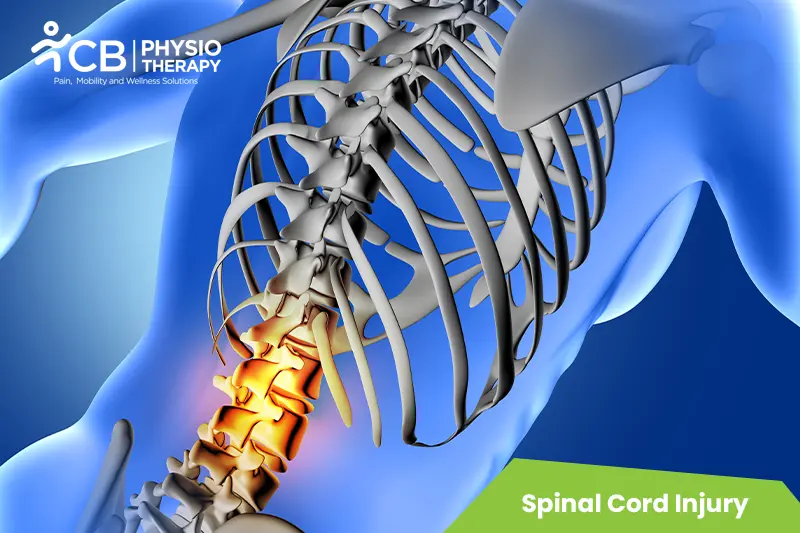
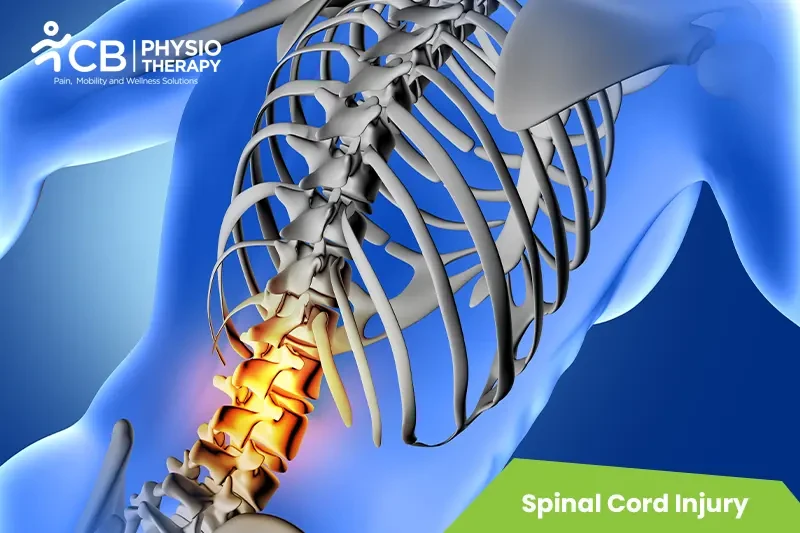
Understanding Spinal Cord Injury
Spinal Cord Injury affects the nervous system's control of movement — and while the diagnosis itself is made and managed by your doctor, physiotherapy shapes what daily life looks like with it. Strength, balance, walking and everyday tasks can all improve with the right rehabilitation, at almost any stage.
Neuro-rehabilitation works because of neuroplasticity: with repeated, task-specific practice the nervous system re-learns. A structured program targets what matters to you — transfers, walking, stairs, confidence — and measures progress milestone by milestone.
Causes & risk factors of Spinal Cord Injury
What commonly drives it — your assessment pins down which of these apply to you.
The underlying neurological event
Conditions like Spinal Cord Injury begin in the nervous system — diagnosis and medical management sit with your doctor and neurologist.
Reduced activity after diagnosis
Fear, fatigue and difficulty shrink movement — and inactivity then adds its own layer of weakness and stiffness.
Muscle weakness and tone changes
Altered signals change how muscles fire — some weaken, some tighten — reshaping movement patterns over time.
Balance and confidence
Balance changes raise fall risk, and fear of falling quietly cuts activity further — a loop rehabilitation is designed to break.
When physiotherapy is the right call
If any of these sound like you, an assessment is the right first step.
- ✓ A new diagnosis of Spinal Cord Injury and you want a clear rehabilitation start point
- ✓ Daily tasks, walking or stairs are getting harder than they used to be
- ✓ Strength, stamina or balance has visibly dropped
- ✓ You want a structured clinic + home program with measurable milestones
- ✓ Family members need guidance to support you safely
Your treatment journey
Step by step — from your first assessment to a tracked recovery plan.
A detailed first assessment
History, movement testing and strength checks — a focused session to find what is actually driving your Spinal Cord Injury.
A diagnosis you understand
Your physiotherapist explains the findings in plain language — what is affected, why it happened and what that means for you.
Active, tracked treatment
Hands-on therapy, the right modalities and graded exercise — progressed session by session and tracked on Fizo IQ™.
Prevention, built in
The final phase rebuilds strength and habits so the same problem does not come back — with a home plan you keep.
What recovery looks like
- ✓ More independence in daily tasks
- ✓ Better strength, balance and stamina
- ✓ Fewer setbacks, with red flags monitored
- ✓ A program your family understands and can support
- ✓ Progress measured milestone by milestone on Fizo IQ™
When to see a doctor — red flags
How CB Physiotherapy treats Spinal Cord Injury
At CB Physiotherapy, treatment for Spinal Cord Injury starts with finding its cause: a structured, physiotherapist-led assessment before anything is prescribed. Your plan then combines hands-on therapy, targeted exercise and the right modalities — delivered at a clinic near you or at home, and coordinated with your doctor where medical care is involved.
Every case runs on Fizo IQ™, our recovery engine: diagnosis, root cause, plan, milestones and goals, tracked session by session. You always know where you are in your recovery — and what comes next.
Exercises that help with Spinal Cord Injury
 Top 5 Exercises For Spinal Cord Injury
Steps & precautions →
Top 5 Exercises For Spinal Cord Injury
Steps & precautions →
 Top 5 Exercises For Back Pain
Steps & precautions →
Top 5 Exercises For Back Pain
Steps & precautions →
Make these exercises yours — a CB physio personalizes, doses and tracks your plan week by week.
Get my personalized planGeneral guidance only — stop if an exercise increases your pain, and check with your physio before starting a new routine.
Get Spinal Cord Injury treatment near you
Certified physiotherapists at a clinic near you or at home — same-day slots, assessment-led care.
Request received!
We'll call you within 10 minutes to confirm your home visit.We'll call you within 10 minutes to confirm your slot.
Chat with us on WhatsAppSpinal Cord Injury, answered
Spinal cord injury depends on two factors:
The site of the injury.
The severity of the injury.
Depending on the severity of the injury, it is classified as:
Complete. If all sensations and all ability to control the movement are lost below the spinal cord.
Incomplete. If some motor or sensory function below the site of injury is affected.
Types of paralysis caused by a spinal cord injury are:
Tetraplegia or quadriplegia: Tetraplegia means that the arms, hands, legs, trunk, and pelvic organs are all affected by the spinal cord injury.
Paraplegia: Paraplegia affects all or part of the legs, trunk, and pelvic organs.
- Intense pain in the neck, head, or back.
- Weakness.
- Incoordination.
- Numbness in hands, fingers, feet, or toes.
- Loss of movement.
- Loss or altered sensation of heat, cold, and touch.
- Difficulty breathing, or clearing secretions from the lungs.
- Improperly positioned or twisted neck or back.
- Loss of bowel or bladder control.
- Exaggerated reflex activities or spasms.
- Changes in sexual function, sensitivity, and fertility.
- Difficulty with balance and walking.
A sudden blow to the spine.
Damage to the vertebrae, ligaments, or discs or to the spinal cord itself.
Motor vehicle accidents.
Falls.
Acts of violence like gunshot wounds, knife wounds, etc.
Sports such as impact sports, diving in shallow water, etc.
Diseases like cancer, arthritis, osteoporosis, etc.
Pathology:
The spinal cord injury destroys the neural tissue. Also, damage to the vascular system provokes hemorrhage and the disruption of the blood–spinal cord barrier, which causes cell death, enlargement of lesioned area, and further loss of neurological functions. Edema develops in the early ischemic period triggering a phase of glutamate excitotoxicity and ionic imbalance. Mitochondrial failure results in energy depletion and oxidative stress. The lesioned area gets enclosed and stabilized by a fibroglial scar. All these events occur after traumatic spinal cord injury.
The examiner rules out a spinal cord injury by examination, tests for sensory function and movement, and by asking some questions about the accident. Motor function, or the ability to move the parts of the body, and sensory function, or the ability to feel touch are checked
If the injured person complains of neck pain, isn't fully awake, or shows signs of weakness or neurological injury, in such case emergency diagnostic tests may be needed.
X-rays:
X-rays can reveal vertebral problems, fractures, tumours, or degenerative changes in the spine.
CT scan:
CT scan can provide a clearer image of any abnormality. X-ray uses computers to form a series of cross-sectional images of bone, disc, and other problems.
MRI:
MRI uses a strong magnetic field and radio waves to produce images, which help check and look closely at the spinal cord and identify herniated discs and blood clots that might compress the spinal cord.
Note: Medication should not be taken without the doctor's prescription.
Surgery:
Surgery is often necessary to remove fragments of bones, fractured vertebrae foreign objects, or herniated discs that appear to compress the spine. Surgery might also be required to stabilize the spine to prevent future pain or deformity.
Cryotherapy lowers the temperature and promotes healing and recovery by reducing pain and inflammation.
FES:
Functional electrical stimulation uses electrical stimulators to control arm and leg muscles to allow people with spinal cord injuries to stand, walk, grip, and reach.
Respiratory training:
After spinal cord injury respiration is affected. Levels of innervations are:
- C3-5 Diaphragm,
- C3-8 Scalene,
- C5-T1 Pectoralis,
- T1-11 Intercostals and
- T6-12 Abdominals.
Physiotherapy interventions like secretion clearance and increased ventilatory techniques. Secretion clearance techniques include percussions, vibrations, shaking, postural drainage, and suctioning. Increased ventilation techniques include positioning, abdominal binders, deep breathing exercises, incentive spirometry, and inspiratory muscle training. Other types of equipment used are continuous positive airway pressure (CPAP) and bi-level positive airway pressure (BiPAP).
Range of movement exercises:
Decreased range of motion may lead to contractures due to immobilization, spasticity, increased muscle tone, and poor positioning.
Stretching exercises:
The physiotherapist positions the part in the lengthened position and uses passive stretching and other techniques such as compression, sustained deep pressure, and heat.
Prevention of Pressure Ulcers:
The occiput, sacrum, scapulas, and heels are areas prone to pressure when lying supine. While the greater trochanter and malleoli are more prone to side-lying.
The physiotherapist gives passive pressure care, such as frequent rolling regimes and mobilizing, and skin moisturizing.
Strengthening exercises:
Progressive strengthening exercises or resistance training and functional strength training are given to achieve favorable results in maintaining and strengthening the muscles. 1-3 sets with 8-12 repetitions and 1-3mins of rest between the sets can be done thrice a week.
Bed mobility and transfers:
The patient is taught bed mobility like rolling, mobilizing from supine to long-sitting, unsupported sitting, lifting vertically, and transfers.
Wheelchair (WC) mobility:
Patients with C1-4 tetraplegia require powered wheelchairs controlled by chin movements, sip, puff, or head array. Patients with C5 tetraplegia most commonly use powered wheelchairs controlled by hand movement.
Most individuals with C6-8 tetraplegia can independently mobilize with manual wheelchairs and might use a hand-controlled wheelchair.
Individuals with SCI lower than C8 will be able to independently mobilise with a manual wheelchair.
Patients are taught turning, opening and closing doors, going around and over obstacles, going up and down inclines, as well as mobilizing indoors and outdoors are important activities to practice to ensure safe and independent mobility.
Gait and standing:
Gait training, strengthening, and balance exercises are the most common physiotherapy activities. The ability to stand or walk is dependent on several factors such as spasticity, bone mineral density, orthostatic hypotension, emotional well-being, and bladder and bowel function. Standing can be attained by using assistive devices such as standing frames, tilt tables, and standing wheelchairs. Patients with paraplegia might be able to stand in parallel bars using orthoses or knee-extension splints. Orthoses and walking aids such as knee-ankle-foot and hip-knee-ankle-foot orthoses can be used for the gait training of patients with complete paraplegia to partially paralyzed lower extremities.
Don't let Spinal Cord Injury decide your day.
Get assessed today — find the cause, get a plan, and know when you'll feel better.