
Spinal Fusion — Symptoms, Causes & Treatment
Also known as Spinal Fusion. Causes, symptoms and how physiotherapy treats Spinal Fusion — without surgery or medicines.
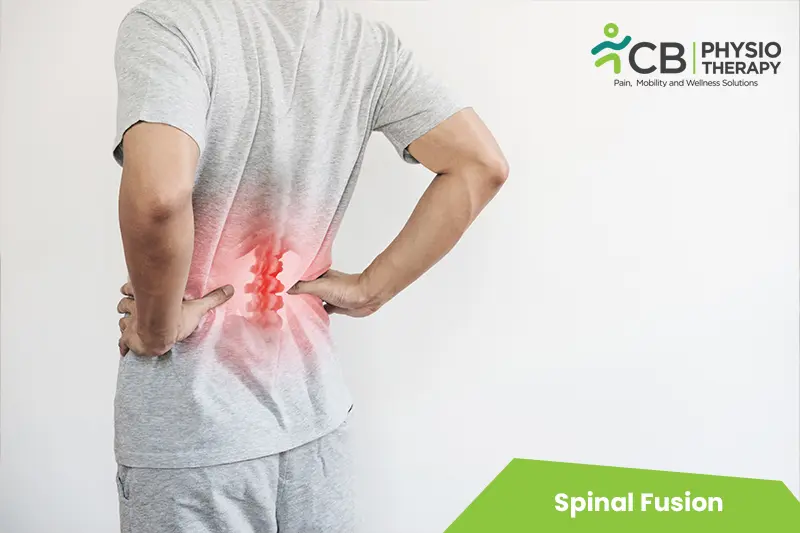
Understanding Spinal Fusion
Spinal Fusion affects people differently, and the right care starts with understanding how it affects you. Its day-to-day impact — on movement, strength, energy and confidence — is where physiotherapy does its work.
Our role in Spinal Fusion is practical: protect and rebuild movement and daily function with a plan set after a careful assessment, in coordination with your doctor wherever medical management is involved. No two plans look the same, because no two cases behave the same.
Causes & risk factors of Spinal Fusion
What commonly drives it — your assessment pins down which of these apply to you.
More than one possible driver
Spinal Fusion can have several contributing factors — a careful history and physical assessment separate them rather than guessing.
Reduced movement and deconditioning
Whatever the trigger, less movement quickly adds weakness and stiffness of its own — usually the most reversible part.
Daily-life load and habits
Work posture, repeated tasks, sleep and stress all shape how a condition behaves day to day.
General health and history
Overall health, previous injuries and existing conditions influence both the picture and the plan — the assessment takes all of it in.
When physiotherapy is the right call
If any of these sound like you, an assessment is the right first step.
- ✓ A new diagnosis of Spinal Fusion and you want a clear rehabilitation start point
- ✓ Daily tasks, walking or stairs are getting harder than they used to be
- ✓ Strength, stamina or balance has visibly dropped
- ✓ You want a structured clinic + home program with measurable milestones
- ✓ Family members need guidance to support you safely
Your treatment journey
Step by step — from your first assessment to a tracked recovery plan.
A detailed first assessment
History, movement testing and strength checks — a focused session to find what is actually driving your Spinal Fusion.
A diagnosis you understand
Your physiotherapist explains the findings in plain language — what is affected, why it happened and what that means for you.
Active, tracked treatment
Hands-on therapy, the right modalities and graded exercise — progressed session by session and tracked on Fizo IQ™.
Prevention, built in
The final phase rebuilds strength and habits so the same problem does not come back — with a home plan you keep.
What recovery looks like
- ✓ More independence in daily tasks
- ✓ Better strength, balance and stamina
- ✓ Fewer setbacks, with red flags monitored
- ✓ A program your family understands and can support
- ✓ Progress measured milestone by milestone on Fizo IQ™
When to see a doctor — red flags
How CB Physiotherapy treats Spinal Fusion
At CB Physiotherapy, treatment for Spinal Fusion starts with finding its cause: a structured, physiotherapist-led assessment before anything is prescribed. Your plan then combines hands-on therapy, targeted exercise and the right modalities — delivered at a clinic near you or at home, and coordinated with your doctor where medical care is involved.
Every case runs on Fizo IQ™, our recovery engine: diagnosis, root cause, plan, milestones and goals, tracked session by session. You always know where you are in your recovery — and what comes next.
Exercises that help with Spinal Fusion
 Top 5 Exercises For Spinal Fusion
Steps & precautions →
Top 5 Exercises For Spinal Fusion
Steps & precautions →
 Top 5 Exercises For Back Pain
Steps & precautions →
Top 5 Exercises For Back Pain
Steps & precautions →
Make these exercises yours — a CB physio personalizes, doses and tracks your plan week by week.
Get my personalized planGeneral guidance only — stop if an exercise increases your pain, and check with your physio before starting a new routine.
Get Spinal Fusion treatment near you
Certified physiotherapists at a clinic near you or at home — same-day slots, assessment-led care.
Request received!
We'll call you within 10 minutes to confirm your home visit.We'll call you within 10 minutes to confirm your slot.
Chat with us on WhatsAppSpinal Fusion, answered
Types of Spinal Fusion:
Allograft:
The bone is grafted from any outside source.
Autograft:
The bone is grafted from the patient.
Deformities of the spine.
Herniated disc.
Spinal canal stenosis.
Spinal weakness or instability.
Spondylolisthesis.
Scoliosis.
Fractured vertebra.
Tumour.
Infection.
Pathology:
Spinal fusion is a surgical procedure used to correct problems with the small bones in the spine (vertebrae), and fuse two or more vertebrae so that they heal into one solid bone. Spinal fusion is done to eliminate painful motion or to restore stability to the spine. Spinal fusion eliminates motion between vertebrae and also prevents the stretching of nerves and surrounding ligaments and muscles. Spinal fusion is an option when pain occurs due to movements, such as motion that occurs in a part of the spine that is arthritic or unstable due to injury, the normal aging process, or disease.
X-rays are used to check the bony alignment and bone damage and also show the decreased disk space between the vertebrae.
Computed tomography (CT) scans:
CT scan is used as an adjunctive study to an MRI scan and can also show nerve root compression.
Magnetic resonance imaging (MRI) scans:
MRI scans provide information about the health of the discs as well as the presence of any tumors or compression on the nerves.
Discogram:
Discogram is performed before the spine fusion surgery. It is done by inserting a needle into the disc and injecting dye. If this process causes normal pain, then it is presumed that the specific disc is the anatomic cause of the pain.
Note: Medication should not be taken without the doctor's prescription.
Excessive mobility and stress on the tissues should be avoided to enhance healing.
Cryotherapy:
Ice therapy is used to help decrease swelling and pain at the surgical site and is applied for 20 minutes several times a day.
Thermotherapy:
Heat therapy is used to help to improve circulation and relax the muscles.
TENS:
Transcutaneous electrical stimulations may be used to help relieve pain.
Simple range of Motion Exercises:
These exercises help the muscles to maintain the stability of the spine and reduce stress through the surgical site by active stabilization. Range of motion exercises promotes blood circulation, bringing oxygen required for tissue healing and healthy bone growth.
Short walks:
After surgery short walk is recommended for the patients, they should get out of bed and walk the first day after surgery, frequent walking throughout the initial recovery period, and further increase the amount and length of the walks as tolerated.
Stretching Exercises:
Stretching exercises should be done such that the patient should feel the stretch, but not to the point of pain, If pain is felt stretching should be stopped. It promotes flexibility as due to inactivity, range of motion can be lost. Gentle stretching exercises for the core back and abdominals and hip muscles will make all the movements easier. But care should be taken not to do it too aggressively.
Hamstrings and quads Stretching:
Stretching of these muscles should be done slowly with a 30-second hold, 3 times in 2 sets per day. For hamstrings, sit in a chair and straighten one leg in front with toes pointed up and knees straight. Push the belly forward to move into a stretch while keeping the chest high. For the quadriceps, lie on the stomach, and bring the heel toward the buttocks as far as possible.
Nerve stretches:
Nerve stretches should be done in two hours, without holding for long. A nerve stretch is done by lying on the back with legs on the ground, and slowly lifting one leg until a stretch is felt in the back of the thigh. Support the raised leg with hands behind the knee, and pump the ankle while holding the knee still. Or lie on the back, and bend both knees. Slowly straighten one leg and push the heel toward the ceiling until a stretch is felt. Alternate stretching each leg.
Static Stabilization Exercises:
These movements are done without moving the trunk and should be completed by moving arms and legs while avoiding any rocking or arching of the lower trunk.
Pelvic Tilt:
The patient lies on the back of the floor with knees bent and pulling the belly in towards the spine, keeping the lumbar spine stable.
Strengthening Exercises:
More advanced exercises should be added to strengthen the back structures and increase overall fitness. Patients can add more rigor and variety by using an exercise ball or resistance bands.
Mat Exercises:
Abdominal strengthening
The patient lies on the floor with knees bent, curls the trunk by raising the head and one shoulder towards the opposite hip a few inches, then extend the back by alternating the limbs, while on hands and knees, raise one arm and opposite leg, then alternate.
Band Movement:
Strengthen the abdominals and oblique muscles
Resistance bands are commonly used for strength training. Pull with the band, anchored low to the ground, and feet shoulder-width apart, grasp the band and pull from the lower right to the left shoulder.
Exercise Ball Movement:
An exercise ball maximizes the range of motion but staying in control is more important while using an exercise ball. Exercise should be performed until fatigue is evident or control becomes difficult. Each set should last 30 to 60 seconds, 1 set a day is usually recommended.
Ball Marching:
The patient sits on the exercise ball, slowly raising one arm and the opposite leg, reverse.
Another exercise is the patient lies with the stomach on the exercise ball and hands/ arms in front, walk forward on the ball until it rests under the thighs, then raises one leg at a time.
The next option is with the stomach on the exercise ball, and knees on the ground, walk straight out on the hands, but don't let the trunk twist or dip down.
Aerobic Exercises:
Aerobic exercises like stationary biking, stair climbing, elliptical training, or brisk walking for at least 20 minutes helps to increase blood flow and oxygen also burn excess calories, help to maintain weight, and prevent added stress on the back structures and surgical site.
Don't let Spinal Fusion decide your day.
Get assessed today — find the cause, get a plan, and know when you'll feel better.