
Trigger Point Injection — How It Works & What It Treats
Also known as TRIGGER POINT INJECTION. What Trigger Point Injection is, how it works and what it treats — explained by CB Physiotherapy's clinical team.
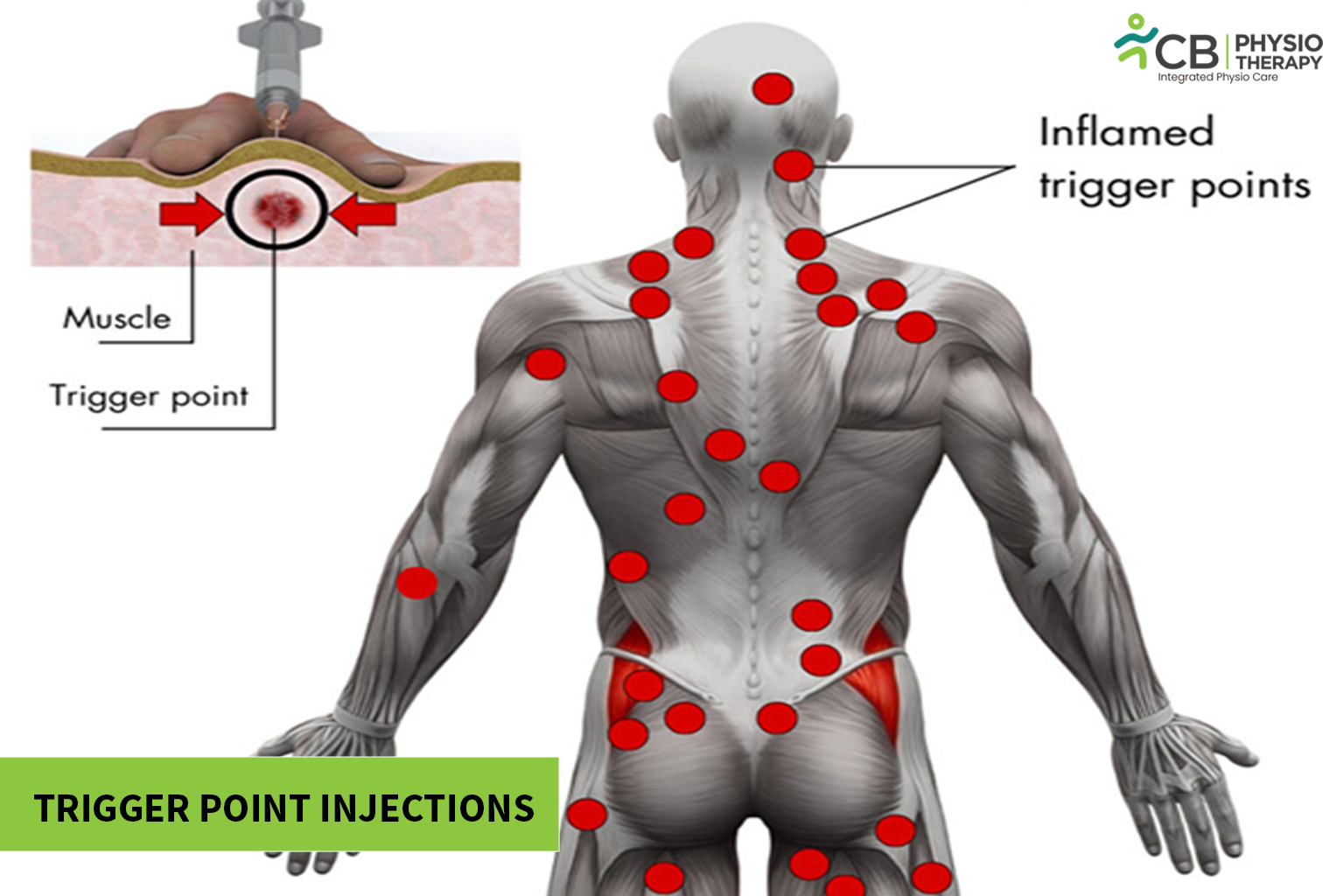
How Trigger Point Injection works
Trigger Point Injection is one of the treatment approaches our physiotherapists draw on — always as part of an assessment-led plan, never as a standalone fix.
What makes any therapy work is the decision-making around it: whether it fits your diagnosis, at what dose, and combined with what. At CB Physiotherapy, Trigger Point Injection is prescribed after a movement assessment and paired with active rehabilitation, because passive treatment alone rarely produces lasting change.
Trigger Point Injection — techniques & equipment
What the treatment actually involves — your plan combines the pieces your assessment calls for.
Assessment before application
Your physiotherapist first confirms Trigger Point Injection suits your diagnosis — and screens for anything that rules it out.
Targeted application
The treatment is applied to the specific structures your assessment identified, at a dose set for your case.
Paired with active rehab
Exercise and movement retraining run alongside, so the gains each session makes are kept.
Reviewed and progressed
Your response is checked every session; the plan is adjusted rather than repeated on autopilot.
Conditions Trigger Point Injection treats
Where it fits best — your assessment confirms whether it belongs in your plan.
- ✓ Spinal Stenosis →
- ✓ Pain or stiffness that has not settled with rest
- ✓ As part of a wider, assessment-led recovery plan
- ✓ When your assessment identifies the specific problem Trigger Point Injection addresses
What a Trigger Point Injection session looks like
Step by step — from screening to treatment to what comes next.
Screening and consent
A quick reassessment and safety screen — you will know what the session involves and why before it starts.
The treatment itself
Trigger Point Injection applied to the targeted area — most patients find sessions comfortable, and you can speak up at any point.
Active follow-through
Exercise or movement work right after, while the treatment effect is fresh.
Response check
What changed and for how long — the answer shapes your next session and the plan.
Benefits of Trigger Point Injection
- ✓ Drug-free support for pain relief and recovery
- ✓ Delivered by certified physiotherapists, never unsupervised
- ✓ Dosed to your case after a proper assessment
- ✓ Always combined with active rehab, for results that last
- ✓ Available at CB clinics near you — and at home where equipment allows
Safety & contraindications
How CB Physiotherapy delivers Trigger Point Injection
You will not walk into CB Physiotherapy and simply receive Trigger Point Injection — you will receive an assessment, and Trigger Point Injection if your case calls for it. That order matters: it is how we make sure every session moves you towards a goal rather than just filling a slot.
Your plan runs on Fizo IQ™ — diagnosis, root cause, milestones, goals — and Trigger Point Injection is combined with hands-on care and exercise as indicated, at a clinic near you or at home where the equipment allows.
Real published prices from our physiotherapists for Trigger Point Injection in India — your exact quote is confirmed after assessment, before you commit. Packages save 10%.
Get Trigger Point Injection near you
Certified physiotherapists at a clinic near you or at home — same-day slots, assessment-led care.
Request received!
We'll call you within 10 minutes to confirm your home visit.We'll call you within 10 minutes to confirm your slot.
Chat with us on WhatsAppTrigger Point Injection, answered
- Local pain
- Referred pain (pain felt in another area)
- Muscle stiffness
- Restricted movement
- Relaxes the tight muscle band
- Provides immediate pain relief
- Interrupts the pain-spasm cycle
- Reduces inflammation
- Provides longer-lasting relief
- Mechanical disruption of the trigger point
- Stimulates muscle relaxation
- Improves blood flow
- Immediate muscle relaxation (anesthetic)
- Long-term inflammation control (steroid)
- Breaks the pain-spasm-pain cycle
A trigger point injection works by relaxing the contracted muscle fibers and restoring normal blood flow.
- Disrupts the tight muscle knot
- Blocks pain signals temporarily (anesthetic effect)
- Reduces local inflammation (if steroid used)
- Improves oxygen supply to muscle
- Breaks the pain cycle
EXACT PROCEDURE (STEP-BY-STEP)
Trigger point injection is a quick outpatient procedure performed under sterile precautions.
- Patient positioned comfortably
- Painful trigger point identified by examination
- Skin cleaned and sterilized
- Small needle inserted into the trigger point
- Medication injected into the tight muscle band
- Needle removed and small dressing applied
Procedure time: 5–15 minutes
Observation time: 10–20 minutes
Same-day discharge
During the procedure:
- Mild needle prick
- Brief muscle twitch response (common and normal)
- Temporary pressure or cramping sensation
After the procedure:
- Immediate soreness at injection site (may last 1–2 days)
- Muscle relaxation
- Improved range of motion
- Pain relief within minutes (if anesthetic used)
- Steroid effect begins in 1–3 days (if used)
Most patients tolerate the procedure very well.
The number of injections depends on:
- Number of trigger points
- Duration of symptoms
- Response to the first injection
- Some patients improve after one session
- Others may require a series of injections
- Typically spaced 1–3 weeks apart if repeated
It ultimately depends on clinical response and functional improvement.
Is the procedure safe?
Yes, when performed by a trained healthcare professional using sterile technique.
Possible minor side effects:
- Temporary soreness
- Bruising
- Mild swelling
- Temporary numbness
Serious complications are very rare.
The main goal is to relieve muscle spasm and restore normal movement.
- Reduces muscle tightness
- Improves flexibility
- Decreases pain intensity
- Enhances daily function
- Facilitates participation in physiotherapy
- Improves quality of life
Trigger point injections are used for muscle-related pain conditions such as:
- Myofascial pain syndrome
- Neck and shoulder pain
- Upper and lower back pain
- Tension-type headaches
- Fibromyalgia-related focal trigger points
- Muscle strain or overuse injuries
Although generally safe, certain situations require caution.
Absolute:
- Active skin infection at injection site
- Bleeding disorder
- Allergy to medication
- No patient consent
Relative:
- Uncontrolled diabetes (if steroid used)
- Pregnancy
- Severe systemic illness
- Anticoagulant therapy
Pain relief alone does not correct:
- Poor posture
- Muscle imbalance
- Weakness
- Movement dysfunction
- Repetitive strain patterns
After pain reduces, physiotherapy helps:
- Strengthen weak muscles
- Improve flexibility
- Correct posture
- Restore normal biomechanics
- Prevent recurrence
- Achieve long-term results
Trigger point injections are most effective when combined with a structured rehabilitation program.
Ready to start your recovery?
Get assessed today — find the cause, get a plan, and know when you'll feel better.