Concussion — Symptoms, Causes & Treatment
Also known as Concussion. Causes, symptoms and how physiotherapy treats Concussion — without surgery or medicines.
Understanding Concussion
Concussion affects people differently, and the right care starts with understanding how it affects you. Its day-to-day impact — on movement, strength, energy and confidence — is where physiotherapy does its work.
Our role in Concussion is practical: protect and rebuild movement and daily function with a plan set after a careful assessment, in coordination with your doctor wherever medical management is involved. No two plans look the same, because no two cases behave the same.
Causes & risk factors of Concussion
What commonly drives it — your assessment pins down which of these apply to you.
More than one possible driver
Concussion can have several contributing factors — a careful history and physical assessment separate them rather than guessing.
Reduced movement and deconditioning
Whatever the trigger, less movement quickly adds weakness and stiffness of its own — usually the most reversible part.
Daily-life load and habits
Work posture, repeated tasks, sleep and stress all shape how a condition behaves day to day.
General health and history
Overall health, previous injuries and existing conditions influence both the picture and the plan — the assessment takes all of it in.
When physiotherapy is the right call
If any of these sound like you, an assessment is the right first step.
- ✓ A new diagnosis of Concussion and you want a clear rehabilitation start point
- ✓ Daily tasks, walking or stairs are getting harder than they used to be
- ✓ Strength, stamina or balance has visibly dropped
- ✓ You want a structured clinic + home program with measurable milestones
- ✓ Family members need guidance to support you safely
Your treatment journey
Step by step — from your first assessment to a tracked recovery plan.
A detailed first assessment
History, movement testing and strength checks — a focused session to find what is actually driving your Concussion.
A diagnosis you understand
Your physiotherapist explains the findings in plain language — what is affected, why it happened and what that means for you.
Active, tracked treatment
Hands-on therapy, the right modalities and graded exercise — progressed session by session and tracked on Fizo IQ™.
Prevention, built in
The final phase rebuilds strength and habits so the same problem does not come back — with a home plan you keep.
What recovery looks like
- ✓ More independence in daily tasks
- ✓ Better strength, balance and stamina
- ✓ Fewer setbacks, with red flags monitored
- ✓ A program your family understands and can support
- ✓ Progress measured milestone by milestone on Fizo IQ™
When to see a doctor — red flags
How CB Physiotherapy treats Concussion
We treat Concussion the way we treat everything: assessment first, plan second, treatment third. It sounds obvious, but it is the difference between sessions that fill a slot and sessions that move you towards a goal. Care is delivered by certified physiotherapists at a clinic near you or at home.
Your whole journey is tracked on Fizo IQ™ — the diagnosis, the root cause, the milestones and the goals — so progress is measured, not guessed, and the plan adapts the moment your response calls for it.
Exercises that help with Concussion
Make these exercises yours — a CB physio personalizes, doses and tracks your plan week by week.
Get my personalized planGeneral guidance only — stop if an exercise increases your pain, and check with your physio before starting a new routine.
Get Concussion treatment near you
Certified physiotherapists at a clinic near you or at home — same-day slots, assessment-led care.
Request received!
We'll call you within 10 minutes to confirm your home visit.We'll call you within 10 minutes to confirm your slot.
Chat with us on WhatsAppConcussion, answered
A concussion is a mild traumatic brain injury (TBI). The word comes from the Latin concutere, which means "to shake violently." A concussion is most often caused by a sudden direct blow or bump to the head . It can occur after an impact to head or after a whiplash-type injury that causes head and brain to shake quickly back and forth. A concussion results in an altered mental state that may include becoming unconscious . Anyone can become injured during a fall, car accident, or any other daily activity. Active participation in impact sports such as football or boxing, have an increased risk of getting a concussion.
Concussions are usually not life-threatening, but they can cause serious symptoms that require medical treatment. Effects are usually temporary but can include headaches and problems with concentration, memory, balance and coordination . A concussion is different from a contusion . A concussion specifically affects your brain, but contusions are bruises. Contusions can occur on your head, but they aren’t typically serious and tend to resolve within several days.
Concussions can be tricky to diagnose. Signs may not appear for days or weeks after the injury. Some symptoms last for just seconds; others may linger. Concussions are fairly common. But it's important to recognize the signs of a concussion so you can take the proper steps to treat the injury. There are some common physical, mental, and emotional symptoms a person may display following a concussion. Signs of traumatic brain injury include:
- Confusion or feeling dazed
- Clumsiness
- Slurred speech
- N ausea or vomiting
- H eadache
- Balance problems or dizziness
- Blurred vision
- Sensitivity to light
- Sensitivity to noise
- Sluggishness
- R inging in ears
- Irritability or other behavior or personality changes
- Difficulty concentrating
- Loss of memory
- Fatigue or sleepiness
- Loss of consciousness
- Forgetfulness such as repeating yourself
- Slowed response to questions
- Problems with sleep
- Depression
- Problems with taste or smell
Concussions in Children
It's important to watch for behavioral changes. Young children, especially, may not be able to fully communicate what they’re feeling, so it is critical to watch them closely. Symptoms of concussions in children include:
- Headache
- Dizziness
- Problems with balance
- Upset stomach or vomiting
- Fatigue
- Sensitivity to light or noise
- Mental fogginess or slowed thinking
- Problems with memory, concentration, or focus
- Feeling more irritable, sad, nervous, or emotional than usual
- Problems with sleep
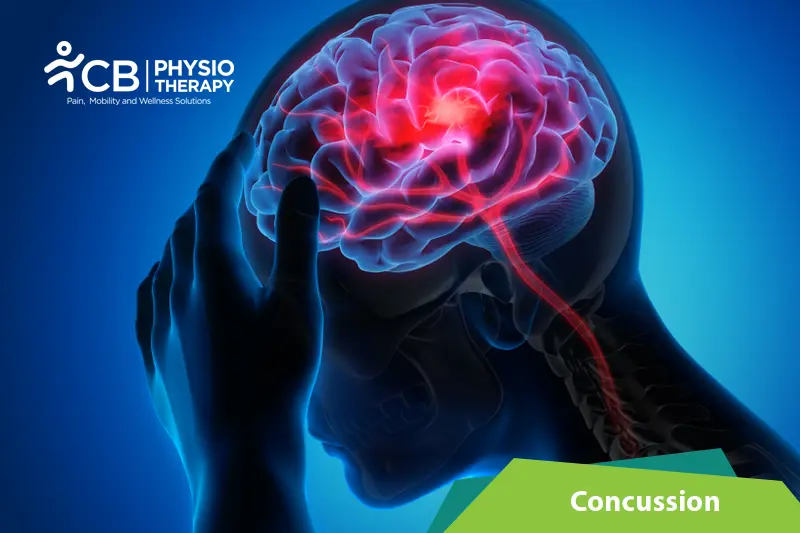
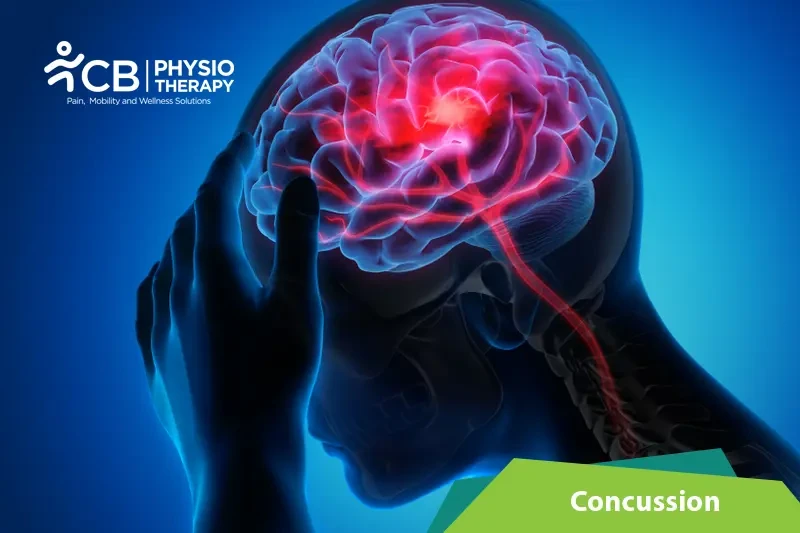
Brain tissue is soft and squishy. It’s surrounded by cerebrospinal fluid, which acts as a cushion between it and the hard protective exterior, the skull. A concussion occurs when our brain bounces or twists inside the skull or experiences rapid, whiplash-type back and forth movement that causes it to collide with the inside of your skull. This brain movement stretches and damages brain cells and leads to chemical changes in the brain.
These injuries cause brain not to function normally for a brief period of time and result in the signs and symptoms of concussion. Motor vehicle accidents falls, and sports injuries are common causes of concussions. Any sport that involves contact can result in a concussion. Among children, most concussions happen on the playground, while bike riding, or when playing sports such as football, basketball, ice hockey, wrestling, or soccer.
A healthcare provider will ask about the event leading to your head injury, the symptoms experienced and perform a neurological exam. The neurological exam will check:
- Neurological function and reflexes.
- Vision, eye movement, reaction to light.
- Balance and coordination.
- Hearing.
- Strength.
- Neck muscles for their motion and for tenderness
Verbal, written or computerized tests may be used to check:
- Thinking of ability.
- Problem-solving skills.
- Memory and concentration.
Imaging with CT scan or MRI isn’t always needed in the early evaluation of concussion. This is because most of the effects of a concussion aren’t seen on imaging. However, these imaging tests might be ordered if more serious effects of a concussion are suspected – like bleeding inside the skull, brain swelling or spinal cord or cervical spine injury – or if symptoms are worsening
Treatment for a concussion depends on the severity of your symptoms. A patient suffering from concussion might need surgery or other medical procedures if he or she experiences, bleeding in the brain, swelling of the brain or a serious injury to the brain. However, most concussions don’t require surgery or any major medical treatment.
If the concussion is causing headaches, then the doctor may recommend over-the-counter pain relievers such as ibuprofen (Advil) or acetaminophen (Tylenol). Your doctor will also probably ask you to get plenty of rest, avoid sports and other strenuous activities, and avoid driving a vehicle or riding a bike for 24 hours or even a few months, depending on the severity of your injury.
Physiotherapy treatment
After a thorough concussion assessment that includes several concussion tests, a physiotherapist can differentiate the various causes of symptoms. Implementation of a treatment plan for concussion management would then follow, with a specialized focus on different symptom areas.
Cervical spine issues after a concussion
If the neck or spine has been affected by the concussion an injury, a physiotherapist can help with:
- Strengthening neck muscles
- Manual therapy to ensure the joints are moving well
- Myofascial release techniques to ensure good mobility of the surrounding soft tissue
- Vestibular issues after a concussion
Vestibular problems involving dizziness or imbalance can be helped with:
- Balance training
- Canalith repositioning maneuver (a head maneuver to move the ear crystals to an area of your inner ear that eases dizziness)
- Visual disturbances after a concussion
If vision is affected after a concussion, ocular reflex training can prescribe to improve visual motor control to reduce visual disturbances.
Exertion issues after a concussion
If exertion is a problem, exercise prescriptions should be part of a concussion management plan, with incremental progression of individually tailored exercises
Don't let Concussion decide your day.
Get assessed today — find the cause, get a plan, and know when you'll feel better.