Verified
Dr. Deepanshu Khatri
Physiotherapist
See clinics, physiotherapists and prices for your city.
Whether it's a dull ache, a sharp catch, or pain that keeps coming back — we find the root cause of your Lateral Collateral Ligament(lcl) Injury and fix it, at a clinic near you or at home.
Precision Care, Proven RecoveryWe'll call you within 10 minutes to confirm your home visit.We'll call you within 10 minutes to confirm your slot.
Chat with us on WhatsAppCommon triggers include muscle strain, joint stiffness, poor posture and long desk hours. If two or more of these fit, a physiotherapy assessment can identify exactly what's driving it.
Most lateral collateral ligament(lcl) injury improves without surgery or long-term medication — the key is finding the cause first.
Lateral Collateral Ligament(lcl) Injury rarely signals something serious, but see a doctor immediately if it comes with:
Our physios screen for these red flags at every first assessment and refer you to the right doctor if needed.
We start with an AI-based assessment to find the root cause — then follow a clear, four-phase plan.
Hands-on therapy and advanced modalities to calm pain and inflammation fast.
Mobility work and posture correction so everyday movement feels normal again.
Targeted strengthening that protects you — in-clinic or in our physio gym.
Back to work, sport and life — with a home program that prevents relapse.
One patient record, stage by stage: your physiotherapist pinpoints the diagnosis, finds the root cause and builds your in-clinic plan — while Fizo IQ™, our AI decision-support engine, tracks every milestone until your goals are met and you leave with an exercise plan to stay active.
Every plan combines hands-on care, advanced modalities and guided exercise — matched to your assessment.
Offered by our physiotherapists near you — see how Interferential Therapy (ift) fits your recovery plan.
Offered by our physiotherapists near you — see how Overhead Track Harness Therapy fits your recovery plan.
Offered by our physiotherapists near you — see how Tecar / Cret Therapy fits your recovery plan.
Offered by our physiotherapists near you — see how Cryotherapy(cold Therapy) fits your recovery plan.
These symptoms respond well to Lateral Collateral Ligament(lcl) Injury — tap one to see how we treat it near you.
Make these exercises yours — a CB physio personalizes, doses and tracks your plan week by week.
Get my personalized planGeneral guidance only — stop if an exercise increases your pain, and check with your physio before starting a new routine.
Every CB physio is a qualified BPT/MPT clinician. You don't need to choose one — our lead physiotherapist reviews your case and assigns the specialist best suited to treat it.
Verified
Physiotherapist
Head Of The Clinic
Head Of The Clinic · BPT, MPT
Verified
Sr. Consultant Physiotherapist · BPT, MPT
Head Of The Clinic · BPTh, MPTh
Sr. Consultant Physiotherapist · BPTh
Head Of The Clinic · BPTh, MPTh
The same prices you'll see at the clinic — published before you book. Sessions run 30–45 minutes.
Booking a course of sessions? Save 10% when you take a treatment package — and recover with a plan built around your goals.
Ask about packages →Rated 5.0 / 5 across 102 verified patient reviews in Delhi.
“I visited CB Physiotherapy because I pulled my hamstring. I consulted Dr. Meghna here who gave me a one week treatment plan and suffice to say I started to see results after the first session itself. I was unable to sit and had a lot of pain while walking. After my first session, I was able to walk better and sit better. By the end of the week, I had no pain. They have good infrastructure here and offer various treatments from cupping therapy to laser treatment. I would definitely recommend Dr. Meghna over any other physiotherapist in Saket if not Delhi.”
“I went for consultation for my knee pain and there I met Dr Rahul He took my consultation and sessions for 9 days and he was supr throughout the sessions and now it's so easy for me to be back in daily routine.”
“I had an amazing experience with Dr. Rahul also he took care of everything regarding my lower back strain also they have all the equipment which can help them to cure from the pain or injury. It was a great overall experience with the clinic staff too”
“Hello, I had 15 sessions with them. Overall all sessions were good. Their staff are very knowledgeable and helpful. A special thanks to Mr. Rahul and Ms. Mehak. Both them really helped with my pain on right shoulder and explained about basic and various exercises which i should do on regular basis. Would definitely recommend others.”
“Dr. Deepanshu is an exceptional physiotherapist! His personalized treatment plan and hands-on techniques helped me recover from chronic back pain effectively. He’s patient, knowledgeable, and takes the time to explain everything clearly. His positive attitude and encouragement made the entire process motivating and stress-free. I highly recommend him to anyone seeking top-notch physiotherapy care!”
“Dr. Rahul is an amazing physiotherapist! He genuinely cares about his patients and tailors treatments to fit your needs. Thanks to him, I’ve seen great progress and feel so much better. Highly recommend.”
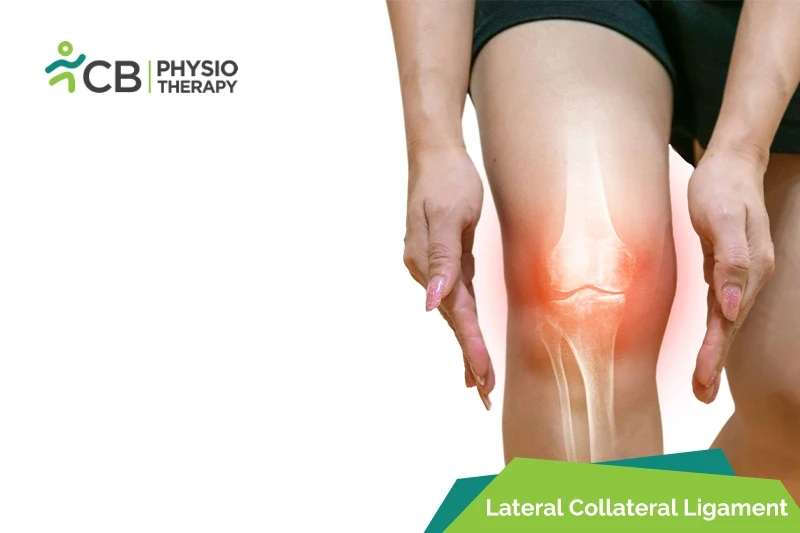
Knee joint is the largest joint in the body and is one of the easiest joints to get injured. Lateral collateral ligament (LCL) sprains and tears, however, are much less common knee injuries. The knee's collateral ligaments are the lateral collateral ligament (LCL) and the medial collateral ligament (MCL), located on either side of the knee. These ligaments control the sideways motion of the joint, protecting it from unusual movement side-to-side. The lateral collateral ligament (LCL) runs along the outer side of the knee.
Types of lateral collateral ligament (LCL) sprain:
Grade 1 lateral collateral ligament (LCL) sprain, the ligament is stretched, with mild to moderate pain, mildly injured, and minimally decreased range of motion. But is still able to keep the knee stable and functional.
Grade 2 Lateral collateral ligament (LCL) sprain or partial LCL tear, with severe pain, the ligament is stretched or stressed and becomes loose and range of motion is moderate to severe decreased.
Grade 3 Lateral collateral ligament (LCL) sprain or complete LCL tear with severe pain, the ligament is torn into two separate pieces and the joint is no longer stable and the range of motion is severely decreased.
The knee joint is vulnerable to hard muscle contraction and direct impact, caused by:
Lateral collateral ligament (LCL) sprains symptoms can vary in severity, depending on the grade of injury. Symptoms include:
Pathology:
The lateral collateral ligament injury is a disruption of the connection which is present between the lateral femur and lateral fibula. A lateral collateral ligament sprain is graded as I, II, and III degrees. It may cause mild injuries with some or no laxity, with the ligaments in continuity, or with complete disruption.
Physical examination:
Physical examination includes observing the swelling, ecchymosis, and warmth along the lateral joint line. The patient is assessed for range of motion, muscle strength, sensation, reflexes, and palpation along the lateral joint line. Gait analysis and special tests are performed to determine associated ligamentous, meniscal, or soft tissue injuries.
X-ray:
X-ray of AP and Lateral side is used to rule out associated structural injuries. Varus and Posterior kneeling stress images are used to determine injury of LCL.
Magnetic resonance imaging (MRI):
Magnetic resonance imaging (MRI) is the gold standard in diagnosing LCL injuries. Coronal and Sagittal images are used in diagnosing an LCL injury.
Ultrasound is used in case of rapid diagnosis of LCL injury. Thickened and hypoechoic LCL indicates an LCL injury. In case of a complete tear, an ultrasound may show increased edema, lack of fiber continuity, dynamic laxity of the LCL.
Medication: Nonsteroidal anti-inflammatory drugs (NSAIDs), pain killers, analgesics, etc.
Note: Medication should not be taken without the doctor's prescription.
Surgery:
Lateral Collateral ligament (LCL) injuries tend to involve other structures of the knee that might require additional treatment. Some LCL sprains might heal by conservative treatment others require surgery.
Surgery is performed as an open procedure combined with arthroscopy. Torn LCL is replaced using a tissue graft, which is passed through tunnels within the bone and then attached to the fibula and femur bones using screws.
Reconstruction is another technique used, it involves an allograft hamstring tendon or an autograph to reconstruct the LCL. Usually, reconstruction of the LCL in the knee with a patellar tendon allograft is also done.
Rest:
Rest is recommended to prevent the injured area from any stress and to protect it from further injury. This knee brace, may be helpful to protect the ligament from further sideways movements can also help speed the healing process.
Ice applied immediately after injury to the injured area for 15 to 20 minutes at a time every hour can help reduce swelling and inflammation of the joint.
Compression:
After cryotherapy, a compression sleeve is worn, this helps to control swelling and protects the knee.
Elevation:
Elevation promotes circulation of the blood back to the heart, this helps to drain the toxic substances as the injured tissue is broken down by the body.
Ultrasound therapy is used to reduce pain and increase the range of motion.
Transcutaneous electrical stimulation (TENS):
Transcutaneous electrical stimulations (TENS) are used to decrease pain and swelling.
Range of motion exercises:
Range of motion exercises are started in pain-free ranges of motion. Physiotherapist teaches specific exercises to help restore function while improving strength and stability. E.g lie on the stomach with both legs straight, bend one knee up as far as possible, and then straighten out so it is straight again. Repeat this exercise 10-20 times in a pain-free range.
Physiotherapy helps to strengthen the muscles around the knee. E.g. take a resistance band and put it on the lower leg, feet should be kept hip-width apart, then squat down and step out with one leg wider than the hip-width, then bring afterward the other leg, return to hip-width. Repeat this exercise 10 times in each direction and should be done in a pain-free range of motion.
Stretching exercises:
Stretching exercises are used to increase joint range of motion. E.g. bring the foot up towards the buttock with the same side hand, then push the hips forward and leg back, and feel stretch on the front of the thigh and hold it for 30 seconds repeat 3 times.
Progressive resistive exercises (PRE):
Progressive resistive exercises are recommended to the patient, these are gradual self-resistive exercises with graded resistance with weight belts or self-generated tension.
Balance exercises:
Balance exercises are done with the help of a wobble board which is used to enhance balance and equilibrium.
Plyometrics:
Plyometric exercises are high-intensity exercises used to cope with high demands like sports activities. Examples are jumping, running, reverse lunge knee-ups, squat jumps, clapping push-ups, etc.

The patient is advised to continue doing the strengthening exercises to prevent the knee from re-injury. The patient can continue to wear a brace while activities.
Get assessed today — find the cause, get a plan, and know when you'll feel better.