Verified
Dr. Sidharth Sharma
Physiotherapist · BPT
See clinics, physiotherapists and prices for your city.
Whether it's a dull ache, a sharp catch, or pain that keeps coming back — we find the root cause of your Achilles Tendon Rupture and fix it, at a clinic near you or at home.
Precision Care, Proven RecoveryWe'll call you within 10 minutes to confirm your home visit.We'll call you within 10 minutes to confirm your slot.
Chat with us on WhatsAppCommon triggers include muscle strain, joint stiffness, poor posture and long desk hours. If two or more of these fit, a physiotherapy assessment can identify exactly what's driving it.
Most achilles tendon rupture improves without surgery or long-term medication — the key is finding the cause first.
Achilles Tendon Rupture rarely signals something serious, but see a doctor immediately if it comes with:
Our physios screen for these red flags at every first assessment and refer you to the right doctor if needed.
We start with an AI-based assessment to find the root cause — then follow a clear, four-phase plan.
Hands-on therapy and advanced modalities to calm pain and inflammation fast.
Mobility work and posture correction so everyday movement feels normal again.
Targeted strengthening that protects you — in-clinic or in our physio gym.
Back to work, sport and life — with a home program that prevents relapse.
One patient record, stage by stage: your physiotherapist pinpoints the diagnosis, finds the root cause and builds your in-clinic plan — while Fizo IQ™, our AI decision-support engine, tracks every milestone until your goals are met and you leave with an exercise plan to stay active.
Every plan combines hands-on care, advanced modalities and guided exercise — matched to your assessment.
Offered by our physiotherapists near you — see how Interferential Therapy (ift) fits your recovery plan.
Offered by our physiotherapists near you — see how Kinesio Taping / Taping Therapy fits your recovery plan.
Offered by our physiotherapists near you — see how Transcutaneous Electrical Nerve Stimulation(tens) Therapy fits your recovery plan.
Offered by our physiotherapists near you — see how Platelet-rich Plasma (prp) Injections fits your recovery plan.
These symptoms respond well to Achilles Tendon Rupture — tap one to see how we treat it near you.
Top 5 Exercises For Achilles Tendon Rupture
Steps & precautions →
Top 5 Exercises For Headache
Steps & precautions →
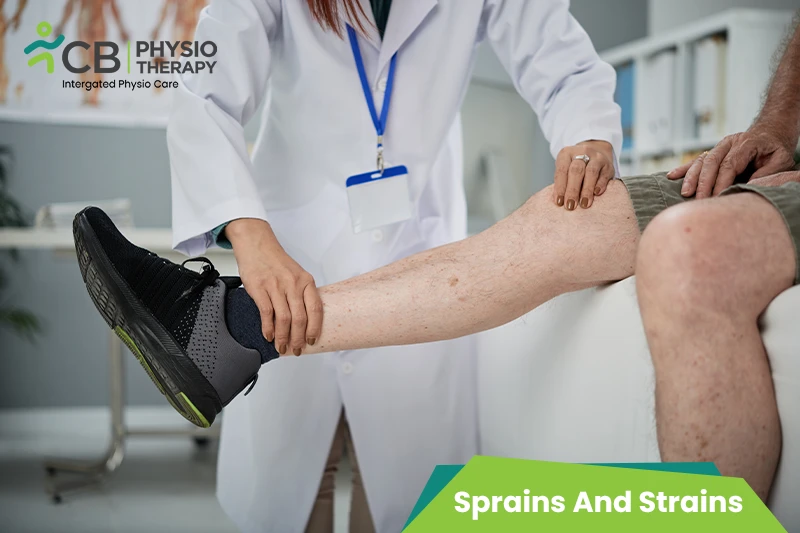
Top 5 Exercises For Sprains And Strains
Steps & precautions →
Make these exercises yours — a CB physio personalizes, doses and tracks your plan week by week.
Get my personalized planGeneral guidance only — stop if an exercise increases your pain, and check with your physio before starting a new routine.
Every CB physio is a qualified BPT/MPT clinician. You don't need to choose one — our lead physiotherapist reviews your case and assigns the specialist best suited to treat it.
Verified
Physiotherapist · BPT
Verified
Physiotherapist
Verified
Physiotherapist
Verified
Physiotherapist
Verified
Physiotherapist · BPT
Verified
Physiotherapist
Verified
Physiotherapist · BPT
Rated 5.0 / 5 across 18 verified patient reviews in Faridabad.
“Dr Rahul Kumar is very experienced. I was diagnosed with disc issues and initially I was not even able to move. His treatment helped me recover in a short duration of time.”
“Went for rehab post an elbow dislocation. The place has good facilities and the therapists there are really helpful Dr Rahul Kumar was overseeing me, she was extremely patient and explained things well. The variety of new exercises done helped with my recovery and made the sessions more interesting.”
“Excellent physiotherapist”
“Dr. Sidharth extensive knowledge of physiotherapy was evident. He conducted a thorough assessment of my condition, taking the time to understand my medical history and concerns. His ability to explain the underlying causes of my symptoms in a clear and concise manner helped me grasp the importance of the prescribed treatment plan. he empowered me to actively participate in my own recovery.”
“Much appreciated work in physio”
“Quality treatment!! I will give u 5-stars⭐⭐⭐⭐⭐ for your work...”
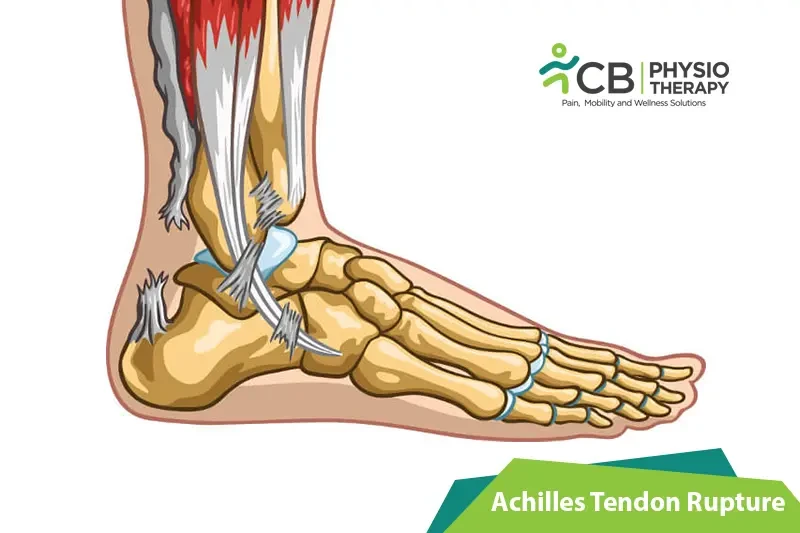
Tendon is a band of tissues that connect the muscle to the bone. The Achilles tendon is such a tendon that runs down behind the lower leg and connects the calf muscle to the heel bone. The Achilles tendon facilitates walking as it helps to raise the heel off the ground. Achilles tendon rupture is a complete or partial tear that occurs due to the stretching of the tendon beyond its stretch limits.
Complete rupture of Achilles tendon shows the following symptoms:
Pathology
Achilles tendon pathology is different based on anatomic location, histopathology, or generic names. The pathology can be divided into abnormalities within the mid-portion of the tendon or in the structures surrounding the tendon, or a cluster of abnormalities that can occur at the tendon insertion. The rupture can occur with or without these underlying tendon pathologies.
Achilles tendon rupture occurs within 6 cm of the point where it attaches to the heel bone. This area is prone to rupture because blood flow is poor, which also can impair its ability to heal. Ruptures are often caused due to:
Physical examination:
The patient is examined is done thoroughly, patient's history is taken. The examination includes observation, palpation, some active movements, and some specific tests.
Thompson Test:
Thompson Test is performed during the physical examination. The test is useful for diagnosing complete Achilles tendon ruptures.
Matles Test:
This test is also done during the physical examination. The patient lies in the prone position and is asked to flex the knee up to 90 degrees. Throughout the movement, the examiner observes the feet and ankles. The test is negative when the foot goes slightly into plantar flexion and the test is positive if the foot is in the neutral position or the movement results in dorsiflexion.
Achilles Tendon Total Rupture (ATR-score):
ATR-score is an important questionnaire that refers to the limitations or difficulties a patient faces who has a tendon rupture.
Real-time Achilles ultrasound Thompson test:
This test is like the Thompson test but is done under ultrasound visualization. It can be used by the examiner to provide improved diagnostic characteristics compared with static ultrasound.
X-ray:
X-ray of the back of the ankle is taken to rule out other disease conditions.
Ultrasound:
The movement of the tendon is observed in real-time. Colour-Doppler ultrasound can also assess blood flow in the region.
.
Magnetic resonance imaging (MRI):
Magnetic resonance imaging (MRI) of the leg is done to diagnose the rupture of the Achilles tendon. MRI scan of the ankle is performed to check for tendon degeneration and assess the severity of the damage.
Medication: NSAIDs, corticosteroids, analgesics, pain killers, etc.
Note: Medication should not be taken without the doctor's prescription.
Treatment for a ruptured Achilles tendon depends on the age, activity level, and severity of the injury. Younger and more active people, especially athletes, tend to choose surgery to repair a completely ruptured Achilles tendon, while older people usually opt for nonsurgical treatment.
Surgery:
Surgery involves making an incision in the back of the lower leg and stitching the two tendons together. Depending on the severity of the injury of the two tissues, the repair might be reinforced with other tendons. The torn ends of the tendon are reattached with one large incision (open surgery) or many smaller incisions (percutaneous surgery).
Immobilization:
Boots or cast is used for immobilization, the ankle is kept from moving for the first few weeks, usually with a walking boot with heel wedges or a cast, with the foot flexed down.
Ice therapy can be used to decrease inflammation and pain.
Ultrasound therapy is beneficial in the early healing process of tendons when the pulsed mode is used.
Transcutaneous electrical stimulations (TENS):
Transcutaneous electrical stimulations (TENS) are found to be effective in the healing of Achilles tendon sutures.
Laser therapy can be used in the treatment and rehabilitation of Achilles sutures alone or in combination with more conventional therapies.
Gentle range of motion exercises like passive ROM to active ROM exercises. Exercises may include Passive ankle ROM in all directions, ankle pumps, ankle active ROM in all directions, ankle alphabet. These motions should be done in a slow and in controlled way for 3 seconds, 15 repetitions up to three times a day.
Flexibility Exercises:
Flexibility exercises are done for the ankle and lower extremity, this can help these stretch the tight muscles. The scar tissue that is formed along the injured Achilles can also help remodel the tissue and get it functioning normally, towel calf stretch, stretching for the gastrocsoleus muscles, stair stretching by hanging the heel over the edge of a step, etc. Manual stretching for the muscles surrounding the ankle can also be done. Each stretch should be held for 30 to 60 seconds and performed in 5 to 10 sets.
Progressive Ankle Strengthening:
Progressive ankle strengthening exercises are done to improve the strength of the muscles. Placing progressive stress on the Achilles tendon with strengthening exercises, helps to improve the overall function. Manual resistance, calf raises, short arc quad sets, and straight leg raise, these exercises can be done 10 to 15 times, in 2 -3.sets.
Balance and Proprioception:
Balance and proprioception impairments may develop after Achilles tendon rupture, due to the period of immobilization. Therefore specific exercises are recommended to improve the balance. E.g. single-leg stance, wobble board exercises, standing on foam, etc.
Plyometrics:
Plyometrics or high-level sports and recreational activities are also a part of the rehab program. Plyometrics are specific exercises that require to quickly jump and land in a specific and safe manner, e.g. are hopping in place, over lines, forward and backward, and side to side, first with two feet, and then with the affected foot only, etc.
Aerobic Conditioning:
The physiotherapist recommends aerobic conditioning to counteract the deleterious effects of immobilization. Aerobic exercises help to improve the strength, from non-weight bearing with minimal or no impact to full weight bearing with some impact. These exercises include biking, elliptical trainer, treadmill walking, and running.
To get the maximal effect, these exercises should be done for 30 minutes for 5 days a week. These exercises aim to return to the highest level of performance, as required by an athlete or during everyday life.

The patient is advised to stop the exercises that cause pain or swelling around the Achilles tendon. This may be a sign of overdoing it and may need to rest a bit before continuing. And is also advised to continue strength and stability exercises even after the recovery because some problems can persist for up to a year.
Get assessed today — find the cause, get a plan, and know when you'll feel better.