Open today · 8 AM–8 PM · Same-day slots
CB Physiotherapy
Same-day appointments

Muscle Stiffness Treatment Doctors in Faridabad

Whether it's a dull ache, a sharp catch, or pain that keeps coming back — we find the root cause of your Muscle Stiffness and fix it, at a clinic near you or at home.

Precision Care, Proven Recovery
ACCURATE DIAGNOSIS
ROOT CAUSE ASSESSMENT
COMPREHENSIVE RECOVERY PLAN
MILESTONE TRACKING
GOALS ACHIEVED
STAYING ACTIVE
See how it works ↓
Move pain-free Avoid drugs & surgery
5.0 / 5 · 18 Google reviews Verified on Google

Request received!

We'll call you within 10 minutes to confirm your home visit.We'll call you within 10 minutes to confirm your slot.

Chat with us on WhatsApp

Book in 30 seconds

Visit your nearest CB clinic. Tell us your concern and a preferred time — we'll confirm your slot by call within 10 minutes.

Same-day booking by default. We'll confirm your exact slot by call.
+91
No spam · Your number is safe with us
Prefer to talk now? Call +09821966696
Understanding your muscle stiffness

Does this sound like you?

Common triggers include muscle strain, joint stiffness, poor posture and long desk hours. If two or more of these fit, a physiotherapy assessment can identify exactly what's driving it.

  • A dull ache or sharp, burning muscle stiffness that keeps returning
  • Discomfort that worsens with movement, lifting or long sitting hours
  • Morning stiffness that eases as you move
  • Pain that limits work, sport or everyday activities
  • Recurring episodes that keep coming back

Most muscle stiffness improves without surgery or long-term medication — the key is finding the cause first.

⚠ When to seek urgent medical care

Muscle Stiffness rarely signals something serious, but see a doctor immediately if it comes with:

  • Fever, unexplained weight loss, or a history of cancer
  • Numbness or weakness that keeps getting worse
  • Loss of bladder or bowel control
  • Pain after a major fall or accident

Our physios screen for these red flags at every first assessment and refer you to the right doctor if needed.

Assessment-led treatment

How we treat muscle stiffness

We start with an AI-based assessment to find the root cause — then follow a clear, four-phase plan.

Phase 1

Ease the pain

Hands-on therapy and advanced modalities to calm pain and inflammation fast.

Phase 2

Restore movement

Mobility work and posture correction so everyday movement feels normal again.

Phase 3

Build strength

Targeted strengthening that protects you — in-clinic or in our physio gym.

Phase 4

Return to activity

Back to work, sport and life — with a home program that prevents relapse.

Your physiotherapist, with Fizo IQ™

Every recovery, planned and proven

One patient record, stage by stage: your physiotherapist pinpoints the diagnosis, finds the root cause and builds your in-clinic plan — while Fizo IQ™, our AI decision-support engine, tracks every milestone until your goals are met and you leave with an exercise plan to stay active.

Physio Expert @CB with Fizo IQ™ — recovery engine
TRACKING
ACCURATE DIAGNOSIS
L4–L5 disc bulge · nerve-root irritation, pinpointed at the first movement assessment
ROOT CAUSE ASSESSMENT
Poor sitting posture, weak core–hip chain · quietly loading that disc
COMPREHENSIVE RECOVERY PLAN
24 clinic sessions · manual therapy + spinal decompression · guided exercise therapy, reviewed weekly
MILESTONE TRACKING
Sitting pain-free ✓ · stairs ✓ · next: the morning 5 km walk
GOALS ACHIEVED
Pain 7 → 3 in six weeks · back to daily life, moving freely
STAYING ACTIVE
A personalized exercise plan, yours to keep · so the pain doesn't come back
Example recovery journey · every plan is built around you
Start here

Possible conditions behind Muscle Stiffness

Pick the condition that sounds like yours, or type it below — we'll match you to the right specialist and book you in.

Move better

Exercises that help with Muscle Stiffness

More exercises →

Make these exercises yours

Get my personalized plan

General guidance only — stop if an exercise increases your pain, and check with your physio before starting a new routine.

Meet your care team

Licensed experts who treat hundreds like you every month

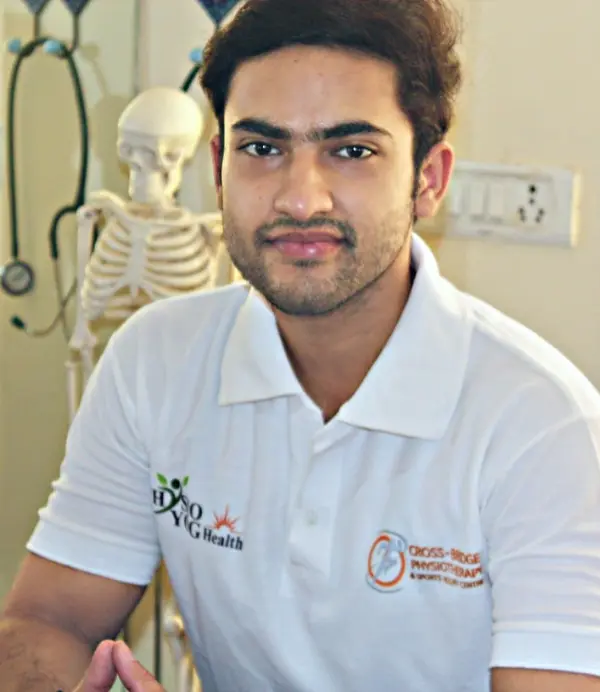
Every CB physio is a qualified BPT/MPT clinician. You don't need to choose one — our lead physiotherapist reviews your case and assigns the specialist best suited to treat it.

Not sure who to see? You don't have to decide. Our lead physiotherapist reviews every case and assigns the physio best suited to it — based on your condition and availability.
Patient stories

Muscle Stiffness recoveries, verified on Google

Rated 5.0 / 5 across 18 verified patient reviews in Faridabad.

Verified

“Dr Rahul Kumar is very experienced. I was diagnosed with disc issues and initially I was not even able to move. His treatment helped me recover in a short duration of time.”

PB
Pappu Verified patient · Treated at CB · 3 months ago
Verified

“Went for rehab post an elbow dislocation. The place has good facilities and the therapists there are really helpful Dr Rahul Kumar was overseeing me, she was extremely patient and explained things well. The variety of new exercises done helped with my recovery and made the sessions more interesting.”

NB
Nisha Verified patient · Treated at CB · 3 months ago
Verified

“Excellent physiotherapist”

SS
Sonu Sharma Verified patient · Treated at CB · 5 months ago
Verified

“Dr. Sidharth extensive knowledge of physiotherapy was evident. He conducted a thorough assessment of my condition, taking the time to understand my medical history and concerns. His ability to explain the underlying causes of my symptoms in a clear and concise manner helped me grasp the importance of the prescribed treatment plan. he empowered me to actively participate in my own recovery.”

SS
Subhash Sharma Verified patient · Treated at CB · 3 months ago
Verified

“Much appreciated work in physio”

SP
Shivam Prajapati Verified patient · Treated at CB · 3 months ago
Verified

“Quality treatment!! I will give u 5-stars⭐⭐⭐⭐⭐ for your work...”

AS
Amar Singh Verified patient · Treated at CB · 3 months ago
Good to know

Muscle Stiffness, answered

Muscle stiffness is when your muscles feel tight and you find it more difficult to move than you usually do, especially after rest. You may also have muscle pains, cramping, and discomfort. This is different from muscle rigidity and spasticity. With these two symptoms, your muscles stay stiff even when you’re not moving. Muscle stiffness usually goes away on its own. You may find relief with regular exercise and stretching. In some cases, muscle stiffness can be a sign of something more serious, especially if there are other symptoms present. Muscles stiffness can also be accompanied by pain, cramping, and discomfort. It is usually not a cause for concern and can be treated with home remedies and stretching.

Muscle stiffness typically occurs after exercise, hard physical work, or lifting weights. You may also feel stiffness after periods of inactivity, like when you get out of bed in the morning or get out of a chair after sitting for a long time. Sprains and strains are the most common reasons for muscle stiffness.

· Sprains and Strains

· Polymyalgia rheumatica causes muscle pain and stiffness. It usually affects the upper body, including the shoulders, neck, and arms. It also commonly affects the hips. The average age of a person with polymyalgia rheumatica is 70, and some people do not develop it until they reach their 80s.

· Chronic fatigue Syndrome

· Fibromyalgia

Other common conditions that may cause stiff muscles include:

· Insect bite or sting

· Infection

· Injury from extreme heat or cold

· Anaesthesia or medication used for surgery

Some symptoms can be treated at home. Make an appointment with your doctor if your sprain or strain causes severe pain or if any additional symptoms don’t go away. Stiff muscles with other symptoms may mean an underlying condition.

In addition to sprains and muscle strains, there are other conditions that cause muscle stiffness along with other symptoms.Tetanusisa bacterial infection, usually from soil or dirt, with symptoms that include:

· Difficulty swallowing

· Stomach pain or cramping

· Increased blood pressure

· Rapid heart rate

Meningitis is an infection of the covering of the brain and spinal cord with symptoms that include:

· Stiff neck

· Sudden high fever

· Headache

Nausea and vomiting

Muscle stiffness is relatively common, but some people are more prone to it than others. This problem is particularly prevalent in infants, young children, and older adults above the age of 65 years. The following factors can put anyone at an increased risk of developing muscle stiffness and cramps:

Over weight : Being overweight or obese increases stress on your knee joints, even during ordinary activities such as walking or going up and down stairs. It also puts you at increased risk of osteoarthritis by accelerating the breakdown of joint cartilage

Excessive alcohol consumption : High levels of alcohol consumption have also been believed to be the key risk factor for contribution to muscle stiffness.

Hypothyroidism: Certain medical conditions like that are of Hypothyroidism have been believed to be one of the contributing factor for causing muscle stiffness among elders.

There are also some simple changes people can make to their lifestyle to prevent getting muscle stiffness. These include:

Practice good posture: Make sure your furniture at home and at work provides comfort and support.

Take regular breaks . To reduce stiffness, get up, walk around, and stretch every so often to keep the muscles loose. You may find it helpful to set an alarm or desktop notification as a reminder.

Health and diet

There are a couple of things to take into consideration when it comes to preventing muscle stiffness. Make sure you stay hydrated and are getting enough of the right nutrients.

Water: Making sure you have enough water in your body helps your muscles work well. Many experts recommend eight 8-ounce glasses of water or other healthy drinks every day. If you are active and sweat, you should have extra water. Multiple studies have found that dehydration during exercise increases the chance of muscle damage and causes more muscle soreness.

Calcium and magnesium : Calcium and magnesium are important to muscle health and with a optimum level of consumption can significantly reduce the chances of muscle stiffness.

You should call your doctor if your muscle stiffness doesn’t go away or if you have other symptoms. Seek immediate medical attention if you experience muscle stiffness along with any of the following symptoms:

· Fever especially with stiffness in the neck

· Extreme muscle weakness

· Redness, pain, and swelling in the area you’re experiencing muscle stiffness

· Muscle pain that began after taking a new medication

· These symptoms could mean there’s an underlying condition.

Your doctor may ask how and when the pain started, whether it has occurred before and how it was treated, and other questions to help determine both your general health and the possible causes of your muscle stiffness. A comprehensive examination will be required to find the causes of your stiffed muscle. Your doctor will look for physical abnormalities, swelling, deformity or muscle weakness, and check for tender areas . They’ll also perform a physical examination to locate your pain or stiffness. And your doctor may order blood or other lab tests, including X-rays and CT or MRI scans .

Your specific treatment will vary depending on the cause. Your doctor may recommend anti-inflammatory medications, like ibuprofen, to lessen pain and discomfort.

Home treatments

You may be able to treat muscle stiffness at home with rest, massage, and application of heat or cold.

Heat may work better for muscle tightness. Cold may work better for swelling and inflammation. Options include hot and cold packs, heating pads, and heat therapy patches.

Apply heat or cold to the affected area for no more than 20 minutes. Let the area rest for 20 minutes before reapplying either option. If you aren’t sure about whether to use heat or cold, call your doctor for instructions.

Stretches

Stretching is important for keeping muscles flexible and preventing stiffness. To decrease muscle stiffness, improve circulation, and reduce inflammation, try the following:

· Make time for regular exercise

· Stretch before and after exercise

· Take warm baths

· Massage sore areas

Physiotherapy can help with both muscle and joint stiffness in clients through assessment, advice and treatment and appropriate. Physiotherapy can help stiffness by:

· Increasing joint range of movement

· Increasing muscle length

· Decreasing pain

· Offering self-management strategies

· Sign posting to other appropriate medical services as necessary

For joint and muscle stiffness there are several Physiotherapeutic techniques which can be used to help. Some of the techniques include:

· Joint mobilisations

· Range of movement exercises

· Stretching exercises

· Strengthening exercises

· Electrotherapy (PSWD, Interferential, TENS)

· Acupuncture

· Massage

Ready when you are

Don't let the pain decide your day.

Get assessed today — find the cause, get a plan, and know when you'll feel better.

📞 Call 💬 WhatsApp Book now