Verified
Dr. Surender Singh
Physiotherapist · BPT
See clinics, physiotherapists and prices for your city.
Whether it's a dull ache, a sharp catch, or pain that keeps coming back — we find the root cause of your Torticollis and fix it, at a clinic near you or at home.
Precision Care, Proven RecoveryWe'll call you within 10 minutes to confirm your home visit.We'll call you within 10 minutes to confirm your slot.
Chat with us on WhatsAppCommon triggers include muscle strain, joint stiffness, poor posture and long desk hours. If two or more of these fit, a physiotherapy assessment can identify exactly what's driving it.
Most torticollis improves without surgery or long-term medication — the key is finding the cause first.
Torticollis rarely signals something serious, but see a doctor immediately if it comes with:
Our physios screen for these red flags at every first assessment and refer you to the right doctor if needed.
We start with an AI-based assessment to find the root cause — then follow a clear, four-phase plan.
Hands-on therapy and advanced modalities to calm pain and inflammation fast.
Mobility work and posture correction so everyday movement feels normal again.
Targeted strengthening that protects you — in-clinic or in our physio gym.
Back to work, sport and life — with a home program that prevents relapse.
One patient record, stage by stage: your physiotherapist pinpoints the diagnosis, finds the root cause and builds your in-clinic plan — while Fizo IQ™, our AI decision-support engine, tracks every milestone until your goals are met and you leave with an exercise plan to stay active.
Make these exercises yours — a CB physio personalizes, doses and tracks your plan week by week.
Get my personalized planGeneral guidance only — stop if an exercise increases your pain, and check with your physio before starting a new routine.
Every CB physio is a qualified BPT/MPT clinician. You don't need to choose one — our lead physiotherapist reviews your case and assigns the specialist best suited to treat it.
Verified
Physiotherapist · BPT
Verified
Physiotherapist · MPT
Verified
Physiotherapist · BPT
Verified
Physiotherapist · BPT
Verified
Physiotherapist · BPT
Verified
Physiotherapist · BPT
Verified
Physiotherapist
Rated 5.0 / 5 across 22 verified patient reviews in Gurgaon.
“Best physiotherapist on CB physio platform . Highly educated and very confident regarding knowledge. Thanks CB physio you provide me best Doctor...”
“Received good treatment from Dr .Amit for ankle injury. Now I can walk without any support. My mobility is improved so much..🙏🙏 thank you”
“Thanks for the treatment, sir, for my back issue; it is quite relaxing now. Pain has been subsidised a lot. I am very satisfied with the treatment I received.”
“i have been to several physical therapy providers over the years, and this one is by far the best. The therapists is caring and really know their stuff. i got treatment for elbow at my home. its so convenient. the treatment was good i can feel much difference..thank you.”
“I suffered a serious injury that left me with limited mobility and a lot of pain. But thanks to the amazing care I received from Dr. Amit, I was able to regain my strength after 4 sessions and get back to my normal routine. I’m so grateful for his support and expertise..”
“Dr. Surender is an exceptional home physiotherapy services provider who has a wealth of knowledge and experience in treating various conditions. I recently had the pleasure of receiving treatment from him for a persistent back pain, and I can confidently say that he is one of the best physiotherapists I have ever had.👍🏼🙏”
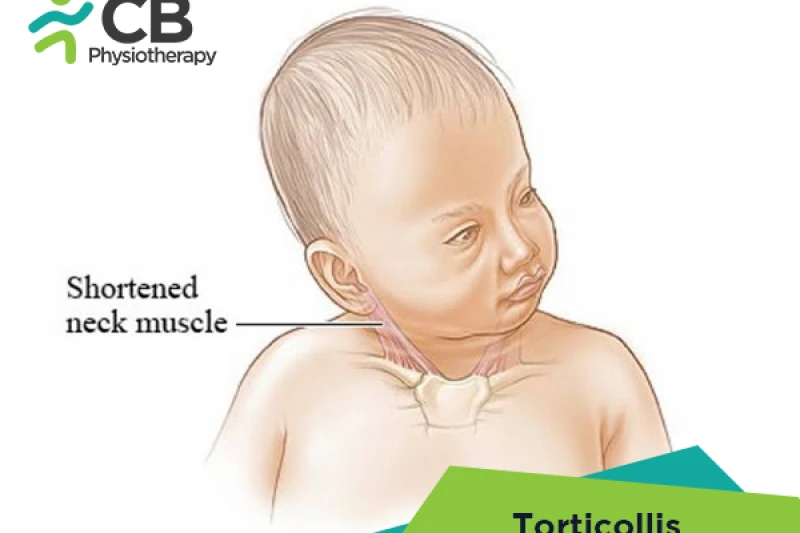
Torticollis is also known as Wryneck. It is a condition of twisting of the neck that causes the head to tilt and rotate. Wryneck, or torticollis, is a painful condition in which the top of the head tilts to one side while the chin tilts to the other side. This condition may be present at birth or may be acquired. It can also occur due to damage to the neck muscles or blood supply.
Types of Torticollis
· Temporary Torticollis
This type of torticollis mostly disappears after one or two days. It can be due to ear infection, cold or swollen lymph nodes, or injury to the head and neck.
· Fixed Torticollis
Fixed torticollis or permanent torticollis occurs due to a problem in bone or when the neck muscles of one side are scarred or tight.
· Klippel-Feil Syndrome
It is a congenital form of torticollis, the bones in the baby's neck are not formed properly, and the two neck vertebrae are fused. Children born with this condition may have difficulty in vision and hearing.
· Cervical dystonia
This is a rare disorder sometimes referred to as spasmodic torticollis. It is caused due to the contracture or spasm of the neck muscles. The head is twisted or turned painfully to one side. It may also tilt forward or backward. Cervical dystonia sometimes goes away without treatment, but there can be a risk of recurrence.
The exact cause of torticollis is unknown.
Congenital muscular torticollis is more likely to happen in first-born children. It occurs due to the position of the uterus resulting in the injury of the neck muscles.
Acquired torticollis may be caused due to the irritation to the cervical ligaments because of viral infection or vigorous movement and
Other causes can be like:
Sometimes, each person may experience symptoms differently. Symptoms can begin slowly and may also worsen over time. The most common symptoms include:
· Neck muscle pain
· Inability to turn the head, holding in a twisted position.
· Spasm of the neck muscles
· Awkward position of the chin
· Inability to turn the head in a normal position.
· Stiff neck
· One-shoulder higher than the other
· Chin tilt to one side
· Babies with Congenital torticollis may have flattened and unbalanced faces.
· Motor skill delays or difficulties in vision and hearing.
Pathology
It occurs due to unilateral shortening and contraction of the sternocleidomastoid muscle. There is a deposition of collagen and migration of fibroblasts around the muscle fibers, leading to limitation of head mobility causing neck contracture.
Diagnosis of torticollis can be confirmed with a medical history and physical examination.
Electromyogram:
An electromyogram (EMG) measures the electrical activity in the muscles and also determines which muscles are affected.
X-rays:
X-ray Imaging tests such as X-rays can be used to check any bony problem.
MRI:
MRI scans can also be used to find structural problems that might the symptoms.
Treatment of torticollis
Torticollis sometimes goes away without treatment. Chronic wry neck can cause pain and difficulty neck movements. Medications and physiotherapy can relieve pain and stiffness. Surgery can also be used as a treatment in severe cases. Children with torticollis need surgery to lengthen the sternocleidomastoid muscle. Treatment is most successful if it's started in early-stage especially during childhood.
Medication
Muscle relaxants, botulinum toxin injections, pain medications.
Note: Medication should be taken under the doctor's prescription.
There's no way to prevent torticollis. However, getting treatment quickly can prevent it from becoming worse. Congenital forms of torticollis can be treated by stretching the neck muscles, only if immediate treatment is started within a few months after birth. If this or other treatments does not work, surgery is the next step.
Neck collar:
A neck brace or soft collar helps to keep the neck from moving.
Heat Therapy or thermotherapy helps the sore neck muscles to lessen the pain.
Ultrasound therapy produces high-frequency sound waves which travel deep into tissue and create gentle therapeutic heat, which helps in the recovery process.
Massage:
Massage therapy or Neck massage may also help lessen your neck pain.
Chiropractic care:
Chiropractic adjustments can be utilized to help relieve symptoms of torticollis and can even aid in healing the condition.
Stretching exercises:
Passive range of motion and gentle stretching exercises can help the baby achieve full neck motion.
Exercises rotation, Side bending, and Sitting stretching:
The parent should sit with the back against the wall and the knees bent. Hold the child and stretch his tight muscle. All the exercises should be done at regular intervals.
Get assessed today — find the cause, get a plan, and know when you'll feel better.