Open today · 8 AM–8 PM · Same-day slots
CB Physiotherapy
Same-day appointments

Diabetic Foot Treatment Doctors in Noida

Whether it's a dull ache, a sharp catch, or pain that keeps coming back — we find the root cause of your Diabetic Foot and fix it, at a clinic near you or at home.

Precision Care, Proven Recovery
ACCURATE DIAGNOSIS
ROOT CAUSE ASSESSMENT
COMPREHENSIVE RECOVERY PLAN
MILESTONE TRACKING
GOALS ACHIEVED
STAYING ACTIVE
See how it works ↓
Move pain-free Avoid drugs & surgery
5.0 / 5 · 31 Google reviews Verified on Google

Request received!

We'll call you within 10 minutes to confirm your home visit.We'll call you within 10 minutes to confirm your slot.

Chat with us on WhatsApp

Book in 30 seconds

Visit your nearest CB clinic. Tell us your concern and a preferred time — we'll confirm your slot by call within 10 minutes.

Same-day booking by default. We'll confirm your exact slot by call.
+91
No spam · Your number is safe with us
Prefer to talk now? Call +09821966696
Understanding your diabetic foot

Does this sound like you?

Common triggers include muscle strain, joint stiffness, poor posture and long desk hours. If two or more of these fit, a physiotherapy assessment can identify exactly what's driving it.

  • A dull ache or sharp, burning diabetic foot that keeps returning
  • Discomfort that worsens with movement, lifting or long sitting hours
  • Morning stiffness that eases as you move
  • Pain that limits work, sport or everyday activities
  • Recurring episodes that keep coming back

Most diabetic foot improves without surgery or long-term medication — the key is finding the cause first.

⚠ When to seek urgent medical care

Diabetic Foot rarely signals something serious, but see a doctor immediately if it comes with:

  • Fever, unexplained weight loss, or a history of cancer
  • Numbness or weakness that keeps getting worse
  • Loss of bladder or bowel control
  • Pain after a major fall or accident

Our physios screen for these red flags at every first assessment and refer you to the right doctor if needed.

Assessment-led treatment

How we treat diabetic foot

We start with an AI-based assessment to find the root cause — then follow a clear, four-phase plan.

Phase 1

Ease the pain

Hands-on therapy and advanced modalities to calm pain and inflammation fast.

Phase 2

Restore movement

Mobility work and posture correction so everyday movement feels normal again.

Phase 3

Build strength

Targeted strengthening that protects you — in-clinic or in our physio gym.

Phase 4

Return to activity

Back to work, sport and life — with a home program that prevents relapse.

Your physiotherapist, with Fizo IQ™

Every recovery, planned and proven

One patient record, stage by stage: your physiotherapist pinpoints the diagnosis, finds the root cause and builds your in-clinic plan — while Fizo IQ™, our AI decision-support engine, tracks every milestone until your goals are met and you leave with an exercise plan to stay active.

Physio Expert @CB with Fizo IQ™ — recovery engine
TRACKING
ACCURATE DIAGNOSIS
L4–L5 disc bulge · nerve-root irritation, pinpointed at the first movement assessment
ROOT CAUSE ASSESSMENT
Poor sitting posture, weak core–hip chain · quietly loading that disc
COMPREHENSIVE RECOVERY PLAN
24 clinic sessions · manual therapy + spinal decompression · guided exercise therapy, reviewed weekly
MILESTONE TRACKING
Sitting pain-free ✓ · stairs ✓ · next: the morning 5 km walk
GOALS ACHIEVED
Pain 7 → 3 in six weeks · back to daily life, moving freely
STAYING ACTIVE
A personalized exercise plan, yours to keep · so the pain doesn't come back
Example recovery journey · every plan is built around you
Feeling something?

Symptoms Diabetic Foot addresses

These symptoms respond well to Diabetic Foot — tap one to see how we treat it near you.

Move better

Exercises that help with Diabetic Foot

More exercises →

Make these exercises yours

Get my personalized plan

General guidance only — stop if an exercise increases your pain, and check with your physio before starting a new routine.

Meet your care team

Licensed experts who treat hundreds like you every month

Every CB physio is a qualified BPT/MPT clinician. You don't need to choose one — our lead physiotherapist reviews your case and assigns the specialist best suited to treat it.

Dr. Vidhi, physiotherapist in Noida Extention Verified

Dr. Vidhi

Physiotherapist · BPT

5.0 (9)
Noida Extention
5 yrs experience
Ortho Spine Sports Physiotherapy Center
Dr. Deepika, physiotherapist in Greater Noida Verified

Dr. Deepika

Physiotherapist

5.0 (1)
Greater Noida
4 yrs experience
Ortho Spine Sports Physiotherapy Center
Not sure who to see? You don't have to decide. Our lead physiotherapist reviews every case and assigns the physio best suited to it — based on your condition and availability.
Patient stories

Diabetic Foot recoveries, verified on Google

Rated 5.0 / 5 across 31 verified patient reviews in Noida.

Verified

“Dr kasim listened well to my situation, was very quick to diagnose me and gave very clear guidelines on how I should manage my condition”

AB
Aahil Verified patient · Treated at CB · 3 weeks ago
Verified

“I recently had the opportunity to experience physiotherapy at home, and I must say it was an outstanding and convenient experience. One of the biggest advantages of receiving physiotherapy at home was the convenience it offered. Instead of traveling to a clinic or hospital, the physiotherapists came to my doorstep, saving me time and energy. This personalized approach allowed me to receive treatment in the comfort of my own home, which greatly contributed to my overall well-being and recovery. Thanks Dr. kasim for the services.”

RG
Rakhi Gupta Verified patient · Treated at CB · 3 months ago
Verified

“I wholeheartedly recommend Dr. Kasim to anyone seeking treatment for a shoulder issue. His outstanding care, expertise, and compassionate approach make him an exceptional physiotherapist. Under his guidance, I experienced remarkable progress and successful recovery. Thank you, Dr. Kasim, for your exceptional care and dedication to helping your patients regain their shoulder health.”

AH
Anwer Hussain Verified patient · Treated at CB · 3 months ago
Verified

“Dr. Vidhi's approach is highly professional and patient-centered. She took the time to thoroughly assess my condition, asking detailed questions and actively listening to my concerns. She ensured that I fully understood my diagnosis, the treatment plan, and the expected outcomes. . Her dedication to providing evidence-based care was evident. thanks for treated me so well..god bless.”

RK
Rakulpreet Kaur Verified patient · Treated at CB · 3 months ago
Verified

“Thank you sir for providing home physiotherapy treatment. its wonderful to have session with you. 🙏🙏”

SL
Sham Lal Verified patient · Treated at CB · 3 months ago
Verified

“Hats off to you, ma'am. I am very satisfied with the treatment I had for body posture. Every session was great; it made me feel comfortable.👍👍”

AV
Anjali Verma Verified patient · Treated at CB · 3 months ago
Good to know

Diabetic Foot, answered

Diabetic foot is a complication of diabetes. People with diabetes over a period may suffer from high blood sugar levels (hyperglycemia), or frequent fluctuations in blood sugar levels that affect the nerves adversely throughout the body and the person starts feeling numbness in the foot because of poor blood flow, this occurs mainly due to nerve damage. Nerve damage can occur in any part of the body, but nerves are mostly affected in the legs and feet.

Diabetic foot occurs in patients suffering from diabetes, which occurs due to:


  • Eye disease from diabetes,
  • Kidney disease,
  • Heart disease,
  • Alcohol consumption,
  • Obesity,
  • Poor quality shoes,
  • Poor hygiene,
  • Improper trimming of toenails.

The symptoms vary, depending on the severity of the condition. A few of the commonly found symptoms are:


  • Numbness,
  • Pain,
  • Tingling,
  • Loss of sense,
  • Redness,
  • Skin discoloration,
  • Changes in skin temperature,
  • Swelling,
  • Frequent infection,
  • Slow healing,
  • Weak immunity,
  • Changes in toenails,
  • Fluid or pus discharge,
  • Foul smell,
  • Open sores on the feet,
  • Corns or calluses,
  • Ingrown toenails or infected with fungus,
  • Cracks in the skin.

Pathology:

Diabetic foot occurs as a result of the combined effects of diabetes-related vascular disease and neuropathy, which is due to frequent fluctuations in blood sugar levels, affecting the nerves adversely throughout the body. There is a thickening of capillary basement membranes, arteriolar hyalinosis, and endothelial proliferation causing ulceration in severe cases.

Physical examination:

The examiner checks the symptoms, examines the toes, feet, or legs, and checks for the sensation or the feel of touch. Also looks for the signs such as redness, swelling, warmth, skin discoloration, and skin discharge.

X-ray:

X-ray checks the signs of damage to the bones by infection, and foreign bodies in the soft tissues like gangrene - a very serious, life-threatening, or limb-threatening infection.

Doppler Ultrasound:

It is used to check the blood flow through the arteries and veins in the lower extremities, by moving a non-invasive probe over the blood vessels of the lower extremities.

Laboratory test:

Complete blood cell count helps in determining the presence and severity of infection. A very high or very low WBC suggests a serious infection. Kidney function tests, liver enzyme test, and heart enzyme test is used to assess whether other body systems are working properly in the face of serious infection.

Medication: Duloxetine, Pregabalin, Antibiotic, etc.

Note: Medication should not be taken without the doctor's prescription.

Surgical Treatment:

When conservative treatments do not help or do not give the expected results, then in such cases surgical treatment is suggested, which includes:

  • Removing dead or decaying or dead tissue.
  • Amputating parts.
  • Arterial bypass.
  • Endovascular surgery.

Bandaging with elevation:

Bandaging helps to decrease the Edema combined with elevation.

Strengthening exercises:

Strengthening exercises improve muscle strength, make the muscles stronger and more injury resistant and help to regain lost strength in the muscles through constant training routines. Strengthening exercises for muscles like the hamstring, quadriceps, calf, and tibialis anterior muscle is recommended.

Therapeutic ultrasound:

Ultrasound is another type of physiotherapy electrical modality that uses very high-frequency sound waves to stimulate the tissue beneath the skin. This can help to regain sensitivity in the feet.

Transcutaneous electrical nerve stimulations (TENS):

TENS helps to reduce the feeling of stiffness and enhances the healing of foot ulcers.

Low-Level Laser Therapy (LLLT):

LLLT is a non-invasive, pain-free method that has been considered an effective treatment option for diabetic feet.

Massage therapy:

Massage can be done regularly. Massage inhibits muscle contraction, spasms, and atrophy due to poor blood supply.

Range of motion exercises:

Exercises should be done regularly, as they may reduce neuropathic pain and can help control blood sugar levels. It should be ensured that exercises for people with diabetic neuropathy do not hurt the feet. Active exercises like hip flexion, extension, abduction, adduction, internal rotation, external rotation, knee flexion, extension, ankle dorsiflexion, plantarflexion, inversion, and eversion. Also, the active assisted exercise of the hip and knee can be recommended.

Stretching exercises:

Stretching exercises can be done manually. Stretching exercises help to keep the joints flexible and reduce the chances of injury during other activities. Gentle stretching for 5 to 10 minutes helps the body warm up and get ready for aerobic activities such as walking or swimming. Calf stretch, seated hamstring stretch, and plantar fascia stretch are examples of stretching exercises.

Balance training:

Keeping the balance system healthy is important for joint pain, weakness, or dizziness. Balance training can help get back to normal, and overcome feelings of stiffness or unsteadiness.

Gait training:

This training involves relearning how to walk and prevent and stabilize foot complications, such as ulcers and injury. This type of physical re-education is crucial for people using prostheses after losing limbs if diabetic neuropathy leads to an amputation.

Aerobic Exercise

Aerobic exercises increase the heart rate, work the muscles, and raise the breathing rate. Usually, the person works for about 30 minutes a day, 3-5 days a week. Initially start with 5 or 10 minutes a day and increase the time, each week. Or split up the activity for the day, try a 10-minute walk after each meal. Other examples of aerobic exercises are brisk walking on a treadmill, stationary bicycle, low-impact aerobics class, swimming, or water aerobic exercises.

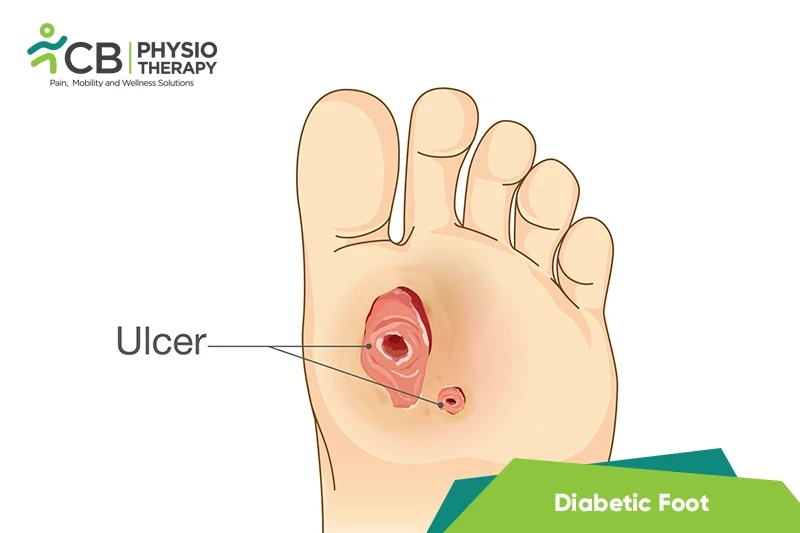
The patient is advised not to leave the foot unchecked even for one day. Cuts and injuries should be avoided. Wash the feet every day, using warm water, but never soak the foot, make them completely dry and apply lotion. Trim the toenails and use diabetes-friendly footwear and socks. Never step out barefoot not even when indoors.

Ready when you are

Don't let the pain decide your day.

Get assessed today — find the cause, get a plan, and know when you'll feel better.

📞 Call 💬 WhatsApp Book now