Verified
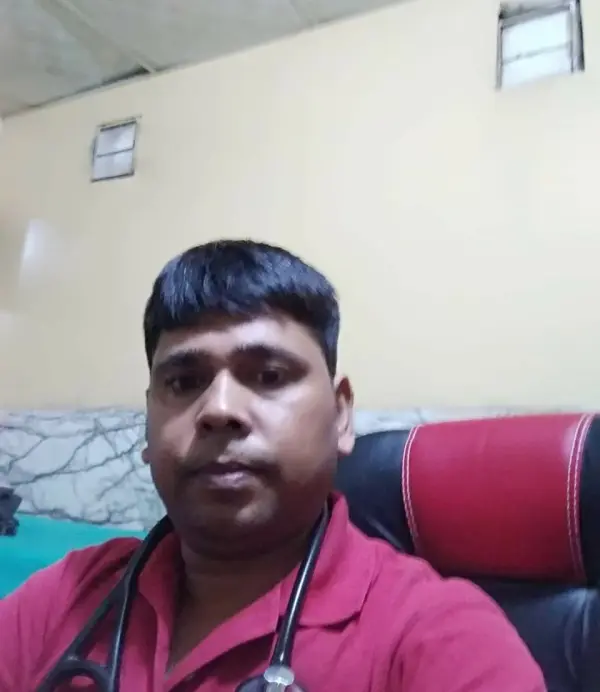
Dr. Kasim Saifi
Physiotherapist · BPT
See clinics, physiotherapists and prices for your city.
Whether it's a dull ache, a sharp catch, or pain that keeps coming back — we find the root cause of your Varicose Veins and fix it, at a clinic near you or at home.
Precision Care, Proven RecoveryWe'll call you within 10 minutes to confirm your home visit.We'll call you within 10 minutes to confirm your slot.
Chat with us on WhatsAppCommon triggers include muscle strain, joint stiffness, poor posture and long desk hours. If two or more of these fit, a physiotherapy assessment can identify exactly what's driving it.
Most varicose veins improves without surgery or long-term medication — the key is finding the cause first.
Varicose Veins rarely signals something serious, but see a doctor immediately if it comes with:
Our physios screen for these red flags at every first assessment and refer you to the right doctor if needed.
We start with an AI-based assessment to find the root cause — then follow a clear, four-phase plan.
Hands-on therapy and advanced modalities to calm pain and inflammation fast.
Mobility work and posture correction so everyday movement feels normal again.
Targeted strengthening that protects you — in-clinic or in our physio gym.
Back to work, sport and life — with a home program that prevents relapse.
One patient record, stage by stage: your physiotherapist pinpoints the diagnosis, finds the root cause and builds your in-clinic plan — while Fizo IQ™, our AI decision-support engine, tracks every milestone until your goals are met and you leave with an exercise plan to stay active.
Make these exercises yours — a CB physio personalizes, doses and tracks your plan week by week.
Get my personalized planGeneral guidance only — stop if an exercise increases your pain, and check with your physio before starting a new routine.
Every CB physio is a qualified BPT/MPT clinician. You don't need to choose one — our lead physiotherapist reviews your case and assigns the specialist best suited to treat it.
Verified
Physiotherapist · BPT
Verified
Physiotherapist · BPT
Verified
Physiotherapist · BPT
Verified
Physiotherapist · MPT
Verified
Physiotherapist · BPT
Verified
Physiotherapist
Verified
Physiotherapist · BPT
Verified
Physiotherapist · BPT
Rated 5.0 / 5 across 31 verified patient reviews in Noida.
“Dr kasim listened well to my situation, was very quick to diagnose me and gave very clear guidelines on how I should manage my condition”
“I recently had the opportunity to experience physiotherapy at home, and I must say it was an outstanding and convenient experience. One of the biggest advantages of receiving physiotherapy at home was the convenience it offered. Instead of traveling to a clinic or hospital, the physiotherapists came to my doorstep, saving me time and energy. This personalized approach allowed me to receive treatment in the comfort of my own home, which greatly contributed to my overall well-being and recovery. Thanks Dr. kasim for the services.”
“I wholeheartedly recommend Dr. Kasim to anyone seeking treatment for a shoulder issue. His outstanding care, expertise, and compassionate approach make him an exceptional physiotherapist. Under his guidance, I experienced remarkable progress and successful recovery. Thank you, Dr. Kasim, for your exceptional care and dedication to helping your patients regain their shoulder health.”
“Dr. Vidhi's approach is highly professional and patient-centered. She took the time to thoroughly assess my condition, asking detailed questions and actively listening to my concerns. She ensured that I fully understood my diagnosis, the treatment plan, and the expected outcomes. . Her dedication to providing evidence-based care was evident. thanks for treated me so well..god bless.”
“Thank you sir for providing home physiotherapy treatment. its wonderful to have session with you. 🙏🙏”
“Hats off to you, ma'am. I am very satisfied with the treatment I had for body posture. Every session was great; it made me feel comfortable.👍👍”
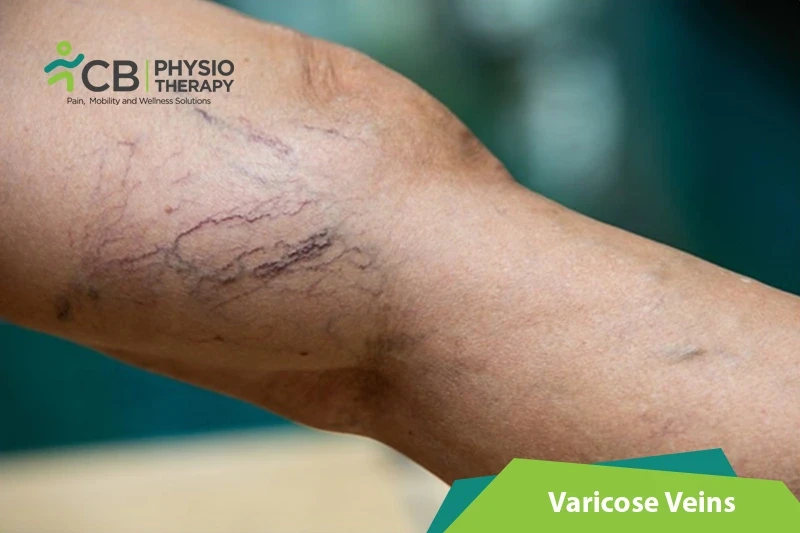
Varicose veins are swollen and twisted blood vessels that bulge under the skin surface. Though any superficial vein may become blue or purple and bulged, but the veins most commonly affected are those in the legs, feet, and ankles. Spider veins, which may surround the varicose veins, are smaller red or purple lines that appear close to the skin’s surface.
Varicose veins aren’t dangerous for most people. Although they can cause discomfort. In severe cases varicose veins can lead to serious health problems, like blood clots.
Varicose veins occur when the walls of the veins become weak. As blood pressure in the vein increases, the vein stretches, the valves that keep blood moving in one direction in the vein can’t work as they should. The blood backs up and pools in the vein, causing the vein to swell, bulge and twist.
This can occur due to several reasons, including:
Varicose veins most often develop on the lower half of the body, usually on the calves, ankles, and feet. They can also develop in the pelvic area mostly in people who have had children. Symptoms of varicose veins include:
Pathology:
Arteries carry blood from the heart to the other parts of the body, and veins return the blood from the rest of the body to the heart. To bring back blood to the heart, the veins in the legs have to work against gravity. This blood flow is controlled by valves. These valves in the veins open as blood flow towards the heart then close to stop blood from flowing backward, this happens when muscle contractions act as pumps, elastic vein walls help blood return to the heart. If the valves become weak or damaged as in the case of varicose veins, blood can flow backward and pool in the vein, causing the veins to stretch or twist.
Physical examination:
During the physical examination, the veins are examined and also observed during sitting and standing positions.
Trendelenburg Test:
This test is performed during physical examination. The patient is made to lie in the supine position with the legs flexed. Then the legs are raised above the heart level. The examiner squeezes the veins that will empty the vein and also gravity helps to empty the vein completely.
Then a tourniquet is put to occlude the deeper veins and the patient is asked to put the leg down or stand up. In normal conditions, the veins usually fill within 30-35 seconds. If the superficial veins fill quicker with the tourniquet in place, it is a sign that there is valvular incompetence in the deep veins below the tourniquet level.
The tourniquet is released after 20 seconds if there is no rapid filling in the nerves and there is a sudden filling, then it is a sign that the superficial veins are not working properly but the deep veins are competent
The test can be repeated if required by placing the tourniquet at different levels to check the levels at which the valves are incompetent.
Schwartz Test:
Schwartz test is another test performed during physical examination. In this test, the lower limb is exposed and a tap is placed on the lower part of the leg where the long saphenous vein is present. The examiner then checks if an impulse can be felt at the saphenous opening. If the impulse is felt, then it is a sign that the valves are incompetent and the superficial venous system is not functioning properly.
Duplex Ultrasound:
Ultrasound is a safe, painless, and non-invasive technique that allows checking the blood flow. It uses sound waves to produce images of the tissues inside the body. It can show blood clots and how the valves are working.
Venogram:
A venogram is done to check the functioning of the veins. It involves injecting contrast material into the veins to show how blood flows through the veins. This allows determining the condition of the veins
Note: Medication should not be taken without the doctor’s prescription.
There are many different treatments available for varicose veins based upon the presence of different symptoms, size, and location of the varicose veins, cases which accompany skin changes like swelling, dermatitis or ulceration, etc, and those which do not respond to conservative treatment, generally demand further treatment. These treatments include:
Injection therapy or sclerotherapy:
In this therapy, the patient is injected with a liquid solution into the vein to form a clot and help permanently destroy the vessel. This causes the walls of the vein to stick together and eventually, the veins turn into scar tissue and fade away.
Surgery:
Surgery includes removal of varicose veins, including “phlebectomy” or vein stripping. Also known as ligation and stripping, is a process in which the surgeon ties off the affected vein to stop blood from pooling. The surgeon may remove the vein to prevent varicose veins from reappearing.
Elevation
The patient is asked to raise the feet above the waist which helps blood flow to the heart. It increases blood circulation and decreases pressure in the veins. Leg elevation can also be done while sitting or sleeping.
Compression bandaging:
Wearing compression stockings, elastic stockings, and socks or bandaging compresses the part that can help to ease the pain and discomfort caused by varicose veins and may also prevent them from getting worse. Support socks and pantyhose compress the veins and help blood circulate, which can prevent varicose veins from getting worst. It also stops the veins from stretching and helps blood flow.
Exercises:
Exercises are done to improve circulation, move frequently, and avoid sitting still for prolonged periods. Exercise can increase the body’s ability to pump blood up the leg back towards the heart. And thus decreases the chances of getting varicose veins.
Walking or Running:
Low-impact exercises for varicose veins include walking, swimming, and biking, etc. Walking for 30 minutes a day, 5 days a week can give good benefits.
Leg Lifts:
For doing leg lifts the patient sits or lies on the back while sticking the feet straight out. Then the patient lifts one leg at a time up, holding it in the air. Slowly lower it down and repeat the same exercise with the other leg.
Bicycling or Bicycle Legs:
Riding a bike or stationary bike is also found to be beneficial. It can be done by doing bicycle leg exercise even without having an actual bike. The patient lies on the back, puts the legs in the air, bends them at the knee. Pedaling is done slowly while bicycling.
Lunges:
Lunges are done by moving the legs apart in a standing position, then the patient is asked to step forward to slowly bend the knees, keeping it directly above the ankle. This position is held and then slowly the leg is straightened and then return back to the original position.
Rocking the Feet:
The rocking of the feet can be done by sitting or standing, the patient does rocking back and forth from heel to toe.
Laser therapy is a minimally invasive procedure, in which a catheter a long, thin tube, is used and laser to close off a damaged vein. Also known as endovenous thermal ablation is a process of destruction of abnormal veins with techniques using laser, radiofrequency, etc.
The patient is advised to live an active, healthy lifestyle and has a healthy weight to prevent the chances of developing varicose veins. the patient is also advised to avoid long periods of standing to encourage blood flow, take regular breaks to stretch, and walk around, especially if the patient has a job that requires being on feet.
Get assessed today — find the cause, get a plan, and know when you'll feel better.