Verified
Dr. Anup Brahmbhatt
Physiotherapist · BPT
See clinics, physiotherapists and prices for your city.
Whether it's a dull ache, a sharp catch, or pain that keeps coming back — we find the root cause of your Ankle Bone Spur and fix it, at a clinic near you or at home.
Precision Care, Proven RecoveryWe'll call you within 10 minutes to confirm your home visit.We'll call you within 10 minutes to confirm your slot.
Chat with us on WhatsAppCommon triggers include muscle strain, joint stiffness, poor posture and long desk hours. If two or more of these fit, a physiotherapy assessment can identify exactly what's driving it.
Most ankle bone spur improves without surgery or long-term medication — the key is finding the cause first.
Ankle Bone Spur rarely signals something serious, but see a doctor immediately if it comes with:
Our physios screen for these red flags at every first assessment and refer you to the right doctor if needed.
We start with an AI-based assessment to find the root cause — then follow a clear, four-phase plan.
Hands-on therapy and advanced modalities to calm pain and inflammation fast.
Mobility work and posture correction so everyday movement feels normal again.
Targeted strengthening that protects you — in-clinic or in our physio gym.
Back to work, sport and life — with a home program that prevents relapse.
One patient record, stage by stage: your physiotherapist pinpoints the diagnosis, finds the root cause and builds your in-clinic plan — while Fizo IQ™, our AI decision-support engine, tracks every milestone until your goals are met and you leave with an exercise plan to stay active.
These symptoms respond well to Ankle Bone Spur — tap one to see how we treat it near you.
Make these exercises yours — a CB physio personalizes, doses and tracks your plan week by week.
Get my personalized planGeneral guidance only — stop if an exercise increases your pain, and check with your physio before starting a new routine.
Every CB physio is a qualified BPT/MPT clinician. You don't need to choose one — our lead physiotherapist reviews your case and assigns the specialist best suited to treat it.
Verified
Physiotherapist · BPT
Verified
Physiotherapist
Verified
Physiotherapist · BPT
Verified
Physiotherapist · BPT
Verified
Physiotherapist
Rated 4.9 / 5 across 13 verified patient reviews in Bangalore.
“For sure you all should come to his physiotherapy center. Everyone out here are so polite and helpful....all of my Chiro sessions by Dr. Anup were so helpful to cure my rounded shoulder. I was treated by Dr. Nadia. She was so kind and of course so well skilled. You should try this physiotherapy center for sure...”
“Thanks so much, Dr. Bella, for your services. I'm so pleased with every session I got from you for my cervical pain. My cervical pain is almost gone, and I can move my neck freely after treatment. recommended for all.”
“Thanks so much Dr.anup for the treatment. My back issue is resolved to some extent after couple of sessions. I had good experience at cb physiotherapy clinic.👍👍”
“Dr Bela and team has healing hand. She is Best physio and Chiro I ever met thank you. Amazing results in just 1 week of treatment for 10 year old condition.”
“For sure you all should come to this physiotherapy center. Everyone out here are so polite and helpful....all of my Chiro sessions by Dr. Anup were so helpful to cure my rounded shoulder. He was so kind and ofcourse so well skilled.”
“Dr. Madhusudan is a excellent Physio.He listen, understands the problems of the patient very carefully. He suggests genuine therapy for the patients. I highly recommend this doctor.”
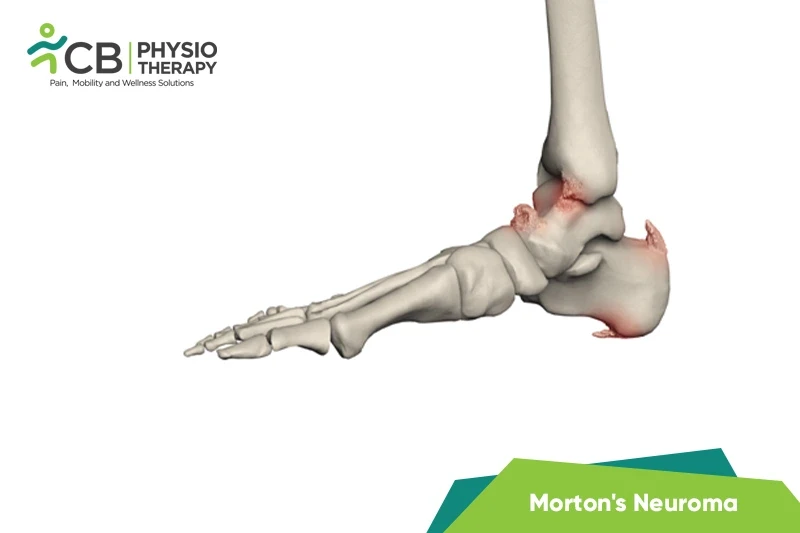
An ankle bone spur or osteophyte is a hard and smooth bump of extra bone that usually develops near joints. It is a bony growth formed on normal bone, as the body tries to repair itself by building extra bone. It is generally formed in response to constant pressure or stress over a long time.
A bony spur is an extra bone that can occur at places such as the spine, shoulders, hands, hips, knees, and feet. It can occur due to:
Most bone spurs are without symptoms. But if the bone spur presses on other tissues or bones or causes a muscle or tendon to rub, then it can break that tissue down over time, causing:
Pathology:
A bone spur is a tiny pointed outgrowth of bone, caused by local inflammation, such as osteoarthritis or tendonitis. Bone spurs develop in areas of injury or inflammation of the nearby cartilage or tendons.
Physical Examination:
The examiner requires the medical history of the patient and conducts certain physical examinations to determine the cause of the pain.
CT scan:
CT scan is one of the most advantageous procedures and is ideal for detecting the bone spur and also reflects how the adjacent soft tissues are affected by the bone outgrowths.
Magnetic resonance imaging (MRI):
Magnetic resonance imaging is a sensitive diagnostic technique. It helps in assessing and identifying the changes that occur in the tissues and bones. It can be also utilized for revealing bone spurs.
Ultrasound imaging:
Ultrasound imaging is helpful in identifying bone spurs and evaluating the muscles and ligaments around the joints. In case of bone spurs, the ligaments can be stretched or even torn.
X-ray:
X-rays help to indicate bone spur formation and highlight the degeneration of the spinal cords. The X-ray also indicates the distance between bones.
Medication: Nonsteroidal anti-inflammatory drugs, Corticosteroid injection, Naproxen Sodium, Acetaminophen, Ibuprofen, etc.
Note: Medication should not be taken without the doctor's prescription.
Surgery:
Bone spurs do not require treatment unless they cause pain or damage to other tissues. In case of excess pain, conservative treatment is recommended. However, in some severe cases, surgery is recommended, when the pain becomes unbearable, and starts affecting the movement of body parts. Overall, the surgical operation involves minimally invasive techniques.
Cryotherapy or ice therapy are both effective for treating chronic heel spurs. It may be used to relieve inflammation and reduce pain.
Thermotherapy helps to loosen tense muscles and promote oxygen and blood flow to the affected area. Heat therapy might also be effective for reducing pain during exercises.
Low laser therapy:
Low-level laser therapy (LLLT) is found to be an effective method for treating heel spurs.
Deep tissue massage may be helpful for heel spurs, by increasing blood circulation and removing toxins.
Therapeutic ultrasound is proved to be effective in relieving pain and swelling.
Extracorporeal Shock Wave Therapy (ESWT):
ESWT is an advanced technology modality used by physiotherapists to ease pain and decrease swelling.
Night Splints:
Night splint keeps the ankle in 5-degree of dorsiflexion for a few weeks Patients feel relief from heel pain in the short term when the use of a night splint is incorporated into a conservative treatment procedure.
Heel Inserts:
Heel inserts relieve heel spur pressure and inflammation by distributing the pressure evenly throughout the heel reducing stress.
Orthotics:
Customized orthotics are useful in distributing pressure uniformly over the rearfoot region.
Footwear Modification
Proper footwear provides relief from heel pain and heel spurs as it aims to correct over-pronation, fallen arches, and flat feet.
Passive and active stretching:
Strengthening and stretching of the muscles is done to eliminate inflammation surrounding the spur. The treatment program may take 6 to 12 months for relieving symptoms.

The patient is advised to keep the bones and joints healthy. These include maintaining a healthy weight, wearing footwear with proper support, and doing regular workouts.
Get assessed today — find the cause, get a plan, and know when you'll feel better.