
Shoulder Arthropathy — Symptoms, Causes & Treatment
Also known as Shoulder Arthritis. Causes, symptoms and how physiotherapy treats Shoulder Arthropathy — without surgery or medicines.
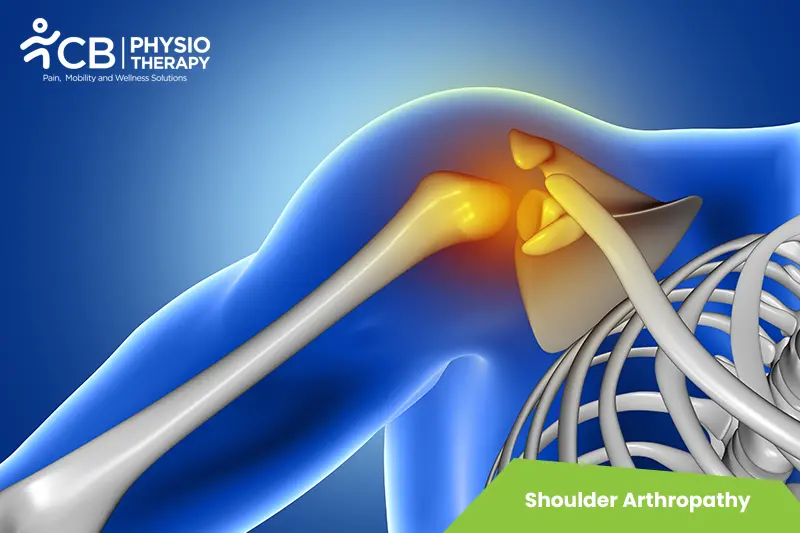
Understanding Shoulder Arthropathy
Shoulder Arthropathy (also called Shoulder Arthritis) can arrive suddenly or build over months, and how much it hurts is a poor guide to how serious it is — minor strains can hurt intensely, while slow-building problems stay quiet until they start limiting you.
Physiotherapy approaches Shoulder Arthropathy by treating the cause rather than chasing the symptom: a detailed movement assessment first, then a plan combining hands-on treatment, targeted exercise and the habit changes that stop it returning.
Causes & risk factors of Shoulder Arthropathy
What commonly drives it — your assessment pins down which of these apply to you.
Joint stiffness and age-related change
Joints that move less start to hurt more; age-related wear is normal, but painful stiffness is not something to simply accept.
Weakness and deconditioning
When supporting muscles lose strength, load shifts to structures that were never meant to carry it.
Old injuries and compensations
A previous injury that never fully rehabilitated often leaves a movement pattern that overloads something else.
Sudden spikes in activity
A new sport, a new gym program, a long trek — tissue adapts to gradual change and protests when change is sudden.
Muscle strain and overload
A sudden lift, an awkward movement or simply more load than the tissues were prepared for — the most common trigger.
When physiotherapy is the right call
If any of these sound like you, an assessment is the right first step.
- ✓ You want to avoid long-term painkillers — or surgery has been mentioned
- ✓ You've been diagnosed with Shoulder Arthropathy and told to "rest and see"
- ✓ Movement feels restricted, weak or guarded compared to before
- ✓ You want to return to sport or work with a plan, not by trial and error
- ✓ Shoulder Arthropathy that keeps returning or hasn't settled within two weeks
Your treatment journey
Step by step — from your first assessment to a tracked recovery plan.
A detailed first assessment
History, movement testing and strength checks — a focused session to find what is actually driving your Shoulder Arthropathy.
A diagnosis you understand
Your physiotherapist explains the findings in plain language — what is affected, why it happened and what that means for you.
Active, tracked treatment
Hands-on therapy, the right modalities and graded exercise — progressed session by session and tracked on Fizo IQ™.
Prevention, built in
The final phase rebuilds strength and habits so the same problem does not come back — with a home plan you keep.
What recovery looks like
- ✓ Relief that comes from treating the cause, not masking it
- ✓ A clear diagnosis and a timeline you can plan around
- ✓ Strength and movement rebuilt, not just pain reduced
- ✓ Lower chance of recurrence, with a prevention plan
- ✓ Care without long-term medicines — at a clinic near you or at home
When to see a doctor — red flags
How CB Physiotherapy treats Shoulder Arthropathy
At CB Physiotherapy, treatment for Shoulder Arthropathy starts with finding its cause: a structured, physiotherapist-led assessment before anything is prescribed. Your plan then combines hands-on therapy, targeted exercise and the right modalities — delivered at a clinic near you or at home, and coordinated with your doctor where medical care is involved.
Every case runs on Fizo IQ™, our recovery engine: diagnosis, root cause, plan, milestones and goals, tracked session by session. You always know where you are in your recovery — and what comes next.
Get Shoulder Arthropathy treatment near you
Certified physiotherapists at a clinic near you or at home — same-day slots, assessment-led care.
Request received!
We'll call you within 10 minutes to confirm your home visit.We'll call you within 10 minutes to confirm your slot.
Chat with us on WhatsAppShoulder Arthropathy, answered
Shoulder arthritis is damage to the cartilage inside the shoulder joint, it has two joints. Shoulder arthritis usually refers to the bigger ball-and-socket joint named the glenohumeral joint as it connects the glenoid and humerus. The cartilage covers both the ball i.e the humeral head and the socket i.e. the glenoid.
When the cartilage in the shoulder begins to break down on the surface and also in the deeper layers, it’s called shoulder arthritis. The other joint in the shoulder, the acromioclavicular or AC joint, can also develop arthritis.
Shoulder arthritis typically develops in stages.
- The cartilage becomes soft then it develops cracks in the surface.
- Begins to fibrillate i.e.deteriorate and flake.
- Then wears away to expose the surface of the bone
- Finally loses its ability to act as a smooth, gliding surface.
- Osteoarthritis or degenerative joint disease. This disease is associated with wear and tear related to aging.
- Rheumatoid arthritis is an autoimmune disorder, in which the body attacks its own healthy cells, which may include the lining of the joint.
- Post-traumatic shoulder arthritis occurs if the shoulder was dislocated, fractured, o injured, you may develop post-traumatic arthritis.
- Rotator cuff tear arthropathy is a type of shoulder arthritis that can develop due to a prolonged rotator cuff tear. The four rotator cuff tendons in the shoulder wrap around the ball portion of the shoulder joint, holding it in place. If anyone or more of these tendons are torn heavily, then this may cause the humeral head to rub against other bones and develop arthritis.
- Avascular necrosis refers to the disrupted blood supply to an area of the body, it results in that area dying i.e.necrosis. In the shoulder, the humeral head may lose blood supply due to disease, traumatic injuries, etc. Without a blood supply, the bone will slowly collapse, becomes uneven, and causes arthritis.
- Pain aggravated by activity and progressively gets worse over time.
- Condition may intensify with changes in the weather.
- Deep ache in the joint.
- Shoulder stiffness.
- Might radiate or travel to the side of the neck.
- Limited movement of the shoulder.
- Night pain is common with sleep disturbance.
- Difficult to lift the arm while combing the hair or even reaching up to a shelf.
- Crepitus, grinding, clicking, or snapping sound while moving the shoulder.
- Sometimes the crepitus is painful and can be loud enough for other people to hear.
Shoulder arthropathy is a degenerative joint disease that involves: (a). The cartilage in the joints breaks down. (b). Abnormal bony growths like bone spurs or osteophytes, develop in the joint.
The examiner will discuss the symptoms and medical history and also examine the shoulder.
During the physical examination, the examiner will look for weakness or atrophy in the muscles, tenderness, extent of passive and active range of motion, signs of injury to the muscles, tendons, and ligaments surrounding the joint, crepitus with movement, provocation of pain when pressure is applied on the joint.
X-Rays:
X-rays create detailed pictures of dense structures, like bone, and help to distinguish among various forms of arthritis. X-rays of an arthritic shoulder show a narrow joint space, changes in the bone, and the formation of osteophytes.
Bone scan:
A bone scan also helps to determine the condition of the bone and soft tissues of the joint which helps in the diagnosis of shoulder arthropathy.
Note: Medication should not be taken without the doctor’s prescription.
Surgery:
Surgery is recommended if the pain causes disability and is not relieved by nonsurgical treatment. Surgeries done are as follows:
- Arthroscopy.
- Shoulder joint replacement (arthroplasty).
- Hemiarthroplasty.
- Total shoulder arthroplasty.
- Reverse total shoulder arthroplasty.
- Resection arthroplasty.
- Reverse total shoulder replacement.
Rest or change in activities. The patient should take rest and also change the way he moves his arm to avoid provoking pain.
Thermotherapy:
Moist heat may provide temporary relief. Heat is a better treatment for shoulder arthropathy and is good for warming up the joint before stretching.
Cryotherapy:
The patient is recommended to apply ice to the shoulder for 20 to 30 minutes two or three times a day to reduce inflammation and ease pain. Ice therapy can be used once or several times a day if needed. It can be applied in a bag or as a pad that can be placed in the freezer and reused. The ice pack should be placed on the top, on the front, and on the back of the shoulder for 20-30 minutes at a time. If the pain wakes up the patient at night, then consider icing the shoulder before bed.
TENS:
Transcutaneous electrical stimulations (TENS), are electrical stimulations that are applied through pads placed on the skin, to relieve pain.
Hydrotherapy:
Water exercises are useful exercises that increase the range of motion by immersing the body in water and allowing weight-bearing muscles to relax, and during this process simple range of motion exercises are performed.
Range of motion Exercises:
Physiotherapy exercises may improve the range of motion, strength, and function in your shoulder. Range-of-motion exercises keep the shoulder mobile. But if the range of motion is not affected, then the main aim is to prevent it from further deteriorating.
Stretching Exercises:
Due to joint stiffness, the pain and the ability of the shoulder joint to be active may also worsen. Therefore, stretching exercise is recommended for two to three minutes every day, whether the patient has a loss of motion or not.
Strengthening Exercises:
Strengthening the shoulder with arthritis is recommended if the exercises don’t cause more pain.If these exercises do not bother the shoulder, then they are perfectly fine to do.
Don't let Shoulder Arthropathy decide your day.
Get assessed today — find the cause, get a plan, and know when you'll feel better.