Open today · 8 AM–8 PM · Same-day slots
CB Physiotherapy
Same-day appointments

Knee Fracture Treatment Doctors in Delhi

Whether it's a dull ache, a sharp catch, or pain that keeps coming back — we find the root cause of your Knee Fracture and fix it, at a clinic near you or at home.

Precision Care, Proven Recovery
ACCURATE DIAGNOSIS
ROOT CAUSE ASSESSMENT
COMPREHENSIVE RECOVERY PLAN
MILESTONE TRACKING
GOALS ACHIEVED
STAYING ACTIVE
See how it works ↓
Move pain-free Avoid drugs & surgery
5.0 / 5 · 102 Google reviews Verified on Google

Request received!

We'll call you within 10 minutes to confirm your home visit.We'll call you within 10 minutes to confirm your slot.

Chat with us on WhatsApp

Book in 30 seconds

Visit your nearest CB clinic. Tell us your concern and a preferred time — we'll confirm your slot by call within 10 minutes.

A certified physio visits your home. Tell us what you need and a preferred time — we'll confirm your slot by call within 10 minutes.

Same-day booking by default. We'll confirm your exact slot by call.
+91
No spam · Your number is safe with us
Prefer to talk now? Call +09821966696
Understanding your knee fracture

Does this sound like you?

Common triggers include muscle strain, joint stiffness, poor posture and long desk hours. If two or more of these fit, a physiotherapy assessment can identify exactly what's driving it.

  • A dull ache or sharp, burning knee fracture that keeps returning
  • Discomfort that worsens with movement, lifting or long sitting hours
  • Morning stiffness that eases as you move
  • Pain that limits work, sport or everyday activities
  • Recurring episodes that keep coming back

Most knee fracture improves without surgery or long-term medication — the key is finding the cause first.

⚠ When to seek urgent medical care

Knee Fracture rarely signals something serious, but see a doctor immediately if it comes with:

  • Fever, unexplained weight loss, or a history of cancer
  • Numbness or weakness that keeps getting worse
  • Loss of bladder or bowel control
  • Pain after a major fall or accident

Our physios screen for these red flags at every first assessment and refer you to the right doctor if needed.

Assessment-led treatment

How we treat knee fracture

We start with an AI-based assessment to find the root cause — then follow a clear, four-phase plan.

Phase 1

Ease the pain

Hands-on therapy and advanced modalities to calm pain and inflammation fast.

Phase 2

Restore movement

Mobility work and posture correction so everyday movement feels normal again.

Phase 3

Build strength

Targeted strengthening that protects you — in-clinic or in our physio gym.

Phase 4

Return to activity

Back to work, sport and life — with a home program that prevents relapse.

Your physiotherapist, with Fizo IQ™

Every recovery, planned and proven

One patient record, stage by stage: your physiotherapist pinpoints the diagnosis, finds the root cause and builds your in-clinic plan — while Fizo IQ™, our AI decision-support engine, tracks every milestone until your goals are met and you leave with an exercise plan to stay active.

Physio Expert @CB with Fizo IQ™ — recovery engine
TRACKING
ACCURATE DIAGNOSIS
L4–L5 disc bulge · nerve-root irritation, pinpointed at the first movement assessment
ROOT CAUSE ASSESSMENT
Poor sitting posture, weak core–hip chain · quietly loading that disc
COMPREHENSIVE RECOVERY PLAN
24 clinic sessions · manual therapy + spinal decompression · guided exercise therapy, reviewed weekly
MILESTONE TRACKING
Sitting pain-free ✓ · stairs ✓ · next: the morning 5 km walk
GOALS ACHIEVED
Pain 7 → 3 in six weeks · back to daily life, moving freely
STAYING ACTIVE
A personalized exercise plan, yours to keep · so the pain doesn't come back
Example recovery journey · every plan is built around you
Feeling something?

Symptoms Knee Fracture addresses

These symptoms respond well to Knee Fracture — tap one to see how we treat it near you.

Move better

Exercises that help with Knee Fracture

More exercises →

Make these exercises yours

Get my personalized plan

General guidance only — stop if an exercise increases your pain, and check with your physio before starting a new routine.

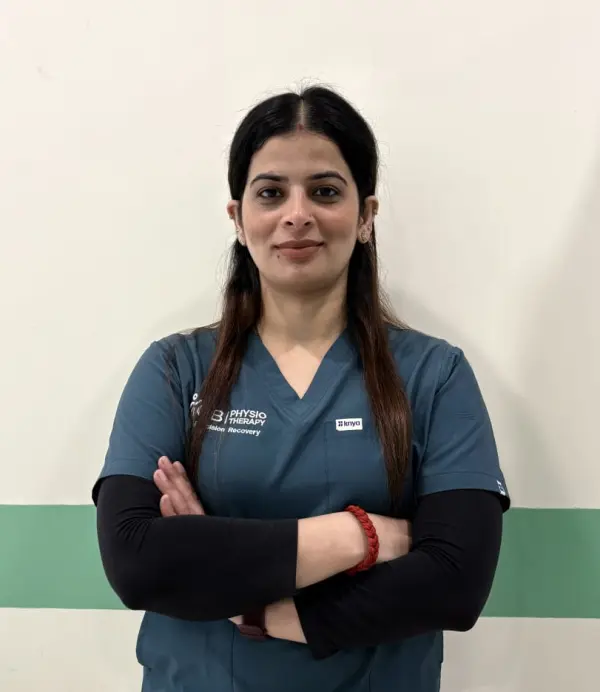
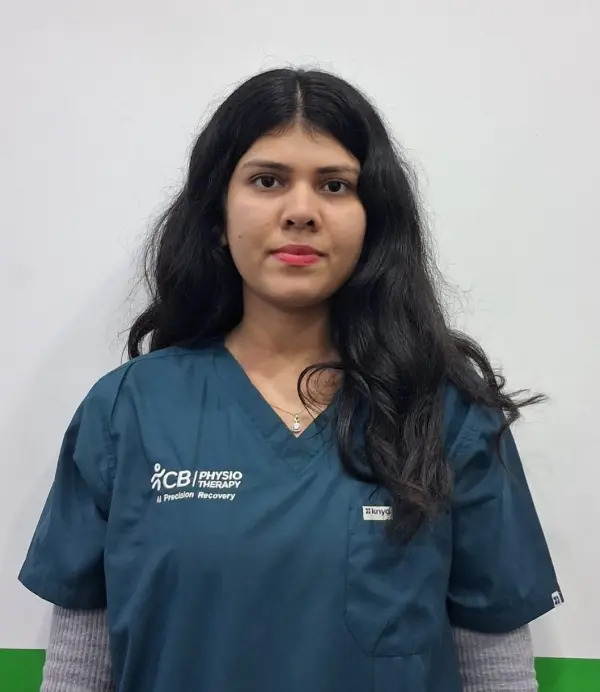
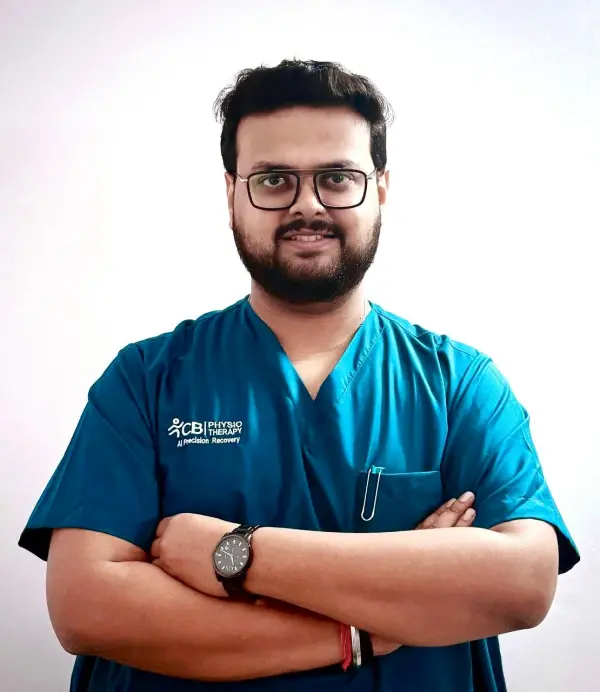
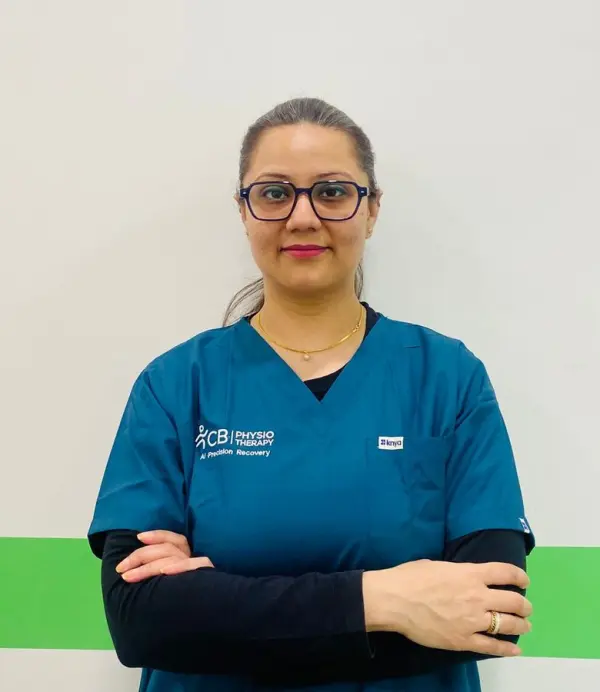
Meet your care team

Licensed experts who treat hundreds like you every month

Every CB physio is a qualified BPT/MPT clinician. You don't need to choose one — our lead physiotherapist reviews your case and assigns the specialist best suited to treat it.

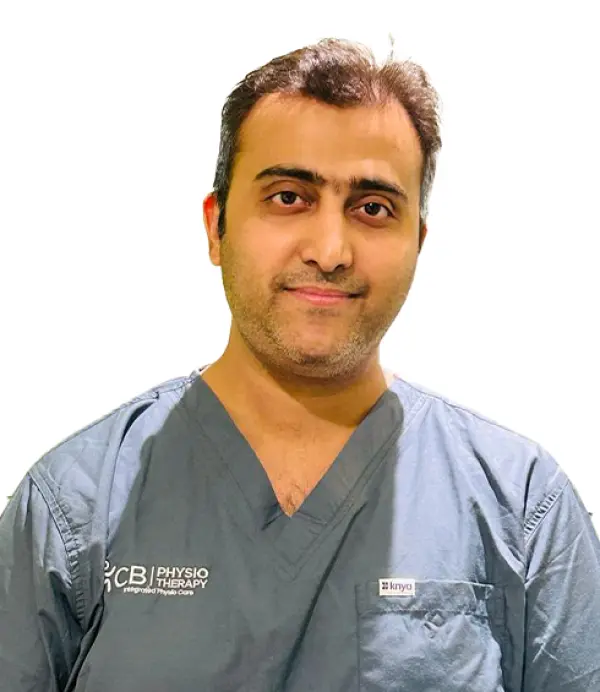
Dr. Rahul Dogra, physiotherapist in Vasant Kunj

Dr. Rahul Dogra

Head Of The Clinic

5.0 (18)
Vasant Kunj
cb physiotherapy vasant kunj
4 yrs experience
Ortho Spine Sports Physiotherapy Center
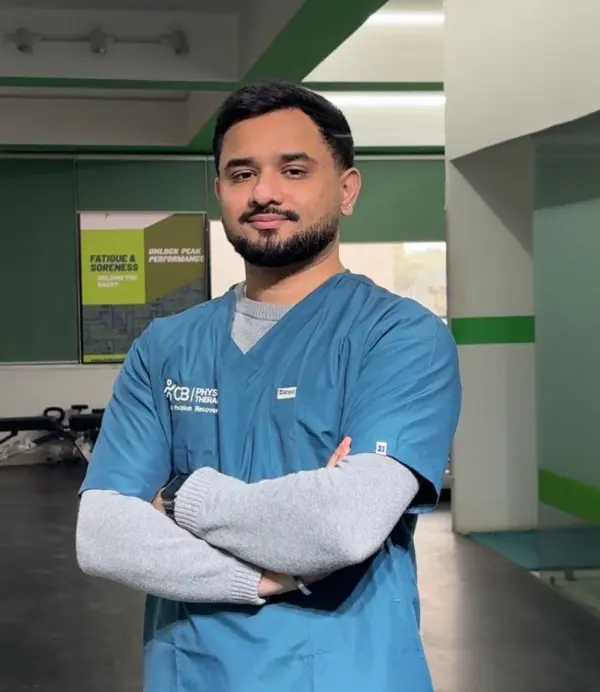
Dr. Nayima Tassaduq, physiotherapist in Safdarjung Enclave

Dr. Nayima Tassaduq

Head Of The Clinic · BPT, MPT

5.0 (18)
Safdarjung Enclave
CB Physiotherapy Safdarjung Enclave
6 yrs experience
Ortho Spine Sports Physiotherapy Center

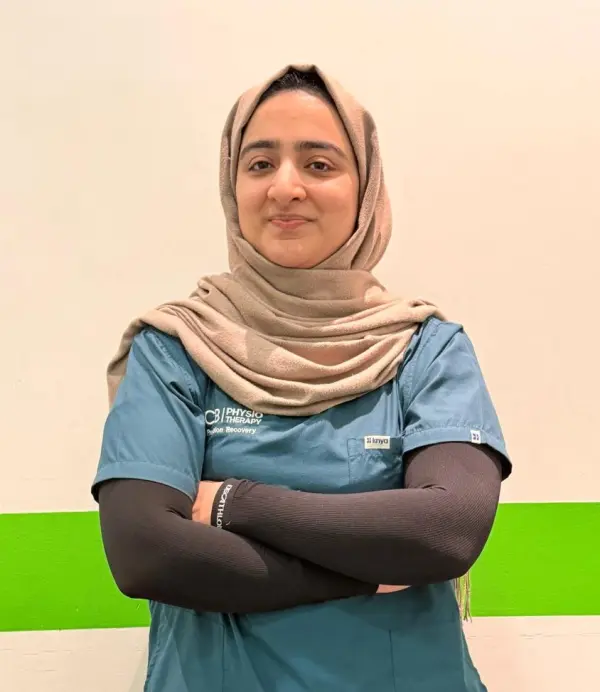
Dr. Anjali Pandey

Sr. Consultant Physiotherapist · BPT, MPT

5.0 (16)
Safdarjung Enclave
CB Physiotherapy Safdarjung Enclave
4 yrs experience
Ortho Spine Sports Physiotherapy Center
Dr. Monika Bhardwaj, physiotherapist in Greater Kailash 2 (gk2)

Dr. Monika Bhardwaj

Head Of The Clinic · BPTh, MPTh

5.0 (13)
Greater Kailash 2 (gk2)
cb physiotherapy greater kailash
5 yrs experience
Ortho Spine Sports Physiotherapy Center
Dr. Meghna Kirar, physiotherapist in Saket

Dr. Meghna Kirar

Sr. Consultant Physiotherapist · BPTh

5.0 (1)
Saket
cb physiotherapy clinic saket
4 yrs experience
Ortho Spine Sports Physiotherapy Center
Not sure who to see? You don't have to decide. Our lead physiotherapist reviews every case and assigns the physio best suited to it — based on your condition and availability.
Transparent pricing

Clear charges, no surprises

The same prices you'll see at the clinic — published before you book. Sessions run 30–45 minutes.

Physical Therapy Per session
₹1,000
Book
Advanced Physiotherapy Per session
₹1,500
Book
Sports Physiotherapy Per session
₹3,500
Book
10%

off every package

Booking a course of sessions? Save 10% when you take a treatment package — and recover with a plan built around your goals.

Ask about packages →
Patient stories

Knee Fracture recoveries, verified on Google

Rated 5.0 / 5 across 102 verified patient reviews in Delhi.

Verified

“I visited CB Physiotherapy because I pulled my hamstring. I consulted Dr. Meghna here who gave me a one week treatment plan and suffice to say I started to see results after the first session itself. I was unable to sit and had a lot of pain while walking. After my first session, I was able to walk better and sit better. By the end of the week, I had no pain. They have good infrastructure here and offer various treatments from cupping therapy to laser treatment. I would definitely recommend Dr. Meghna over any other physiotherapist in Saket if not Delhi.”

YD
Yash Dagar Verified patient · Treated at CB · 4 months ago
Verified

“I went for consultation for my knee pain and there I met Dr Rahul He took my consultation and sessions for 9 days and he was supr throughout the sessions and now it's so easy for me to be back in daily routine.”

SS
Sristi Suman Verified patient · Treated at CB · 5 months ago
Verified

“I had an amazing experience with Dr. Rahul also he took care of everything regarding my lower back strain also they have all the equipment which can help them to cure from the pain or injury. It was a great overall experience with the clinic staff too”

HJ
Harshit Jaiswal Verified patient · Treated at CB · 5 months ago
Verified

“Hello, I had 15 sessions with them. Overall all sessions were good. Their staff are very knowledgeable and helpful. A special thanks to Mr. Rahul and Ms. Mehak. Both them really helped with my pain on right shoulder and explained about basic and various exercises which i should do on regular basis. Would definitely recommend others.”

JB
Jeevesh Bajaj Verified patient · Treated at CB · 6 months ago
Verified

“Dr. Deepanshu is an exceptional physiotherapist! His personalized treatment plan and hands-on techniques helped me recover from chronic back pain effectively. He’s patient, knowledgeable, and takes the time to explain everything clearly. His positive attitude and encouragement made the entire process motivating and stress-free. I highly recommend him to anyone seeking top-notch physiotherapy care!”

SS
Sunita Singh Verified patient · Treated at CB · 6 months ago
Verified

“Dr. Rahul is an amazing physiotherapist! He genuinely cares about his patients and tailors treatments to fit your needs. Thanks to him, I’ve seen great progress and feel so much better. Highly recommend.”

SB
Sudhir Bhan Verified patient · Treated at CB · 6 months ago
Good to know

Knee Fracture, answered

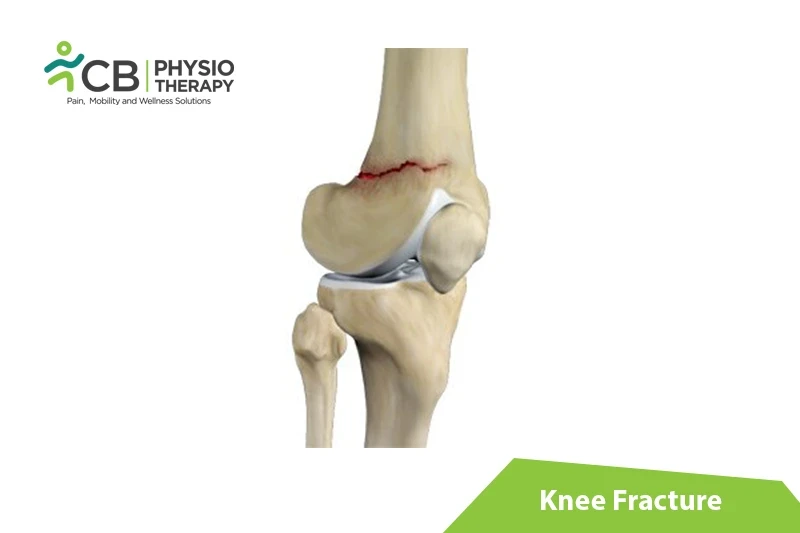
A knee fracture is a break or a crack in the bones that form a knee joint. These bones can get injured by a fall, traffic accident, contact sports, and physical exercises. The most common form of knee fracture is a patellar fracture, though knee fracture can involve any bone in the joint, including the patella, tibial plateau, tibial tuberosity, tibial eminence, and femoral condyles. Fracture in the knee joint can either be an isolated fracture, i.e single bone, or multiple fractures, which involve other knee-joint parts like the patella, femur, and tibia.


Types of Knee Fractures

Knee fractures can occur in any part of the bones. Types of knee fractures include:

Hairline fracture:

The hairline fracture occurs on the bone's surface and does not penetrate through the entire thickness of the bone. The hairline fracture cannot spread through the whole bone, it covers the knee bone partially and is treated with the help of conservative treatment.

Stable Fracture or non-displaced fracture:

In a stable fracture, the pieces of the bone remain fully aligned or the broken ends are separated by only a millimeter or two. In a stable fracture, the bones often stay in place during healing.

Displaced Fracture

In a displaced fracture, the bone fragments are separated and are not aligned properly. This type of fracture requires surgery, so that the pieces of bone are put back together.

Comminuted Fracture

This type of fracture has three or more shattered bone parts. And therefore, the knee is very unstable.

Open Fracture

In an open fracture, the skin is broken and the bone is exposed. This type of fracture can cause osteomyelitis or soft tissue infection. Open fractures often involve severe damage to the surrounding muscles, ligaments, and tendons and require immediate care.

Depending on the type and severity of fracture, symptoms vary, these may include:

  • Pain in the knee joint,
  • Tenderness,
  • Swelling, bruising, inflammation etc
  • Muscle spasms,
  • Limited range of motion,
  • Inability to walk and move properly or place pressure on the affected knee.

Pathology:

Knee joint fractures are caused by falls, accidents, sharp blows, or bone infections, which the knee fails to resist causing a break or fracture. They can usually involve nerves, ligaments, muscles, and tendons.

The causes of knee fractures can be varied, they may occur due to:

  • Older age, aging, bones become more brittle and susceptible to breaking,
  • Females are more prone to knee fractures
  • Direct falls or accidents,
  • Sharp blows,
  • Sports and physical activities e.g. football, basketball, and downhill skiing,
  • Sudden contraction of a quadriceps,
  • Osteoporosis
  • Bone infection,
  • Previous knee injury,
  • Smoking and drinking alcohol.

Physical Examination:

The examiner checks the detailed medical history and also examines the knee to check the sensation and muscle strength. The examiner also checks for hemarthrosis, a condition in which the blood from the fractured knee collects inside the joint area, causing swelling and intense pain.

X-ray:

X-ray shows images of dense structures, such as broken pieces of bone, and also helps in determining the involvement of the knee or ankle joint, and also finds out the gap between broken bones.

Computed Tomography scan (CT scan):

A computed tomography scan (CT scan) uses X-rays and a computer to make detailed images of the injured knee.

Magnetic Resonance Imaging (MRI):

Magnetic Resonance Imaging (MRI) uses magnets, radio waves, and a computer to make detailed images of the knee to help the doctor make a diagnosis.

Medication: Nonsteroidal anti-inflammatory drugs like naproxen (Aleve, Naprosyn), Motrin, Naproxen, Daypro, and Celebrex etc..

NOTE: Medications should not be taken without the doctor's prescription.

Surgery:

When conservative methods fail to work and also in cases where the bones are displaced, surgical techniques are used, such as using screws, plates, metal pins, or knee arthroscopic surgery. Arthroscopic surgery is used to treat non-displaced and hairline fractures not responding to conservative treatment and is also performed to repair the tendon and ligamental tears associated with fracture.

Rest:

Cast and braces are used to hold the ends of the bone together in position. During recovery, the knee is immobilized with a brace. Knee braces can also be used if the patient suffers from chronic stiffness or weakness in the joint, a knee brace can be continued for support. It helps to stand and move around with more confidence.

Cryotherapy:

Cryotherapy involves the direct application of ice covered with plastic or cloth kept over the knee joint for around 30 minutes, two to three times a day.

Thermotherapy:

Thermotherapy or moist heat is applied to the knee joint, its increases blood circulation.

Assistive devices:

Assistive devices including, a wheelchair, crutches, cane, or walker can be used for support.

Ultrasound therapy:

Ultrasound therapy helps to break the adhesions and thus increases the range of motion and decreases pain.

Transcutaneous electrical stimulation (TENS):

TENS is used to reduce pain and swelling in the knee. And also helps to improve the strength of the muscle.

Laser therapy (LLLT):

Laser therapy enhances the healing process and accelerates callus formation.

Range of motion exercises:

Simple range of motion exercises are done in the pain-free range to increase joint movement such as knee flexion, knee extension, SLR, etc.

Stretching and Strengthening Exercises:

Stretching exercises are done to achieve more range of motion and flexibility. Strengthening exercises include isometrics, isotonic, isokinetic exercises for quadriceps, hamstring, adductor, abductor, gluteal, ankle muscles, etc. Progressed to resisted exercises with therabands and weights.

Weight Bearing:

Weight-bearing exercise is initially limited to gently touching the floor with the toe, with the help of a walker, crutches, or cane. As the knee heals, the muscles strengthen, and gradually more weight is put on the leg.

Balance and proprioception exercises:

Balance and proprioception exercises can be done with a bobath ball or on a wobble board.

The patient is advised to play physical sports with care, to minimize the possibility of reoccurrence of knee fracture. The patient is also advised to avoid stairs, squatting, and bending, to limit stress on the knees. And also should follow physiotherapy even after the fracture is healed, to restore muscle strength and range of motion.

Ready when you are

Don't let the pain decide your day.

Get assessed today — find the cause, get a plan, and know when you'll feel better.

📞 Call 💬 WhatsApp Book now