Verified
Dr. Asif Alam
Physiotherapist · BPT
See clinics, physiotherapists and prices for your city.
Whether it's a dull ache, a sharp catch, or pain that keeps coming back — we find the root cause of your Sprengel's Shoulder and fix it, at a clinic near you or at home.
Precision Care, Proven RecoveryWe'll call you within 10 minutes to confirm your home visit.We'll call you within 10 minutes to confirm your slot.
Chat with us on WhatsAppCommon triggers include muscle strain, joint stiffness, poor posture and long desk hours. If two or more of these fit, a physiotherapy assessment can identify exactly what's driving it.
Most sprengel's shoulder improves without surgery or long-term medication — the key is finding the cause first.
Sprengel's Shoulder rarely signals something serious, but see a doctor immediately if it comes with:
Our physios screen for these red flags at every first assessment and refer you to the right doctor if needed.
We start with an AI-based assessment to find the root cause — then follow a clear, four-phase plan.
Hands-on therapy and advanced modalities to calm pain and inflammation fast.
Mobility work and posture correction so everyday movement feels normal again.
Targeted strengthening that protects you — in-clinic or in our physio gym.
Back to work, sport and life — with a home program that prevents relapse.
One patient record, stage by stage: your physiotherapist pinpoints the diagnosis, finds the root cause and builds your in-clinic plan — while Fizo IQ™, our AI decision-support engine, tracks every milestone until your goals are met and you leave with an exercise plan to stay active.
Make these exercises yours — a CB physio personalizes, doses and tracks your plan week by week.
Get my personalized planGeneral guidance only — stop if an exercise increases your pain, and check with your physio before starting a new routine.
Every CB physio is a qualified BPT/MPT clinician. You don't need to choose one — our lead physiotherapist reviews your case and assigns the specialist best suited to treat it.
Verified
Physiotherapist · BPT
Verified
Physiotherapist · BPT
Verified
Physiotherapist · BPT
Verified
Physiotherapist · BPT
Verified
Physiotherapist · MPT (Orthopaedics)
Rated 5.0 / 5 across 20 verified patient reviews in Ghaziabad.
“मुझे फिजियोथेरेपी करवानी है होम सर्विस आपके पास अवेलेबल है”
“VERY Best physiotherapist and good experience”
“I recently had the pleasure of receiving physiotherapy treatment from Dr. Asif, and I cannot praise his skills and dedication enough. As a physiotherapist, he possesses a unique blend of expertise, compassion, and professionalism that sets him apart from others in his field.”
“I recently had the privilege of being treated by Dr. Asif Alam, and I cannot speak highly enough of his exceptional care and expertise as a physiotherapist. His ability to diagnose and explain the root causes of my issues was truly impressive. He provided me with a clear understanding of my condition His hands-on techniques were precise and effective, providing me with immediate relief and tangible results. He continuously monitored my progress and adjusted the treatment plan accordingly, ensuring that I was on track to a full recovery.”
“I have no words to express how good Dr. Asif was for post-knee rehabilitation. Every session I had was excellent. Day by day, I'm improving. I can walk without support. Thanks so much! All praise for you!🙏”
“Thank you, Dr. shally for your outstanding service!👍🏼”
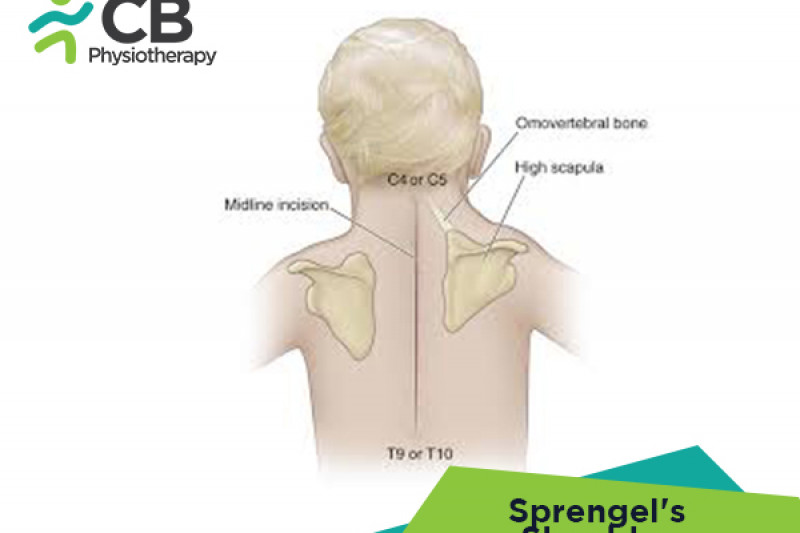
Sprengel's shoulder is also called a high scapula. Sprengel deformity is the most common congenital abnormality of the shoulder girdle characterized by an abnormally raised scapula on one side or both sides. The affected shoulder blade is abnormally connected to the spine, which causes restriction of the shoulder movement. Scoliosis with convexity on the involved side may also be observed. The movement of the scapula is marked by limitation due to fibrous bands or a bony bar, as the muscles of the scapula are poorly developed.
Depending on the severity of the condition and the additional skeletal or muscular abnormalities present Sprengel's deformity can change.
· Asymmetry in the shoulder alignment.
· An elevated shoulder blade may cause a lump in the base of the neck.
· Underdeveloped muscles in the surrounding area.
· Restricted ROM (range of motion)of shoulder and arm on the affected side.
· Limitation of shoulder abduction and elevation.
· Limited or restricted movement of the cervical spine.
· Neck deformities like mild tilting (torticollis) to severe spine deformity.
Sprengel's deformity is a developmental condition, caused due to:
· Disorder during early fetal development.
· Genetic defect.
· Sprengel deformity may be associated with, Klippel-Feil syndrome, clavicular abnormalities, rib abnormalities, limb length discrepancy, scoliosis, spina bifida, hemivertebrae, underdevelopment (hypoplasia) of neck or shoulder muscles.
Pathology
Sprengel's deformity often affects surrounding structures, which require a normal scapula for development. The elevated scapula is the most common sign, but the weakness of the surrounding musculature is also seen. An arrest in the development of bone, cartilage, and muscles. The trapezius, rhomboids, levator scapulae, pectoralis major, latissimus dorsi, and sternocleidomastoid may be absent or poorly developed. Weakness of serratus anterior muscle may lead to winging of the scapula.
Cavendish Classification of Sprengel's Deformity
Grade
Description
Very mild
Shoulders are in level. The deformity cannot be seen when the patient is dressed.
Mild
Shoulders are almost in level. The deformity can be seen as a lump when the patient is dressed.
Moderate
The shoulder is elevated by 2–5 cm. The deformity is easily visible.
Severe
The shoulder is much elevated with the superior angle of the scapula lies near the occiput, with or without neck webbing.
X-ray:
The x-ray shows bony and cartilage deformity or abnormality.
Computed tomography (CT):
Computed tomography (CT) scans are used to identify associated abnormalities like scoliosis, cervical and scapular abnormalities.
Magnetic resonance imaging (MRI):
Magnetic resonance imaging (MRI) helps to identify any bony, cartilaginous, or muscular weakness or defects.
Conservative treatment for Sprengel's shoulder:
In non-surgically cases encourage the child to participate in sports such as swimming to maintain ROM. Moderate to severe cases may require surgical management.
Surgery:
There are several surgical procedures used to treat Sprengel's deformity. Woodward techniques and Green are the most commonly used procedures. These procedures involve removal of the protruding portion of the scapula and omovertebral bone as well as translation of the scapula inferiorly to a more caudad position. To prevent brachial plexus injury osteotomy of the clavicle can also be done.
After the surgery, the patient's shoulder immobilized to help the healing process and prevent possible discomfort. Physiotherapy aims at improving deformity, to facilitate effortless motion of the shoulder.
Transcutaneous electrical nerve stimulation (TENS):
Transcutaneous electrical nerve stimulation provides pain relief, which may be caused after performing stretching exercises.
Ultrasound is very effective in breaking adhesions.
Thermotherapy is used for relaxation of the muscles before performing the exercise program.
Mobilization:
Physiotherapy, consisting of passive and active ROM exercises, beginning after 6 weeks. Gradual relaxed passive mobilization of the shoulder and scapula are done to improve the range of motion and flexibility of the shoulder. Early mobilization of the scapula and shoulder including movements of abduction and elevation.
Strengthening exercises
Strengthening exercises of all the groups of muscles strengthen the weakened muscles.. Strengthening of the shoulder girdle muscles by isometric and isotonic exercises like shoulder shrugs, shoulder rotation, push up, arm support, forearm support, bridging, etc.
Stretching exercise for Upper trapezius muscle:
The child sits in a chair. Place her right hand below her buttocks. The therapist holds the child's scapula by grasping the acromion and lateral border of the scapula. The child then performs neck flexion and neck rotation towards the left side. Then the child places her left hand below her buttocks. The therapist holds the child's scapula by grasping the acromion and lateral border of the scapula. The child then performs neck flexion and neck rotation towards the right side. The child maintains the neck in these positions for 10 seconds during stretching.
Stretching exercises for Levator scapulae:
The child lies in a prone position, with her head rotated to the opposite right side. The child then holds her head and pulls it in flexion with her left hand and abducted her right shoulder as much as possible, without elevating the scapula. The therapist restricts the scapular elevation by grasping the scapula.
Cross-body stretching:
The child is in a supine position. The therapist grasps the child's acromion and lateral border of the scapula. The child then flexes her right shoulder with the elbow to 90°. The child uses her left hand to hold her right elbow and then pulls her elbow from the right side to the left side, as far as possible.
Protraction exercise scapula:
The child lies in a supine position. When her right shoulder in 90° flexion and her elbow fully extended. The child then extends her right elbow with maximal force in the forward direction. The therapist grasps the child's scapula by holding the acromion to prevent the scapular elevation and trunk rotation.
Posterior tilt exercise for scapula:
The child is lying in a prone position, with the shoulder abducted to 130– 145°, humerus overhead, and forearm in a neutral position. The child then places the left hand under her forehead and lies slightly on the forehead with the dorsum of her hand. While she lifts her right arm, with her elbow extended, the therapist restricts scapular elevation by grasping the superior angle of the scapula.

The parents are advised to supervise all the exercises to be performed by the child. While performing the exercises at home, the parents should look for the proper movement of the scapula and prevent the elevation of the scapula. If the superior border of the scapula moves upwards, then the exercise should be stopped and the child should be asked to perform the exercise again.
Get assessed today — find the cause, get a plan, and know when you'll feel better.