
Cupping Therapy — How It Works & What It Treats
Also known as Cupping Therapy. What Cupping Therapy is, how it works and what it treats — explained by CB Physiotherapy's clinical team.
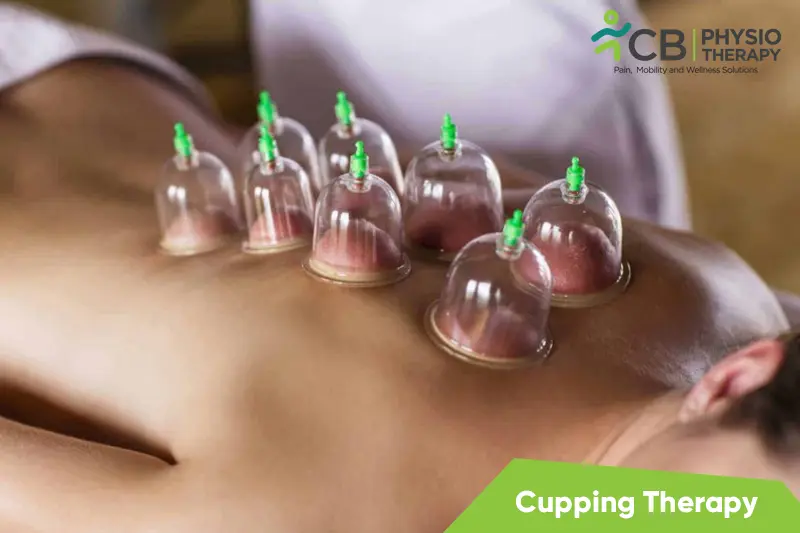
How Cupping Therapy works
Cupping therapy places cups on the skin and creates suction inside them — lifting the skin and superficial tissue upward rather than pressing down as massage does. That decompression is its distinguishing idea: it increases local blood flow, gently mobilises the fascia and skin layers, and eases the tension in muscles beneath. The familiar circular marks are not bruises in the injury sense — they are the visible result of blood drawn to the surface, fading over days.
In modern physiotherapy, cupping is used as a soft-tissue tool for myofascial pain and stubborn muscle tightness — chosen when the assessment suggests decompression will help, dosed carefully, and combined with movement and strengthening so its window of looseness turns into lasting change.
Cupping Therapy — techniques & equipment
What the treatment actually involves — your plan combines the pieces your assessment calls for.
Suction cups, dry technique
Silicone or plastic cups with controlled suction — modern physiotherapy uses dry cupping; nothing pierces the skin.
Static and gliding application
Cups rest on trigger-point areas or glide over oiled skin — a reverse massage along the muscle.
Dosage decisions
Suction strength and time are dosed to your skin and sensitivity — marks should fade in days, not weeks.
Movement under suction
Actively moving the muscle while cupped — combining decompression with retraining in one step.
Conditions Cupping Therapy treats
Where it fits best — your assessment confirms whether it belongs in your plan.
- ✓ Cervical Spondylosis →
- ✓ Frozen Shoulder →
- ✓ Arthritis →
- ✓ Rotator Cuff Injury →
- ✓ Rheumatoid Arthritis →
- ✓ Fibromyalgia Syndrome →
- ✓ Broad areas of muscle tightness — backs, shoulders, thighs
- ✓ Myofascial pain that keeps returning after massage
- ✓ Tissue tightness limiting stretch and movement
- ✓ You respond well to soft-tissue work and want it to last longer
What a Cupping Therapy session looks like
Step by step — from screening to treatment to what comes next.
Assessment and area mapping
The tight, restricted regions are identified by examination — cups go where the findings are.
Cupping, dosed to you
Five to fifteen minutes of static or gliding cups; a pulling sensation, strong but not painful.
Marks explained honestly
Circular discolouration for a few days is expected — you will know before treatment, not after.
Move while it's loose
Stretching and activation immediately after, converting the release into range you keep.
Benefits of Cupping Therapy
- ✓ Broad-area release that pressing techniques can miss
- ✓ Drug-free option for myofascial pain and tightness
- ✓ Often pairs well with dry needling and manual therapy
- ✓ A useful window of looseness for retraining movement
- ✓ Comfortable for most — many find it deeply relaxing
Safety & contraindications
How CB Physiotherapy delivers Cupping Therapy
At CB Physiotherapy, cupping earns its slot the same way every modality does: through the assessment. When decompression suits your findings, it is dosed carefully, explained honestly — marks included — and followed immediately by the movement work that makes its release last.
It usually works alongside manual therapy, needling or exercise in one coordinated plan on Fizo IQ™, rather than as a standalone ritual.
Real published prices from our physiotherapists for Cupping Therapy in India — your exact quote is confirmed after assessment, before you commit. Packages save 10%.
Get Cupping Therapy near you
Certified physiotherapists at a clinic near you or at home — same-day slots, assessment-led care.
Request received!
We'll call you within 10 minutes to confirm your home visit.We'll call you within 10 minutes to confirm your slot.
Chat with us on WhatsAppCupping Therapy, answered
Cupping Therapy is an ancient healing practice that has found a strong place in modern physiotherapy and sports recovery. It involves placing special cups on the skin to create suction, which helps increase blood circulation, release tight muscles, and promote faster healing. Dry & Wet Cupping ( HIjama ) are most commonly used types of cupping.
Today, physiotherapists use cupping as part of rehabilitation programs for chronic pain, orthopedic conditions, mobility improvement, and athletic recovery. Unlike traditional methods, cupping at CB Physiotherapy is applied in a controlled, safe, and evidence-based way.
There are multiple forms of cupping therapy, each designed to achieve specific therapeutic goals.
Dry Cupping
This is the most common form, where suction is applied without any incisions. It is used for pain relief, relaxation, and to reduce muscle tightness.
Wet Cupping (Hijama)
Involves controlled release after suction. It is believed to help with detoxification and inflammation management. While used sparingly in physiotherapy, it remains popular in traditional medicine.
Fire Cupping
Here, heated cups are applied to the skin to create deeper suction. This method enhances circulation, helps with muscle stiffness, and induces relaxation.
Ice Cupping
Combines cold therapy with suction. It is effective in controlling swelling, inflammation, and post-injury pain, especially in acute sports injuries.
Cupping Massage
Cups are moved across the skin with oils, combining suction with massage-like effects. It improves relaxation, lymphatic drainage, and deep tissue recovery.
Dynamic / Functional Cupping
Cups are applied while the patient performs guided exercises or stretches. This is widely used in sports physiotherapy to improve flexibility, break fascial adhesions, and enhance functional performance.
Cupping is often recommended as a complementary therapy for the following conditions:
✅ Relieves pain from back, neck, shoulders, and joints
✅ Reduces swelling and inflammation in muscles and tissues
✅ Improves circulation and oxygen supply for faster healing
✅ Releases fascia and loosens stiff muscles
✅ Enhances relaxation and stress relief
✅ Promotes sports recovery and injury prevention
✅ Supports mobility and flexibility in daily life and athletics
Yes. When performed by trained physiotherapists, cupping therapy is safe, hygienic, and effective. Side effects are minimal and temporary, such as mild bruising or redness.
Cupping is not recommended for:
-
Patients with bleeding disorders
-
Severe skin conditions or infections like Eczema and Psoriasis etc.
-
Pregnant women (without medical clearance)
Athletes and active individuals increasingly use cupping therapy for faster recovery and performance optimization. It:
-
Speeds up clearance of metabolic waste after intense workouts
-
Reduces muscle soreness and stiffness (DOMS)
-
Improves range of motion and flexibility
-
Aids in quick rehabilitation after injuries
-
Restores energy and reduces fatigue
This is why many elite athletes use cupping therapy regularly as part of their training and recovery regimen
Cupping alone is effective, but its results are amplified when integrated with other physiotherapy treatments:
-
Manual Therapy & Mobilizations – restore normal joint mechanics
-
Electrotherapy (TENS/IFT/Ultrasound) – target pain and tissue healing
-
Cryotherapy or Heat Therapy – manage inflammation or stiffness
-
Exercise Therapy – build long-term strength, mobility, and recovery
This multi-modality approach ensures patients not only get immediate relief but also long-term benefits
Assessment – your physiotherapist identifies target areas.
-
Application – cups are placed for 5–15 minutes, static or with movement.
-
Experience – a mild suction/pulling sensation, sometimes warmth or cooling depending on the method.
-
After-effects – temporary marks or mild bruising that fade naturally within a week.
Most patients experience noticeable improvement after just a few sessions.
Cupping Therapy is a versatile and effective technique for pain management, mobility improvement, and sports recovery. With multiple approaches—dry, wet, fire, ice, massage, and dynamic cupping—it can be customized to each patient’s needs.
At CB Physiotherapy, we combine cupping with evidence-based physiotherapy modalities to ensure faster, safer, and long-lasting results.
Ready to start your recovery?
Get assessed today — find the cause, get a plan, and know when you'll feel better.