
Fibromyalgia Syndrome — Symptoms, Causes & Treatment
Also known as Fibromyalgia Syndrome. Causes, symptoms and how physiotherapy treats Fibromyalgia Syndrome — without surgery or medicines.
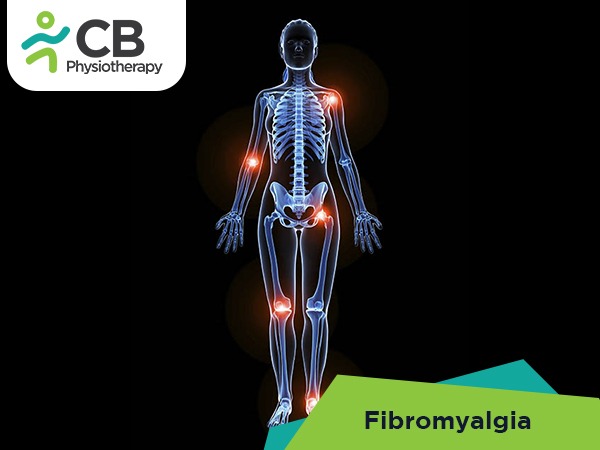
Understanding Fibromyalgia Syndrome
Fibromyalgia Syndrome is an inflammatory condition, so flare-ups and calmer phases tend to alternate. Medical management from your doctor controls the disease process; physiotherapy protects what it threatens — joint mobility, muscle strength and your capacity to stay active.
Graded, well-dosed exercise is one of the best-evidenced ways to reduce pain and stiffness in inflammatory conditions. The art is in the dosing: enough to build capacity, never enough to provoke a flare — which is exactly what a physiotherapist-led plan manages.
Causes & risk factors of Fibromyalgia Syndrome
What commonly drives it — your assessment pins down which of these apply to you.
An overactive immune response
The inflammation is driven by the immune system, not by injury — which is why your doctor's medical management leads the treatment.
Flare and rest cycles
Resting too much in calm phases weakens muscles and stiffens joints — making the next flare feel worse than it needs to.
Stiffness that follows inflammation
Inflamed joints lose range quietly; keeping them moving within tolerance is protective, not risky.
Deconditioning
Pain makes activity shrink; lost fitness then makes every activity cost more — graded exercise reverses the slide.
When physiotherapy is the right call
If any of these sound like you, an assessment is the right first step.
- ✓ You've been diagnosed with Fibromyalgia Syndrome and told to "rest and see"
- ✓ Movement feels restricted, weak or guarded compared to before
- ✓ You want to return to sport or work with a plan, not by trial and error
- ✓ Fibromyalgia Syndrome that keeps returning or hasn't settled within two weeks
- ✓ Pain or stiffness that limits work, sleep or daily activities
Your treatment journey
Step by step — from your first assessment to a tracked recovery plan.
A detailed first assessment
History, movement testing and strength checks — a focused session to find what is actually driving your Fibromyalgia Syndrome.
A diagnosis you understand
Your physiotherapist explains the findings in plain language — what is affected, why it happened and what that means for you.
Active, tracked treatment
Hands-on therapy, the right modalities and graded exercise — progressed session by session and tracked on Fizo IQ™.
Prevention, built in
The final phase rebuilds strength and habits so the same problem does not come back — with a home plan you keep.
What recovery looks like
- ✓ A clear diagnosis and a timeline you can plan around
- ✓ Strength and movement rebuilt, not just pain reduced
- ✓ Lower chance of recurrence, with a prevention plan
- ✓ Care without long-term medicines — at a clinic near you or at home
- ✓ Relief that comes from treating the cause, not masking it
When to see a doctor — red flags
How CB Physiotherapy treats Fibromyalgia Syndrome
We treat Fibromyalgia Syndrome the way we treat everything: assessment first, plan second, treatment third. It sounds obvious, but it is the difference between sessions that fill a slot and sessions that move you towards a goal. Care is delivered by certified physiotherapists at a clinic near you or at home.
Your whole journey is tracked on Fizo IQ™ — the diagnosis, the root cause, the milestones and the goals — so progress is measured, not guessed, and the plan adapts the moment your response calls for it.
Exercises that help with Fibromyalgia Syndrome
Make these exercises yours — a CB physio personalizes, doses and tracks your plan week by week.
Get my personalized planGeneral guidance only — stop if an exercise increases your pain, and check with your physio before starting a new routine.
Get Fibromyalgia Syndrome treatment near you
Certified physiotherapists at a clinic near you or at home — same-day slots, assessment-led care.
Request received!
We'll call you within 10 minutes to confirm your home visit.We'll call you within 10 minutes to confirm your slot.
Chat with us on WhatsAppFibromyalgia Syndrome, answered
Fibromyalgia syndrome (FMS) is a chronic disorder characterized by widespread and persistent non-inflammatory musculoskeletal pain. Symptoms usually include fatigue, insomnia, morning stiffness, depression, anxiety, and cognitive problems (forgetfulness, concentration difficulties, mental slowness, and memory and attention problems .
Many researchers believe that repeated nerve stimulation causes the brain and spinal cord of people with fibromyalgia to change. This change involves an abnormal increase in levels of certain chemicals in the brain that signal pain . I n addition, the brain's pain receptors seem to develop a sort of memory of the pain and become sensitized, meaning they can overreact to painful and non-painful signals .
There are likely many factors that lead to these changes, including:
· Genetically transmitted
· Fibromyalgia maybe sometimes be triggered the following problems
1. Stress-related disorders.
2. Sleep Disturbances. Patients with fibromyalgia often complain of sleep disorders and these are probably one of the causes.
3. Autoimmune diseases like osteoarthritis, lupus, multiple sclerosis, rheumatoid arthritis, diabetes mellitus, etc.
4. Psychiatric problems seem to contribute considerably to the development of fibromyalgia. Depression is more frequently associated with fibromyalgia than with other musculoskeletal diseases
5. Infections seem to be able to induce fibromyalgia even viruses such as HCV, HIV, Coxsackie B, and Parvovirus and bacteria like Borrelia could be involved.
6. Physical trauma, vaccinations, and chemical substances may also be trigger factors.
The universal symptom of fibromyalgia is pain. Patients have an increased sensitivity to many different sensory stimuli and an unusually low pain threshold. The pain of fibromyalgia is generally widespread.
· Pain at (0–19 points), these include shoulder girdle, hip (buttock), jaw, upper back, lower back, upper arm, upper leg, chest, neck, abdomen, lower arm, and lower leg (all these areas should be considered bilaterally).
· Fatigue.
· Tenderness.
· Dizziness.
· Clumsiness.
· Cognitive problems – reduced concentration, memory problems, and communication difficulties.
· Stress, depression, or anxiety.
· Disturbed sleep .
Fibromyalgia is associated with disordered sensory processing, there is growing evidence to suggest that fibromyalgia may comprise multiple pathogenetic subsets, including originating, at least in part, within the peripheral nervous system. Most cases of fibromyalgia evolve out of persistent regional pain.
Diagnosis is di ffi cult and frequently missed because symptoms are vague and generalized. Despite this, three main symptoms are referred by almost every patient: pain, fatigue, and sleep disturbance.
History of widespread musculoskeletal pain present for at least three months, and tenderness in at least 11 of 18 defined tender points (both criteria must be satisfied). The pain must a ff ect both sides of the body, must a ff ect areas above and below the waist, and must be also axial. For a tender point to be considered positive it must be evaluated by digital palpation with about 4 kg of pressure (when the thumbnail bed blanches) and the subject must state that the palpation was “painful” (“irritating” is not su ffi cient).
The American College of Rheumatology has established three criteria for diagnosing fibromyalgia . These criteria are:
Widespread pain index (WPI)
Note the number of areas in which the patient has had pain over the past week (0–19 points). The following are the areas to be considered: shoulder girdle, hip (buttock, trochanter), jaw, upper back, lower back, upper arm, upper leg, chest, neck, abdomen, lower arm, and lower leg (all these areas should be considered bilaterally).
SS scale score
Fatigue, waking unrefreshed, cognitive symptoms (e.g., working memory capacity, recognition memory, verbal knowledge, anxiety, and depression). For each of these 3 symptoms, indicate the level of severity over the past week using the following scale:
0 = no problem
1 = slight or mild problems, generally mild or intermittent
2 = moderate; considerable problems, often present and/or at a moderate level
3 = severe; pervasive, continuous, life-disturbing problems
Considering somatic symptoms in general, indicate whether the patient has the following:
0 = no symptoms
1 = few symptoms
2 = a moderate number of symptoms
3 = many symptoms
Final score between 0 and 12
Criteria
A patient satisfies diagnostic criteria for fibromyalgia if the following 3 conditions are met:
(i) WPI ≥ 7/19 and SS scale score ≥ 5 or WPI 3–6 and SS scale score ≥ 9
(ii) symptoms have been present at a similar level for at least 3 months
(iii) the patient does not have a disorder that would otherwise explain the pain
Modified criteria
(i) WPI (as above)
(ii) SS scale score (as above, but without the extent of somatic symptoms)
(iii) presence of abdominal pain, depression, headaches (yes = 1, no = 0)
The number of pain sites (WPI), the SS scale score, and the presence of associated symptoms are summed to give a final score between 0 and 31.
The goals of fibromyalgia treatment are to alleviate pain, increase restorative sleep, and improve physical function through a reduction in associated symptoms.
Medication
Tramadol, antidepressants, and neuromodulating antiepileptics, duloxetine, milnacipran.
Note: Medication should not be taken without a doctor’s prescription.
The Exercise program is planned, structured, and performed to improve or maintain bodily movements . E ff ective exercise focuses on stretching with gradual progression to strengthening and reconditioning exercise.
Relaxation:
Abdominal and diaphragmatic breathing is taught for relaxation.
Transcutaneous electrical nerve stimulation (TENS):
This treatment decreases fibromyalgia-related pain by blocking pain signals from reaching your spinal cord. It also reduces muscle spasms and triggers the release of endorphins (natural pain killers your brain produces).
Using sound waves, this treatment produces a gentle heat that enhances blood flow to deep tissues. Ultrasound can help decrease pain, inflammation, stiffness, and muscle spasms.
Heat deeply relaxes your muscles and gets blood to flow to the painful area faster. This therapy can be used with dry heat (eg, a dry, hot towel) or moist heat (eg, a moist, warm cloth).
Deep tissue massage:
A massage therapist uses pressure to decrease muscle tension and muscle spasms.
Myofascial release (MFR) involves applying gentle, sustained pressure into the connective tissue restrictions to eliminate pain and restore motion. By going slowly and waiting for the body’s natural rhythm, the fascia responds by elongating, rehydrating, and reorganizing.
Strengthening and flexibility exercises:
Exercises help build muscle strength and flexibility. A gradual progression from low-intensity exercise, using the “start low and go slow” approach. To achieve at least moderate intensity. Strengthening programs should begin with lower resistance levels and progression should be done accordingly. The intensity and duration of exercise sessions should be reduced when significant post-exertion pain or fatigue is experienced, and the intensity increased by 10% after 2 weeks of exercise without exacerbating symptoms.
Hydrotherapy:
This treatment involves reducing your pain using water. For example, you may sit in warm water to relieve pain and muscle stiffness. Water-based exercises, aquatic therapy, or hydrotherapy) are exercises that are performed in the water.
Low-impact aerobic exercise:
This type of exercise is gentle yet highly effective. An example of low-impact aerobic exercise is water aerobics. Low-impact aerobic exercises, such as swimming, cycling, walking, and stationary cross-country ski machines can be effective fibromyalgia treatments.
Cognitive-behavioral therapy (CBT):
Behavior modification therapy (BMT) is a form of cognitive-behavioral therapy (CBT) that aims to reduce negative, stress- or pain-increasing behaviors and improve positive, mindful behaviors. It includes learning new coping skills and relaxation exercises.
Patient education is an important first step in helping patients understand and cope with their diverse symptoms . Patient education for promoting self-efficacy is recommended for contributing to exercise performance and subsequent adherence to exercise and physical activity regimens. Self-efficacy involves “having, or gaining, the confidence that one can complete a task, such as regular participation in exercise (efficacy expectation)” and “believing that completing a task results in the desired effect, such as fitness or symptom control (efficacy outcome)”. The individuals must also believe that they can successfully perform an activity before they even consider undertaking it.
Don't let Fibromyalgia Syndrome decide your day.
Get assessed today — find the cause, get a plan, and know when you'll feel better.