
Overhead Track Harness Therapy — How It Works & What It Treats
Also known as TREAD-AID OVERHEAD TRACK SYSTEM. What Overhead Track Harness Therapy is, how it works and what it treats — explained by CB Physiotherapy's clinical team.
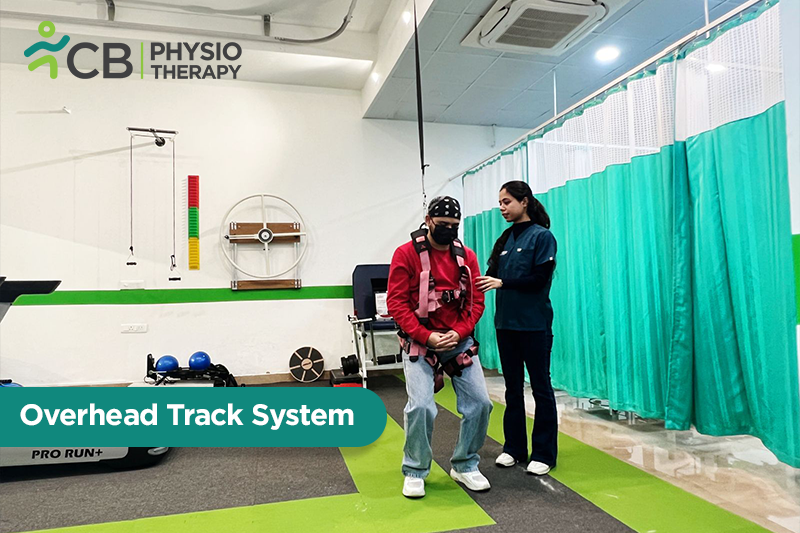
How Overhead Track Harness Therapy works
Overhead Track Harness Therapy (also called TREAD-AID OVERHEAD TRACK SYSTEM) is one of the treatment approaches our physiotherapists draw on — always as part of an assessment-led plan, never as a standalone fix.
What makes any therapy work is the decision-making around it: whether it fits your diagnosis, at what dose, and combined with what. At CB Physiotherapy, Overhead Track Harness Therapy is prescribed after a movement assessment and paired with active rehabilitation, because passive treatment alone rarely produces lasting change.
Overhead Track Harness Therapy — techniques & equipment
What the treatment actually involves — your plan combines the pieces your assessment calls for.
Assessment before application
Your physiotherapist first confirms Overhead Track Harness Therapy suits your diagnosis — and screens for anything that rules it out.
Targeted application
The treatment is applied to the specific structures your assessment identified, at a dose set for your case.
Paired with active rehab
Exercise and movement retraining run alongside, so the gains each session makes are kept.
Reviewed and progressed
Your response is checked every session; the plan is adjusted rather than repeated on autopilot.
Conditions Overhead Track Harness Therapy treats
Where it fits best — your assessment confirms whether it belongs in your plan.
- ✓ Parkinson's Disease →
- ✓ Degenerative Disc Disease →
- ✓ Stroke Or Cerebrovascular Accident (cva) →
- ✓ Total Knee Replacement(tkr) →
- ✓ Hip Fracture →
- ✓ Medial Collateral Ligament (mcl) Injury →
- ✓ Pain or stiffness that has not settled with rest
- ✓ As part of a wider, assessment-led recovery plan
- ✓ When your assessment identifies the specific problem Overhead Track Harness Therapy addresses
What a Overhead Track Harness Therapy session looks like
Step by step — from screening to treatment to what comes next.
Screening and consent
A quick reassessment and safety screen — you will know what the session involves and why before it starts.
The treatment itself
Overhead Track Harness Therapy applied to the targeted area — most patients find sessions comfortable, and you can speak up at any point.
Active follow-through
Exercise or movement work right after, while the treatment effect is fresh.
Response check
What changed and for how long — the answer shapes your next session and the plan.
Benefits of Overhead Track Harness Therapy
- ✓ Delivered by certified physiotherapists, never unsupervised
- ✓ Dosed to your case after a proper assessment
- ✓ Always combined with active rehab, for results that last
- ✓ Available at CB clinics near you — and at home where equipment allows
- ✓ Drug-free support for pain relief and recovery
Safety & contraindications
How CB Physiotherapy delivers Overhead Track Harness Therapy
You will not walk into CB Physiotherapy and simply receive Overhead Track Harness Therapy — you will receive an assessment, and Overhead Track Harness Therapy if your case calls for it. That order matters: it is how we make sure every session moves you towards a goal rather than just filling a slot.
Your plan runs on Fizo IQ™ — diagnosis, root cause, milestones, goals — and Overhead Track Harness Therapy is combined with hands-on care and exercise as indicated, at a clinic near you or at home where the equipment allows.
Real published prices from our physiotherapists for Overhead Track Harness Therapy in India — your exact quote is confirmed after assessment, before you commit. Packages save 10%.
Get Overhead Track Harness Therapy near you
Certified physiotherapists at a clinic near you or at home — same-day slots, assessment-led care.
Request received!
We'll call you within 10 minutes to confirm your home visit.We'll call you within 10 minutes to confirm your slot.
Chat with us on WhatsAppOverhead Track Harness Therapy, answered
1: Enhanced balance and stability.
2: Increased confidence in walking.
3: Reduced fear of falling.
4: Improved gait mechanics.
5: Greater independence in daily activities.
6: Decreased risk of fall-related injuries.
Overall, Overhead Track Harness Therapy provides a comprehensive approach to rehabilitation, addressing both physical and psychological aspects of recovery to help individuals regain function and improve their quality of life.
1: Assessment and Planning: Before applying the overhead track system to a patient, physiotherapy professionals conduct a thorough assessment of the patient's mobility needs and any specific requirements for transfers. This assessment helps determine the appropriate type and configuration of the overhead track system.
2: Selection of Lifting Device and Sling: Depending on the patient's mobility and transfer requirements, physiotherapy providers select the appropriate lifting device and sling. Common lifting devices include ceiling-mounted patient lifts or portable hoists that attach to the overhead track system. Slings are chosen based on the patient's size, weight, and specific needs for support during transfers.
3: Attachment of Lifting Device: The chosen lifting device is attached to the overhead track system. This may involve connecting the lift unit to a motorized trolley that moves along the tracks or directly attaching the lift to the tracks using a specialized mounting bracket.
4: Transfer Process: To transfer the patient using the overhead track system, Physiotherapists carefully position the patient onto the sling while ensuring their comfort and safety. The lifting device is then activated to raise the patient off the bed or chair, and they are gently moved along the training tracks.
5: Monitoring and Support: Throughout the transfer process, the physiotherapist closely monitors the patient's comfort and stability. They may provide additional support or adjustments as needed to ensure a smooth and safe transfer.
6: Disconnection and Storage: Once the transfer is complete, the lifting device is disconnected from the overhead track system, and any slings or accessories are properly stored. The overhead track system remains in place for future use as needed.
Overall, implementing an overhead track system for a patient involves careful planning, selection of appropriate equipment, and skilled execution by trained physiotherapists to ensure safe and comfortable transfers.
1: Stroke
2: Parkinson's disease
3: Multiple sclerosis
4: Traumatic brain injury
5: Spinal cord injury
6: Degenerative conditions
7: Fracture cases
8: Age-related balance and mobility issues
9: Prosthetics
1: Severe respiratory conditions, such as chronic obstructive pulmonary disease (COPD) or severe asthma, may have difficulty tolerating the pressure or positioning required during transfers using overhead track systems.
2: Unstable cardiovascular conditions, such as uncontrolled hypertension, recent heart attack, or severe arrhythmias, may be at increased risk of complications during transfers using overhead track systems.
3: Unhealed surgical wounds, incisions, or injuries may be at risk of further injury or complications if subjected to the pressure or friction associated with transfers using overhead track systems.
4: Unstable fractures, orthopedic injuries, or recent joint replacements may require specialized handling and precautions during transfers.
5: Uncontrolled seizure disorders may be at risk of injury during transfers using overhead track systems, particularly if a seizure occurs while suspended in the lifting device.
6: Severe cognitive impairment, such as advanced dementia or delirium, may have difficulty understanding or cooperating during transfers using overhead track systems.
7: Unable to maintain stable positioning or control their movements may not be suitable candidates for transfers using overhead track systems. This includes individuals with severe spasms, tremors, or involuntary movements that could compromise their safety during transfers.
8: Uncontrolled pain, especially during movement or transfers, may make the use of overhead track systems uncomfortable or intolerable.
Ready to start your recovery?
Get assessed today — find the cause, get a plan, and know when you'll feel better.