
Genu Valgus — Symptoms, Causes & Treatment
Also known as Knock Knees. Causes, symptoms and how physiotherapy treats Genu Valgus — without surgery or medicines.
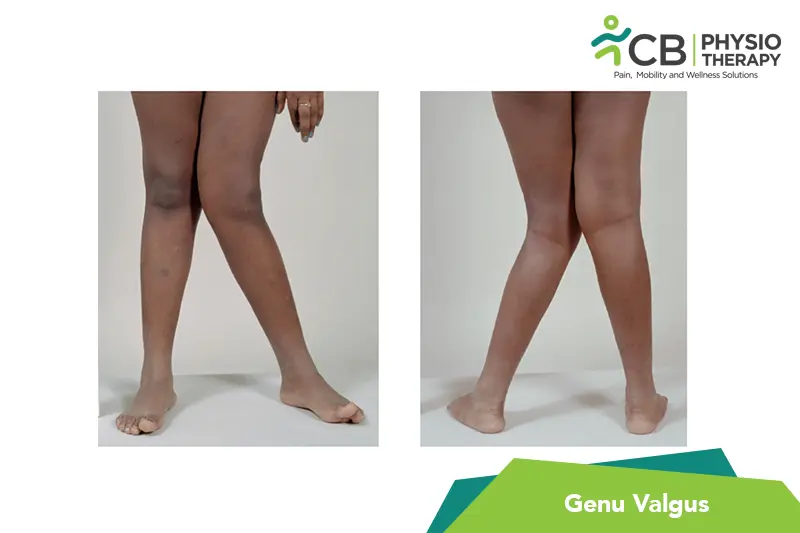
Understanding Genu Valgus
Genu Valgus (also called Knock Knees) can arrive suddenly or build over months, and how much it hurts is a poor guide to how serious it is — minor strains can hurt intensely, while slow-building problems stay quiet until they start limiting you.
Physiotherapy approaches Genu Valgus by treating the cause rather than chasing the symptom: a detailed movement assessment first, then a plan combining hands-on treatment, targeted exercise and the habit changes that stop it returning.
Causes & risk factors of Genu Valgus
What commonly drives it — your assessment pins down which of these apply to you.
Sudden spikes in activity
A new sport, a new gym program, a long trek — tissue adapts to gradual change and protests when change is sudden.
Muscle strain and overload
A sudden lift, an awkward movement or simply more load than the tissues were prepared for — the most common trigger.
Posture and long static hours
Desks, driving and screens keep the same structures loaded for hours at a stretch — comfortable at first, aching later.
Joint stiffness and age-related change
Joints that move less start to hurt more; age-related wear is normal, but painful stiffness is not something to simply accept.
Weakness and deconditioning
When supporting muscles lose strength, load shifts to structures that were never meant to carry it.
When physiotherapy is the right call
If any of these sound like you, an assessment is the right first step.
- ✓ You want to return to sport or work with a plan, not by trial and error
- ✓ Genu Valgus that keeps returning or hasn't settled within two weeks
- ✓ Pain or stiffness that limits work, sleep or daily activities
- ✓ You want to avoid long-term painkillers — or surgery has been mentioned
- ✓ You've been diagnosed with Genu Valgus and told to "rest and see"
Your treatment journey
Step by step — from your first assessment to a tracked recovery plan.
A detailed first assessment
History, movement testing and strength checks — a focused session to find what is actually driving your Genu Valgus.
A diagnosis you understand
Your physiotherapist explains the findings in plain language — what is affected, why it happened and what that means for you.
Active, tracked treatment
Hands-on therapy, the right modalities and graded exercise — progressed session by session and tracked on Fizo IQ™.
Prevention, built in
The final phase rebuilds strength and habits so the same problem does not come back — with a home plan you keep.
What recovery looks like
- ✓ Lower chance of recurrence, with a prevention plan
- ✓ Care without long-term medicines — at a clinic near you or at home
- ✓ Relief that comes from treating the cause, not masking it
- ✓ A clear diagnosis and a timeline you can plan around
- ✓ Strength and movement rebuilt, not just pain reduced
When to see a doctor — red flags
How CB Physiotherapy treats Genu Valgus
At CB Physiotherapy, treatment for Genu Valgus starts with finding its cause: a structured, physiotherapist-led assessment before anything is prescribed. Your plan then combines hands-on therapy, targeted exercise and the right modalities — delivered at a clinic near you or at home, and coordinated with your doctor where medical care is involved.
Every case runs on Fizo IQ™, our recovery engine: diagnosis, root cause, plan, milestones and goals, tracked session by session. You always know where you are in your recovery — and what comes next.
Get Genu Valgus treatment near you
Certified physiotherapists at a clinic near you or at home — same-day slots, assessment-led care.
Request received!
We'll call you within 10 minutes to confirm your home visit.We'll call you within 10 minutes to confirm your slot.
Chat with us on WhatsAppGenu Valgus, answered
- Genetics, some children inherit this condition from their parents.
- Injury or infection that affects the growth plates in the legs.
- Obesity can also increase the risk of developing knock knees.
- Poor nutrition can also contribute to the development of genu valgus.
- Conditions such as rickets or Blount's disease.
- Visible deformity of the legs.
- Knee pain, especially after physical activity or extended periods of standing or walking.
- Difficulty walking or running due to instability in the knee joint.
- Increased risk of falls due to the abnormal alignment of the legs.
Pathology:
Genu valgus deformity occurs when there is an imbalance between the forces acting on the inner and outer aspects of the knee joint, causing the knee joint to tilt towards the midline of the body. This leads to increased pressure on the inner aspect of the knee joint and can cause the development of arthritis over time. In addition, the abnormal alignment of the legs can cause strain on the muscles and ligaments, leading to pain and instability in the knee joint.
A physiotherapist may perform a physical examination to assess the alignment of the legs and the degree of deformity, and evaluate the strength and stability of the knee joint.
X-rays:
X-rays can provide a clear image of the bones in the legs, showing the degree of deformity and any underlying conditions that may be contributing to the condition.
MRI (Magnetic Resonance Imaging):
MRI can provide a detailed view of the soft tissues, including the muscles, ligaments, and tendons surrounding the knee joint. This test may be recommended if there is suspicion of an underlying injury or condition affecting these structures.
CT Scan (Computed Tomography):
The scan can provide a detailed view of the bones and can be helpful in assessing the degree of deformity and any underlying conditions affecting the knee joint.
Gait Analysis:
Gait analysis involves assessing the way a person walks or runs, and can help identify any issues with balance or stability that may be contributing to the condition.
Blood Tests:
Blood tests may be recommended to assess for any underlying medical conditions that may be contributing to the development of genu valgus, such as rickets or Blount's disease.
Joint Aspiration:
In some cases, joint aspiration may be recommended to remove fluid from the knee joint and assess for any signs of inflammation or infection.
Note: Medication should not be taken without the doctor’s prescription.
Surgery:
In some cases, surgery may be recommended to correct genu valgus, particularly if the condition is severe or is causing significant pain or functional limitations. The goal of surgery is to realign the knee joint and restore normal alignment to the lower extremities. There are several surgical procedures that may be used to correct genu valgus, including:
- Osteotomy: This involves cutting and reshaping the bones in the leg to correct the alignment of the knee joint. The bone is then held in place with screws or plates while it heals.
- Arthroscopy: This is a minimally invasive procedure that involves making small incisions in the knee joint and using a small camera to guide the surgeon as they make repairs or corrections to the joint.
- Ligament reconstruction: In some cases, damage to the ligaments in the knee joint may contribute to the development of genu valgus. Ligament reconstruction involves repairing or replacing damaged ligaments to help stabilize the knee joint.
Thermotherapy or heat therapy is used to reduce pain and inflammation in the knee joint.
Transcutaneous electrical nerve stimulation (TENS):
TENS involves the use of low-frequency electrical impulses to stimulate the nerves surrounding the knee joint. This can help to reduce pain and swelling in the knee joint.
Neuromuscular electrical stimulation (NMES):
NMES involves the use of electrical impulses to stimulate the muscles surrounding the knee joint. This can help to improve muscle strength and reduce instability in the knee joint.
Interferential current (IFC):
IFC involves the use of high-frequency electrical currents to stimulate the nerves surrounding the knee joint. This can help to reduce pain and improve blood flow to the affected area.
Ultrasound therapy:
Ultrasound therapy involves the use of high-frequency sound waves to penetrate the skin and stimulate blood flow to the affected area. This can help to reduce pain and inflammation in the knee joint.
Electrical muscle stimulation (EMS):
EMS involves the use of electrical impulses to stimulate the muscles surrounding the knee joint. This can help to improve muscle strength and reduce instability in the knee joint.
Strengthening exercises:
Strengthening exercises can help to improve the strength of the muscles surrounding the knee joint, which can help to reduce instability and improve overall knee function. Exercises may include squats, lunges, leg presses, and resistance band exercises.
Stretching exercises:
Stretching exercises can help to improve the flexibility of the muscles surrounding the knee joint, which can help to reduce pain and improve range of motion. Exercises may include hamstring stretches, quadriceps stretches, and calf stretches.
Balance and stability exercises:
Balance and stability exercises can help improve the knee joint's stability, reducing the risk of falls and other injuries. Exercises may include single-leg stands, balance boards, and agility drills.
Manual therapy:
Manual therapy techniques such as massage, joint mobilization, and stretching can help to improve circulation, reduce pain and inflammation, and improve overall knee function.
Gait analysis and training:
Gait analysis can help identify any issues with walking or running that may contribute to the condition. Gait training may be used to help improve overall movement patterns and reduce stress on the knee joint.
Don't let Genu Valgus decide your day.
Get assessed today — find the cause, get a plan, and know when you'll feel better.