
Popliteal (baker's) Cyst — Symptoms, Causes & Treatment
Also known as Popliteal (baker's) Cyst. Causes, symptoms and how physiotherapy treats Popliteal (baker's) Cyst — without surgery or medicines.
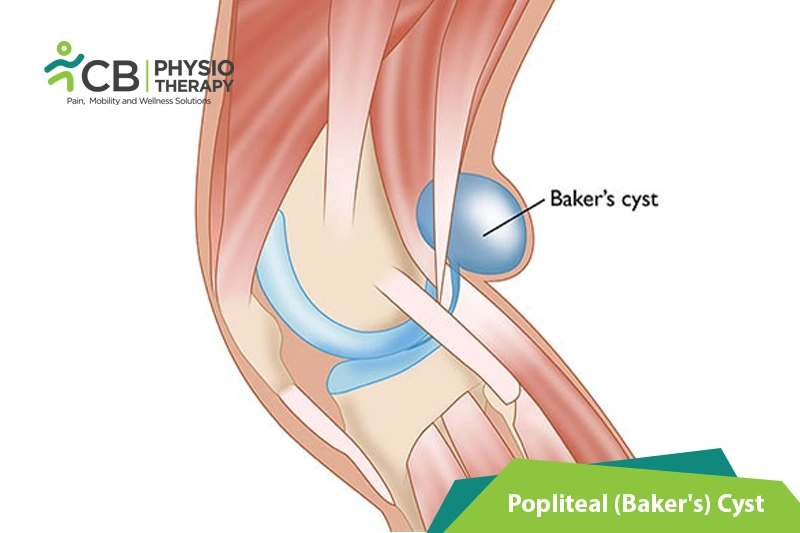
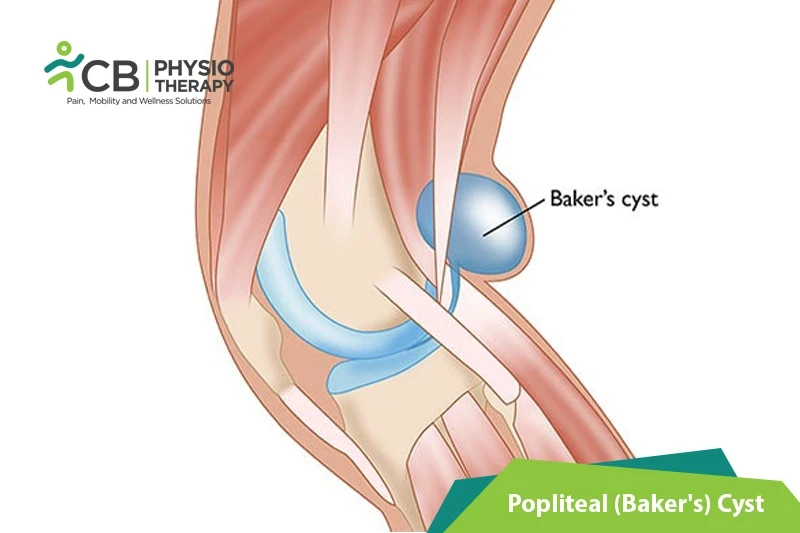
Understanding Popliteal (baker's) Cyst
Popliteal (baker's) Cyst affects people differently, and the right care starts with understanding how it affects you. Its day-to-day impact — on movement, strength, energy and confidence — is where physiotherapy does its work.
Our role in Popliteal (baker's) Cyst is practical: protect and rebuild movement and daily function with a plan set after a careful assessment, in coordination with your doctor wherever medical management is involved. No two plans look the same, because no two cases behave the same.
Causes & risk factors of Popliteal (baker's) Cyst
What commonly drives it — your assessment pins down which of these apply to you.
More than one possible driver
Popliteal (baker's) Cyst can have several contributing factors — a careful history and physical assessment separate them rather than guessing.
Reduced movement and deconditioning
Whatever the trigger, less movement quickly adds weakness and stiffness of its own — usually the most reversible part.
Daily-life load and habits
Work posture, repeated tasks, sleep and stress all shape how a condition behaves day to day.
General health and history
Overall health, previous injuries and existing conditions influence both the picture and the plan — the assessment takes all of it in.
When physiotherapy is the right call
If any of these sound like you, an assessment is the right first step.
- ✓ A new diagnosis of Popliteal (baker's) Cyst and you want a clear rehabilitation start point
- ✓ Daily tasks, walking or stairs are getting harder than they used to be
- ✓ Strength, stamina or balance has visibly dropped
- ✓ You want a structured clinic + home program with measurable milestones
- ✓ Family members need guidance to support you safely
Your treatment journey
Step by step — from your first assessment to a tracked recovery plan.
A detailed first assessment
History, movement testing and strength checks — a focused session to find what is actually driving your Popliteal (baker's) Cyst.
A diagnosis you understand
Your physiotherapist explains the findings in plain language — what is affected, why it happened and what that means for you.
Active, tracked treatment
Hands-on therapy, the right modalities and graded exercise — progressed session by session and tracked on Fizo IQ™.
Prevention, built in
The final phase rebuilds strength and habits so the same problem does not come back — with a home plan you keep.
What recovery looks like
- ✓ More independence in daily tasks
- ✓ Better strength, balance and stamina
- ✓ Fewer setbacks, with red flags monitored
- ✓ A program your family understands and can support
- ✓ Progress measured milestone by milestone on Fizo IQ™
When to see a doctor — red flags
How CB Physiotherapy treats Popliteal (baker's) Cyst
We treat Popliteal (baker's) Cyst the way we treat everything: assessment first, plan second, treatment third. It sounds obvious, but it is the difference between sessions that fill a slot and sessions that move you towards a goal. Care is delivered by certified physiotherapists at a clinic near you or at home.
Your whole journey is tracked on Fizo IQ™ — the diagnosis, the root cause, the milestones and the goals — so progress is measured, not guessed, and the plan adapts the moment your response calls for it.
Exercises that help with Popliteal (baker's) Cyst
Make these exercises yours — a CB physio personalizes, doses and tracks your plan week by week.
Get my personalized planGeneral guidance only — stop if an exercise increases your pain, and check with your physio before starting a new routine.
Get Popliteal (baker's) Cyst treatment near you
Certified physiotherapists at a clinic near you or at home — same-day slots, assessment-led care.
Request received!
We'll call you within 10 minutes to confirm your home visit.We'll call you within 10 minutes to confirm your slot.
Chat with us on WhatsAppPopliteal (baker's) Cyst, answered
A popliteal cyst, also known as a Baker's cyst, is a fluid-filled swelling that forms a lump at the back of the knee, it often causes tightness and restricted movement. The cyst can be painful while bending or extending the knee. Conditions like a meniscus tear or osteoarthritis cause the joint to produce excess fluid, inside the knee joint which can lead to the formation of a cyst.
Sometimes the knee produces too much of the Synovial fluid, causing an increase in the pressure forces, which create a bulge. This severe swelling causes a popliteal cyst to form behind the knee. Causes of a popliteal cyst can be:
- Injury or damage to the knee,
- Arthritis,
- Rheumatoid arthritis,
- Meniscus tear,
- Anterior cruciate ligament (ACL) tear,
- Other conditions that cause joint inflammation.
Popliteal cysts do not have symptoms and are discovered incidentally during a physical examination or on an MRI scan. When symptoms occur, they may include:
- Knee pain,
- Feeling of fullness or lump behind the knee,
- Tightness or stiffness at the back of the knee,
- Swelling in the knee,
- Bruising on the knee and calf,
- Limited range of motion.
In case of a very large cyst, it can interfere with blood flow in the veins of the leg, which can result in pain, swelling, weakness, or numbness if there is nerve compression. In severe cases, the cyst may resemble a blood clot or deep vein thrombosis, a much more serious problem.
Pathology
The Popliteal cyst is a benign swelling of the semimembranosus bursa found behind the knee joint. It is not a true cyst, as there is open communication with the synovial sac. The cyst arises between the tendons of the medial head of the gastrocnemius and the semimembranosus muscles, present posterior to the medial femoral condyle. The synovial sac of the knee joint in certain conditions produce a posterior bulge, into the popliteal space. When this bulge becomes large, it becomes palpable and cystic.
Physical examination:
The patient is asked about their medical history and previous knee injury. The patient is asked to describe symptoms. Then a physical examination of the affected knee is done and compared to the normal knee. The patient is examined for swelling, joint instability, clicking or popping noise when the knee is bent, joint stiffness and limited range of motion, etc. Palpation of the back of the knee is done where the cyst is located. Often, a cyst becomes firm when the knee is fully extended and soft when the knee is bent.
X-rays:
X-rays help to provide images of dense structures, such as bone. Although the cyst cannot be seen on an x-ray, the doctor can check for narrowing of the joint space and other signs of arthritis in the joint.
An ultrasound test uses sound waves to create images of structures inside the body. An ultrasound helps to look for the lump behind the knee and check whether it is solid or filled with fluid.
Magnetic resonance imaging (MRI) scans:
Magnetic resonance imaging (MRI), is done to produce clear pictures of the body's soft tissues. MRI scan shows an area of fluid behind the knee and the location of a popliteal cyst.
Medication: Nonsteroidal anti-inflammatory, Steroid injection, etc.
Note: Medication should not be taken without the doctor's prescription.
Aspiration:
In this procedure, the area around the cyst is made numb, and then a needle is used to drain the excess fluid from the joint. Aspiration is often done by using ultrasound to guide the placement of the needle.
Surgery
Surgical treatment for a popliteal cyst is rarely required, surgery is recommended if the symptoms are not relieved with conservative treatment or if the cyst returns repeatedly after aspiration.
Arthroscopy:
In this procedure, a tiny incision is made under anesthesia, then a small camera is inserted called an arthroscope into the knee joint. The camera shows images on a video screen, and these images are used for surgery.
Excision:
Excision is done in case of a large cyst or in case of nerve and vascular problems, open surgical procedure is carried, to remove the entire cyst.
Immobilization:
Immobilization is recommended for several weeks after surgery to immobilize the knee, this can be achieved by wearing a knee brace.
Elevation:
The limb is kept in an elevated position to drain the excess fluid.
Ice therapy for 15 minutes every 4-7 hours will reduce the inflammation. Ice is applied to decrease pain and swelling.
Ultrasound therapy is used to increase circulation, drain out the toxins and thus decrease pain.
A physiotherapist uses various massage techniques to increase circulation and decrease swelling.
Transcutaneous electrical stimulations (TENS):
Transcutaneous electrical stimulations (TENS) are used to reduce knee swelling and pain.
Iontophoresis:
Iontophoresis uses mild electrical current to push anti-inflammatory medicine to the sore area. This treatment is helpful for patients who can't tolerate injections.
Kinesio taping is done on the backside of the knee and is proven to be effective in reducing inflammation.
Foam rollers:
For tightness and soreness, a foam roller is used to assist with any myofascial symptoms. The foam roller is not directly used behind the knee.
After aspiration or arthroscopic surgery, specific exercises are done to help improve range of motion, which also help to walk right after the procedure, but strenuous activity during recovery should be avoided. Range of motion exercises is done to regain full pain-free ROM. Examples of ROM exercises are heel slides by lying on the back and sliding the heel toward to regain pain-free movement, etc.
Strengthening exercises like quadriceps, hamstring, and gluteus medius strengthening are essential as their weakness can lead to poor knee biomechanics and cause pain and instability. Strengthening with weights can be limited initially to a pain-free range of motion, for this manual resistance, therabands and weight cuffs can be used.
Stretching exercises:
Stretching exercises are used to enhance the flexibility of the lower limb. Stretching of the hamstring, quadriceps, patellar ligament, and of other structures around the knee are recommended.
To prevent the recurrence of a popliteal cyst, the patient is advised to follow the recovery instructions. The patient is advised to decrease the activity and avoid high-impact activities that irritate the knee, such as jogging, aerobics, heavy lifting, climbing, and even running, this can help prevent pain and prevent reoccurrence.
Don't let Popliteal (baker's) Cyst decide your day.
Get assessed today — find the cause, get a plan, and know when you'll feel better.